
TL;DR:
- Confident aging involves trusting judgment, adapting to change, and maintaining independence despite challenges. Improving mindset, consistent habits, adaptive strategies, and intentional social connections support self-sufficiency and resilience in solo aging.
Aging confidently is defined as trusting your own judgment, adapting to change, and maintaining a fulfilling life with purpose and independence. It is not about pretending nothing changes. It is about knowing you can handle what comes. Nearly 50% of adults over 65 improved their physical or mental abilities over time, which means decline is not the default story. And while 85% of adults over 65 live with at least one chronic condition, most still live independently. If you are a solo ager, that combination of facts is worth sitting with. You are not alone, and you are not stuck.
How does aging confidently start with your mindset?
Confidence in aging begins in the mind, not the body. Positive beliefs about aging correlate significantly with improved cognitive and physical performance, regardless of current health status. Yale researcher Becca R. Levy has shown that these views can be modified and lead to real improvements even when chronic conditions are present. That means your perception of aging is not fixed. It is something you can actively work on.
One of the most useful concepts here is what psychologists call "accurate seeing." Confidence after 60 is about trusting your judgment despite changes, and most challenges come from misinterpreting normal discomfort as serious decline. A stiff morning does not mean you are falling apart. Forgetting a name does not mean cognitive loss. Accurate seeing means calling things what they actually are, not what fear says they are.
Building what researchers call the "resilience muscle" matters just as much. Resilience built through navigating hardship correlates with higher life satisfaction in older adults who practice self-compassion and emotional regulation. Every hard season you have already survived is evidence that you can handle the next one. That is not a small thing.
Here are four mindset shifts that build genuine confidence after 50:
- Replace "I can't do that anymore" with "I do that differently now." The activity may change form, but your engagement with life does not have to stop.
- Name the fear specifically. Vague anxiety is harder to manage than a named concern. "I am worried about falling" is something you can address. "Everything feels scary" is not.
- Track what is working. Keep a short weekly note of things you did well or enjoyed. It counters the brain's natural negativity bias.
- Seek accurate information. Fear often fills the space where facts should be. A doctor's visit, a trusted resource, or a conversation with a peer can replace catastrophic thinking with real data.
Pro Tip: Write down one thing each morning that you handled well the day before. Over time, this simple habit rewires how you interpret your own capability.
What daily habits support physical and mental vitality?
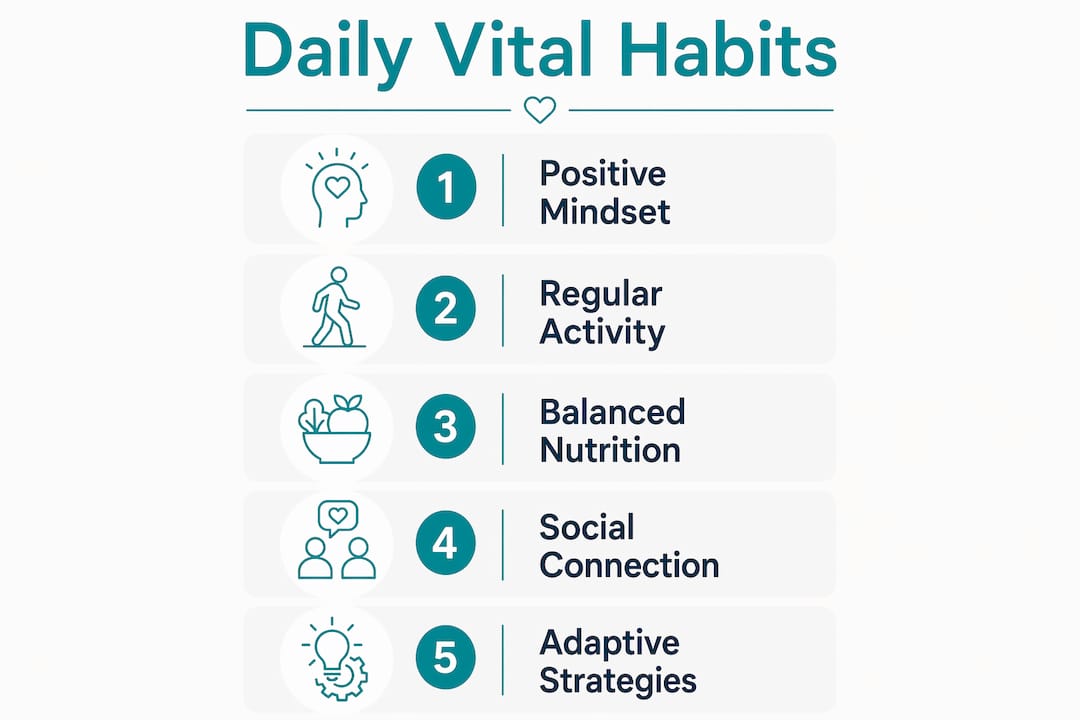
Healthy aging, the recognized term for the science of maintaining function and well-being as you grow older, rests on a small set of habits practiced consistently. Healthy aging focuses on lifestyle choices that support muscle strength, sleep hygiene, and social connection rather than on avoiding physical change. Dr. Cai at Houston Methodist describes it as working with your biology, not against it.

The physical foundation is straightforward. Health authorities recommend 2.5–5 hours of moderate aerobic activity weekly plus strength training at least 2 days per week for adults 65 and older. That translates to about 30 minutes of brisk walking five days a week, plus two sessions of resistance work. You do not need a gym membership to meet this standard.
Here is a realistic weekly routine that supports both physical and mental vitality:
- Monday, Wednesday, Friday: 30 minutes of walking, swimming, or cycling at a pace where you can still hold a conversation.
- Tuesday and Thursday: 20–30 minutes of bodyweight or resistance band exercises targeting legs, core, and upper body.
- Daily: 7–9 hours of sleep, a consistent wake time, and a wind-down routine that limits screens for the last hour before bed.
- Daily: One cognitively engaging activity such as reading, a crossword, learning a language with an app like Duolingo, or playing a musical instrument.
- Weekly: At least two planned social interactions, whether in person, by phone, or by video call.
Nutrition matters too. Prioritize protein at every meal to protect muscle mass, which declines naturally with age. Limit ultra-processed foods and stay well hydrated. These are not dramatic changes. They are steady, repeatable choices that add up.
Pro Tip: Pair a new habit with an existing one. If you already make coffee every morning, do 10 minutes of gentle stretching while it brews. Habit stacking removes the need for willpower.
How can solo agers adapt to chronic conditions and stay independent?
Adapting to chronic conditions is not surrender. It is the most practical form of maintaining independence at home. The goal shifts from doing things the same way you always did to doing them in ways that conserve energy for what matters most. Maintaining independence requires adapting daily tasks and embracing technology and routines that save energy for meaningful activities.
Here are the core adaptive strategies that work for solo agers:
- Simplify your environment. Remove trip hazards, install grab bars in the bathroom, and keep frequently used items at waist height. Small changes prevent big setbacks.
- Use technology as a tool, not a last resort. Automated lighting, medication reminder apps, and voice-activated assistants reduce cognitive load and physical effort without requiring technical expertise.
- Schedule, do not improvise. Batch errands on one day. Cook larger portions twice a week. Scheduled tasks take less energy than constant decision-making.
- Identify your peak energy window. Most people have two to three hours each day when they feel sharpest. Protect that time for tasks that require the most focus or physical effort.
The data on chronic conditions is worth repeating here. The fact that 85% of adults over 65 live with at least one chronic condition yet most maintain independence tells you something important. The condition is not the barrier. The absence of a plan is.
| Challenge | Adaptive strategy | Benefit |
|---|---|---|
| Fatigue | Batch tasks, rest between activities | Preserves energy for priorities |
| Mobility changes | Grab bars, non-slip mats, reorganized storage | Reduces fall risk at home |
| Cognitive load | Medication apps, written schedules | Reduces errors and stress |
| Social isolation | Scheduled calls, community programs | Builds resilience and mood |
What social connections help solo agers build real confidence?
Social connection is not a comfort bonus. It is a health requirement. Intentional social engagement and scheduled interactions build the resilience muscle that solo agers need most when living independently. The key word is intentional. Passive connection, such as waiting for someone to call or hoping to run into a neighbor, does not deliver the same benefit as planned, regular contact.
Building a strong support circle means identifying three to five people who know your situation and can check in regularly. These do not have to be family members. Neighbors, faith community members, former colleagues, and friends from interest groups all qualify. What matters is that the relationship is mutual and consistent.
Here is how to build and use your social network with intention:
- Schedule weekly contact. Put calls or visits on the calendar the same way you schedule a doctor's appointment. Treat them as non-negotiable.
- Join a recurring group activity. A weekly walking group, book club, or volunteer shift creates built-in social contact without requiring you to initiate every time.
- Use age tech for independence as empowerment, not as a signal of frailty. A medical alert device means you can live alone more safely. A video calling tablet means distance does not have to mean disconnection.
- Set clear boundaries. Knowing what kind of help you will and will not accept keeps relationships healthy and prevents resentment on both sides.
Age tech and boundary-setting empower solo agers to maintain independence safely without constant external help. That combination of technology and clear communication is what separates reactive aging from proactive aging. You get to define the terms.
Key takeaways
Aging confidently requires a combination of accurate thinking, consistent daily habits, adaptive strategies, and intentional social connection, all of which are learnable and sustainable for solo agers.
| Point | Details |
|---|---|
| Mindset shapes outcomes | Positive beliefs about aging improve cognitive and physical performance, regardless of health status. |
| Daily habits are the foundation | Meeting exercise, sleep, and nutrition guidelines protects both physical function and brain health. |
| Adaptation is independence | Changing how you do tasks, not stopping them, is the most effective way to stay self-sufficient. |
| Social connection is non-negotiable | Scheduled, intentional interactions build resilience and reduce the health risks of isolation. |
| Planning beats reacting | Proactive strategies, from technology to support circles, give solo agers more control over their future. |
What I have learned about confidence and getting older
Confidence is not the absence of doubt. It is the decision to act despite it. I have seen this play out repeatedly in conversations with adults who are aging alone. The ones who do best are not the ones who feel no fear. They are the ones who have learned to read their situation accurately and respond without catastrophizing.
The phrase "accurate seeing" keeps coming back to me because it is so practical. Most of what feels like decline is actually adjustment. Your body is asking for a different approach, not signaling the end of capability. When you learn to tell the difference, the fear loses most of its power.
What I find most encouraging is that positive views on aging can be modified at any point. You do not have to have had an optimistic relationship with aging your whole life to start building one now. That is genuinely good news. Embracing aging does not mean pretending it is easy. It means deciding that your life still has real shape and real possibility, and then building accordingly.
For solo agers especially, the work of aging well is also the work of knowing yourself. What do you need? Who do you trust? What does a good day actually look like for you? Those answers are yours to define.
— Mike
How Agingsolo supports your independence at every stage
Agingsolo is built specifically for adults who are growing older without a built-in support system nearby. The guides, checklists, and planning tools on the site address the real questions solo agers face: how to stay safe at home, how to build a support network, how to plan ahead without feeling overwhelmed by the process.
If you are ready to move from thinking about aging well to actually planning for it, the aging in place guide is a strong starting point. It covers safety, independence, and the practical steps that make staying home a real and sustainable option. For adults who want a broader picture of what solo aging looks like and what it requires, the guide to growing old alone safely walks through connection, safety, and independence in plain language. Both resources are free and written for people who want clarity, not complexity.
FAQ
What does aging confidently actually mean?
Aging confidently means trusting your judgment and adapting to change without letting fear drive your decisions. It is grounded in accurate self-assessment rather than denial or catastrophizing.
Can you build confidence in aging if you already feel behind?
Yes. Positive views on aging can be modified at any point and lead to real improvements even when chronic conditions are present. Starting with small mindset shifts and consistent daily habits produces measurable results over time.
How much exercise do adults over 65 actually need?
Health authorities recommend 2.5–5 hours of moderate aerobic activity weekly plus strength training at least 2 days per week. That breaks down to about 30 minutes of brisk walking five days a week plus two resistance sessions.
How do solo agers stay connected without family nearby?
Scheduled, intentional interactions with neighbors, community groups, or friends replace passive social habits and build the resilience needed for independent living. A recurring group activity, such as a walking club or volunteer role, creates consistent contact without requiring constant personal initiative.
Is using assistive technology a sign of losing independence?
No. Age tech empowers solo agers to live more safely and independently without relying on constant external help. Devices like medical alert systems and medication reminder apps extend independence rather than signal its end.