
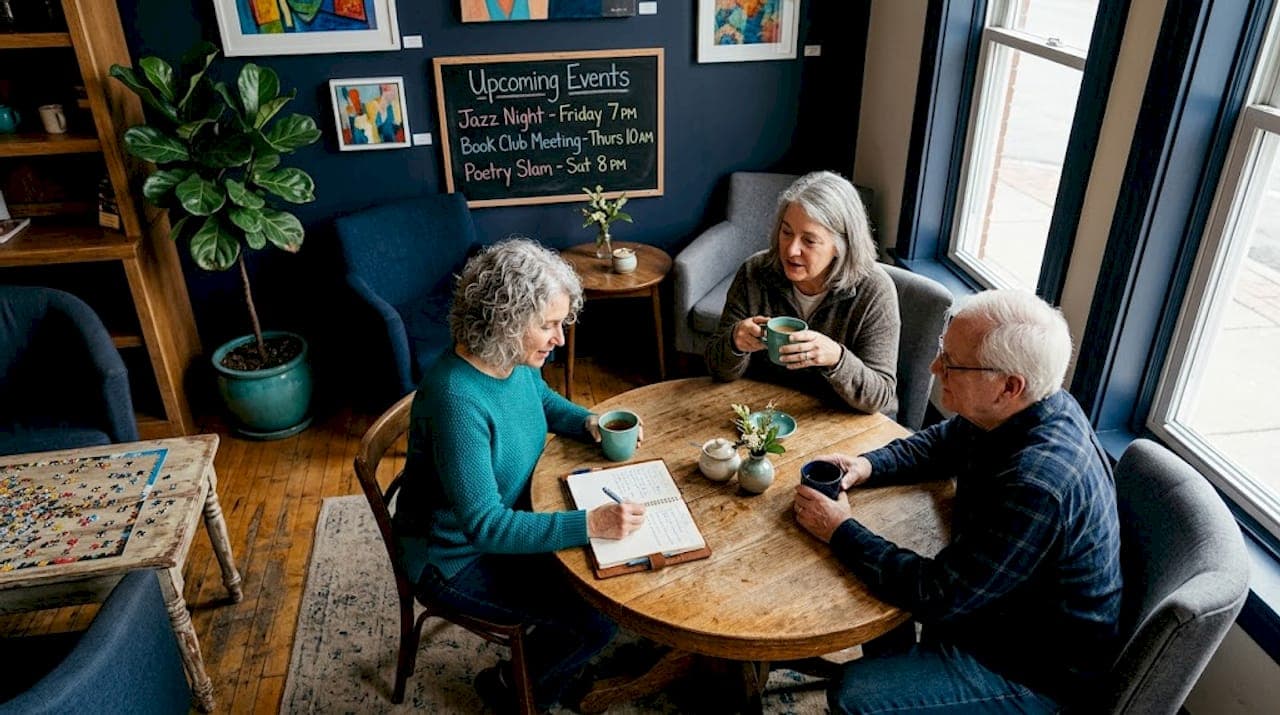
Aging alone doesn't have to mean feeling alone. But if you're one of the over 24 million adults aged 50 and older living solo in the U.S., the quiet can sometimes feel heavier than expected. The benefits of aging solo community groups go far beyond filling your calendar. They can protect your brain, steady your emotions, and give you something money and planning alone simply can't buy: real human connection. This article walks you through what to look for, what the research actually says, and how to find the right fit for where you are right now.
Table of Contents
- Key takeaways
- 1. How to evaluate aging solo community groups before you commit
- 2. The real health benefits of aging solo community groups
- 3. Types of community groups and how they compare
- 4. How to decide which group actually fits your life
- 5. What people often get wrong about aging alone and community
- Ready to build your support network?
- FAQ
Key takeaways
| Point | Details |
|---|---|
| Isolation carries real health risks | Social isolation is linked to risks comparable to smoking 15 cigarettes daily, making community groups a genuine health tool. |
| Consistency amplifies the benefits | Visiting a community group four or more days per week over several years produces measurable mental and physical health gains. |
| Multiple group types exist | Senior centers, hobby clubs, virtual groups, and health-focused programs all serve different needs and lifestyles. |
| Short-term programs work too | Even programs lasting three months or less can significantly reduce loneliness when they combine social, peer, and emotional support. |
| Alignment matters | The best group for you matches your independence preferences, schedule, transportation access, and longer-term solo aging plan. |
1. How to evaluate aging solo community groups before you commit
Not every group is worth your time. Before you walk through any door or join any Zoom call, it helps to know what you're actually evaluating. Here's what separates a group that transforms your week from one that just fills it.
- Accessibility and location. Can you get there on your own? If transportation is a concern now or might become one, proximity matters more than a great program you can only reach by asking for favors.
- Meeting frequency. Groups that meet weekly or more often give you the kind of steady rhythm that builds real relationships. Long-term attendance four or more days per week correlates with measurably better health outcomes.
- Diversity and inclusiveness. A group where you feel genuinely welcome, not tolerated, matters. Look for inclusive language, a range of ages within the 50-plus bracket, and a mix of people who are also aging solo.
- Types of support offered. The best groups offer more than socializing. Look for emotional support, peer connection, and practical help like information sharing, referrals, or wellness programming. Multicomponent programs that combine all three are measurably more effective at reducing loneliness.
- Opportunities to contribute. Belonging goes deeper when you have a role. Look for groups where you can lead a discussion, volunteer, or bring a skill. That sense of purpose is not a bonus. It's part of what makes aging feel meaningful.
Pro Tip: Before committing, ask how long most members have been attending. A group where people stay for years signals a culture worth investing in.
2. The real health benefits of aging solo community groups
This is where the research gets hard to ignore. The social benefits of aging alone are real, but so are the risks when isolation goes unaddressed.
Social isolation carries health consequences comparable to smoking 15 cigarettes a day, and approximately 871,000 deaths annually worldwide are linked to loneliness. Those numbers aren't meant to frighten you. They're meant to show you that community isn't a soft benefit. It's a health strategy.
Here's what consistent participation in community groups actually delivers:
- Reduced loneliness. This sounds obvious, but the mechanism matters. Regular social contact rewires how your nervous system responds to stress. The relief is physiological, not just psychological.
- Lower risk of cognitive decline. Social isolation increases the risk of dementia by up to 60% over nine years. Staying connected is one of the most accessible brain-protective habits available to you.
- Stronger emotional resilience. Solo aging builds emotional self-reliance, and community groups add a safety net that makes that independence more sustainable under pressure.
- Better physical health. Group fitness programs, walking clubs, and wellness workshops all reduce sedentary behavior. But even purely social groups improve physical health through reduced stress hormones and better sleep.
- Sense of purpose and identity. Community involvement is directly linked to a positive aging outlook and improved mental wellness. Knowing people expect to see you is a small but powerful motivator.
The advantages of solo aging include real independence and self-direction. Community groups don't take that away. They make it more durable.
3. Types of community groups and how they compare

There's no single best option. Different group formats serve different needs, and understanding the landscape helps you choose with intention rather than defaulting to whatever is closest.
| Group type | Best for | Key benefit | Potential limitation |
|---|---|---|---|
| Senior centers | Broad social needs | Multi-service hub: meals, fitness, classes | Can feel institutional to some |
| Hobby or interest clubs | Shared passion connections | Deep friendships built around meaning | May lack emotional support component |
| Health and wellness groups | Physical and mental well-being | Structured activity with peer accountability | Scheduling can be rigid |
| Virtual community groups | Limited mobility or rural areas | Accessible from home, lower barrier to entry | Less in-person connection depth |
| Group counseling or tele-support | Grief, transition, emotional processing | Professional-guided emotional support | Less casual social interaction |
Senior centers deserve special mention. They often function as full-service support networks for seniors, offering everything from fitness classes and nutritional meals to legal aid referrals and social hours under one roof. For solo agers, that breadth is genuinely useful.
Virtual groups have expanded meaningfully since 2020, and they're no longer a lesser substitute. For adults dealing with mobility limits, geographic isolation, or simply a preference for lower-stakes entry points, online community groups for singles and solo agers can deliver real connection. Healthcare providers are increasingly using social prescribing to connect older adults with exactly these types of groups, recognizing community engagement as a clinical health tool.
- Cost considerations. Senior centers are often free or low-cost. Specialty wellness programs may carry fees. Virtual groups range from free (public library programs, nonprofit offerings) to subscription-based.
- Social interaction quality. In-person groups typically build deeper bonds over time. Virtual groups offer more flexibility. The right answer depends on your personality and availability.
Pro Tip: Try a virtual group first if you're unsure about committing. Many offer drop-in formats that let you get a feel for the culture before you invest regular time.
4. How to decide which group actually fits your life
Knowing the benefits is one thing. Knowing which group fits you is the part most articles skip. Here's a practical way to think it through.
- Assess your honest social needs. Are you looking for casual companionship, a structured group with activities, emotional support after a loss, or practical peer information? Naming what you actually need narrows your options fast.
- Check your transportation picture. If you drive now but may not in three years, factor that in. A group you can reach by bus, on foot, or through a rideshare is a more sustainable choice than one that requires your own car.
- Match schedules to your real life. A morning group won't work if your health is better in the afternoons. A daily drop-in won't work if you travel or have caregiving responsibilities. Pick something you can actually sustain.
- Do a trial visit before committing. One visit tells you a lot about culture. Do people introduce themselves? Does the conversation feel welcoming? Trust your instincts on whether you could picture yourself as a regular.
- Balance independence with structure. Some people thrive with a loose, informal group. Others do better with a structured program that creates accountability. Neither is wrong. Knowing your preference keeps you from abandoning a good group just because the format felt off.
- Connect the choice to your broader solo aging plan. Your support network is part of your solo aging plan. A community group that includes people who check in on you, share resources, and know your situation is not just social. It's a piece of your safety infrastructure.
Understanding how to find community groups that genuinely fit takes a bit of self-reflection first. The clearer you are on what you need, the less time you spend in the wrong room.
5. What people often get wrong about aging alone and community
I've spent years working alongside people who are navigating solo aging, and the misconception I hear most often is this: people assume that needing community means admitting weakness. That choosing independence and choosing connection are somehow opposites.
They're not. In my experience, the solo agers who age most confidently are the ones who build connections deliberately, not because they're lonely, but because they're thinking ahead. They treat community the same way they treat a good financial plan. You don't wait until things fall apart to put one in place.
What I've also seen is that people underestimate what they bring to a group. Solo agers, particularly those who have navigated loss, career transitions, or health changes on their own, carry a kind of quiet resilience that younger group members and even professionals learn from. The strongest relationships in these settings often aren't between people seeking help. They're between people who showed up prepared to give it.
My honest take: the benefits of aging solo community groups aren't just about reducing loneliness in aging populations. They're about building a life in later years that still has texture, surprise, and reciprocity. That's worth showing up for.
— Mike
Ready to build your support network?
If this article has you thinking more seriously about your own connections, that's exactly where to start. Agingsolo is built for adults who are planning their solo aging years with clear eyes and a realistic picture of what good support actually looks like.
The Agingsolo resource library covers everything from understanding your solo aging options to building the kind of practical support network that holds up when you need it. You'll find guides on staying active, checklists for safety planning, and frameworks for thinking about your living situation before a health event forces the decision. Whether you're just starting to think about this or already deep in the planning process, Agingsolo 101 is a grounded, judgment-free place to begin. Take it one step at a time. The planning itself is a form of self-care.
FAQ
What are the main benefits of aging solo community groups?
Community groups reduce loneliness, lower the risk of cognitive decline by up to 60%, and provide emotional and practical support that solo agers may not have through family networks. Regular participation is also linked to better physical health outcomes over time.
How often should I attend a community group to see real benefits?
Research shows that attending four or more days per week over several years produces measurable improvements in both mental and physical health. Even shorter-term programs of three months or less can significantly reduce loneliness when they combine multiple types of support.
What types of community groups work best for solo agers?
Senior centers, hobby clubs, health-focused wellness groups, and virtual communities all offer distinct advantages. The best fit depends on your social needs, transportation access, and whether you prefer structured programming or more casual connection.
Does social isolation really affect brain health?
Yes. Social isolation independently accelerates cognitive decline separate from loneliness, with some studies showing a 28% to 60% higher risk of dementia. Staying socially active is one of the most accessible ways to protect cognitive function as you age.
How do I find community groups for solo agers near me?
Start with your local senior center, public library, or Area Agency on Aging. Many healthcare providers now use social prescribing to connect patients with community programs, so your doctor's office can also be a useful starting point.