
TL;DR:
- Building a friendship-based care network involves mapping at least eight people, scoring them on proximity and trust, then inviting the top five with specific, low-effort tasks. Maintaining such a system requires assigning clear roles, using simple tools, and reviewing roles every six to eight weeks to prevent burnout. This approach enhances health by reducing loneliness and ensuring consistent support through trusted relationships built before care is needed.
Start by mapping five or more willing people and assigning each one a small, recurring task. That single step moves you from hoping someone will show up to knowing someone will. A friendship-based care network, sometimes called a care circle, is an intentional group of neighbors, friends, and community contacts organized around specific, low-burden commitments so that no one person carries too much.
Here is what to do in your first week:
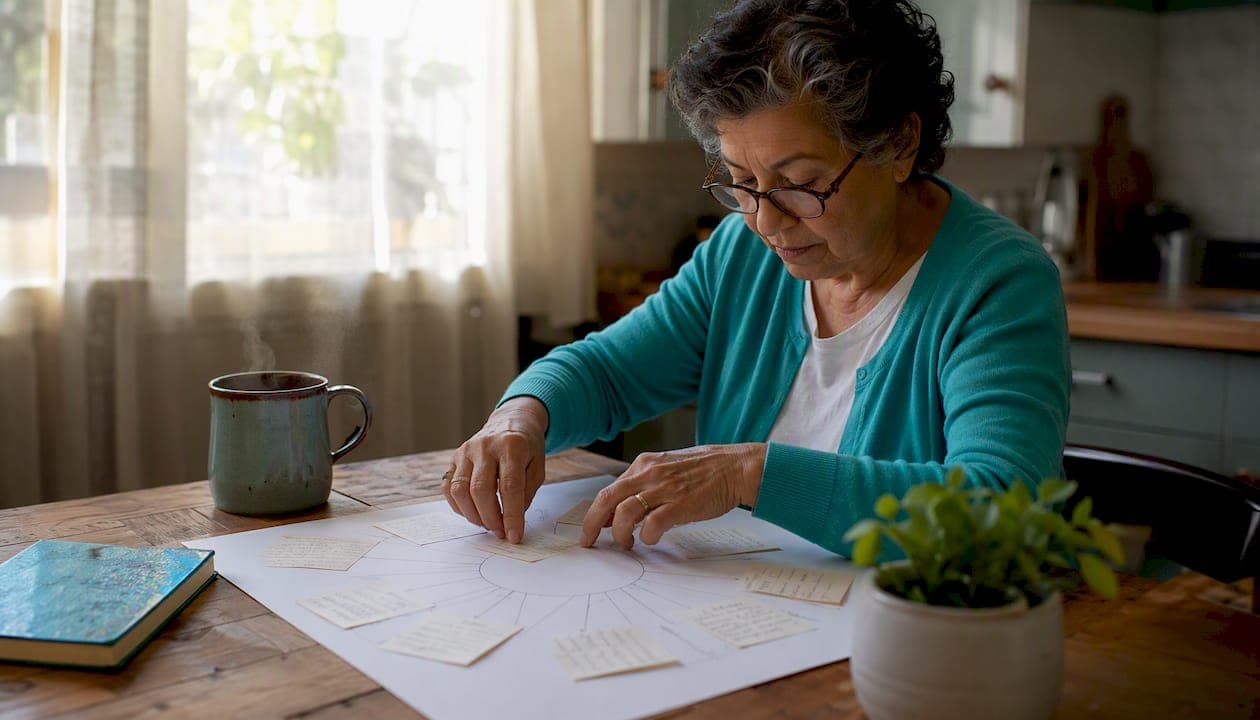
- Day 1: Write down every person in your life, including neighbors, hobby friends, faith community members, and online contacts. Aim for at least eight names.
- Day 3: Score each person on four factors: proximity, availability, trust, and a skill or task they could realistically offer. Circle your top five.
- Day 7: Send one short, specific invitation to each of those five people. Assign one small task per person. Schedule a 20-minute group check-in for the following week.
That is your network's foundation. Everything else builds from there.
Table of Contents
- What does your first 30 days look like?
- Why does a friendship-based support system actually improve your health?
- How do you map your current support network?
- How do you invite people and define their roles?
- Which structure fits your network best?
- What tools help you coordinate without burning out on admin?
- How do you keep friendships healthy inside a care network?
- When should you bring in professionals?
- Ready-to-use templates and a sample rota
- Key Takeaways
- Why the friendship-first approach is the one that actually holds
- Agingsolo can help you build this from the ground up
- Useful sources
- FAQ
What does your first 30 days look like?
A solid friendship care support system does not appear overnight, but one month is enough to get the structure running. Here is a week-by-week plan.
Week 1: Map and invite
- Complete the mapping exercise (see Step 1 below) and identify five or more people.
- Draft and send personalized invitations to each person.
- Confirm who said yes and what task they are willing to take on.
Week 2: Assign roles and set up coordination
- Match each person to one specific, low-effort task: a weekly 10-minute check-in call, a monthly grocery run, or a ride to one appointment per month.
- Create a group text or shared calendar. Keep it simple.
- Share a one-page rota so everyone sees the schedule at a glance.
Week 3: Hold your first meet-up
- A 60-minute video or in-person gathering works well. Introduce everyone, review the rota, and answer questions.
- Set a communication norm: who sends updates, how often, and through which channel.
Week 4: Test a task swap and review
- Have two members swap one task to test flexibility.
- Check in with each person individually. Ask: "Is this still working for you?"
- Schedule a full network review for six to eight weeks out.
Commitment expectations are worth naming clearly. Most members should spend no more than one to two hours per month on their assigned task. That is the ceiling, not the floor. Distributing responsibility across five or more people, each committed to one specific low-effort task, is what prevents any single friend from burning out.
A note on time: A well-structured network asks less of each person than most friends expect. One check-in call per week takes about the same time as a coffee break.
Why does a friendship-based support system actually improve your health?
The evidence is clear and worth knowing before you ask anyone for help. Social connection directly affects physical and mental health outcomes, including reduced risk of depression, lower rates of cognitive decline, and better recovery from illness.
Local caregiver networks reduce caregiver burnout and improve outcomes including fewer hospital readmissions. When tasks are shared across a group, no one person reaches the point of exhaustion, and the person receiving care gets more consistent, reliable support.
The Friendship Line, run by the Institute on Aging, responds to more than 11,000 calls per month. It is the nation's only accredited 24-hour toll-free emotional support line for older adults. That call volume reflects something real: the need for connection is not a preference. It is a health factor.
A few specific benefits worth naming:
- Reduced loneliness: Regular contact with known, trusted people lowers the subjective experience of isolation even when physical proximity is limited.
- Practical safety: Someone who checks in regularly is more likely to notice a change in your condition before it becomes a crisis.
- Motivation: Friends who know your goals tend to encourage follow-through on health routines, appointments, and daily activity.
Friendship-based care complements professional services. It does not replace them. A care circle handles the everyday: rides, meals, company, and check-ins. Professionals handle the clinical. Both are necessary, and a strong friendship network often makes professional care more effective by catching problems earlier.
How do you map your current support network?
The mapping exercise is the single most useful thing you can do before making any asks. It reveals people you had not thought of and helps you make specific requests instead of vague ones. Listing everyone already in your life, including distant family and neighbors, then matching tasks to capacity is the recommended starting point.
Step-by-step mapping process:
- Open a blank page or use the Agingsolo support circle worksheet. Write every name you can think of: family, neighbors, coworkers (current or former), faith community members, hobby group contacts, and online friends.
- Next to each name, note: how close they live, how often you are already in contact, and what kind of help they could realistically offer.
- Score each person on four factors: proximity (can they get to you in 30 minutes?), availability (do they have flexible time?), trust (would you be comfortable asking?), and skill match (do they drive, cook, or have a calm phone manner?).
- Circle your top five names. These are your first invitations.
- For each circled name, write one specific task they could take on. Not "help when needed." Something like: "Drive me to my cardiologist appointment once a month."
Where to find latent supporters you may have overlooked:
- Neighbors who wave but have never been asked for anything specific
- Members of a book club, walking group, or hobby class
- Faith community contacts who have offered help in passing
- Online friends who cannot help physically but can check in by text or video call
- Former colleagues who live nearby
Pro Tip: The most sustainable asks are the ones that fit naturally into someone's existing routine. A neighbor who already shops on Saturdays is a better grocery-run candidate than a friend who would have to rearrange their week.
How do you invite people and define their roles?
Most friends want to help. They just wait to be asked, and they wait for something specific. A vague "let me know if you need anything" rarely converts into action. A clear, small ask almost always does.

Three invitation scripts to use:
1. The casual ask (for a close friend): "Hey, I'm putting together a small group of people I trust to check in on me regularly. Would you be up for a quick 10-minute call once a week? It would mean a lot, and I'd do the same for you."
2. The values-based ask (for someone you know less well): "I've been thinking about how I want to age well and stay connected. I'm building a small circle of people who look out for each other. I'd love to include you. It's low-key, maybe one small thing a month."
3. The structured invite (for a micro-group): "I'm starting a small care group with a few people I trust. We'd each take one recurring task, share a simple schedule, and check in as a group once a month. Would you be interested in joining? I can send you a one-page overview."
Sample role definitions with clear commitments:
- Check-in caller: One 10-minute phone or video call per week to say hello and note anything unusual.
- Grocery runner: One grocery pickup or delivery per month, using a shared list.
- Appointment driver: One ride to a medical or other appointment per month.
- Tech helper: Available by text to help troubleshoot a phone, app, or device once or twice a month.
- Errand backup: On-call for one small errand per month (pharmacy pickup, mail, etc.).
Frame every ask as mutual. Reframing caregiving from dependence to equality keeps friendships sustainable. You are not asking for charity. You are building a system where everyone contributes and everyone benefits.
Sample confirmation message to send after someone says yes:
Which structure fits your network best?
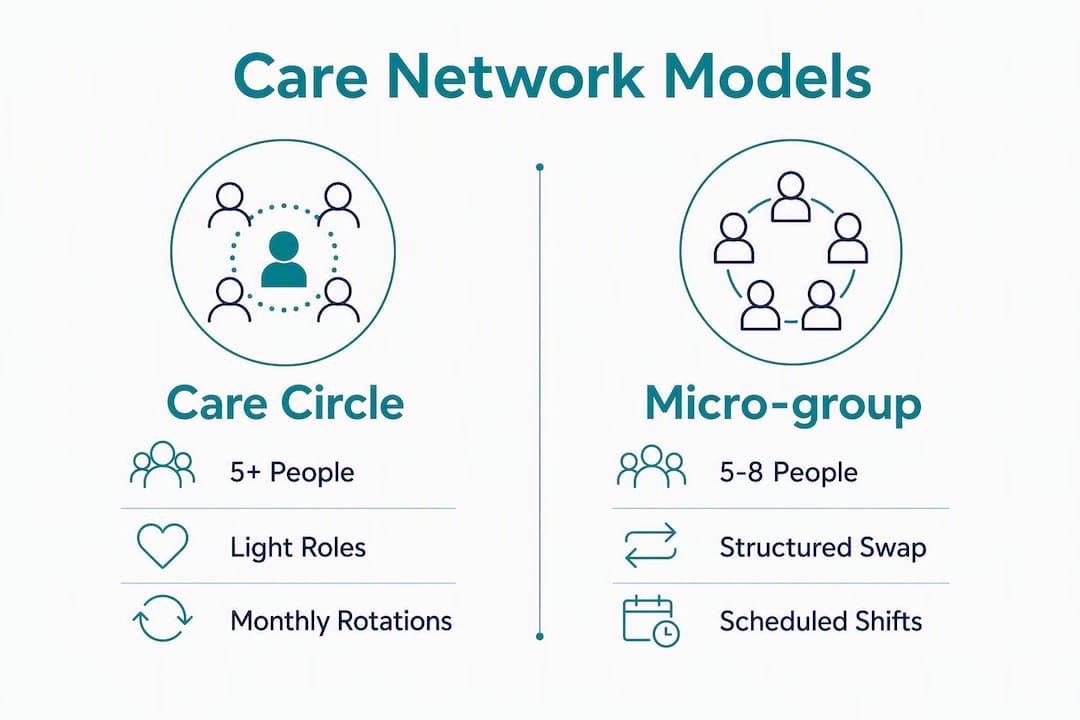
Three practical models work well for most friendship-based support systems. Each suits a different situation.
| Model | Ideal group size | Commitment level | Best tasks | Scheduling cadence |
|---|---|---|---|---|
| Care Circle | 5 or more people | Low per person | Check-ins, rides, meals, errands | Ongoing, task-by-task |
| Micro-group / Respite Swap | 5–8 people | Low-medium | Rotating scheduled tasks, respite coverage | Weekly or biweekly rotation |
| Buddy System | 2–3 people | Medium | Daily or near-daily contact, emergency backup | Daily or every other day |
Care Circle works best when you have a wider network of willing people who each want a light, defined role. It is the most flexible model and the easiest to start. Tasks are assigned individually, and coordination happens through a shared calendar or group chat.
Micro-group / Respite Swap suits people who want a tighter, more structured arrangement. Groups of 5–8 people rotating small recurring tasks are one of the most sustainable structures for this kind of care. Members swap tasks when someone is unavailable, which builds in redundancy without adding burden.
Buddy System is the right fit when you need frequent, reliable contact with one or two trusted people. It is the most intimate model and works well as a layer inside a larger care circle.
Sample micro-group rota (4 people, one month):
- Week 1: Person A calls Monday; Person B handles grocery run Friday.
- Week 2: Person C calls Monday; Person D handles grocery run Friday.
- Week 3: Rotate. Person B calls Monday; Person A handles grocery run Friday.
- Week 4: Group check-in call, 20 minutes. Review and adjust.
Pro Tip: You do not have to choose just one model. Many people use a care circle for broad coverage and a buddy system for daily contact. Layer them based on what you actually need, not what sounds most organized.
What tools help you coordinate without burning out on admin?
Coordination does not need to be complicated. The goal is one system that everyone can use without a learning curve.
Simple tool options by category:
- Group text (iMessage, WhatsApp, or standard SMS): Best for quick updates, schedule changes, and casual check-ins. Set up one group thread for the whole network.
- Shared calendar (Google Calendar or Apple Calendar): Assign each recurring task as a repeating event. Invite all members so everyone sees the schedule.
- Sign-up apps (SignUpGenius or a simple Google Sheet): Useful for one-off tasks like meal delivery or appointment rides. Members claim slots without needing to coordinate by text.
- Printed rota: For members who prefer paper, a one-page monthly schedule works just as well. Email or mail it at the start of each month.
For technology tools that support independence, Agingsolo has a dedicated resource page worth bookmarking.
Privacy pointers:
- Keep personal medical details out of group chats. Use private one-on-one messages for anything sensitive.
- Prefer calendar invites and private groups over public social media posts.
- Decide together what information the group shares and what stays between you and one trusted contact.
One-session setup checklist:
- Create a group chat and add all confirmed members.
- Set up a shared calendar with recurring task events.
- Share a one-page rota by email or print.
- Create a short emergency contact list: who to call first, second, and third if something goes wrong.
- Confirm that every member has each other's phone numbers saved.
How do you keep friendships healthy inside a care network?
The biggest risk in any friendship-based system is that one person ends up carrying too much while others drift. Catching that early is easier than repairing a strained friendship later.
Language for setting limits gracefully:
- "I can do the grocery run this month, but I'll need to pass in November. Can we find a backup?"
- "I'm glad to be your check-in caller, but I'm not the right person for medical decisions. Let's make sure someone else has that role."
- "I want to stay in this group, but I need to reduce my commitment for the next few weeks. Here's what I can still do."
Reciprocity does not have to be identical. Maintaining a balanced relationship where friends both contribute and receive prevents the burden narrative from taking hold. Someone who cannot drive can still make calls, send cards, or offer emotional support. The exchange does not have to be task-for-task.
Warning signs of caregiver fatigue to watch for:
- A member starts missing their scheduled tasks without explanation.
- Someone's tone shifts from warm to flat or short in group communications.
- A person mentions feeling tired, stressed, or overwhelmed more than once.
- Tasks start piling up on one or two people while others go quiet.
What to do when someone seems overwhelmed:
- Reach out privately, not in the group chat.
- Ask directly: "Are you doing okay with your role? I want to make sure this is still working for you."
- Offer a temporary swap or a month off without making it a big deal.
- Review the rota at your next group check-in and redistribute if needed.
Pro Tip: Schedule a formal network review every six to eight weeks. Put it on the shared calendar now. A brief 20-minute check-in where everyone says what is working and what is not prevents small frustrations from becoming real problems.
When should you bring in professionals?
A friendship network is not a substitute for professional care when the situation calls for it. Knowing the line in advance protects both you and your friends.
Red flags that require professional involvement:
- A sudden change in physical or cognitive condition (confusion, falls, significant weight loss)
- Safety hazards in the home that friends cannot safely address
- Suspected financial exploitation or elder abuse
- Network members consistently unable to meet a need, even with the best intentions
- A medical situation requiring clinical judgment or licensed care
Escalation template for your network:
- Who contacts whom: Designate one network member as the primary contact for emergencies. That person calls 911, a doctor, or adult protective services as appropriate.
- What to document: Keep a one-page summary of your medications, conditions, insurance, and emergency contacts. Store it somewhere your primary contact can access quickly.
- How the network shares tasks during escalation: Assign a temporary coordinator to handle communication while the primary contact manages the emergency.
U.S. resources to have on hand:
- Adult Protective Services (APS): Find your state's APS through the Eldercare Locator at 1-800-677-1116.
- Friendship Line (Institute on Aging): 1-800-971-0016, available 24 hours a day for emotional support.
- Local home care agencies: Search through your state's Area Agency on Aging.
- Telehealth options: Many primary care providers now offer same-day video visits for non-emergency concerns.
When a rapid transition to a higher level of care becomes necessary, having a plan already in place makes an enormous difference. Resources like emergency assisted living planning can help you think through those scenarios before they arise.
Pro Tip: Keep a printed one-page emergency document in a visible location, such as on the refrigerator. First responders are trained to look there. Include your name, date of birth, primary diagnosis if relevant, medications, allergies, and the name and number of your primary network contact.
For a full emergency planning guide built specifically for solo agers, Agingsolo has a dedicated resource.
Ready-to-use templates and a sample rota
These templates are designed to be copied, adjusted, and used today. They draw from the Agingsolo support circle resources.
Mapping worksheet fields:
| Field | Example entry |
|---|---|
| Name | Sandra (neighbor, two doors down) |
| Proximity | 5-minute walk |
| Contact frequency | Weekly wave, occasional text |
| Likely task | Grocery pickup, check-in call |
| Availability | Weekday mornings |
| Trust level (1–5) | 4 |
| Priority to invite | Yes |
Full invitation scripts are in the "How do you invite people" section above. Use the casual ask for close friends, the values-based ask for acquaintances, and the structured invite when forming a micro-group.
Sample confirmation message:
Sample 4-person, one-month rota:
| Week | Person A | Person B | Person C | Person D |
|---|---|---|---|---|
| Week 1 | Monday check-in call | Friday grocery run | On-call backup | Appointment ride (if needed) |
| Week 2 | On-call backup | Monday check-in call | Friday grocery run | Appointment ride (if needed) |
| Week 3 | Friday grocery run | On-call backup | Monday check-in call | Appointment ride (if needed) |
| Week 4 | Group review call (all four) | Group review call | Group review call | Group review call |
Sample 60-minute meet-up agenda:
- 0:00–0:10: Introductions and why we are here
- 0:10–0:25: Review the rota and confirm each person's role
- 0:25–0:40: Set communication norms (which channel, how often, who sends updates)
- 0:40–0:55: Questions, concerns, and adjustments
- 0:55–1:00: Confirm next check-in date
Agingsolo's free worksheets and the paid 45-minute clarity session can extend these templates with personalized planning, legal considerations, and safety checklists specific to your situation.
Key Takeaways
A friendship-based care network works best when five or more people each hold one small, specific role, coordinated through a simple rota and reviewed every six to eight weeks.
| Point | Details |
|---|---|
| Start with mapping | List at least eight people, score on proximity and trust, then invite your top five. |
| Assign specific tasks | Vague offers rarely convert; one named task per person creates follow-through. |
| Use a simple rota | A one-page monthly schedule prevents confusion and distributes load evenly. |
| Review every six to eight weeks | Scheduled check-ins catch burnout early and keep the network fair. |
| Agingsolo resources | Free worksheets and a 45-minute clarity session help you build and sustain your support circle. |
Why the friendship-first approach is the one that actually holds
Most advice about aging solo focuses on what to buy or which service to hire. That framing misses something. The people who age with the most dignity and the least crisis are usually the ones who built real relationships before they needed them, not after.
Friendship-based care works because it is built on existing trust. A neighbor who already knows you will notice when something is off. A friend who has been your check-in caller for six months will hear the difference in your voice. No app or service replicates that.
What I see consistently in solo ager planning is that the barrier is rarely willingness. Friends want to help. The barrier is specificity. People do not know what to offer, so they offer nothing. The mapping exercise and the invitation scripts in this article exist to close that gap. They turn goodwill into a schedule.
The equality framing matters more than most people realize. When you ask a friend for help in a way that acknowledges what they bring and what you bring in return, you are not creating a dependency. You are deepening a friendship. That reframe changes everything about how the ask lands and how long the arrangement lasts.
One more thing worth saying plainly: this is not a system you build once and forget. It needs a review every couple of months, a willingness to rotate roles when someone's life changes, and the honesty to say when something is not working. That ongoing attention is what separates a real safety net from a list of names on a piece of paper.
Agingsolo can help you build this from the ground up
Solo agers who want a personalized plan do not have to figure this out alone. Agingsolo offers free downloadable worksheets, a Circle of Care template, and a sample rota you can adapt immediately. These tools are built specifically for adults aging without a traditional family support system.
The paid 45-minute Solo Aging Clarity Session goes further. In one focused Zoom call, you work through your specific situation: who is in your network, what gaps exist, what legal and safety considerations apply to you, and what your next concrete steps are. It is the fastest way to move from a general plan to one that actually fits your life.
If you are ready to take the first step, start with the solo ager planning guide or go directly to the support circle templates to download the mapping worksheet and rota today.
Useful sources
These are the most authoritative resources cited in this article, along with notes on what each covers.
- Building Your Care Circle, LTCFEDS Care Navigator: Defines the care circle model and recommends the mapping exercise as the first step toward intentional support planning.
- Friendship Line, Institute on Aging: The nation's only accredited 24-hour emotional support line for older adults, receiving more than 11,000 calls per month.
- The Respite Swap: How to Build a Local Care Circle, Paid.Care: Covers micro-group mechanics, task rotation, and low-cost alternatives to paid care.
- Building Resilient Caregiver Networks Locally, Caring.News: Evidence on how local networks reduce burnout and improve care outcomes.
- Caregiving and Friendship, The Atlantic: Explores the equality framing that keeps friendship-based care sustainable and dignified.
- Social Connectedness and Health, CDC: Primary source on how social connection affects physical and mental health outcomes.
- Build Your Support Circle, Agingsolo: Free worksheets, Circle of Care templates, and the clarity session for personalized solo ager planning.
- Health and Emergency Planning, Agingsolo: Emergency planning templates and health checklists for solo agers.
- Emergency Assisted Living Planning, Divine Transitions for Seniors: Practical guidance for rapid transitions when a higher level of care is needed urgently.
For local resources, contact your state's Area Agency on Aging or search the Eldercare Locator at eldercare.acl.gov. State adult protective services listings are available through the same portal.
This article provides general information for planning purposes, not professional legal, medical, or financial advice. Confirm current programs and eligibility with the relevant agencies or a qualified professional.
FAQ
What is the first step to build a friendship-based care network?
Start with a mapping exercise: write down every person in your life, score each on proximity, trust, and availability, then invite your top five with one specific, low-effort task each.
What is the 5-3-1 rule for building friendships?
The 5-3-1 rule is a social maintenance guideline suggesting you maintain contact with roughly five acquaintances, three closer friends, and one very close confidant. For a care network, the same logic applies: a wider circle of light-touch contacts plus a smaller core of trusted, task-committed people creates both breadth and reliability.
How many people do you need in a care circle?
Practitioners recommend at least five people, each committed to one specific low-effort task, to prevent any single person from carrying too much. A micro-group of 5–8 people rotating tasks is one of the most sustainable structures.
How do you keep friends from burning out in a care network?
Assign one named task per person, set a clear time commitment of one to two hours per month, and schedule a network review every six to eight weeks to redistribute roles before fatigue sets in.
How can Agingsolo help me set up a support circle?
Agingsolo offers free mapping worksheets and Circle of Care templates at agingsolo.today/build-your-support-circle, plus a paid 45-minute Solo Aging Clarity Session for personalized planning tailored to your specific situation.