
TL;DR:
- A chosen family is a deliberately built network of non-biological relationships based on mutual commitment and shared rituals. It offers older adults a crucial support system that protects against loneliness, provides practical help, and addresses disenfranchised grief. Building such a family requires consistent effort, clear communication, legal planning, and intentional relationship cultivation over time.
A chosen family is defined as a deliberately constructed network of non-biological relationships built on mutual commitment, shared rituals, and accountability over time. For adults over 50 who are aging alone, this concept is not a consolation prize for missing biological ties. It is a legitimate, often healthier alternative. The American Psychological Association recognizes social connection as a core protective factor for mental and physical health in older adults. Agingsolo exists precisely to help solo agers build this kind of intentional support, and the research backs up why it matters so much.
What is a chosen family, and how does it work?
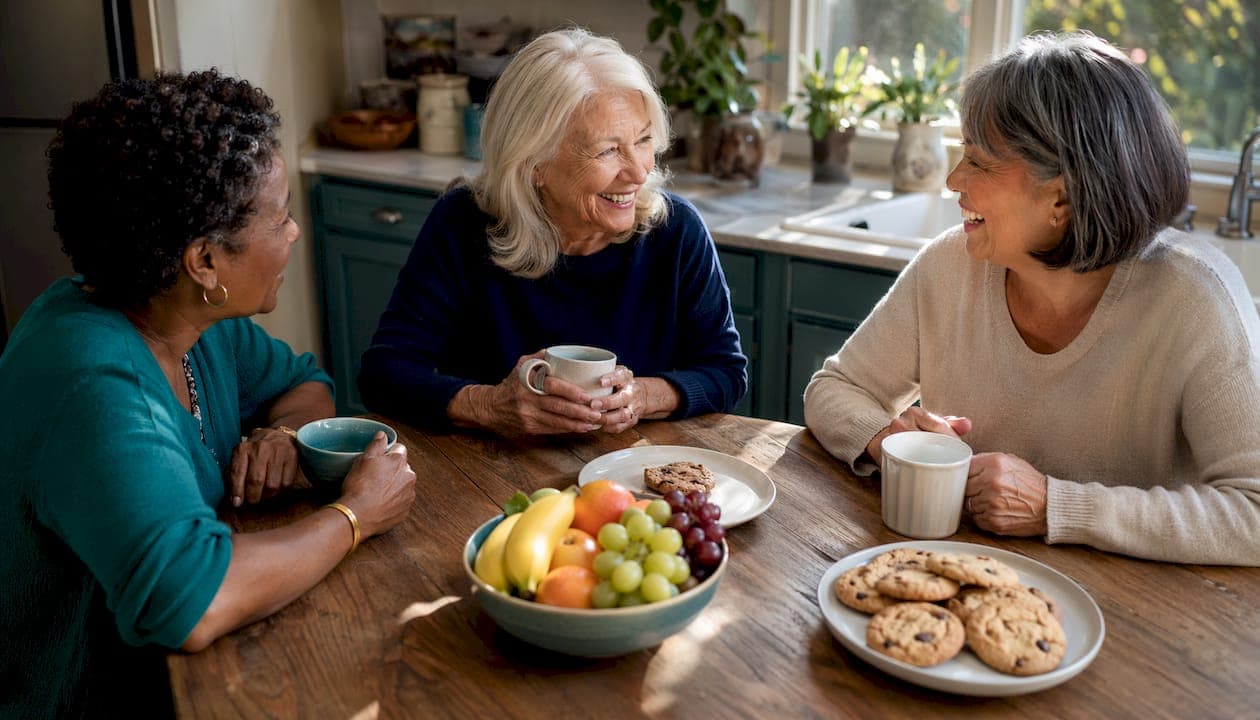
A chosen family is a deliberately constructed network of people who commit to showing up for each other the way biological families ideally would. The key word is "deliberately." These relationships do not happen by accident. They are built through repeated contact, explicit invitation, and a shared understanding of mutual responsibility.
Sociologists and psychotherapists use the term "families of choice" to describe this structure. The phrase signals something important: kinship is a social relationship, not just a biological one. You choose these people, and they choose you back. That reciprocity is what separates a chosen family from a close friend group.
What makes intentional family bonds distinct is their scope. A good friend calls when things are fine. A chosen family member shows up when things fall apart. They witness your milestones, hold your history, and stay consistent through the hard seasons. That level of presence is what creates the kinship feeling.
How chosen family differs from biological family
Biological families rely on shared history and, often, obligation. You did not choose your siblings or your parents. The bond came with the birth certificate. Chosen family relationships carry a different weight. They exist because both people actively want them to.
This distinction matters for older adults. Biological family ties can carry old wounds, unspoken expectations, and complicated dynamics. Families of choice start with a cleaner slate. The relationship is defined by what you both agree it should be, not by what it has always been.
- Mutual commitment: Both people explicitly agree to show up, not just when it is convenient.
- Shared rituals: Weekly calls, holiday dinners, and milestone celebrations create continuity that casual friendships rarely sustain.
- Crisis availability: A chosen family member is someone you can call at 2:00 AM. That is the standard.
- Witnessing over time: They know your story because they have been present for it, not just told about it.
Pro Tip: Write down three people in your life who already meet two or more of these criteria. Those are your starting points. You may already have the seeds of a chosen family without having named it yet.
Why chosen family matters so much after 50
Social isolation is a genuine health risk for older adults. The American Psychological Association identifies chronic loneliness as a factor linked to increased risk of depression, anxiety, and cognitive decline. For solo agers, those risks are not abstract. They are daily realities that a strong support network directly counters.
Chosen family relationships buffer loneliness in a way that casual social contact cannot. Attending a community event helps. But knowing that someone specific is expecting to hear from you, and will notice if they do not, creates a fundamentally different kind of safety. That accountability is the protective layer.
"Chosen families provide consistent, reciprocal support through hardship over years. That kind of sustained presence is what transforms a close friendship into something that functions as true kinship."
For solo agers specifically, a chosen family also serves a practical function. Who will drive you to a medical appointment? Who will check in after a procedure? Who knows your preferences if you cannot speak for yourself? These are not morbid questions. They are the questions that supportive relationships answer before a crisis forces the issue.
Chosen family also addresses what researchers call disenfranchised grief. When a chosen family member dies, the loss is real and deep. But society often does not recognize it the way it recognizes the death of a spouse or parent. Legal non-recognition means no bereavement leave, no formal acknowledgment, and no built-in support structure. Knowing this in advance helps you plan for it and name it clearly to others.
How to build your chosen family: practical steps for adults 50+
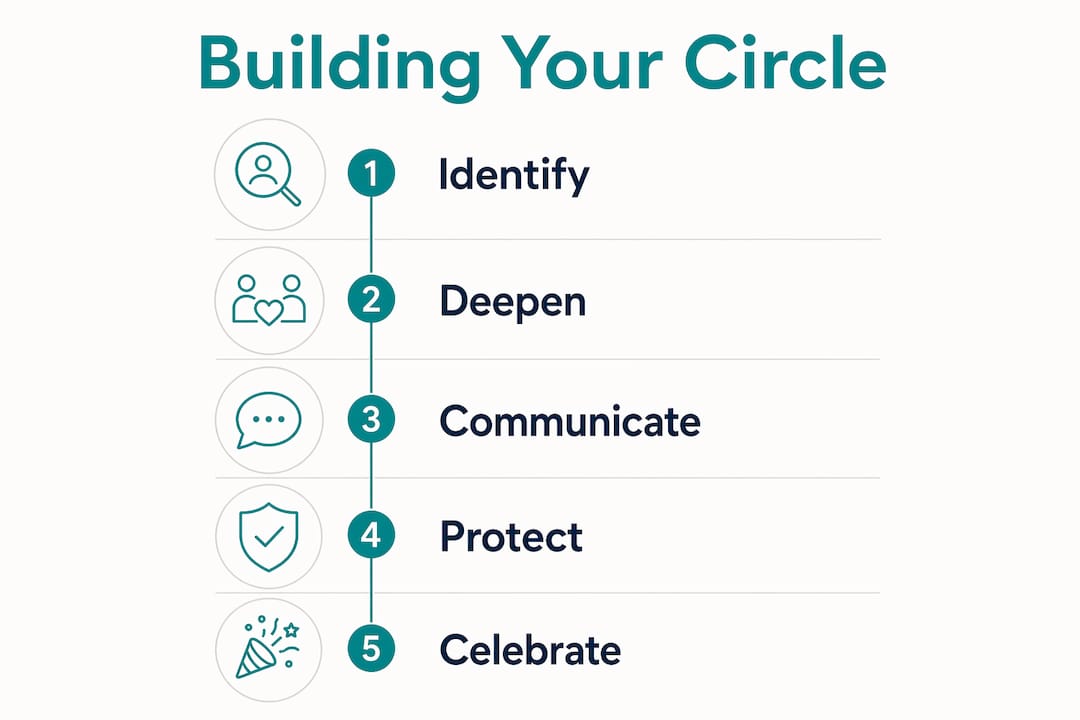
Building a chosen family is not a single event. It is a slow, consistent process of showing up repeatedly until the relationship has enough weight to hold real stakes. Here is how to start.
-
Identify your existing connections. Look at who is already in your life. Neighbors, former colleagues, members of a faith community, or people from a hobby group. You are not starting from zero. You are looking for relationships that have warmth and could grow with more intention.
-
Engage in community spaces regularly. Interest groups, neighborhood associations, book clubs, and volunteer organizations all create the repeated contact that chosen family requires. One visit does not build a bond. Showing up every week for three months does.
-
Make explicit invitations. Do not wait for closeness to happen naturally. Invite someone to coffee. Suggest a regular walk. Ask if they want to be your emergency contact. Directness is not awkward. It is how intentional family bonds actually form.
-
Create shared rituals. A weekly phone call, a monthly dinner, a standing check-in text. Rituals like these provide the continuity that transforms a friendship into something that feels like family. They also make it easier to notice when someone goes quiet.
-
Communicate openly about what you need. Tell people what kind of support helps you most. Do you need someone to listen first, or do you want practical solutions? The "Hear, Hug, and Help" framework from Psychology Today describes this well: emotional attunement comes before problem-solving. Share that preference with the people in your circle.
-
Use technology to maintain distance connections. Video calls, group chats, and shared photo albums keep relationships alive when geography separates you. Agingsolo's guide on technology for solo agers covers simple tools that make staying connected easier without a steep learning curve.
Pro Tip: Do not try to build your entire chosen family at once. Focus on deepening one or two relationships at a time. Breadth comes after depth.
What challenges come with chosen family, and how do you handle them?
Chosen family relationships are not without friction. Knowing the common obstacles in advance makes them easier to navigate when they appear.
The biggest barrier is often internal. Societal conditioning teaches most people that only biological ties count as real family. Giving yourself permission to invest in non-biological relationships as deeply as you would in a sibling or child takes conscious effort. That permission is not given to you. You have to claim it.
- Mismatched expectations: One person may feel the relationship is closer than the other does. Clear, early conversations about what you each want from the connection prevent a lot of hurt.
- Conflict and distance: Chosen families are not immune to disagreements. The difference is that you have no shared history forcing you to work it out. You have to choose to repair, every time.
- Overlapping circles: Chosen family ecosystems often involve multiple overlapping support circles. That is healthy. It means no single person carries the full weight of your support needs. Embrace the network rather than trying to consolidate it into one or two people.
- Legal invisibility: Chosen family members have no automatic legal standing. They cannot make medical decisions or access your home in an emergency unless you document it. Naming a chosen family member as your emergency contact, healthcare proxy, or power of attorney is not just paperwork. It is how you give the relationship the legal weight it deserves. A family guide to supportive care can help you understand what documentation matters most.
- Grief without recognition: When you lose a chosen family member, the grief is real. Plan for it. Tell your other support people who this person was to you, so they can show up when the loss happens.
Key Takeaways
A chosen family built on mutual commitment, shared rituals, and explicit communication provides solo agers with the social safety net that biological family cannot always offer.
| Point | Details |
|---|---|
| Definition matters | Chosen family is defined by mutual commitment and shared rituals, not biology. |
| Health protection | Strong social bonds reduce the risk of loneliness, depression, and cognitive decline in adults 50+. |
| Build slowly | Consistent, repeated contact over time creates kinship. One-off connections do not. |
| Legal planning is necessary | Name chosen family members as emergency contacts and legal proxies to give the relationship real authority. |
| Permission is the first step | Claiming the right to invest in non-biological relationships as deeply as biological ones is the foundation. |
Why I think chosen family is the most underused resource in solo aging
I have worked with and around solo agers long enough to see a pattern. The people who age with the most dignity and the least fear are almost never the ones with the most money or the best health. They are the ones with a steady, reliable circle of people who know them.
What surprises most people is how intentional that circle had to be. It did not just happen. Someone made a decision, probably years earlier, to invest in a few specific relationships with the same seriousness they would give a financial plan. They showed up consistently. They named the relationship out loud. They did the paperwork.
The hardest part is not finding people. Most adults over 50 already know someone who could be part of their chosen family. The hardest part is believing that those relationships deserve the same weight as biological ones. That belief does not come automatically. You have to practice it.
My honest observation is this: chosen family is not a backup plan. For many solo agers, it is the primary plan. And when it is built with care and intention, it holds.
— Mike
Agingsolo's resources for building your support circle
Solo aging without a plan feels uncertain. Solo aging with a strong, intentional support network feels different. Agingsolo is built for exactly this work.
The Agingsolo resource library covers everything from identifying your first chosen family members to documenting your support circle for emergencies. The Build Your Support Circle guide walks you through the practical steps of forming intentional family bonds, setting expectations, and making your network legally visible. If you are just getting started, the solo aging explained page gives you a clear picture of what building wellbeing without traditional family actually looks like. You do not have to figure this out alone.
FAQ
What is a chosen family?
A chosen family is a network of non-biological relationships built on mutual commitment, shared rituals, and consistent support over time. It functions as true kinship because both people actively choose and maintain the bond.
How is chosen family different from close friends?
Close friends provide companionship. Chosen family members commit to crisis support, witnessing milestones, and long-term accountability. The difference is depth, consistency, and explicit mutual commitment.
Why is chosen family especially important for solo agers?
Solo agers lack a built-in support system from a spouse or nearby adult children. A chosen family fills that gap by providing emotional support, practical help, and a network of people who can act on your behalf in an emergency.
How do I legally protect my chosen family relationships?
Name chosen family members as your emergency contact, healthcare proxy, and power of attorney. Legal documentation bridges the gap between social intimacy and legal authority for non-biological relationships.
How long does it take to build a chosen family?
Chosen family relationships develop through consistency rather than intensity. Meaningful bonds typically form over months or years of repeated contact, shared experiences, and mutual support.