

TL;DR:
- Senior safety risks include falls, medication errors, and home hazards that can be minimized through simple, low-cost measures. Regularly removing trip hazards, reviewing medications, testing detectors, and planning escape routes significantly improve safety for independent seniors. Professional assessments and building a support network further reduce risks and support safe aging in place.
The most common independent senior safety risks are falls, medication errors, fire and burns, bathroom hazards, home security threats, isolation, poor nutrition and hydration, cognitive decline, emergency-response gaps, and firearm storage issues. If you're aging solo or caring for someone who is, here's where to start right now:
- Remove trip hazards today. Clear loose rugs, cords, and clutter from all walking paths.
- Organize medications and call your pharmacist. Bring every bottle, supplement, and OTC to one review.
- Test smoke and CO detectors. Plan two escape routes and put emergency numbers in large print near every phone.
That's your 15-minute safety quick-check. If you find problems you can't fix alone, the sections below tell you exactly who to call and what it will cost.
Table of Contents
- What makes falls the most dangerous risk for independent seniors?
- How do you reduce fire and burn risks at home?
- Why are medication errors a serious hazard for solo agers?
- Why is the bathroom the highest-risk room in your home?
- How do you protect yourself from scams, break-ins, and financial abuse?
- What does a room-by-room home-proofing checklist look like?
- How do you build a reliable emergency plan when you live alone?
- When should you get a professional home-safety assessment?
- How does a support network actually reduce safety risk?
- What do safety fixes actually cost, and where can you get help paying?
- Your 24-hour, 1-week, and 1-month action plan
- Key Takeaways
- Why small, steady changes protect your independence better than big overhauls
- Agingsolo's Solo Aging Clarity Session can help you prioritize what's next
- Authoritative sources and further reading
- FAQ
What makes falls the most dangerous risk for independent seniors?
Falls are the leading cause of injury-related death for adults 65 and older in the U.S. In 2021, older adult falls caused over 38,000 deaths and nearly 3 million emergency department visits. Those numbers make falls the single highest-priority hazard to address, and they're worth taking seriously.
Statistic: Falls caused a significant number of deaths and emergency room visits among older adults in the U.S. (CDC)
Falls rarely happen for just one reason. The MSD Manual describes fall risk as multifactorial: age-related changes in balance and vision, medical conditions, medication side effects, and environmental hazards all interact. A rug that was fine five years ago can become a real danger when your balance or eyesight shifts.
Your room-by-room fall-prevention checklist
- Remove all loose rugs or secure them with non-slip backing and double-sided tape.
- Fix or replace any loose carpet edges and uneven thresholds.
- Add handrails on both sides of every staircase, indoors and out.
- Install grab bars in the bathroom (tub, shower, and near the toilet).
- Use bright, even lighting in hallways, stairwells, and the kitchen.
- Keep frequently used items at waist height so you're not reaching or bending.
- Wear supportive, non-slip footwear inside the house. Socks alone are a hazard.
- Use a cane or walker if your doctor has recommended one. Keep it within reach.
For strength and balance, ask your doctor about a referral to physical therapy or a community fall-prevention program such as the CDC's STEADI initiative. Even a few weeks of targeted balance exercises can meaningfully reduce your risk.
Pro Tip: The most common time for a nighttime fall is the trip from bed to bathroom. Put a night light in the outlet closest to your bed and another in the bathroom before you go to sleep tonight. It takes two minutes and costs under $10.
How do you reduce fire and burn risks at home?
Smoke detectors, unattended cooking, space heaters, and improperly stored flammables are the highest fire risks for older adults living alone. Fires are a top cause of death among seniors, and most home fires are preventable with a few steady habits.
Fire and burn safety checklist
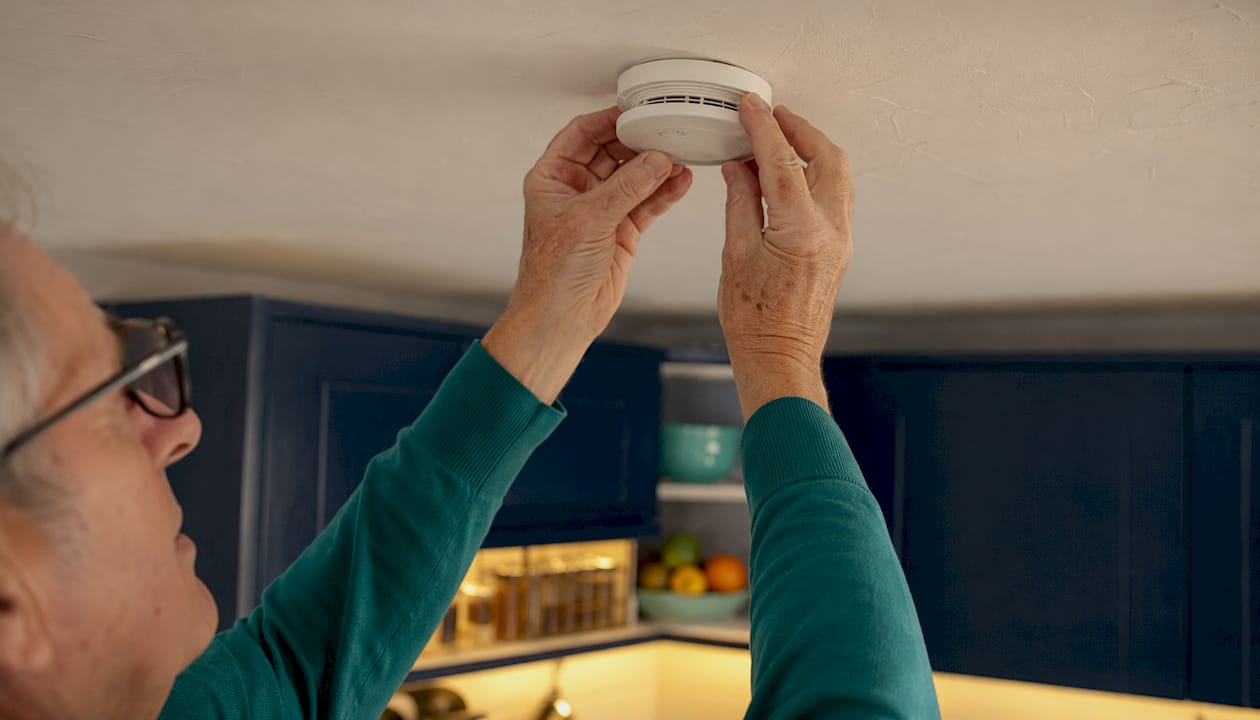
- Test smoke detectors monthly and replace batteries at least once a year. Install one in every bedroom, outside every sleeping area, and on every floor.
- Install a carbon monoxide detector outside each sleeping area.
- Never leave food cooking on the stovetop unattended. Unattended cooking is the leading cause of home fires.
- Keep space heaters at least three feet from anything flammable. Turn them off before you sleep.
- Set your water heater to no higher than 120°F to prevent scalding burns.
- Store flammables (cleaning products, lighter fluid) away from heat sources.
- Keep a fire extinguisher in the kitchen and know how to use it.
- Avoid overloaded extension cords. One appliance per outlet is the safest rule.
Your escape plan matters just as much as your detectors. Identify two exits from every room you use regularly, keep pathways clear, and practice your route at least twice a year. If you use a walker or have limited mobility, think through the route in detail and share it with a neighbor or contact who can help.
Pro Tip: The most common detector mistake is placing a smoke alarm too close to the kitchen, which leads to nuisance alarms and then disabled detectors. Keep kitchen detectors at least 10 feet from the stove, and use a heat alarm (not smoke) directly above the cooking area.
Why are medication errors a serious hazard for solo agers?
Medication complexity is a major but often invisible risk. Many older adults manage more than a dozen prescriptions alongside OTCs and supplements, and even "natural" products can interact with prescription medications in ways that increase dizziness, drowsiness, and fall risk. When you're living alone, a medication-related fall or confusion episode can go unnoticed for hours.
Steps to get your medications under control
- Gather every bottle, blister pack, supplement, and herbal remedy in your home.
- Bring the full collection to your pharmacist or prescribing doctor for a medication reconciliation review.
- Ask specifically about any drug that causes drowsiness, dizziness, or low blood pressure when you stand up.
- Request large-print labels if standard labels are hard to read.
- Use a weekly pill organizer or blister pack system to track daily doses.
- Create a written medication list (drug name, dose, time, prescriber) and keep a copy near your phone.
Psychoactive medications, sedatives, blood pressure drugs, and some antihistamines are among the classes most associated with fall risk. Your pharmacist can flag these and suggest safer alternatives in some cases. Never stop or adjust a medication on your own, but do ask the questions.
Pro Tip: Set a monthly calendar reminder to do a quick medication check: confirm nothing has expired, verify you have enough supply for 30 days, and note any new side effects to report at your next appointment.
Why is the bathroom the highest-risk room in your home?
Bathrooms combine wet surfaces, hard edges, and awkward movements in a small space. Approximately half of all falls that lead to hospitalization among older adults occur at home, and the bathroom and stairs are the most hazardous spots. The good news: most bathroom risks respond to low-cost, low-effort fixes.
Bathroom safety: what to install and where
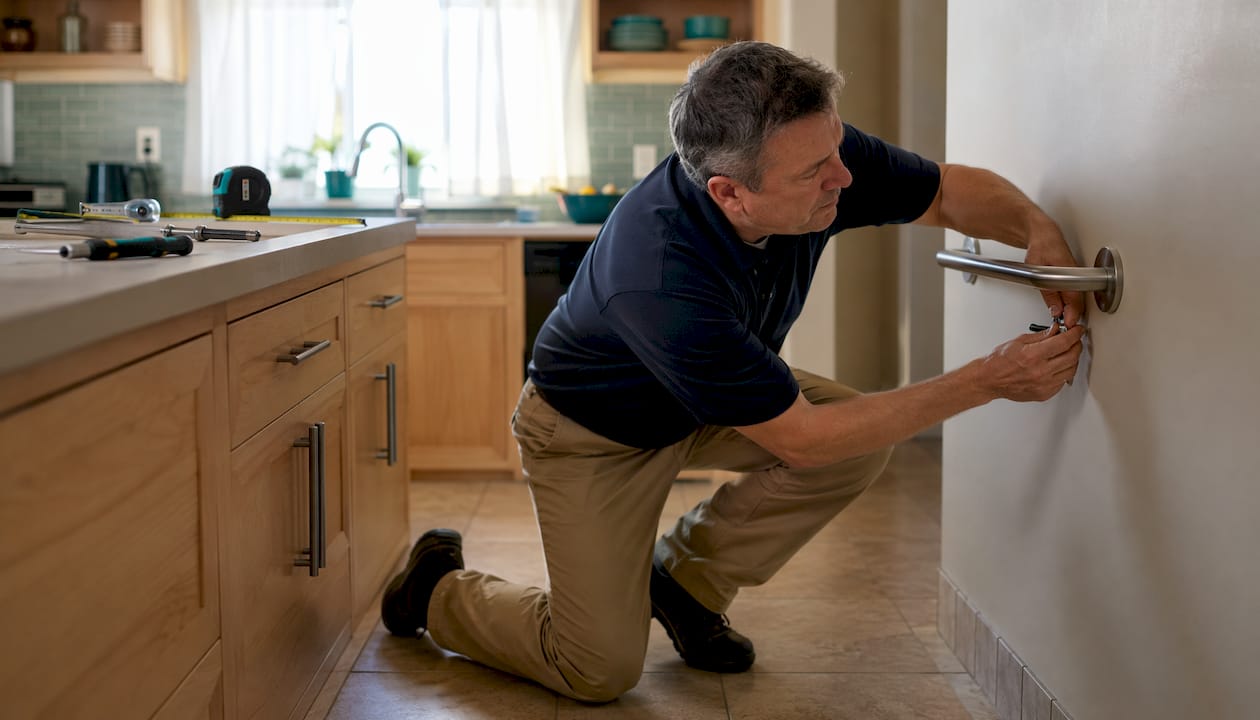
- Mount grab bars on the wall next to the tub or shower entry and along the inside wall. Use bars rated for at least 250 lbs and anchor them into studs.
- Add a second grab bar beside the toilet for sitting and standing.
- Place a non-slip rubber mat inside the tub or shower, and a non-slip rug (with rubber backing) on the floor outside.
- Install self-stick non-slip strips on the tub floor if a mat shifts.
- Add a shower seat or fold-down bench so you can bathe seated when needed.
- Raise toilet height with a toilet safety frame or raised seat if getting up and down is difficult.
- Install a night light near the bathroom door and inside the bathroom.
For grab bars, wall-mounted straight bars work well for tub entry and toilet support. Angled bars offer better leverage for stepping over a tub edge. Fold-down shower seats are a good choice when space is tight. If you're renting or prefer not to drill, tension-mounted options exist, though they're less secure than stud-anchored bars.
"The bathroom is where we see the most preventable injuries. A grab bar installed correctly takes about an hour and costs under $50 in materials. The cost of not having one can be a broken hip and months of recovery." — Cedars-Sinai nursing staff, as reported in What Nurses See
When you're unsure about placement or your walls need special anchoring, an occupational therapist (OT) can assess the space and give you a precise installation plan. Many local Area Agencies on Aging can connect you with a contractor who does this work at reduced cost.
Pro Tip: Check your grab bars every few months by gripping and pulling firmly. A bar that shifts even slightly needs to be re-anchored before it fails under real weight.
How do you protect yourself from scams, break-ins, and financial abuse?
Older adults living alone face higher exposure to targeted scams and opportunistic crime. A few steady habits with your locks, your phone, and your bank account reduce that exposure significantly.
Home security and scam prevention checklist
- Use deadbolt locks on all exterior doors and secure sliding doors with a bar or pin.
- Install a peephole or video doorbell so you can screen visitors without opening the door.
- Never let an unscheduled repair person inside without verifying their identity and calling the company directly.
- Set up banking alerts for transactions over a threshold you choose (even $50 can catch early fraud).
- Ask your bank about a trusted-contact option, which allows a named person to be notified if unusual activity is flagged.
- Review your billing statements and credit card charges weekly, not monthly.
- Rotate passwords on financial accounts every few months and avoid reusing them.
Scammers targeting older adults often use urgency: "You must act now or lose your benefits." That pressure is always a red flag. Legitimate organizations give you time to verify. A short script that works: "I don't make decisions by phone. Send me something in writing and I'll review it." Then hang up.
For a practical financial safety checklist built specifically for solo agers, Agingsolo has a free downloadable guide that covers banking safeguards, trusted-contact setup, and what to do if you suspect exploitation.
Pro Tip: Register your number with the National Do Not Call Registry (donotcall.gov) and report suspicious calls to the FTC at reportfraud.ftc.gov. Neither stops all scam calls, but both reduce volume and create a paper trail.
What does a room-by-room home-proofing checklist look like?
The fixes that give you the biggest safety return on the least time and money are: removing loose rugs, improving lighting, securing handrails, and adding non-slip surfaces. Start there, then work through the rest.
Quick home walk-through checklist
- Entryway: Clear the path from door to main living area. Secure any threshold over ½ inch high.
- Living room: Remove or secure all area rugs. Route lamp and phone cords along walls, not across floors.
- Kitchen: Keep frequently used items at waist height. Use a stable step stool with a handrail for anything higher.
- Bedroom: Place a lamp within reach of the bed. Install a night light between the bed and bathroom.
- Bathroom: Non-slip mat in tub, grab bars installed, night light on.
- Stairs: Handrails on both sides, secure carpeting, light switches at top and bottom.
- Outdoor: Clear walkways, repair uneven pavement, add motion-sensor lighting at entry points.
The NIA's room-by-room guide recommends handrails, secure carpeting, non-slip bath mats, good lighting, and grab bars as the core interventions. These are also the most cost-effective.
Typical cost and time estimates for common fixes
| Fix | DIY Cost (estimate) | Contractor Cost (estimate) | Typical Install Time |
|---|---|---|---|
| Night lights (plug-in) | $5–$15 each | N/A | 2 minutes |
| Non-slip bath strips | $10–$20 | N/A | 15 minutes |
| Non-slip rug backing | $10 | N/A | 5 minutes |
| Grab bar (DIY, stud-anchored) | $25 | N/A | 1–2 hours |
| Grab bar (contractor-installed) | $25 (materials) | $200 labor | Same day–1 week |
| Shower seat (fold-down) | $40–$120 | $50 installed | 1–3 hours |
| Handrail addition (stairs) | $30 (materials) | $150 installed | 1–3 days |
| Basic exterior ramp | $200–$500 (materials) | $500–$2,000+ | 1–4 weeks |
| Medical alert subscription | $20–$50/month | N/A | Same day (setup) |
All figures are estimates. Get 2–3 local quotes for contractor work.
For funding help, contact your local Area Agency on Aging (eldercare.acl.gov) or ask about programs through the National Institute on Aging. Many counties offer minor home-modification grants or low-cost labor programs for older adults.
How do you build a reliable emergency plan when you live alone?
The three highest-impact preparedness steps are an easy-to-reach phone, a tested alert system, and a daily check-in plan with a named contact. All three together create a safety net that actually holds.
Setting up your emergency communication system
- Keep a charged phone within reach at all times, including the bathroom and bedroom.
- Post emergency numbers (911, your doctor, a neighbor, your primary contact) in large print near every phone.
- Create a written list of your medications, conditions, and allergies to keep near the front door for first responders.
- Choose a daily check-in contact and agree on a specific time and method (text, call, or email).
- Designate a backup contact in case your primary is unavailable.
- Test your full system monthly: call your contact, confirm they received it, and note the date.
For devices, the main categories are: wearable medical-alert buttons (worn around the neck or wrist, with a monitored call center), smartwatches with built-in fall detection, and smart-home voice assistants that can call for help on command. Wearables with 24/7 monitoring tend to be the most reliable for solo agers because they don't require the user to initiate the call. The trade-off is a monthly subscription fee, typically in the $20–$50 range. Voice assistants are lower cost but require the person to be conscious and able to speak.
The NIA notes that medical-alert devices, smartwatches with fall detection, and tested daily check-in routines provide redundancy and speed up help after a fall. Owning a device is only useful if it's configured, tested, and part of a clear response plan. Many plans fail simply because no one has confirmed who responds when an alarm triggers.
For a full emergency planning template designed for adults living alone, Agingsolo has a free practical guide with check-in schedules and contact sheets.
Pro Tip: Do a live test of your alert device or check-in plan at least once a month. Log the date and who responded. If a test fails, fix the gap before a real emergency reveals it.
When should you get a professional home-safety assessment?
Get a professional assessment when you've had a fall, when your mobility, vision, or cognitive function has changed, or when DIY fixes haven't reduced the hazards you can see. An occupational therapist or advanced practice nurse will catch things a self-guided checklist misses.
In-home nursing visits have uncovered fall hazards, medication mix-ups, and early signs of serious health events that were invisible during clinic visits. In one pilot, nurses set nearly 100 personalized health goals with older adults and identified risks including dehydration, fall hazards, and medication complications before they caused worse outcomes.
What an OT or in-home nurse will assess
- Mobility and gait: how you move through your home, including getting up from chairs and navigating stairs.
- Activities of daily living (ADLs): bathing, dressing, cooking, and medication handling.
- Footwear and assistive devices: whether what you're using fits your current needs.
- Cognitive function: memory, decision-making, and whether cognitive changes are creating new hazards.
- Environmental interactions: how your specific home layout interacts with your specific health profile.
How to prepare for the visit
- Gather your full medication list (prescriptions, OTCs, supplements).
- Wear the shoes you normally use at home.
- Write down any falls or near-falls from the past 12 months, including where and what you were doing.
- Note any new symptoms: dizziness, vision changes, or confusion.
- Have a list of questions ready, including what modifications to prioritize and what funding may be available.
Many older adults don't report falls to their doctors out of embarrassment or fear of losing independence. The MSD Manual specifically notes that clinicians should ask directly about recent falls because many patients won't volunteer the information. An OT visit is a safe space to be honest.
| Trigger | Who to Call |
|---|---|
| Recent fall or near-fall | Occupational therapist or primary care physician |
| New mobility or vision change | OT or physical therapist |
| Cognitive changes noticed | Primary care physician first, then OT |
| DIY fixes feel unsafe or unclear | OT or certified aging-in-place specialist (CAPS) |
| Caregiver concern about hazards | OT or in-home nurse through Area Agency on Aging |
Pro Tip: Use the OT visit to set two or three measurable goals with a deadline, such as "install grab bars in the bathroom within two weeks." Written goals from an OT also help you access funding programs and get faster contractor quotes.
How does a support network actually reduce safety risk?
A dependable support network and predictable daily routines meaningfully reduce both the likelihood and the severity of safety incidents. This isn't just about companionship. It's about having someone who notices when something is wrong.
Building your support circle
- Name one primary contact who checks in with you daily or every other day.
- Name a backup contact for when your primary is unavailable.
- Make a neighbor agreement: you check on each other if you don't see the usual signs of activity.
- Join a community program or senior center that provides regular, scheduled contact.
- Use meal delivery services (like Meals on Wheels) as a built-in daily check-in, not just a food source.
Routines work as safety tools because they create a baseline. When something changes, the people around you notice faster. Tie medication times to meals. Set a weekly grocery check-in call. Use calendar reminders for monthly tasks like testing detectors or reviewing medications.
Agingsolo's support circle guide walks you through how to recruit contacts, what to ask them, and how to share just enough health information without oversharing. For ideas on community programs that provide regular contact, the community groups resource is a practical starting point.
Formalizing your network
- Write down each contact's name, phone number, and role (primary, backup, neighbor).
- Share your emergency information sheet with each person.
- Agree on what "no response" means and what they should do (call again, come by, call 911).
- Review and update the list every six months.
Pro Tip: When recruiting a friend or neighbor as a check-in contact, keep it simple and mutual. A short written note confirming what you've agreed to (who calls whom, at what time, and what to do if there's no answer) removes ambiguity and makes the arrangement more likely to hold.
What do safety fixes actually cost, and where can you get help paying?
Most home safety fixes fall into three cost bands: under $50 for DIY items you can install yourself, $50–$500 for mid-range retrofits that may need a handyperson, and over $500 for contractor-level work like ramps or major bathroom remodels.
Cost and timeline reference
| Fix | Estimated Cost | Typical Timeline |
|---|---|---|
| Night lights | $5–$15 each | Same day |
| Non-slip strips (tub/floor) | $10–$20 | Same day |
| Grab bar (DIY) | $25 | 1–2 hours |
| Shower seat | $40–$120 | 1–3 hours |
| Grab bar (contractor) | $100–$260 total | Same day–1 week |
| Handrail (contractor) | $150 | 1–3 days |
| Medical alert (monthly) | $20–$50/month | Same day (setup) |
| Basic exterior ramp | $500–$2,000+ | 1–4 weeks |
Figures are estimates. Costs vary by region and contractor.
For funding, your first call should be to your local Area Agency on Aging (eldercare.acl.gov). Many offer free or subsidized minor home-modification programs. Veterans may qualify for home-modification grants through the VA. Some state Medicaid waiver programs cover grab bars and ramps. Local non-profits and faith communities sometimes provide volunteer labor for small installs.
Pro Tip: Always get 2–3 quotes for any contractor job over $200. Bring your OT's written recommendations to each contractor. It speeds up the quote process and signals that you know exactly what you need.
Your 24-hour, 1-week, and 1-month action plan
The single best immediate action is a 15-minute home walk-through focused on three things: lighting, trip hazards, and medications. Start there.
Do today (24 hours)
- Walk through your home and remove any loose rugs, cords, or clutter from walking paths.
- Test every smoke and CO detector. Replace any that don't respond.
- Write emergency numbers in large print and post them near every phone.
- Gather all medications, supplements, and OTCs in one place for review.
- Plug in a night light between your bed and bathroom.
Do this week
- Call your pharmacist and schedule a medication reconciliation review.
- Install non-slip strips in the tub or shower if you don't have them.
- Set up a daily check-in with one named contact and confirm they know what to do if you don't respond.
- Add a night light in every dark hallway.
- Secure or remove any remaining loose rugs.
Do this month
- Schedule an OT or home-safety assessment if you've had a fall, a near-fall, or a new health change.
- Get 2–3 contractor quotes for grab bars or handrails if you can't install them yourself.
- Enroll in a falls-prevention class or physical therapy program if your doctor recommends it.
- Contact your local Area Agency on Aging about funding for home modifications.
- Review and update your emergency contact list.
Key Takeaways
Addressing the most common independent senior safety risks starts with three actions: remove trip hazards and improve lighting, consolidate and review all medications with a pharmacist, and test your smoke and CO detectors while planning two escape routes.
| Point | Details |
|---|---|
| Falls are the top risk | Falls caused a significant number of deaths and emergency room visits among older adults in the U.S. |
| Medication review is urgent | Bring every prescription, OTC, and supplement to one pharmacist review to catch dangerous interactions. |
| Bathroom fixes are high-impact | Grab bars, non-slip mats, and a shower seat address the single highest-risk room in most homes. |
| Emergency plans need testing | A medical-alert device or check-in plan only works if it's tested monthly and everyone knows their role. |
| Agingsolo supports your next step | Free checklists, planning guides, and a 45-minute Solo Aging Clarity Session help you prioritize and act. |
Why small, steady changes protect your independence better than big overhauls
Most safety advice for older adults focuses on dramatic interventions: full bathroom remodels, expensive monitoring systems, moving to a different home. That framing misses something important. The fixes that prevent the most injuries are almost always small, inexpensive, and doable in an afternoon.
A grab bar costs $40 and takes two hours to install. It can prevent a fall that leads to a hip fracture, a hospital stay, and months of recovery. A night light costs $8. A weekly check-in call costs nothing. The gap between "safe enough" and "at serious risk" is often just a handful of these small decisions, made or unmade.
What solo agers often underestimate is how gradually risk accumulates. A medication that was fine two years ago may now interact with a new prescription. A rug that was never a problem becomes one when balance shifts. The environment doesn't change, but the person does. That's why reassessment matters as much as the initial fix. A home that was safe at 65 needs a fresh look at 72.
The other thing worth saying plainly: asking for help is not a sign that independence is slipping. Getting an OT assessment, setting up a check-in system, or booking a clarity session to think through your plan is exactly what independent, proactive aging looks like. It's the people who wait until something goes wrong who lose options.
Agingsolo's Solo Aging Clarity Session can help you prioritize what's next
Knowing the risks is one thing. Knowing which ones apply to your specific home, health, and situation is another. That's where personalized guidance makes a real difference.
Agingsolo's 45-minute Solo Aging Clarity Session is a one-on-one Zoom consultation designed for exactly this. You bring your situation, your questions, and your concerns. The session covers a safety triage of your highest-priority risks, a prioritized action plan with realistic next steps, and a curated resource list matched to your needs. It's not a generic checklist. It's a focused conversation that helps you figure out what to do first and what can wait.
Free resources are also available: safety checklists, emergency-planning templates, and guides on building your support circle. If you're not ready to book a session, start with the aging in place guide for a full planning roadmap, or explore the solo ager's safety and independence guide for a deeper dive into living well alone.
To book a Clarity Session or download free tools, visit agingsolo.today.
Authoritative sources and further reading
The claims in this article draw from the following vetted sources. Each is worth bookmarking for ongoing reference.
- CDC: About Older Adult Fall Prevention — U.S. fall statistics, including the 38,000 deaths and 3 million ER visits figure for 2021.
- NIA: Preventing Falls at Home, Room by Room — Practical room-by-room checklist and guidance on emergency-response systems.
- MSD Manual: Falls in Older Adults — Clinical context on multifactorial fall risk and the importance of reporting falls to clinicians.
- Cedars-Sinai: What Nurses See — Hidden Home Hazards for Older Adults — In-home nursing visit findings, medication complexity, and the value of tailored assessments.
- HealthinAging: Home Safety Tips for Older Adults — Practical tips covering burns, poisoning, and home security.
- CPSC: Older Adult Safety — Consumer product safety guidance including fire, falls, and electrical hazards.
- Agingsolo: Build Your Support Circle — Step-by-step guide for creating a reliable check-in network.
- Agingsolo: Living Alone Emergency Planning — Templates and schedules for emergency plans and daily check-ins.
For high-risk situations, including recent falls, new cognitive changes, or medication concerns, consult your primary care physician or a licensed occupational therapist. This article is general information, not medical or professional advice. Confirm current guidelines and your personal situation with a qualified clinician.
FAQ
What are the most common safety risks for seniors living alone?
The leading risks are falls, medication errors, fire and burns, bathroom hazards, home security threats, isolation, poor nutrition, and cognitive decline. Falls cause the most injury-related deaths and ER visits among adults 65 and older in the U.S.
How much does it cost to make a home safer for an older adult?
Most high-impact fixes cost under $50 and can be done in an afternoon, including night lights, non-slip strips, and grab bars installed DIY. Contractor-installed grab bars typically run $100–$260 total; larger modifications like ramps can cost $500–$2,000 or more.
When should a senior get a professional home-safety assessment?
After any fall, after a new change in mobility, vision, or cognition, or when DIY fixes feel unclear or insufficient. An occupational therapist or in-home nurse will catch hazards that a self-guided checklist often misses.
How do you set up a daily check-in system when you live alone?
Name one primary contact and one backup, agree on a specific check-in time and method, and define what "no response" means and what they should do. Test the system monthly and log the results.
Does Medicare cover home-safety modifications or OT assessments?
Medicare Part B covers occupational therapy services when ordered by a physician and deemed medically necessary. It generally does not cover the cost of home modifications themselves, but your local Area Agency on Aging (eldercare.acl.gov) can connect you with programs that may subsidize grab bars, ramps, and similar fixes.