

Loneliness among adults 50 and older is far more common than most people realize, and it rarely arrives without warning. Many adults aged 50-plus in the US report feeling lonely, with peak rates observed in the midlife age ranges around 45–49 and the 50s. The most common loneliness triggers for adults 50 plus fall into four overlapping categories:
- Major life transitions: widowhood, divorce, retirement, children leaving home
- Physical health factors: chronic illness, mobility limitations, hearing or vision loss
- Psychological factors: depression, anxiety, fear of falling, cognitive decline
- Social isolation influences: loss of social roles, activity restrictions, living alone
Understanding which triggers apply to your life is the first step toward doing something about them. Loneliness is not a character flaw or an inevitable part of getting older. It is a health signal worth taking seriously.
1. Major life transitions that trigger loneliness after 50
Life after 50 often brings a cluster of changes that arrive close together, and each one quietly reshapes your social world.
Widowhood is the strongest predictor of loneliness in 17 out of 20 countries studied, making it the single most consistent trigger across cultures. Losing a spouse removes not just a companion but an entire shared social structure: mutual friends, joint routines, and the daily rhythm of being known by someone. The quiet that follows can feel heavier than expected.

Divorce carries a similar weight. Across most countries analyzed, the risk of transitioning into loneliness after divorce is close to that of widowhood, with the loss of a primary partnership disrupting identity and daily life at the same time.
Retirement deserves its own attention. Retirement causes loss of workplace social interactions, disrupting both identity and social networks in ways that many people underestimate until they are already in it. Casual hallway conversations, shared lunches, and the sense of being needed by a team disappear overnight. Without proactive planning, that gap rarely fills itself.
Then there is the empty nest. When adult children move out or move far away, the daily texture of family life changes. Phone calls help, but they do not replace the presence of people who know your routines.
A note on timing: These transitions often stack. Retirement and widowhood can happen within years of each other, compounding the social loss. Recognizing that overlap helps explain why loneliness can feel sudden even when it has been building slowly.
- Widowhood: strongest and most universal loneliness trigger
- Divorce: nearly as disruptive as widowhood in most countries
- Retirement: loss of workplace identity and casual social contact
- Children moving out: reduced daily family presence and shared routine
- Loss of close friends: especially common after 60, as peers face illness or death
Pro Tip: Start building your post-retirement social network before you retire. Join a community group, volunteer role, or regular class at least six months before your last day of work. The connections you make before you need them are the ones that actually hold.
2. How physical health creates barriers to staying connected
Chronic illness and physical limitations are among the most underestimated causes of loneliness in older adults. They do not just affect your body. They reshape what you can do, where you can go, and how comfortable you feel around other people.
Chronic illness, mobility limitations, and sensory impairments like hearing and vision loss significantly increase loneliness risk by limiting activity and social participation. Conditions like cardiovascular disease, chronic obstructive pulmonary disease, and chronic pain can reduce physical and social activity, sometimes leading to a gradual withdrawal that feels more like fatigue than a choice.
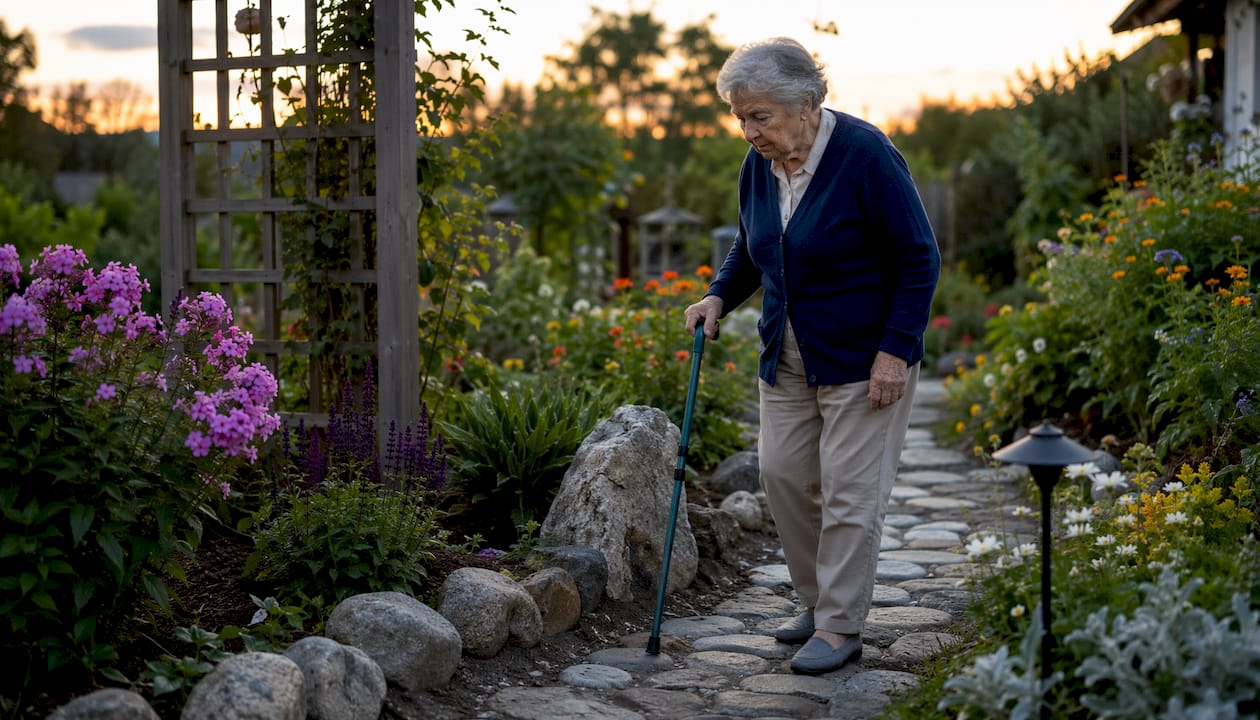
Sensory impairments are a particularly quiet trigger. Hearing loss makes conversations frustrating and exhausting. People with untreated hearing loss often pull back from group settings not because they want to be alone, but because the effort of following a conversation becomes too high. Vision loss creates similar barriers, limiting driving, reading, and the ability to recognize faces across a room.
The feedback loop here is real. Physical limitations reduce social outings. Reduced outings shrink the social circle. A smaller circle means fewer reasons to leave home. Over time, what started as a health issue becomes a social one.
Common physical health factors linked to loneliness in adults 50-plus:
- Cardiovascular disease and stroke
- Chronic pain from musculoskeletal conditions
- Chronic obstructive pulmonary disease
- Hearing loss (often untreated for years)
- Vision impairment
- Mobility limitations and difficulty with transportation
- Parkinson's disease and multiple sclerosis
If you are managing a chronic condition, maintaining your social habits alongside your medical care is not optional. It is part of the treatment.
3. Psychological and cognitive factors that deepen loneliness
Mental health and loneliness do not just coexist. They reinforce each other in a cycle that can be hard to break without outside support.
Depression, anxiety, and fear of falling contribute to loneliness by causing social withdrawal and limiting independence in adults over 50. Depression often shows up differently in older adults than in younger ones. Rather than sadness, the National Institute of Mental Health (NIMH) notes that older adults may experience emotional numbness, loss of interest in activities they once enjoyed, or a general flatness that makes reaching out feel pointless.
Anxiety, particularly around health or safety, can be just as isolating. Fear of falling is a specific and well-documented example. When you are afraid of falling in public, you stop going out. When you stop going out, you stop seeing people. The fear becomes its own kind of cage.
Cognitive decline adds another layer. Early dementia can cause social disengagement before a formal diagnosis, as people pull back from situations where they feel confused or embarrassed. Family members and friends may not recognize what is happening, which can deepen the person's sense of being misunderstood or invisible.
It is worth knowing that loneliness and social isolation are not the same thing. The National Institute on Aging (NIA) describes loneliness as subjective distress while social isolation is an objective lack of social contacts. You can feel lonely in a crowded room, and you can be socially isolated without feeling lonely. Each requires a different response.
Warning signs that psychological factors may be driving loneliness:
- Withdrawing from activities or people you used to enjoy
- Persistent low mood, numbness, or hopelessness
- Avoiding social situations due to worry or fear
- Increased use of alcohol or other substances
- Difficulty concentrating or remembering recent conversations
- Feeling like a burden to others
If you recognize several of these signs in yourself, a primary care provider is a good first call. Loneliness is not a normal part of aging, and it responds well to treatment when caught early.
4. Social isolation and demographic trends among adults 50-plus in the US
Loneliness is not evenly distributed across the 50-plus population. Certain groups carry a higher burden, and understanding those patterns helps clarify who is most at risk.
In the US, loneliness rates are higher among women, those with health issues, the unemployed, and people living alone. Women tend to outlive their partners and are more likely to spend later years without a spouse. People living alone face the daily reality of no built-in social contact, which means every connection requires deliberate effort.
By the numbers: Around 37%–40% of adults aged 50-plus in the US report feeling lonely, with rates highest at ages 45–49 (49%) and in the 50s (45%), then gradually decreasing thereafter. That peak in midlife often surprises people who assume loneliness is primarily a problem of very old age.
Rural adults face compounding challenges. Geographic distance from community resources, fewer transportation options, and smaller social networks all raise isolation risk. Urban adults are not immune, but they typically have more access to programs, transit, and community spaces.
Social isolation and loneliness overlap but are distinct. A person can be socially isolated without feeling lonely, and vice versa. This distinction matters for intervention: emotional support addresses loneliness, while logistical help (transportation, community programs) addresses isolation. Treating them as the same problem leads to mismatched solutions.
The World Health Organization estimates that around 1 in 10 older people experience loneliness globally, and 1 in 4 are socially isolated. In the US, the numbers for the 50-plus group run considerably higher, particularly in the years immediately following major life transitions.
5. Protective factors and coping strategies that actually help
Knowing the triggers is useful. Knowing what pushes back against them is where real change begins.
The most effective approaches to overcoming loneliness at 50 and beyond focus on meaningful connection rather than sheer social volume. Research consistently shows that meaningful connection involving purpose and contribution is more effective against loneliness than simply increasing social contact. Attending a weekly event you find meaningless will not move the needle. Volunteering somewhere you care about often will.
Effective strategies include:
- Volunteering: Provides purpose, routine, and regular contact with others who share your values
- Community groups: Senior centers, faith communities, hobby clubs, and neighborhood associations all offer structured social contact
- Cognitive behavioral therapy (CBT): Proven effective for both depression and generalized anxiety in older adults, and it directly addresses the thought patterns that drive withdrawal
- Small daily habits: Daily calls or public walks disrupt loneliness's neurobiological effects and build social wellbeing gradually over time
- Technology as a supplement: Video calls, online groups, and social media can extend your reach, but work best alongside face-to-face contact rather than as a replacement
Breaking the withdrawal cycle does not require a dramatic overhaul. One small, consistent action repeated over weeks creates a new social habit. That is often enough to shift the trajectory.
Pro Tip: If reaching out feels hard, start with a task rather than a conversation. Joining a group with a shared activity (a walking club, a book group, a volunteer shift) removes the pressure of pure socializing and gives you something to talk about naturally.
For adults building a support circle from scratch, the goal is not a large network. It is a reliable one. Three or four people who check in regularly and know your situation provide more real protection against loneliness than a dozen acquaintances.
6. How Agingsolo helps solo agers plan ahead
Solo agers face a version of loneliness that is structurally different from what most people picture. Without a spouse, partner, or nearby adult children, the safety net that many people take for granted simply is not there. That means the triggers covered in this guide, from retirement to health changes to the empty quiet of living alone, land without a built-in buffer.
Agingsolo is built specifically for this reality. It offers practical guides, checklists, and planning tools designed to help adults aging without a traditional support system stay connected, safe, and prepared. The focus is not on fear. It is on clarity and steady forward planning.
Resources available through Agingsolo that directly address loneliness triggers:
- Hidden Loneliness Checklist: Helps you identify when loneliness may be affecting your health before it becomes a crisis
- Retirement Lifestyle Guide: Addresses the social network disruption that retirement causes and offers concrete steps to rebuild
- Emotional Wellness for Seniors: Practical strategies for maintaining emotional health and connection as a solo ager
- Community Groups for Adults 50+: Explains how group membership reduces isolation and builds a reliable social circle
- Solo Aging Explained: Covers the unique wellbeing challenges of aging without family and how to address them proactively
Pro Tip: Use the planning tools before a transition happens, not after. If retirement is two years away, that is the right time to start mapping your social plan. Waiting until the quiet sets in makes everything harder.

If you are aging solo and want a clear starting point, Agingsolo's complete guide covers the full picture: safety, connection, decision-making, and long-term planning in one place.
7. What loneliness actually does to your health
Loneliness is not just an emotional experience. It has measurable effects on the body that accumulate over time.
The NIA notes that adults who are lonely or socially isolated tend to have longer hospital stays, are readmitted more often, and are more likely to die earlier than those with meaningful social connections. The health risks include higher rates of heart disease, depression, and cognitive decline. The WHO links social isolation and loneliness to serious impacts on physical and mental health, quality of life, and longevity.
The relationship runs in both directions. Poor health increases loneliness risk, and loneliness worsens health outcomes. That bidirectional loop is why addressing loneliness early matters so much. Waiting until health declines to address social connection means fighting on two fronts at once.
Cognitive decline is a particularly sobering outcome. Research consistently links chronic loneliness to accelerated cognitive aging, independent of other risk factors. For solo agers, who may already have fewer people checking in on their mental sharpness, this makes proactive social planning a genuine health priority, not just a quality-of-life preference.
Loneliness is not a normal part of aging, and primary care providers play a key role in identifying it. If your doctor has not asked about your social connections, bring it up yourself.
8. How your environment shapes your risk of loneliness
Where you live affects how lonely you are likely to feel, sometimes as much as who is in your life.
Neighborhood safety is a direct barrier to social participation. When going outside feels risky, whether due to traffic, crime, or poor sidewalk conditions, people stay home. Staying home means fewer chance encounters, fewer errands that double as social contact, and a shrinking sense of the world outside your door.
Transportation access is equally concrete. Adults who cannot drive and live in areas without reliable public transit are effectively cut off from many social opportunities. Medical appointments, community events, grocery stores, and faith communities all require getting there. Without transportation, the isolation compounds quickly.
Rural communities carry a particular burden. Distances between neighbors are greater, community programs are fewer, and the social infrastructure that urban areas take for granted, such as senior centers, libraries, and transit, is often thin or absent. Urban adults face different challenges: high housing costs can force moves that sever long-standing community ties, and dense neighborhoods do not automatically translate into connection.
The NIA lists several environmental risk factors for social isolation and loneliness:
- Living in a rural, unsafe, or hard-to-reach neighborhood
- Lack of transportation
- Inability to leave home without help
- Language barriers
- Experiencing discrimination based on age, race, ethnicity, or sexual orientation
If your environment is working against your social life, naming that clearly is the first step toward finding workarounds, whether that means telehealth visits, online community groups, or longevity-focused lifestyle changes that extend your physical independence.
9. Why technology alone does not solve loneliness for adults 50-plus
Technology can extend your social reach. It cannot replace the warmth of being in the same room as someone who knows you.
Technological interventions combined with face-to-face interaction show promise for reducing loneliness, but are less effective when used alone, especially for adults with sensory impairments or low digital literacy. Video calls, online support groups, and social media can all help maintain connections across distance. But for adults who are already isolated, starting with technology as the primary bridge often falls short.
Digital literacy is a real barrier. Many adults 50-plus did not grow up with smartphones or tablets, and learning new platforms while already feeling disconnected can be discouraging. Devices with small text, complex interfaces, or unreliable internet access create friction that erodes the benefit before it starts.
Sensory impairments compound this further. Hearing loss makes phone and video calls frustrating. Vision impairment makes reading screens difficult. The adults most likely to benefit from digital connection tools are often the ones least able to use them without support.
The practical takeaway: technology works best as a supplement to an existing social life, not as a substitute for one. If you are helping an older adult get started with video calls or online groups, pair the technology with in-person support until the habit is established. And if telehealth is part of your health plan, understanding how it fits into a broader solo aging strategy makes it more useful.
10. The stigma around loneliness that keeps people stuck
One of the quietest barriers to addressing loneliness is the belief that admitting it means something is wrong with you.
American culture tends to prize self-sufficiency and independence, particularly for older adults who grew up in an era when asking for help was seen as weakness. Admitting loneliness can feel like admitting failure, especially for people who raised families, built careers, and managed decades of life on their own terms. That stigma keeps people silent when they most need connection.
There is also a generational expectation that older adults should be content with less. The idea that loneliness is just part of getting older, something to accept rather than address, is both common and wrong. Research is clear that loneliness is not a normal part of aging. It is a health concern that responds to intervention.
Societal ageism adds another layer. When older adults are treated as less socially relevant, excluded from conversations, or assumed to prefer solitude, the message they receive is that their need for connection matters less. That message, absorbed over time, can make people stop reaching out altogether.
The lifestyle content available to older adults in care and community settings can help counter this, but only when it reflects real engagement rather than passive entertainment. Meaningful activity, not just distraction, is what shifts the internal narrative.
If you have been telling yourself that feeling lonely is just how things are now, that story deserves a second look.
11. How to recognize early signs of loneliness before they deepen
Loneliness rarely announces itself clearly. It tends to arrive gradually, disguised as tiredness, irritability, or a general loss of interest in things that used to matter.
Catching it early makes a real difference. The NIMH notes that persistent feelings of grief, social isolation, or loneliness can lead to mental illnesses like depression and anxiety when left unaddressed. Early recognition is not about being hypervigilant. It is about knowing what to look for.
Early warning signs worth paying attention to:
- Turning down invitations more often than you accept them
- Feeling like no one really understands your situation
- Spending most days without meaningful conversation
- Increased screen time as a substitute for human contact
- Feeling flat or unmotivated without a clear reason
- Noticing that weeks pass without seeing anyone in person
The distinction between a rough patch and a pattern matters. One quiet week is not a crisis. Several months of shrinking social contact, combined with a persistent low mood, is worth addressing directly.
A practical tool: Agingsolo's Hidden Loneliness Checklist is designed to help adults 50-plus identify when loneliness may be affecting their health before it reaches a crisis point. It takes the guesswork out of self-assessment.
If you recognize the pattern in yourself, start small. One phone call, one walk, one conversation. Breaking the cycle does not require a complete overhaul. It requires one small action repeated consistently until it becomes a habit.
Key Takeaways
The most common loneliness triggers for adults 50-plus are life transitions, physical health changes, psychological factors, and environmental barriers, and recognizing them early is the most effective path to intervention.
| Point | Details |
|---|---|
| Life transitions dominate risk | Widowhood, divorce, and retirement are the strongest and most consistent loneliness triggers across all countries studied. |
| Prevalence peaks in midlife | Around 37%–40% of US adults 50-plus report loneliness, with rates highest at ages 45–49 (49%) and in the 50s (45%). |
| Loneliness and isolation differ | Loneliness is subjective distress; social isolation is an objective lack of contacts. Each requires a different response. |
| Meaningful connection beats volume | Purpose-driven social contact, such as volunteering or CBT, outperforms simply increasing social activity. |
| Early recognition enables action | Catching warning signs before they become patterns, such as declining invitations or weeks without conversation, allows timely intervention. |
FAQ
What are the most common loneliness triggers for adults 50-plus?
The most common triggers include widowhood, divorce, retirement, children moving out, chronic illness, mobility limitations, hearing or vision loss, depression, anxiety, and living alone. These often overlap, compounding the risk.
Are people in their 50s actually among the loneliest age groups?
Yes. Around 37%–40% of adults aged 50-plus in the US report feeling lonely, with rates peaking at ages 45–49 (49%) and staying high in the 50s (45%), making midlife one of the loneliest periods, not just very old age.
What is the most effective antidote to loneliness after 50?
Meaningful social participation, including volunteering, community engagement, and cognitive behavioral therapy (CBT), is more effective than simply increasing social contact. Small, consistent daily habits also help disrupt loneliness over time.
How do you cope with extreme loneliness when you feel stuck at home?
Start with one small action: a daily phone call, a short walk, or joining an online group. Breaking the withdrawal cycle with consistent small habits gradually rebuilds social wellbeing, even when leaving home is difficult.
How is loneliness different from social isolation?
Loneliness is the subjective feeling of distress from perceived lack of connection. Social isolation is the objective state of having few social contacts. You can experience one without the other, and each calls for a different kind of support.
Recommended
- 11 Common Solo Ager Isolation Challenges and How to Overcome Them | Aging Solo
- Hidden Loneliness Checklist for Solo Agers | Aging Solo
- Hidden Loneliness in Aging Adults | Resources & Solutions for Solo Agers | Aging Solo
- Growing Old Alone: How to Stay Safe, Connected, and Independent as a Solo Ager | Aging Solo