
TL;DR:
- Building social connections after retirement requires deliberate effort to replace workplace routines with consistent, meaningful interactions. A small network of two to three close contacts can prevent loneliness and foster genuine friendships. Patience and intentionality are key to strengthening and maintaining these relationships over time.
Connection after retirement is the active process of building and maintaining meaningful social relationships to sustain well-being and reduce isolation. Without the built-in rhythm of a workplace, social ties don't maintain themselves. Research shows that frequent social engagement reduces frailty risk by 2–5% over seven years among older adults. That number is small per year, but it compounds. The quiet that follows retirement can feel heavier than expected, and the good news is that rebuilding a rich social life is entirely within reach with the right approach.
Why connection after retirement takes deliberate effort
Retirement removes the single most reliable source of daily social contact most adults have ever had. The workplace provides proximity, routine, and shared goals. Those three ingredients are what workplace friendships depend on, and 54% of Americans made their closest friends there. When the job ends, so does the structure that held those friendships together.
Work friendships are context-dependent. They exist because you see the same people every day, not necessarily because of deep compatibility. Within 3–5 years of retirement, contact with former coworkers declines noticeably. That's not a personal failure. It's a predictable outcome of removing the context that created the relationship.
What replaces that structure doesn't appear on its own. Retirement can boost social capital and community involvement, but only if you replace workplace routine with intentional, self-imposed social habits. The shift from passive to active is the whole game.
Here's what that shift looks like in practice:
- Audit your current contacts. List everyone you've spoken to in the past month. Note who initiated each conversation.
- Apply the two-friends-deep rule. Identify at least two people outside your household who would notice if you went silent for a week. If you can't name two, that's your starting point.
- Schedule social time like an appointment. Block recurring time on your calendar for social contact, not as a vague intention but as a fixed commitment.
- Separate nostalgia from connection. Reminiscing about work is comfortable, but it doesn't build new relationships. Authentic connection grows from shared present-day life.
Pro Tip: Set a weekly calendar reminder titled "Social check-in" and treat it with the same weight as a doctor's appointment. Consistency matters more than frequency at first.
How to make friends after retirement: strategies that actually work
Building new friendships as a retiree is not harder than it was at 30. It's just different. The mechanisms that worked automatically at work now require a small amount of deliberate effort. The payoff is friendships built on genuine compatibility rather than proximity.
Start with shared activities
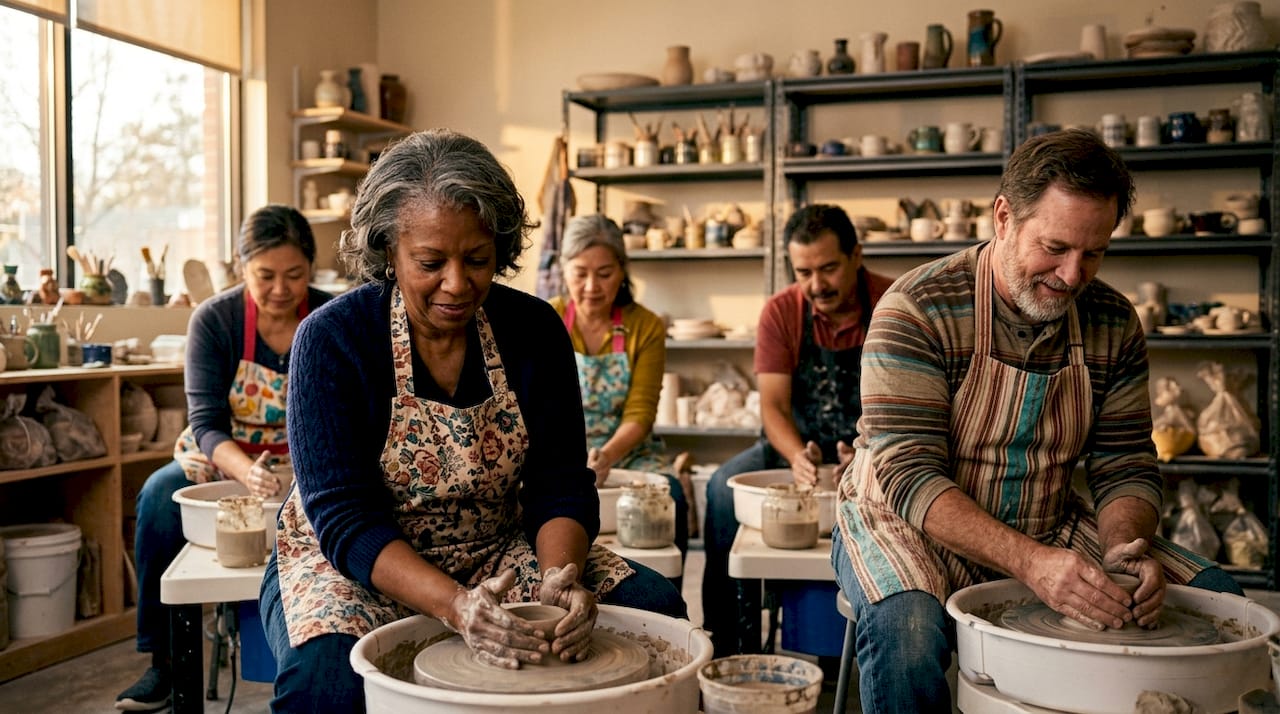
Volunteering, hobby groups, community classes, and faith communities all create the conditions that friendships need: repeated contact, shared purpose, and low social pressure. Shared activities like volunteering accelerate friendship formation because they give you something to talk about beyond small talk. You're not trying to make a friend. You're just showing up consistently to something you care about.
Use the minimal viable network approach
You don't need a large social circle. A minimal viable network of 2–3 key people is sufficient to prevent social isolation. Trying to replace an entire professional network at once leads to scattered effort and shallow results. Focus on depth over breadth, especially in the first year.
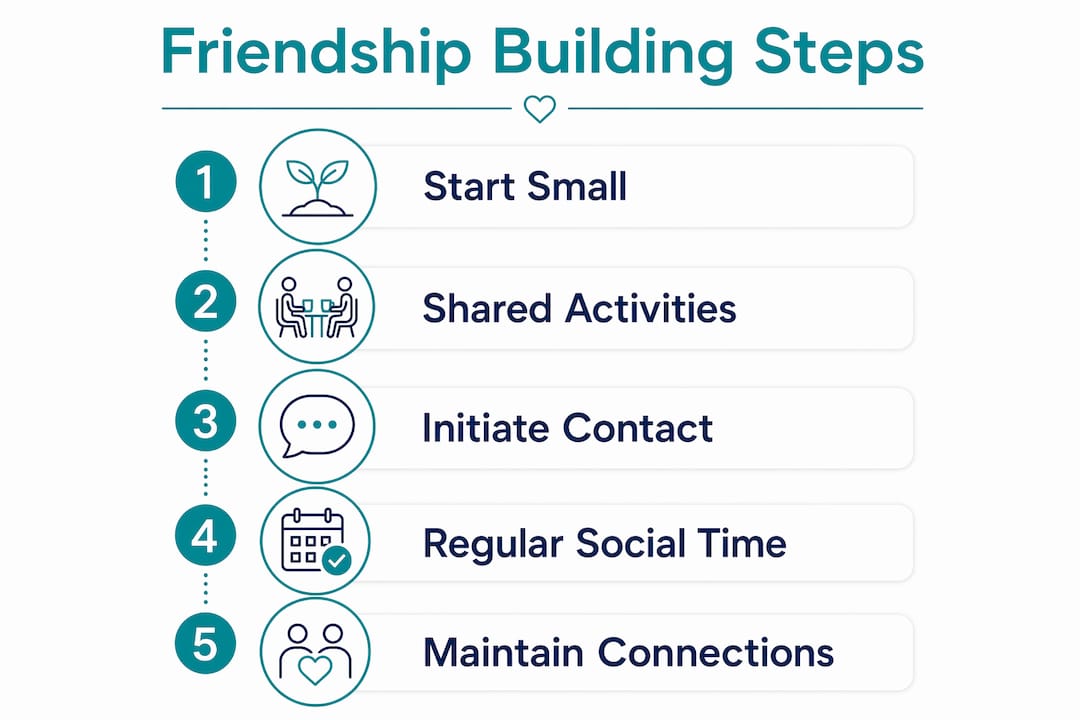
Here's a practical sequence for building new social connections:
- Choose one recurring activity. Pick something you genuinely enjoy and commit to attending for at least six weeks. Consistency is what creates familiarity.
- Make one specific invitation. After a few sessions, invite someone for coffee at a specific time. "Saturday at 10 AM at the coffee shop on Main Street" works far better than "we should hang out sometime." Specific invitations get accepted. Vague ones get deferred indefinitely.
- Use curiosity calls. When you reconnect with old friends or deepen new ones, ask open questions about their current life. "What are you working on these days?" builds more connection than swapping old stories. Curiosity-based conversations foster authentic peer connection far more effectively than nostalgia.
- Let technology serve face-to-face time. Use messaging apps or video calls to stay warm between meetups, but treat them as a bridge to in-person time. Errand-based meetups like grocery runs or walks reduce conversational pressure and build shared experience naturally.
- Repeat and layer. Once one connection feels stable, add another. Don't rush it. The goal is a small, reliable network, not a packed social calendar.
Pro Tip: If you feel awkward making the first move, remember that most people are waiting for someone else to initiate. Being the one who reaches out is a social advantage, not a vulnerability.
How to maintain friendships and keep your social life strong
Building a friendship is one thing. Keeping it alive over months and years is another. The research here is clear and a little humbling. It takes roughly 50 hours of shared time to move from acquaintance to casual friend, and up to 200 hours to develop a close friendship. That means the first 6–12 months of retirement require patience and consistency, not just good intentions.
Maintaining friendships over time comes down to a few steady habits:
- Schedule recurring contact. A standing monthly lunch or weekly walk removes the friction of "we should get together." It just happens. Anchoring social touchpoints as fixed commitments is the single most effective way to maintain consistency.
- Mix digital and in-person contact. A quick text or voice message between meetups keeps the relationship warm without requiring major time investment.
- Invest in shared experiences. Attending a class together, volunteering at the same organization, or taking a day trip creates memories and deepens intimacy faster than conversation alone.
- Notice who you feel better after seeing. Not every relationship deserves equal energy. Prioritize the people who leave you feeling energized, not drained.
| Friendship stage | Hours of shared time needed | Practical approach |
|---|---|---|
| Acquaintance to casual friend | ~50 hours | Weekly activity or recurring meetup |
| Casual to close friend | ~100–200 hours | Shared projects, travel, or regular one-on-one time |
| Maintaining a close friendship | Ongoing, consistent | Scheduled contact plus spontaneous check-ins |
A healthy social baseline for retirees looks like 3–4 short social interactions per week, with at least 30 minutes of real conversation each time. That's not a heavy lift. It's just enough to keep isolation from creeping in.
What gets in the way of social connection after retirement
The biggest barrier to a strong retirement social life is not lack of opportunity. It's the invitation trap. Most retirees wait for others to reach out, assuming that if people wanted to connect, they would. But everyone is waiting. The result is mutual silence that both sides interpret as rejection.
A second barrier is the pressure to rebuild everything at once. Losing a professional network feels like a large loss, and the instinct is to fill it quickly. That pressure leads to scattered effort across too many acquaintances, none of whom become real friends.
The psychological shift that matters most is moving from professional identity to authentic peer identity. At work, your role defined your social value. In retirement, connection comes from who you are, not what you did. That transition takes time, and it's worth being patient with yourself through it.
Meaningful, role-based engagement provides stronger mental health benefits than casual socializing. Structured activities like volunteering, mentoring, or joining a community board give you a role, not just a seat at the table. Generic socializing helps, but purpose-driven connection protects mental health more reliably.
Pro Tip: If you find yourself waiting to be invited, send one specific invitation this week. Just one. The habit of initiating is a skill, and it gets easier every time you practice it.
For retirees aging without a built-in support system, these solo ager isolation challenges are especially worth understanding. Naming the barrier is the first step to moving past it.
Key Takeaways
Building lasting social connection after retirement requires replacing the workplace's automatic structure with intentional, consistent habits focused on depth over breadth.
| Point | Details |
|---|---|
| Workplace ties fade predictably | 54% of Americans made close friends at work; those ties shrink within 3–5 years of retirement. |
| Minimal viable network is enough | A core group of 2–3 people prevents isolation more effectively than a large, shallow social circle. |
| Friendship takes time | Moving from acquaintance to close friend requires up to 200 hours of shared time; patience matters. |
| Specific invitations work | "Coffee Saturday at 10 AM" gets accepted far more often than a vague "let's catch up." |
| Role-based engagement protects mental health | Structured activities like volunteering provide stronger mental health benefits than casual socializing. |
What I've learned about building a social life after retirement
One thing I've noticed that most articles get wrong: they treat retirement social life as a problem to solve rather than a life to design. The framing matters. When you approach it as problem-solving, you're always playing catch-up. When you approach it as design, you get to be intentional about who you spend time with and why.
The retirees I've seen thrive socially are not the ones who stayed busiest. They're the ones who started small and stayed curious. One new connection at a time. One recurring commitment that they actually looked forward to. They didn't try to recreate their work social life. They built something new from scratch, and it fit them better.
The other thing worth saying plainly: authentic curiosity about other people is the most underrated social skill in retirement. Asking someone "what are you working on right now?" and genuinely listening to the answer opens more doors than any amount of small talk. People remember how you made them feel, not what you said.
If you're aging without a spouse, partner, or nearby family, the stakes of building this network are higher. Your social circle is also your safety net. That's not a reason to panic. It's a reason to be thoughtful and start now, one connection at a time. Agingsolo's guide on building a support circle is a good place to get practical about what that network should actually look like.
— Mike
Agingsolo resources for staying connected and independent
Social connection is one part of aging well alone. The other part is having a practical plan for safety, housing, and daily independence.
Agingsolo offers guides built specifically for solo agers who want to stay independent without leaving things to chance. The aging in place guide covers safety, daily living, and support planning in plain language. For retirees who want a broader picture of what thriving alone looks like, the retirement lifestyle guide walks through staying active, connected, and prepared across every area of life. These aren't generic checklists. They're built for people who are doing this without a built-in backup plan, and they treat you as the capable adult you are.
FAQ
What is connection after retirement?
Connection after retirement is the intentional practice of building and maintaining meaningful social relationships once workplace structure is gone. It replaces context-dependent work friendships with relationships based on genuine shared interest and consistent contact.
How many friends do retirees actually need?
A minimal viable network of 2–3 close contacts is sufficient to prevent social isolation. The key benchmark is having at least two people outside your household who would notice if you went silent for a week.
How long does it take to make a real friend after retirement?
It takes roughly 50 hours of shared time to move from acquaintance to casual friend, and up to 200 hours to develop a close friendship. Shared activities like volunteering or hobby groups speed up that process.
What is the invitation trap in retirement?
The invitation trap is the pattern of waiting for others to reach out rather than initiating contact yourself. Most retirees fall into it, which leads to mutual silence that both sides misread as disinterest.
Does volunteering actually help with social connection?
Yes. Volunteering provides a structured role, repeated contact with the same people, and shared purpose. Role-based engagement like volunteering produces stronger mental health benefits than casual socializing alone.
Recommended
- Retirement Lifestyle Guide for Adults 50+: Staying Active, Connected, and Independent | Aging Solo
- Solo Aging 101 | A Clear Starting Point for Planning Ahead
- Independence Is Not Isolation: Building Your Support Circle | Aging Solo
- Hidden Loneliness in Aging Adults | Resources & Solutions for Solo Agers | Aging Solo