

TL;DR:
- Emotional resilience is a learnable skill that helps people adapt, recover, and maintain mental well-being through life's challenges. Building resilience involves honest emotional processing, social connection, and daily habits like breathing, journaling, and movement. For solo agers, proactive support and genuine relationships are essential for maintaining mental health and overcoming loneliness effectively.
Emotional resilience is defined as the ability to adapt, recover, and sustain mental well-being through life's hardships. It is not a fixed personality trait. It is a learnable, dynamic skill set that anyone can develop, including adults over 50 living independently. If you are aging solo and the quiet sometimes feels heavier than expected, that is not weakness. That is a signal worth listening to. Building genuine mental health resilience takes intention, but the science is clear: your brain can rewire itself at any age, and small, steady steps create real change.
What does emotional resilience actually mean?
Most people picture resilience as toughness. Stoicism. Pushing through without complaint. That picture is wrong, and believing it can actually set you back.
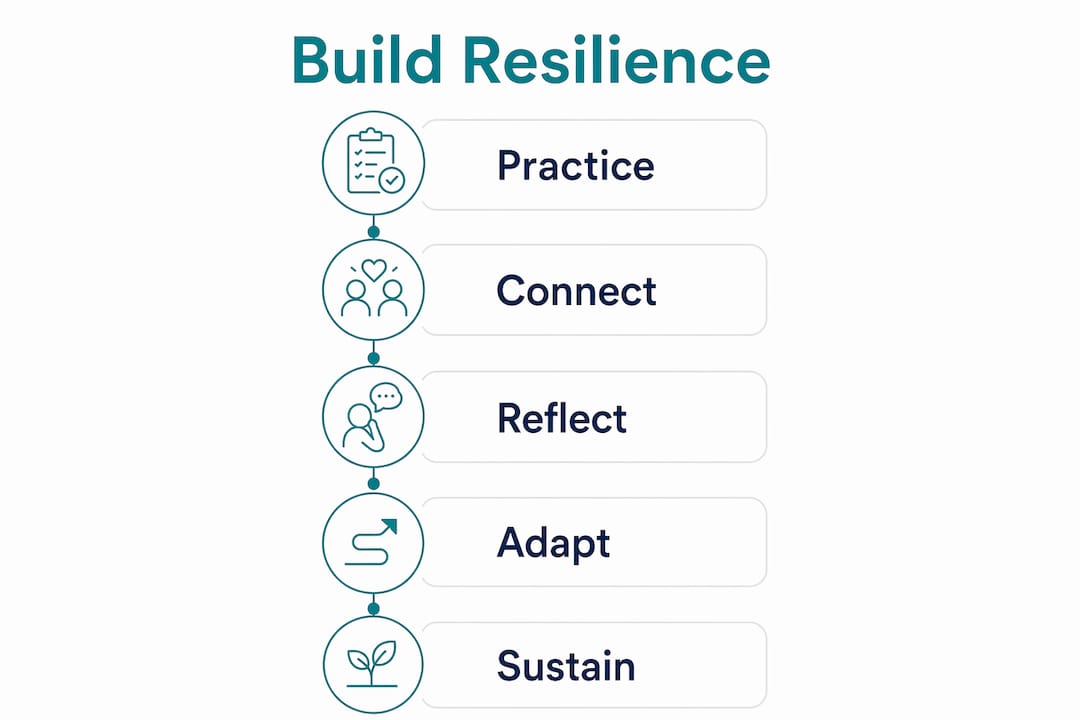
True emotional strength means naming your feelings, including fear, grief, and sadness, and using them as information rather than suppressing them. This approach supports better decision-making, real grit, and lasting perseverance. Stuffing emotions down does not make you stronger. It makes you more brittle.
Researchers identify five core components of psychological resilience:
- Emotional regulation: The ability to feel a difficult emotion without being overwhelmed by it
- Flexible thinking: Reframing a setback without denying that it hurt
- Meaning-making: Finding purpose or learning in hard experiences
- Self-efficacy: Trusting your own capacity to handle what comes next
- Physical health: Sleep, movement, and nutrition as the foundation for all of the above
Social connection belongs on this list too. Genuine relationships built on felt trust and mutual investment are the most consistent predictors of resilience across every age group. For solo agers, this is not a nice-to-have. It is a core part of the structure.
Pro Tip: You do not need a large social circle to build connection. One or two relationships where you feel genuinely seen and supported carry more weight than a dozen surface-level ones.
Evidence-based strategies for building emotional strength
The good news is that developing coping skills does not require a therapist's office or a major life overhaul. Most of the most effective methods fit inside an ordinary day.
-
Structured breathing and mindfulness. Slow, deliberate breathing activates the parasympathetic nervous system and calms the stress response. Even five minutes of focused breathing each morning creates a measurable shift. Daily stress management routines like this protect cardiovascular and immune health over time, which matters especially for older adults living alone.
-
Journaling. Writing about what you feel, not just what happened, helps your brain process and release difficult emotions. It also builds self-awareness, which is the starting point for regulation. Three sentences before bed is enough to begin.
-
Physical movement. Exercise is one of the most reliable supports for resilience, stabilizing the physiology that underlies your capacity to regulate emotions. A 20-minute walk counts. You do not need a gym.
-
Cognitive Behavioral Therapy (CBT), Acceptance and Commitment Therapy (ACT), and Dialectical Behavior Therapy (DBT). These evidence-based therapies teach emotional regulation and cognitive reframing as daily life skills, not just crisis tools. Many are now available through telehealth, which removes the barrier of transportation for solo agers.
-
Self-compassion practices. Small, manageable steps build resilience more reliably than dramatic effort. Treating yourself with the same patience you would offer a friend prevents the self-judgment that derails progress.
-
Avoiding toxic positivity. Forcing a positive frame onto genuine pain does not build strength. Bypassing difficult emotions through excessive positivity increases emotional brittleness over time. Honest acknowledgment of hard feelings is not the opposite of resilience. It is the path through it.
Pro Tip: Pair one new resilience habit with something you already do. If you make coffee every morning, add two minutes of slow breathing before your first sip. Habit stacking makes new practices stick.
How to integrate resilience practices into daily life when aging independently
Knowing what works is one thing. Making it stick when you live alone is another. Without a partner or nearby family to prompt you, the structure has to come from within.
Here are the practices that translate most reliably into sustainable daily routines for solo agers:
- Create a morning anchor. A short, consistent morning routine, even 10 minutes, signals to your nervous system that the day is safe and manageable. Breathing, light movement, and a brief intention all qualify.
- Track small wins. Consistent, gentle small steps backed by neuroplasticity enable real neural rewiring at any age. Keeping a simple log of what you did and how you felt builds agency and shows you the progress that is easy to miss day to day.
- Adjust expectations with the season. Some weeks are harder. Resilience is not a straight line. Flexibility about your own pace is not giving up. It is part of the practice.
- Seek professional support proactively. Therapy and counseling work best when you start before a crisis. Reaching out when life is manageable builds the relationship and the skills you will need when things get harder.
- Use technology and community resources. Video calls, online support groups, and apps for mindfulness or journaling all extend your support network beyond your physical location. Agingsolo's guide to practical wellness routines offers specific tools tailored for adults over 50 living independently.
The table below shows how common daily habits map to specific resilience outcomes:
| Daily habit | Resilience outcome |
|---|---|
| 5-minute morning breathing | Nervous system regulation, reduced baseline anxiety |
| Evening journaling (3 sentences) | Emotional processing, improved self-awareness |
| 20-minute walk | Physical stabilization, mood support |
| Weekly video call with a friend | Social connection, reduced isolation |
| Monthly self-check-in or self-assessment | Progress tracking, adjusted goals |
How does resilience help with loneliness and mental well-being?
Loneliness is one of the most significant mental health risks for adults living alone. It is also one of the most underreported. Many solo agers feel it but do not name it, partly because the culture around aging alone still carries a quiet stigma.
Emotional resilience does not eliminate loneliness. What it does is change your relationship to it. When you have developed coping skills and a steady inner life, solitude and loneliness are no longer the same thing. Solitude can hold meaning, rest, and even pleasure. Loneliness is the ache of disconnection, and resilience gives you the tools to address it rather than endure it.
"Connection characterized by felt support and trust is the most reliable predictor of resilience. For solo agers, building even one or two relationships with that quality changes the entire picture."
Strategies that directly address loneliness through a resilience lens include:
- Community and spiritual engagement. Regular participation in a group, whether a faith community, a class, a volunteer role, or a club, provides structure, purpose, and repeated contact with others. Repeated contact is how trust builds.
- Vulnerability as a strength. Asking for help, sharing what you are going through, and admitting you are struggling are not signs of failure. They are the behaviors that deepen connection. Solo agers who practice this report stronger support networks over time.
- Nurturing hope and meaning. Meaning-making, one of the five core components of resilience, is especially protective in solitude. A creative practice, a cause you care about, or a role that matters to others all anchor a sense of purpose.
- Knowing when to seek help. Resilient individuals report higher happiness and lower rates of stress-related illness, but that outcome depends on getting support when it is needed. Recognizing the difference between a hard week and a pattern that needs professional attention is itself a resilience skill.
Agingsolo's resources on community and connection offer practical guidance on building a real support circle when you are aging without a built-in network.
Key Takeaways
Emotional resilience is a learnable skill built through daily habits, honest emotional processing, and genuine social connection, not through toughness or suppression.
| Point | Details |
|---|---|
| Resilience is a skill, not a trait | Anyone can build it at any age through consistent, small practices. |
| Honest emotion processing matters | Suppressing feelings increases brittleness; naming them builds real strength. |
| Social connection is foundational | Even one or two trusted relationships significantly improve resilience outcomes. |
| Daily habits create lasting change | Breathing, journaling, movement, and self-compassion rewire the brain over time. |
| Seek support proactively | Therapy and community resources work best before a crisis, not only during one. |
What I have learned about resilience after years of working with solo agers
People often come to the topic of resilience expecting a list of techniques that will make hard feelings go away faster. That is not how it works, and I think that misunderstanding causes real harm.
What I have seen, again and again, is that the solo agers who build the most durable inner strength are the ones who stop fighting their own emotional experience. They get curious about it instead. They learn to sit with discomfort long enough to understand what it is telling them. That is not passive. It takes more courage than pushing through.
The other thing I want to say plainly: self-compassion is not self-indulgence. It is the mechanism that keeps you going. When you treat a setback with judgment and criticism, you add a second layer of pain on top of the first. When you treat it with patience, you free up the energy to actually respond. The self-kindness practices that health coaches often recommend are not soft. They are neurologically sound.
Resilience is not a destination. It is a cycle. You get knocked off balance, you use your tools, you return to steadiness, and the next time, the return is a little faster. That is the whole practice. Give yourself the time it actually takes.
— Mike
Agingsolo resources for aging independently with confidence
Living alone after 50 brings real challenges, and emotional well-being is at the center of all of them. Agingsolo was built specifically for adults navigating that reality without a built-in support system.
Whether you are just starting to think about your long-term plan or you are already deep in the work of aging independently, Agingsolo's resilience in aging guide offers practical, grounded tools designed for solo agers. You will find checklists, frameworks, and real-world strategies that go beyond general wellness advice. For a broader look at what aging alone actually requires, the complete solo ager overview covers safety, decision-making, and emotional preparedness in one place.
FAQ
What is emotional resilience?
Emotional resilience is the ability to adapt to stress, recover from setbacks, and maintain psychological functioning over time. It is a learnable skill set supported by neuroplasticity, not a fixed personality trait.
Can adults over 50 build resilience?
Yes. Neuroplasticity supports neural rewiring at any age, meaning consistent small practices like breathing, journaling, and social connection build genuine resilience well into later life.
What is the fastest way to start developing coping skills?
The most accessible starting point is a daily breathing practice of five minutes each morning. It directly regulates the nervous system and requires no equipment, cost, or prior experience.
How does social connection affect mental health resilience?
Genuine relationships built on felt trust and mutual support are the most consistent predictors of resilience. Even one or two close connections significantly reduce the mental health risks associated with living alone.
When should a solo ager seek professional support?
Seek support proactively, before a crisis, not only when things feel unmanageable. Therapies like CBT, ACT, and DBT build daily coping skills that work best when practiced over time rather than introduced during acute distress.