
TL;DR:
- Living alone increases the risk of falls due to hazards and delayed help in emergencies.
- Simple home modifications, regular exercise, and building a support network significantly reduce fall danger.
Living alone comes with real freedom. It also comes with a risk most people don't think about until it's too late. Nearly 80% of serious falls requiring emergency care happen at home, and when you live alone, a fall carries extra weight. There's no one in the next room to hear you. No one to call for help right away. That's not meant to frighten you. It's meant to remind you that these fall prevention tips for living alone are worth your full attention, because a few steady changes can make a very big difference.
Table of Contents
- Key Takeaways
- 1. Remove clutter and secure your rugs
- 2. Improve your lighting throughout the home
- 3. Install grab bars and handrails where you need them most
- 4. Lower your storage to avoid climbing
- 5. Build balance and strength with regular exercise
- 6. Choose the right footwear and assistive devices
- 7. Build a support network and emergency plan
- 8. Practice daily habits that protect you in the moment
- 9. Comparing your options by impact and effort
- My perspective: what I've actually seen make the biggest difference
- Ready to take the next step in your safety planning?
- FAQ
Key Takeaways
| Point | Details |
|---|---|
| Home hazards are the biggest risk | Removing clutter and improving lighting can cut fall risk by up to 38%. |
| Exercise builds your real protection | Balance and strength training, like tai chi, directly reduce fall risk over time. |
| Footwear and devices matter more than you think | Proper shoes and correctly fitted assistive devices prevent slips and instability. |
| A support network is a safety net | Knowing your neighbors and using medical alert systems can get you help fast. |
| Daily habits compound your safety | Small, consistent behaviors like rising slowly and staying hydrated protect you every day. |
1. Remove clutter and secure your rugs
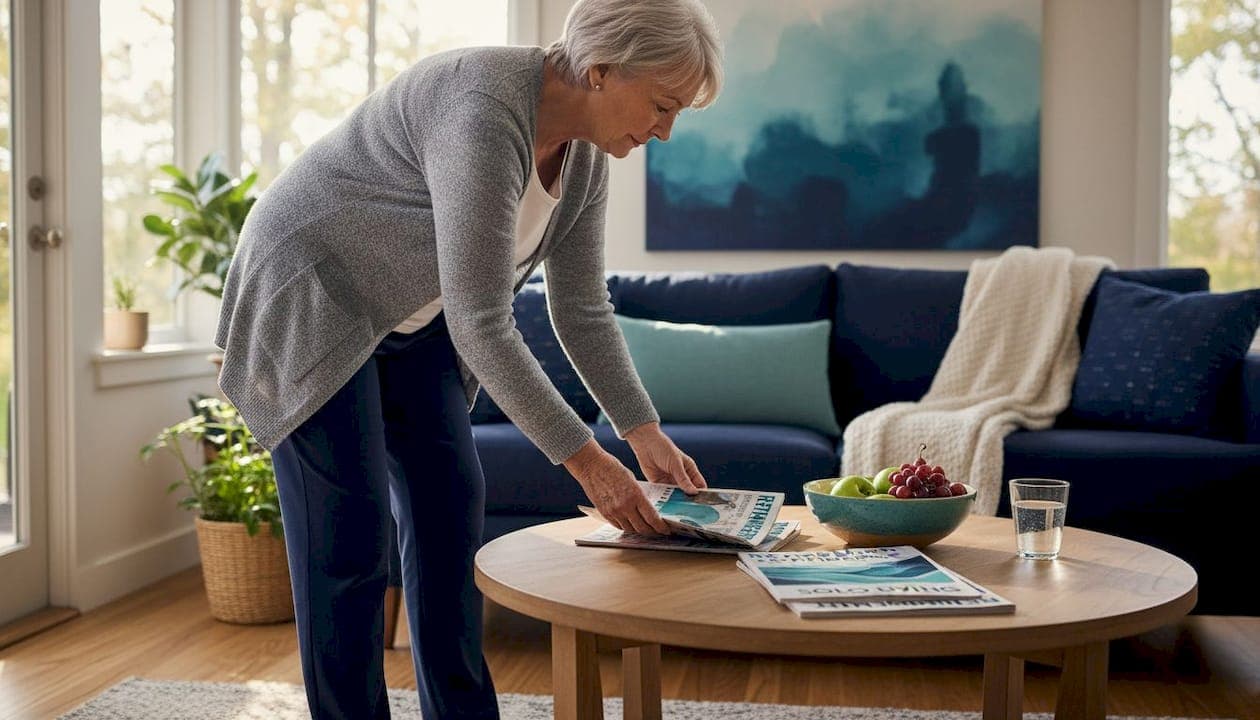
This is where most people start, and for good reason. Clutter on the floor is one of the most common causes of falls at home. Shoes by the door, magazines stacked near the couch, a phone charger cord stretched across the hallway. Each one is a quiet hazard waiting for a tired moment.
Walk through every room with fresh eyes. Pretend you are seeing it for the first time. Clear pathways between the rooms you use most: bedroom, bathroom, kitchen. Then address your rugs. Area rugs are beautiful and also dangerous when their edges curl or they slide on hardwood floors. Secure them with double-sided carpet tape or replace them with rugs that have non-slip backing built in.
Pro Tip: If a rug cannot be secured safely, removing it entirely is always the right call. No rug is worth a fall.
Decluttering to reduce falls isn't just tidying up. Research shows that removing home hazards like clutter and poorly lit areas can reduce falls by up to 38%. That's a number worth taking seriously.
2. Improve your lighting throughout the home
Poor lighting is the sneaky partner of clutter. You don't notice it until you're squinting to see a step or misjudging the edge of a stair. Improving the light in your home is one of the fastest, most affordable upgrades you can make for fall-proofing your home.
Start with the areas you use at night: the path from your bedroom to the bathroom, the top and bottom of any stairs, and the kitchen. Motion-sensor nightlights placed at floor level are particularly helpful because they activate the moment you move, without you fumbling for a switch. Replace dim bulbs in overhead fixtures. Add lamps to dark corners.
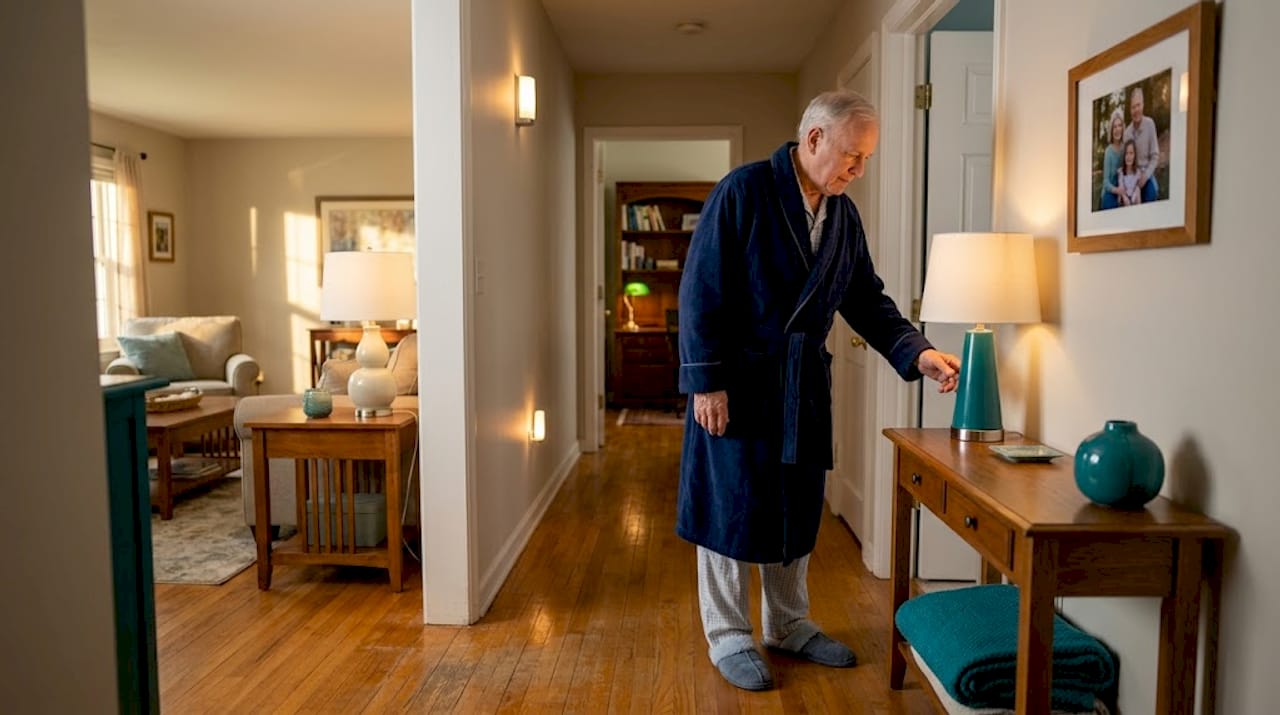
Consider a simple lamp or smart plug on your nightstand so you never swing your legs out of bed into darkness. This one small change eliminates a very common scenario that leads to falls for people living alone.
3. Install grab bars and handrails where you need them most
The bathroom is one of the highest-risk rooms in your home. Wet floors, smooth surfaces, and the physical effort of getting in and out of the tub or off the toilet all create conditions where falls happen fast. Grab bars and raised toilet seats genuinely improve safety in these situations. This is not a luxury. It's one of the most effective home modifications for fall prevention.
Install grab bars next to the toilet and inside the shower or tub. Make sure they are mounted into wall studs, not just drywall. A grab bar that pulls out of the wall when you lean on it is worse than no bar at all. If you have stairs, check that every handrail is secure and runs the full length of the staircase on at least one side.
You do not need to do this alone. Many communities offer programs that send a volunteer or contractor to help with these installations at low or no cost. Your local Area Agency on Aging is a good place to start.
4. Lower your storage to avoid climbing
Reaching overhead or climbing on a step stool to access everyday items creates a real fall risk. It only takes one slightly off-balance moment. The fix is simple: move the things you use regularly to waist-level or lower. Dishes you use daily, medications, pantry staples, cleaning supplies. All of them belong within easy reach.
Adjustable stools with a stable base and a handle can help when you do need to reach higher. Just make sure whatever you're standing on is designed for the purpose and won't wobble. For independent living safety, convenience and safety should always go together.
5. Build balance and strength with regular exercise
This one matters more than almost anything else on this list. Strong legs, steady ankles, and good coordination are what keep you upright when something goes slightly wrong. No grab bar can substitute for a body that knows how to catch itself.
Tai chi and balance exercises significantly improve stability and reduce fall risk, and the research on this is consistent. You do not need to be athletic or flexible to start. A few moves practiced a few times a week will build real strength over time.
Here are some good starting points for living alone fall strategies through exercise:
- Heel-to-toe walking: Walk in a straight line, placing the heel of one foot directly in front of the toes of the other. This challenges your balance in a controlled way.
- Single-leg stands: Hold the back of a sturdy chair and lift one foot slightly off the floor. Work up to 30 seconds per side.
- Chair exercises: Seated leg lifts and ankle circles build lower body strength with zero fall risk.
- Short daily walks: Even 10 to 15 minutes outside adds strength and coordination over time.
Pro Tip: Staying active despite the fear of falling is one of the most protective things you can do. Fear of falling causes many seniors to move less, which leads to more weakness and, eventually, more falls. Movement is your best defense.
Agingsolo has a dedicated guide on staying active while aging alone that offers practical routines and motivation for exactly this.
6. Choose the right footwear and assistive devices
What you put on your feet matters every single day. Loose slippers, thick socks on hardwood floors, and worn-out shoes with no grip all increase your risk of slipping. Well-fitting, non-slip shoes reduce slipping and instability at home, and that protection is real.
Look for footwear with:
- A low, wide heel for stability
- Non-slip rubber soles
- A snug fit that doesn't let your foot slide inside the shoe
- A back strap or enclosed heel rather than an open slip-on
If you use a cane or walker, the fit of that device matters just as much as the fit of your shoes. Proper walker or cane height prevents pain and balance issues that can directly cause falls. A device set too high forces you to hunch your shoulders. One set too low makes you lean forward. Both positions throw off your center of gravity.
If you are not sure whether your device is adjusted correctly, ask your doctor, a physical therapist, or a pharmacist. Most will check it for you in minutes.
7. Build a support network and emergency plan
When you live alone, a fall without a way to call for help is a serious situation. Building a real safety net means making sure someone would know if something happened to you, and that help could reach you quickly.
Start with the people already in your life. Getting to know neighbors and local contacts creates an informal support network that is one of the most practical resources a solo ager can have. Tell a trusted neighbor that you live alone. Arrange a simple check-in system, a wave at a certain time, a light that turns on. These small agreements can mean the difference between a few hours on the floor and a fast response.
Beyond informal networks, consider these tools:
- Medical alert systems with fall detection: These devices detect a fall automatically and contact help even if you cannot press the button. Many are worn as a pendant or wristband.
- Medical ID: Wear or carry a card with your critical health information and emergency contacts.
- Motion sensor or video doorbells: These can alert a trusted contact if your normal patterns change.
- Buddy call systems: A daily check-in call with a friend or family member takes five minutes and provides real peace of mind.
Pro Tip: Informal support networks not only speed up emergency response. They also reduce social isolation, which research connects to better overall health and safety.
Agingsolo's guide on building your support circle walks you through how to create this network thoughtfully, even when you don't have family nearby.
8. Practice daily habits that protect you in the moment
Home modifications and exercise build your foundation. Your daily habits protect you minute to minute. These are the behavioral shifts that prevent the specific moments when falls happen.
- Rise slowly from chairs and beds. Sit at the edge for a few seconds before standing. Dizziness from changing position quickly is one of the most common causes of sudden falls.
- Do one thing at a time when moving. Carrying a heavy laundry basket while navigating stairs is a risk. Multitasking while walking pulls your attention away from your footing.
- Check your medications regularly. Some medications cause dizziness, drowsiness, or blood pressure drops. Talk to your doctor or pharmacist about any that might affect your balance.
- Get your vision checked once a year. Outdated glasses or early vision changes make it harder to judge distances and see hazards clearly.
- Stay hydrated. Dehydration causes dizziness and fatigue faster than most people realize. Drink water consistently throughout the day, not just when you feel thirsty.
- Keep frequently used items accessible. This loops back to storage, but as a daily habit: put things back where you can reach them without strain.
9. Comparing your options by impact and effort
Not every strategy is equal, and you may not want to do everything at once. This table gives you a clear look at the key fall prevention approaches for living alone, so you can prioritize what fits your situation right now.
| Strategy | Impact on fall risk | Effort required | Cost | Best for solo living |
|---|---|---|---|---|
| Remove clutter and secure rugs | High | Low | Free to low | Yes |
| Improve lighting and add motion sensors | High | Low | Low | Yes |
| Install grab bars in bathroom | High | Medium | Low to moderate | Yes |
| Exercise for balance and strength | Very high | Medium (ongoing) | Free | Yes |
| Proper footwear | High | Very low | Low | Yes |
| Correct assistive device fit | High | Very low | Free (with professional help) | Yes |
| Medical alert system | High for emergencies | Low | Moderate (monthly fee) | Especially yes |
| Build informal neighbor network | Medium to high | Low | Free | Especially yes |
| Daily mindful movement habits | High | Low (ongoing) | Free | Yes |
The strategies with the best return for the least effort are clutter removal, lighting improvements, proper footwear, and daily habits. These cost little and deliver a lot. Combine them with regular exercise and a support network, and you have a genuinely strong defense against falls at home.
My perspective: what I've actually seen make the biggest difference
I've worked with many solo agers over the years, and if I had to name the one thing that separates people who fall repeatedly from those who stay steady, it would be this: they stopped being afraid of looking like they needed help.
The fear of falling is real. I've seen it cause people to stop walking to the mailbox, stop cooking full meals, stop visiting friends. That gradual retreat from movement feels safe, but it makes things worse. Staying active despite the fear of falling is genuinely protective. The body needs to move to stay capable of moving.
What I've also seen is that the informal network matters more than any single piece of equipment. A neighbor who checks in every morning is worth more than the fanciest alert device if that device sits in a drawer. People who tell someone, anyone, that they live alone and ask for a simple check-in routine tend to feel safer. And feeling safer leads to moving more. And moving more leads to fewer falls.
Start small. Secure one rug. Add one nightlight. Text one neighbor. The goal isn't to overhaul your life overnight. It's to make your home and your days just steady enough that you stay confident and independent for as long as possible. You can do this, one step at a time.
— Mike
Ready to take the next step in your safety planning?
At Agingsolo, we know that living alone means you're handling all of this yourself, and that's exactly why we built resources designed for you. Our aging in place guide covers home safety, support planning, and emergency readiness in one practical place.

If you're not sure where to begin, the solo aging 101 page is a calm, clear starting point. You'll also find guides on building your support network, staying physically active, and living alone safely after 50. These are real tools for real life, not generic checklists. Because you deserve a plan that actually fits your situation.
FAQ
What are the most effective fall prevention tips for living alone?
Removing clutter, improving lighting, installing grab bars, wearing non-slip shoes, and building a check-in system with a neighbor are among the most effective steps. Combining home modifications with regular balance exercises gives you the strongest protection.
How much can home modifications reduce fall risk?
Removing home hazards like clutter and poor lighting can reduce falls by up to 38%. Adding grab bars and securing rugs further lower the risk in high-danger areas like bathrooms and hallways.
What exercise is best for preventing falls?
Tai chi is one of the top exercises for improving balance and reducing fall risk. Single-leg stands, heel-to-toe walking, and chair-based leg exercises are also effective for building stability.
Should I use a medical alert system if I live alone?
Yes, especially one with automatic fall detection. These devices can contact help even if you are unable to press a button, which is critical when you live alone and a fall leaves you unable to call for assistance.
Can fear of falling actually increase my fall risk?
It can. Fear of falling leads many people to reduce movement, which weakens muscles and coordination over time. Staying gently active, even with small daily walks or chair exercises, rebuilds confidence and lowers actual fall risk.