

TL;DR:
- Starting small with neighbor check-ins and joining social groups helps build trust and community support for aging alone.
- Vetted programs like AmeriCorps Seniors offer free companionship, but careful vetting and trial visits are essential before long-term commitments.
The fastest way to find a trusted companion while aging alone is to start in your own community, then run a short trial before you commit to anything. You don't need to hire someone right away, and you don't need to wait until a crisis forces the issue.
Here's where to begin today:
- Neighbor or buddy system: Knock on two doors this week and suggest a simple check-in routine. No commitment required, just a starting point.
- Interest group or senior center: Join one recurring activity (a walking group, a book club, a craft class) where you'll see the same faces weekly. The National Institute on Aging recommends exactly this kind of consistent, low-stakes contact as the foundation for building real trust.
- Vetted paid companion or volunteer program: If you need more structured support now, call 211 or contact your local Area Agency on Aging to find a volunteer companion through AmeriCorps Seniors, or ask about paid in-home companion care. Hourly in-home companion care rates commonly average $30 per hour nationally, but live-in care is priced daily or weekly and varies by location and responsibilities.
Your single next step: call 211 today and ask, "What senior companion volunteer programs are available in my area?" That one call opens more doors than a week of online searching.
Table of Contents
- Where should you look first to find a companion?
- How do you find, approach, and safely vet a companion?
- Where can you find companions across the U.S.?
- How do you build a neighbor network and buddy system?
- What should you know about paid companion services?
- What safety and legal steps should you take?
- What does the research say about building trust with a companion?
- Key Takeaways
- Why starting small actually protects your independence
- Agingsolo has the tools to help you move forward
- Useful sources and how to use them
- FAQ
Where should you look first to find a companion?
Not every option fits every situation. Here's a quick shortlist, matched to what you actually need right now.
- Neighbors and a buddy system — Best for: daily check-ins and quick safety coverage. If you live in an apartment building or a neighborhood with sidewalks, you already have the raw material. One neighbor who texts you good morning is worth more than a distant acquaintance who means well.
- Senior centers and hobby clubs — Best for: sustained friendship and social routine. Weekly classes in pottery, fitness, or cards give you repeated contact with the same people, which is how real trust forms. Check your local parks and recreation department or YMCA for free or low-cost options.
- Faith communities — Best for: ready-made care networks. Many churches, mosques, synagogues, and temples run formal visitor programs and informal meal trains. You don't have to be deeply religious to benefit from a congregation's social infrastructure.
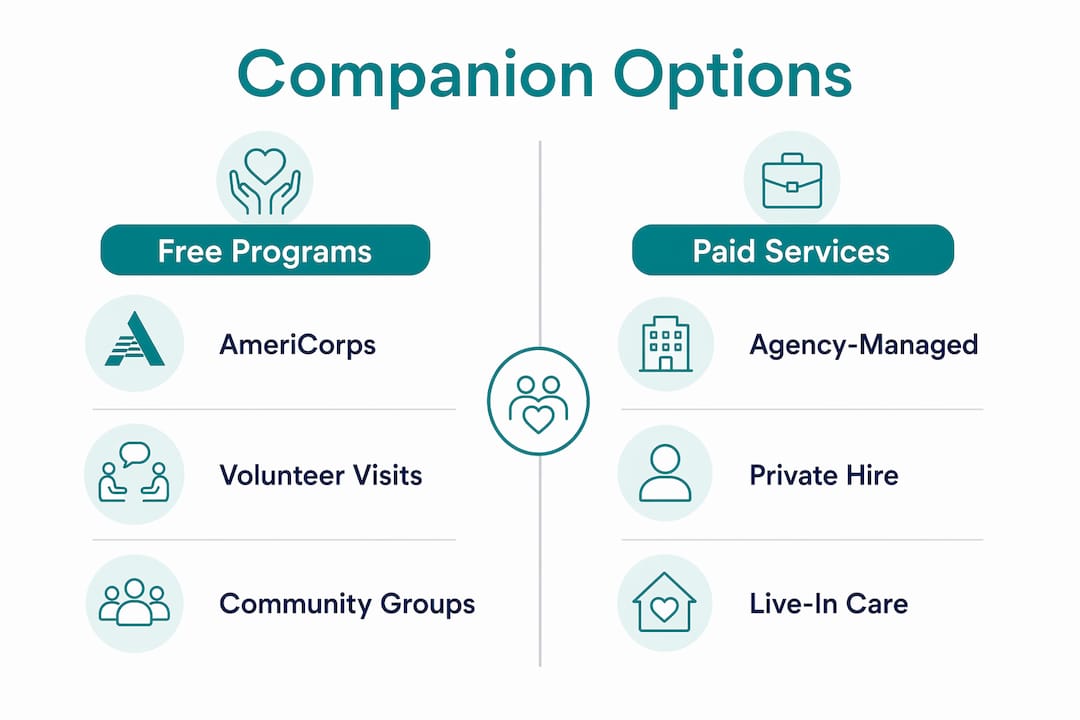
- Volunteer companion programs (AmeriCorps Seniors) — Best for: structured, screened, free support. The AmeriCorps Seniors Senior Companion Program matches older volunteers with adults who need friendly visits and light assistance. No cost to you, and volunteers are vetted.
- Vetted digital platforms — Best for: on-demand scheduling and background-checked helpers. Platforms like Papa connect older adults with trained companions for errands, conversation, and transportation, often through Medicare Advantage or Medicaid health plans.
- Home-care agencies — Best for: dependable, recurring paid support with backup coverage. Agencies handle scheduling, insurance, and replacement staff if your regular companion is unavailable.
Which to choose first? If safety is the priority, start with a neighbor buddy and call 211 the same week. If loneliness is the main concern, a senior center or hobby group will serve you better in the long run.
How do you find, approach, and safely vet a companion?
This is a process, not a single event. Work through it in order and you'll avoid the most common mistakes.
- Decide what you actually need. Write down three things: how often you want contact (daily, weekly), what kind of activity you'd enjoy together, and whether you need any practical help (rides, errands, tech support). Specificity makes every next step easier.
- Draft a concrete outreach. Vague requests get ignored. Instead of "I'm looking for a friend," try: "I'm starting a Thursday morning walking group at Riverside Park, 9 AM. Would you like to join me?" Activity-based invitations get far better responses than open-ended friendship requests.
- Post or ask in the right places. Try your senior center bulletin board, a neighborhood app like Nextdoor, your faith community's newsletter, or a local library events board. For paid companions, ask your Area Agency on Aging for a referral list.
- Set up a first meeting in a public place. Coffee at a café, a walk in a park, or a class at the senior center all work well. Keep it short (45–60 minutes) and low-pressure.
- Vet before you trust. For any paid or semi-formal companion:
- Ask for two personal references and actually call them.
- Request a background check confirmation (most reputable platforms provide this, but platform background checks are a baseline, not a guarantee of compatibility).
- Verify their ID on the first visit.
- Watch for red flags: requests for money, inconsistent stories, pressure to move fast.
- Run a short trial. Agree on three or four visits before making any longer commitment. Observe punctuality, follow-through, and whether the conversation feels natural.
- Formalize with a simple agreement. A one-page written note covering expected tasks, frequency, pay (if any), and an emergency contact for each of you is enough. It protects both sides and removes ambiguity.
Pro Tip: Ask about pace and communication style in the first conversation. Something like: "I tend to like a relaxed pace. How do you usually like to spend time with someone?" That one question surfaces compatibility issues before they become problems.

Where can you find companions across the U.S.?
The channels below are available nationwide. Most are free or low-cost to start.
- Area Agencies on Aging (AAA): Call 211 or visit eldercare.acl.gov to find your local AAA. They maintain referral lists for volunteer companions, friendly visitor programs, and vetted home-care agencies.
- AmeriCorps Seniors Senior Companion Program: Free, screened volunteer companions for older adults who need friendly visits and light support. Find a local program at americorps.gov.
- Senior centers and YMCA branches: Most offer drop-in programs, fitness classes, and social clubs. Many have transportation assistance or can connect you with a ride-share program.
- Faith-based visitor programs: Ask your local congregation's office or call a nearby church, mosque, synagogue, or temple directly.
- Libraries: Many public libraries host senior social hours, book clubs, and technology help sessions, all free and recurring.
- Nextdoor and neighborhood associations: Good for finding a local buddy. Post a specific invite (not a general "looking for friends" message) and you'll get better responses.
- Papa: A companion platform available through many Medicare Advantage and Medicaid health plans. Papa Pals provide conversation, errands, transportation, and more. Check your health plan's benefits to see if it's covered.
- Home-care agencies: Search "in-home companion care agency" plus your county name. Ask specifically about companion-only (non-medical) services, background-check policies, and whether they provide backup staff.
| Channel | Cost | Background Check | Best For |
|---|---|---|---|
| AmeriCorps Seniors Companion | Free | Yes (program-managed) | Regular friendly visits, light support |
| Area Agency on Aging referral | Free | Varies by referral | Local vetted options, navigation help |
| Papa (via health plan) | Often covered | Yes | On-demand companionship, errands, rides |
| Senior center / hobby club | Low or free | No | Sustained friendship, social routine |
| Home-care agency | — | Yes (agency-managed) | Scheduled, recurring paid support |
Accessibility note: If transportation or mobility is a barrier, ask specifically about in-home visits or phone/video companion options. Many programs offer both. For hearing or vision considerations, mention them upfront so the program can match you with a compatible companion.
How do you build a neighbor network and buddy system?
A buddy system doesn't require a formal program. Two or three reliable neighbors who check in on each other regularly is a genuine safety net, and it costs nothing.
Step 1: Map your immediate resources. Walk your building or block and note who you already know by name. Aim to identify two to four people who seem home regularly and appear friendly.
Step 2: Make a specific, low-stakes ask. Try: "I'm trying to stay more connected with neighbors. Would you be up for a quick text check-in a few mornings a week? I'll do the same for you." Mutual benefit makes the ask easier to say yes to.
Step 3: Draft a simple buddy agreement. It doesn't need to be formal. A shared note or text thread covering these basics is enough:
- Who checks in with whom, and how often
- What "no response" means (call again, knock, call 911?)
- A backup contact for each person
- One small reciprocal task per month (picking up mail, sharing a meal)
Step 4: Set up a shared calendar or group text. Even a basic group text with two neighbors keeps everyone loosely coordinated. If you want something more structured, a shared Google Calendar or a simple check-in app works well.
Step 5: Expand slowly. Once your core two-person buddy pair is working, consider adding one more person. A small support circle of three or four is more resilient than a pair, because coverage continues when one person travels or gets sick.
Sample invite for a solo-ager peer group: "I'm a neighbor who lives alone and I'm putting together a small group of people in similar situations. We'd meet once a month for coffee and keep an eye out for each other. Interested?" Post it on your building's board or your neighborhood app.
What should you know about paid companion services?
Paid companion care comes in three main shapes, and the differences matter for your budget and your schedule.
| Type | Schedule | Cost Shape | Vetting | Backup Coverage |
|---|---|---|---|---|
| Agency-managed companion | Scheduled blocks (daily/weekly) | Hourly (varies widely) | Agency-run background checks | Agency provides replacement staff |
| Digital companion platform | On-demand or scheduled | Hourly or per-visit | Platform background checks | Platform reassigns a new companion |
| Private live-in companion | Continuous presence | Daily or weekly rate | Your responsibility | No automatic backup |
Agency-managed care costs more per hour than a private arrangement, but you get backup coverage and someone else handles scheduling. Digital platforms offer flexibility, but platform vetting is a starting point, not a full guarantee. Private live-in companions provide continuous support, with pricing that reflects daily or weekly rates rather than hourly, and varies significantly by location and scope.
Questions to ask any agency or platform before you start:
- Do you run federal and state criminal background checks on all companions?
- Are companions insured and bonded?
- Can I speak with a previous client as a reference?
- What happens if my regular companion cancels?
- What is your cancellation policy?
- Do you offer a short trial period?
Pro Tip: Require a written short trial of at least four visits before signing any longer agreement. Ask for a clear cancellation or replacement clause in writing. This protects you and sets a professional tone from the start.
Live-in companion costs differ substantially from hourly care and typically reflect continuous presence, administrative overhead, and geographic factors. If you're considering that route, a life care plan can help you map the full picture before committing.
What safety and legal steps should you take?
Inviting a companion into your daily life is a good thing. A few practical safeguards make it sustainable.
Emergency contact template (keep one copy at home, share one with your buddy):
- Local buddy or neighbor: name, phone, address
- Out-of-area contact: name, phone, relationship
- Primary care provider: name, clinic, phone
- Pharmacy: name, phone
- Any relevant medical information (allergies, conditions, medications)
Legal documents to have accessible:
- Durable power of attorney (financial)
- Healthcare proxy or durable power of attorney for healthcare
- Advance directive or living will
- Up-to-date contact list
Consult an attorney to prepare or review these documents for your specific situation. The Agingsolo emergency planning guide has templates to help you organize what you already have.
Red flags in any companion relationship:
- Requests for money, loans, or access to financial accounts
- Pressure to move the relationship forward faster than feels comfortable
- Inconsistent stories about their background or experience
- Discouraging you from talking to family, friends, or other contacts
- Showing up unannounced or ignoring agreed boundaries
Technology that helps:
- Medical alert devices (Life Alert, Bay Alarm Medical) for fall detection and emergency calls
- Shared calendar apps (Google Calendar) for coordinating with your buddy
- Check-in apps (Snug Safety, Wellzesta) designed for older adults living alone
- Video calling (FaceTime, Zoom) for remote check-ins with out-of-area contacts
For readers managing early cognitive changes, a dementia care roadmap can help you and your companions plan ahead for transitions before they become urgent.
What does the research say about building trust with a companion?
The evidence is consistent: trust grows through repeated, low-stakes contact, not through a single meaningful conversation.
The National Institute on Aging points to friendly visitor and senior companion volunteer services as effective connectors precisely because they build regular, predictable contact over time. Comfort Keepers' clinical guidance links activity-focused companion care to lower rates of depression and cognitive decline, compared to companions who simply sit with someone passively.
Compatibility checklist (use this before committing to any companion):
- Pace: Do they move and communicate at a speed that feels comfortable to you?
- Activity level: Do your preferred activities overlap enough to share time enjoyably?
- Reliability: Did they show up on time for your first meeting? Did they follow through on anything they said they'd do?
- Communication style: Are they a good listener? Do they talk over you or check their phone?
- Boundaries: Did they respect the limits you set, even informally?
- Reciprocity: Does the relationship feel balanced, or one-sided?
| Statistic | Source |
|---|---|
| AmeriCorps Seniors volunteers report improved health and reduced isolation among participants | AmeriCorps Seniors |
| National median rate for in-home companion care is about $30 per hour; live-in care is priced on a daily or weekly basis and varies significantly by region and scope of support. | |
| Activity-based companion care is linked to lower depression and cognitive decline rates | Comfort Keepers |
Key Takeaways
Building a trusted companion network while aging alone works best when you start small, stay consistent, and formalize the relationships that matter most.
| Point | Details |
|---|---|
| Start community-first | Neighbors, senior centers, and hobby groups build trust faster than cold outreach or paid services alone. |
| Use activity-based invitations | Specific asks ("join my Thursday walking group") get better responses than vague friendship requests. |
| Vet paid companions carefully | Platform background checks are a baseline; always ask for references and run a 4-visit trial before committing. |
| Typical paid care costs are variable and depend on factors such as service type and location. | Live-in arrangements and regional differences change the cost shape substantially. |
| Agingsolo resources | Agingsolo offers checklists, buddy-system tools, and templates to help you build and formalize your support network. |
Why starting small actually protects your independence
There's a tendency to think that asking for companionship means giving something up. It doesn't. Starting with a low-stakes activity, a walking group, a coffee date, a weekly check-in text, lets you observe someone's reliability and character without any emotional risk. You learn whether they show up, whether they listen, whether they respect your pace. That's information you can't get from a background check or a reference call.
The research backs this up. Consistent, repeated contact is what builds real trust, not intensity or speed. A companion you've walked with every Thursday for two months is someone you can genuinely rely on. Someone you had one deep conversation with is still a stranger.
Start with one small, repeatable activity. Give it a month. Then decide whether to go deeper. That's not timidity. That's a smart, steady way to build something that lasts.
While you're building those social ties, don't let the legal and emergency gaps sit unaddressed. Update your emergency contacts, get your power of attorney in order, and make sure at least one person in your life knows where those documents are. The solo aging planning resources at Agingsolo can walk you through both sides of that equation.
Agingsolo has the tools to help you move forward
If you've read this far, you already know what your next step is. Agingsolo exists to make that step easier.
The site offers free checklists, buddy-system templates, emergency contact forms, and plain-language guides built specifically for solo agers in the U.S. You don't need to piece together advice from a dozen different sources. The Agingsolo clearinghouse pulls the most useful tools into one place, including downloadable forms for buddy agreements, emergency planning, and legal document organization.
If you're ready to build a fuller picture of your support plan, the solo ager planning guide is the best place to start. It covers companionship, safety, housing, and decision-making in one clear, calm resource designed for exactly your situation.
Visit Agingsolo and download the tools that fit where you are right now.
Useful sources and how to use them
- National Institute on Aging (nia.nih.gov): Guidance on community services, friendly visitor programs, and building trust through low-stakes interaction. Search "services for older adults living at home."
- AmeriCorps Seniors Senior Companion Program (americorps.gov): Free, vetted volunteer companions for older adults. Search "AmeriCorps Seniors near me" or call your local Area Agency on Aging.
- Eldercare Locator (eldercare.acl.gov or 1-800-677-1116): The federal gateway to local Area Agencies on Aging. Use it to find companion programs, transportation, and meal services in your county.
- 211 (dial 2-1-1): Free, confidential referral service available in most U.S. states. Ask specifically: "What senior companion or friendly visitor programs are available in [your county]?"
- Papa (papa.com): Companion platform available through many Medicare Advantage and Medicaid plans. Check your health plan's benefits portal or call member services.
| Resource | What It Helps With | How to Reach It |
|---|---|---|
| Area Agency on Aging | Local companion referrals, navigation | eldercare.acl.gov or dial 211 |
| AmeriCorps Seniors | Free vetted volunteer companions | americorps.gov |
| 211 | Local program search, crisis referrals | Dial 2-1-1 |
| Papa | On-demand companion care via health plan | papa.com or your health plan |
| Agingsolo clearinghouse | Templates, checklists, buddy-system tools | agingsolo.today/clearinghouse |
Evaluating online platforms: Always ask whether the platform runs both federal and state criminal background checks, whether companions carry liability insurance, and whether you can speak with a previous client. For more specialized needs, a geriatric care manager can provide referrals to vetted local providers. The National Association of Professional Geriatric Care Managers (aginglifecare.org) maintains a searchable directory.
For readers navigating cognitive changes alongside companionship planning, the dementia care planning guide at Memory Lane Care offers stage-based frameworks that pair well with the companion-vetting steps above.
Agingsolo's clearinghouse remains the fastest single starting point for downloadable templates and local referral guidance.
FAQ
What should I do if I'm old and feeling lonely?
Start with one concrete, repeatable activity in your community, such as a senior center class or a neighbor check-in, rather than waiting for the right person to appear. The National Institute on Aging recommends consistent, low-stakes contact as the most reliable way to reduce isolation and build real connection.
What happens if an elderly person has no one to care for them?
Call 211 or contact your local Area Agency on Aging, which can connect you with volunteer companion programs, case managers, and community services at no cost. Programs like AmeriCorps Seniors provide free, screened companions specifically for older adults who lack a built-in support network.
How do you navigate old age when you're on your own?
Build your support network in layers: start with a neighbor buddy for daily safety, add a social group for regular connection, and put legal documents (power of attorney, advance directive, emergency contacts) in place before you need them. Agingsolo's solo ager planning guide walks through each layer with practical checklists.
How do I vet a paid companion before trusting them?
Ask for two personal references and call them, confirm the platform or agency ran federal and state background checks, and run a short trial of at least four visits before making any longer commitment. Platform background checks are a starting point, not a substitute for a personal compatibility check.
Are there free companion programs for seniors in the U.S.?
Yes. The AmeriCorps Seniors Senior Companion Program provides free, vetted volunteer companions to older adults across the country. Contact your local Area Agency on Aging or dial 211 to find the program nearest to you.
Recommended
- Growing Old Alone: How to Stay Safe, Connected, and Independent as a Solo Ager | Aging Solo
- The Honest Guide to Low-Maintenance Pets for People Aging Alone | Aging Solo
- Older Adults Living Alone: A Practical Guide to Safe, Independent Aging | Aging Solo
- Aging Alone: What Every Solo Ager Needs to Know | Aging Solo