
TL;DR:
- Healthy routines for seniors include daily habits that improve strength, balance, mental health, and independence. Building a flexible schedule around essential activities and social connection supports successful aging and ongoing well-being. Consistent daily movement, proper nutrition, quality sleep, and cognitive engagement are key habits to maintain long-term health.
Healthy routines for seniors are daily habits that protect mobility, support nutrition, sharpen the mind, and keep you connected to the people around you. These habits form the foundation of what geriatric specialists call "successful aging," a term that goes beyond avoiding illness to include staying active, purposeful, and independent. Stanford Medicine and aging researchers agree that consistent daily wellness activities for seniors produce measurable improvements in strength, balance, and mental health. You do not need a perfect schedule. You need a steady, realistic rhythm that works for your life.
What do healthy routines for seniors actually include?
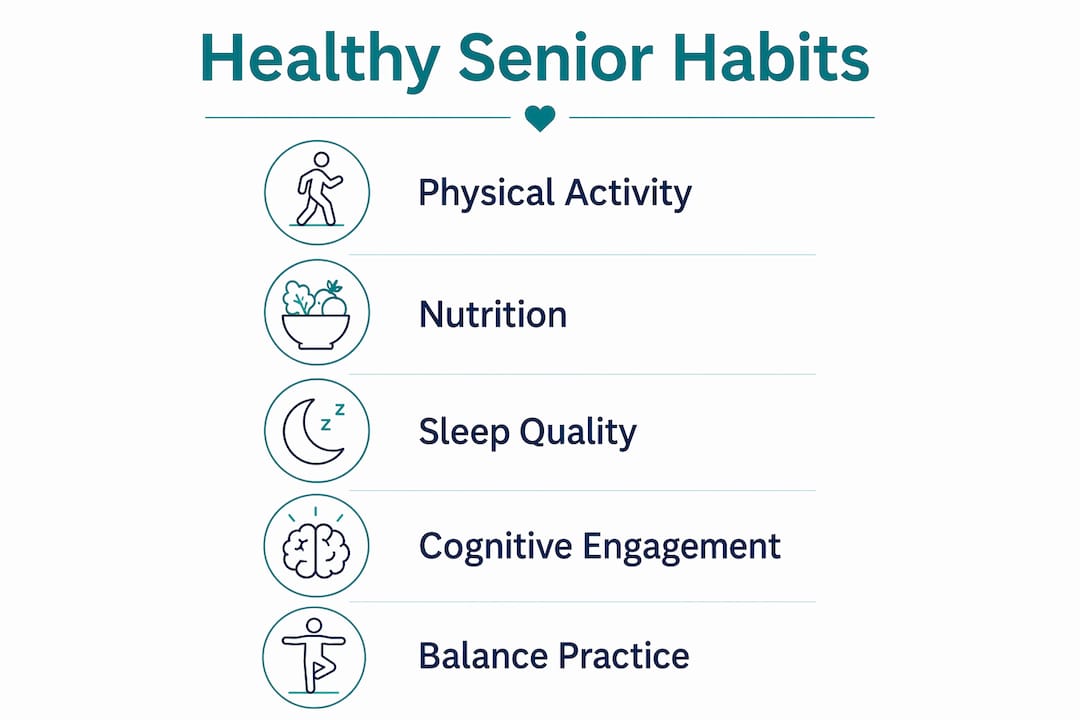
Healthy daily routines for seniors cover five core areas: physical movement, nutrition, sleep, cognitive engagement, and social connection. Each area reinforces the others. Poor sleep, for example, weakens muscle recovery after exercise. Skipping social contact raises the risk of cognitive decline. The goal is not to check every box every day. The goal is to build a gentle, repeatable structure that keeps you moving forward.
Geriatric specialists at Stanford Medicine emphasize that these five habits, practiced consistently, have the strongest evidence for extending both lifespan and quality of life. That is a meaningful distinction. Living longer matters less if you cannot live well.
How much physical activity should seniors do each day?
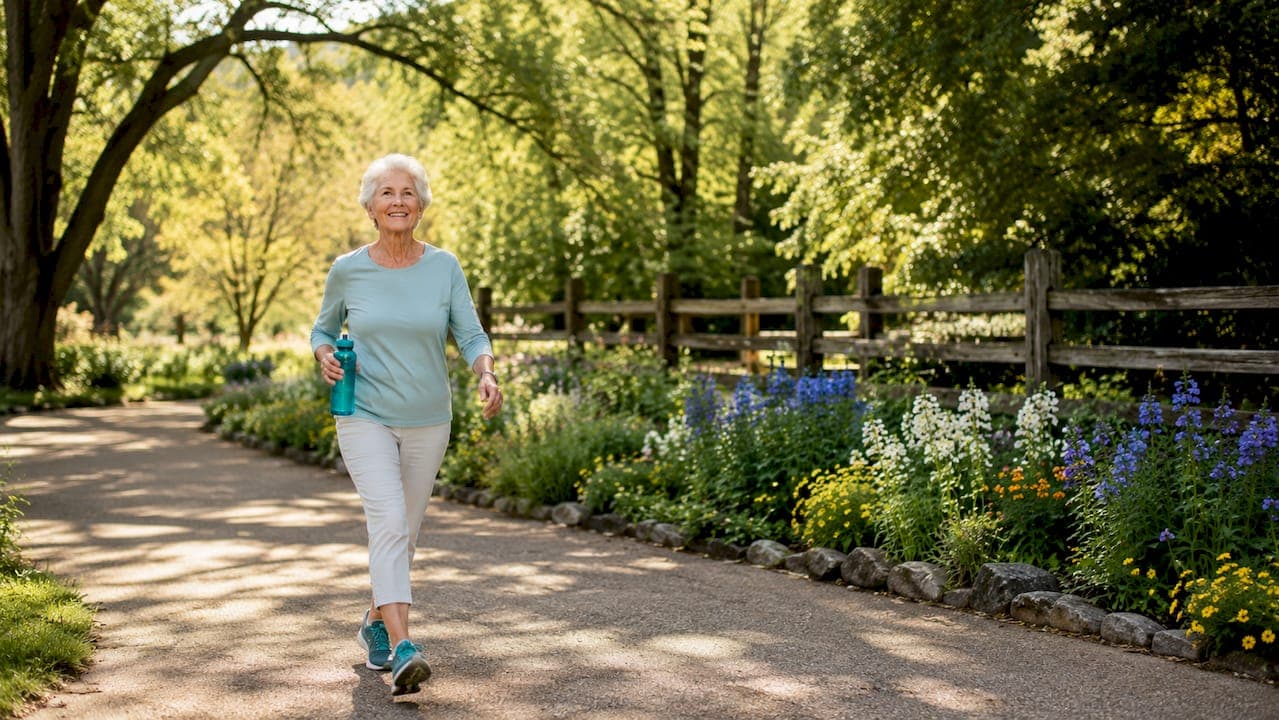
150 minutes per week of moderate aerobic activity is the baseline recommendation for older adults. That breaks down to about 20–30 minutes most days, or shorter bouts spread across the day. A 10-minute walk after each meal, for example, adds up quickly and is easier on joints than one long session.
Aerobic activity that fits real life
You do not need a gym membership. Brisk walking, swimming, water aerobics, cycling on a stationary bike, and dancing all count as moderate aerobic activity. The test is simple: you should be able to talk but not sing during the activity. If you can belt out a song, pick up the pace slightly.
Strength training twice a week
Muscle loss accelerates after age 60. Strength training at least twice a week slows that process and protects your joints. You do not need weights to start. These exercises work well with no equipment:
- Chair squats: Stand in front of a sturdy chair, lower yourself slowly until you almost sit, then stand back up. Repeat 8–12 times.
- Wall push-ups: Stand arm's length from a wall, place your palms flat, and do a standing push-up. Repeat 10–15 times.
- Resistance band rows: Anchor a band to a door handle, hold both ends, and pull toward your chest. Repeat 10–12 times.
Balance practice woven into daily life
Single-leg stands and corner stands improve joint stability and reduce fall risk. Hold a chair back for safety and stand on one leg for 10–20 seconds, then switch. Repeat 5–10 times per leg. The most effective approach, according to AARP, is to practice balance in small daily moments rather than in dedicated sessions. Stand on one leg while brushing your teeth. Pause on one foot while waiting for the kettle. These small moments add up to real stability gains.
Pro Tip: Harvard Health notes that balance training needs no equipment. Functional daily movements, done consistently, deliver the best fall prevention results for older adults.
What nutritional habits support healthy aging?
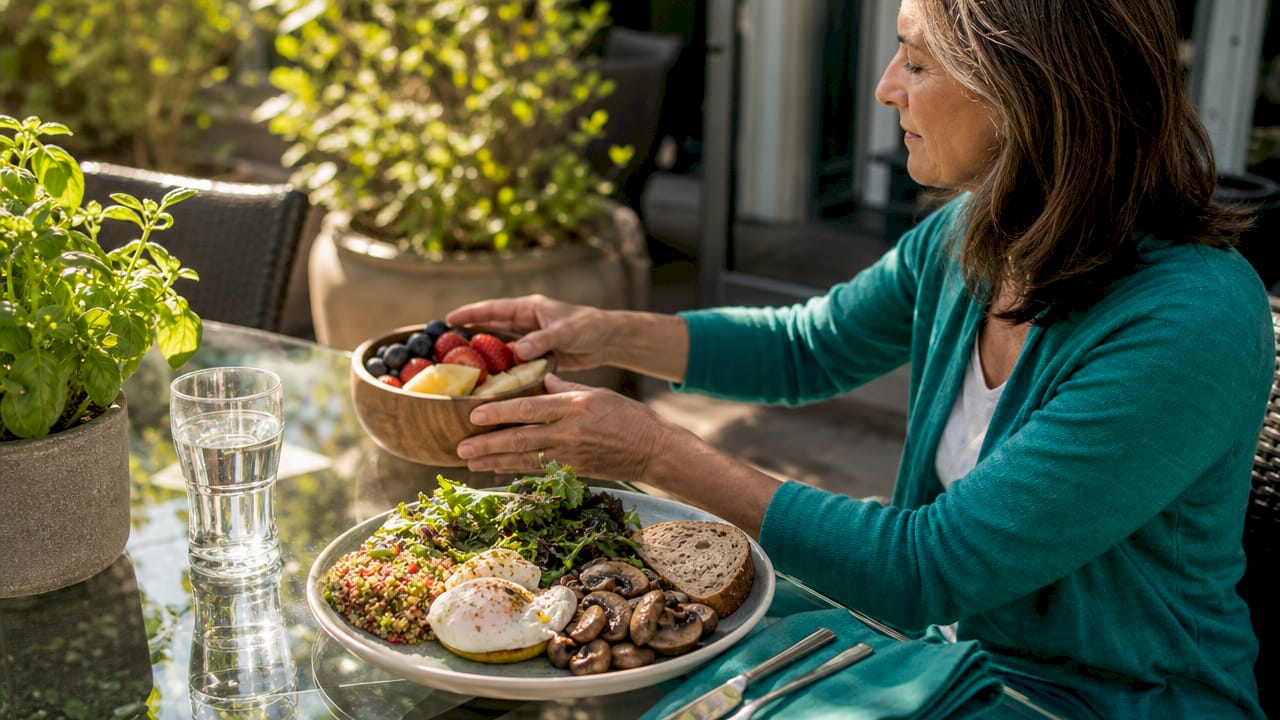
Protein is the most underestimated nutrient for older adults. Healthy older adults need 1.0 to 1.3 grams of protein per kilogram of body weight daily, with 20–30 grams per meal. That is more than most seniors currently eat. Spreading protein across meals, rather than loading it at dinner, helps your muscles absorb and use it more effectively.
Building a plate that works for you
A Mediterranean-style, plant-forward approach gives you the widest range of nutrients with the least effort. Focus on:
- Colorful vegetables at every meal (aim for three different colors per plate)
- Whole grains like oats, brown rice, and whole wheat bread
- Legumes such as lentils, chickpeas, and black beans for plant protein
- Healthy fats from olive oil, avocado, nuts, and fatty fish like salmon
- Lean proteins including eggs, Greek yogurt, chicken, and tofu
Meal planning as a wellness tool
Meal planning reduces decision fatigue and helps you maintain a phytonutrient-rich diet without daily effort. Spending 20 minutes on sunday to plan five dinners removes the 5 p.m. "what do I eat?" problem entirely. It also makes grocery shopping faster and reduces food waste.
Consistent meal timing supports metabolism and insulin sensitivity. Eating at roughly the same times each day signals your body to prepare for digestion, which improves nutrient absorption. Hydration deserves a specific mention. Older adults experience a reduced thirst sensation, which means you can become dehydrated before you feel thirsty. Keep a water bottle visible throughout the day as a simple reminder.
Pro Tip: Prepare a weekly "protein anchor" list: three or four high-protein foods you enjoy and will reliably eat. Build each meal around one of them. This removes guesswork and keeps your intake consistent.
How can seniors improve sleep and keep their minds sharp?
Quality sleep is not a luxury. Older adults need 7–8 hours of sleep per night, with consistent wake and sleep times, including weekends. Irregular sleep schedules disrupt your circadian rhythm, which affects everything from mood to immune function. Going to bed and waking at the same time every day is the single most effective sleep habit you can build.
A calming pre-sleep routine
Your body needs a signal that the day is ending. A consistent wind-down routine of 20–30 minutes helps regulate your internal clock. Try this sequence:
- Dim the lights in your home one hour before bed.
- Put your phone or tablet in another room.
- Do a quiet activity: reading, gentle stretching, or listening to calm music.
- Keep your bedroom cool and dark.
Keeping your mind engaged every day
Cognitive engagement is not about doing brain teasers for an hour. It is about staying curious and mentally active throughout the day. Effective options include:
- Puzzles and games: crosswords, Sudoku, jigsaw puzzles, or card games like bridge
- Reading: books, newspapers, or long-form articles on topics you care about
- Learning a new skill: a language app like Duolingo, a new recipe, or a craft
- Music: playing an instrument or actively listening to music you love
Scheduling social touchpoints and hobbies alongside health tasks is critical for emotional health and brain function. The key word is scheduling. If a coffee call with a friend is on your calendar, it happens. If it is just an intention, it often does not.
What is the best way to build a flexible daily routine?
A flexible routine, sometimes called a "gentle rhythm," helps solo agers maintain independence with less anxiety than a rigid schedule. Predictability reduces stress. Rigidity creates it. The difference matters, especially when your health or energy levels change from day to day.
Think of your routine as a set of anchors, not a timetable. Each anchor is a recurring activity that gives your day shape:
- Morning anchor: wake time, medication, breakfast, short walk or stretch
- Midday anchor: lunch, a social check-in (phone call, text, or in-person visit), light activity
- Afternoon anchor: hobby, cognitive activity, errands, or rest
- Evening anchor: dinner, wind-down routine, consistent bedtime
Adding new habits gradually
New habits stick when you attach them to existing ones. This is called habit stacking. If you already make coffee every morning, do five chair squats while it brews. If you already watch the evening news, do a balance exercise during commercials. Start with one new habit per week. Give it two weeks before adding another.
| New habit | Attach it to |
|---|---|
| Chair squats | Morning coffee brewing |
| Balance stand | Brushing teeth |
| Protein-rich snack | Afternoon reading |
| Evening stretch | Watching TV |
| Hydration check | Each meal |
Pro Tip: Use a simple paper planner or a phone reminder app to anchor your daily schedule. Predictability in daily routines reduces anxiety and supports independent behavior, especially on low-energy days when motivation dips.
When disruptions happen, and they will, return to just one anchor. Getting back to your morning routine after an illness or a difficult week is far easier than trying to restart everything at once. One anchor pulls the rest back into place.
Key takeaways
Building consistent daily wellness activities for seniors is the most reliable path to maintaining independence, physical strength, and mental clarity as you age.
| Point | Details |
|---|---|
| Physical activity baseline | Aim for 150 minutes of moderate aerobic activity weekly, broken into manageable daily sessions. |
| Protein intake matters | Eat 1.0–1.3 grams of protein per kilogram of body weight daily, spread across meals. |
| Sleep consistency | Keep a fixed wake and sleep time every day to protect your circadian rhythm and energy. |
| Balance training daily | Practice single-leg stands and other balance moves during everyday tasks, not just workouts. |
| Flexible routine structure | Use daily anchors, not rigid timetables, to stay on track without adding stress. |
What I have learned about routines and real independence
I have spent a lot of time talking with solo agers about what actually keeps them independent. The honest answer is rarely dramatic. It is not a new supplement or a fancy fitness program. It is the quiet, unglamorous work of showing up for yourself every single day, even when you do not feel like it.
The biggest mistake I see is treating a routine as something you either follow perfectly or abandon entirely. That all-or-nothing thinking is the enemy of progress. A week where you walked three days instead of five is not a failure. It is a week where you walked three days. That still counts.
What I find genuinely encouraging is how small the starting point can be. One chair squat. One glass of water. One phone call to a friend. These are not trivial. They are the building blocks of a life that stays yours. The research backs this up, but you do not need a study to feel the difference a steady morning routine makes to your mood and your sense of control.
The other thing worth saying plainly: social connection is not a bonus feature of a healthy routine. It is a core requirement. Scheduling social interactions, even brief ones, protects emotional health and reduces the isolation that quietly erodes independence. If you are aging alone, this matters even more. Build it in deliberately.
Progress over perfection. Every time.
— Mike
Agingsolo has practical tools to help you stay independent
Building a healthy daily routine is one of the most powerful things you can do for your future. Agingsolo was created specifically for people who are doing this without a built-in support system nearby.

Whether you are looking for guidance on aging in place safely or want a clear starting point for long-term planning, Agingsolo offers practical, calm, and realistic resources built for solo agers. The elder planning guide for 2026 walks you through the key decisions that protect your independence now and in the years ahead. You have already taken the first step by thinking about your daily habits. Agingsolo is here to help you build on that.
FAQ
How much exercise do seniors need each week?
Seniors need at least 150 minutes of moderate aerobic activity weekly, plus muscle-strengthening activities at least twice a week. Short sessions of 10–20 minutes spread across the day count toward the total.
What is the best diet for healthy aging?
A Mediterranean-style diet rich in colorful vegetables, whole grains, legumes, healthy fats, and lean protein supports healthy aging. Older adults should aim for 1.0–1.3 grams of protein per kilogram of body weight daily, distributed across meals.
How can seniors prevent falls at home?
Balance exercises like single-leg stands practiced during daily tasks, such as brushing teeth or waiting for coffee, are the most effective fall prevention strategy. No special equipment is needed.
How many hours of sleep do older adults need?
Older adults need 7–8 hours of quality sleep per night. Keeping a consistent wake and sleep time every day, including weekends, is the most effective way to protect sleep quality.
How do you build a daily routine that actually sticks?
Use a flexible structure built around daily anchors like meals, medications, movement, and social contact rather than a rigid timetable. Attach new habits to existing ones, start with one change per week, and return to a single anchor after any disruption.