
TL;DR:
- Living alone requires a structured medication management system to ensure safety and adherence among seniors. Building a comprehensive medication list, anchoring doses to daily routines, and using a single pharmacy help prevent dangerous interactions and mistakes. Maintaining these habits and seeking support when needed enables solo seniors to manage medications effectively and preserve their independence.
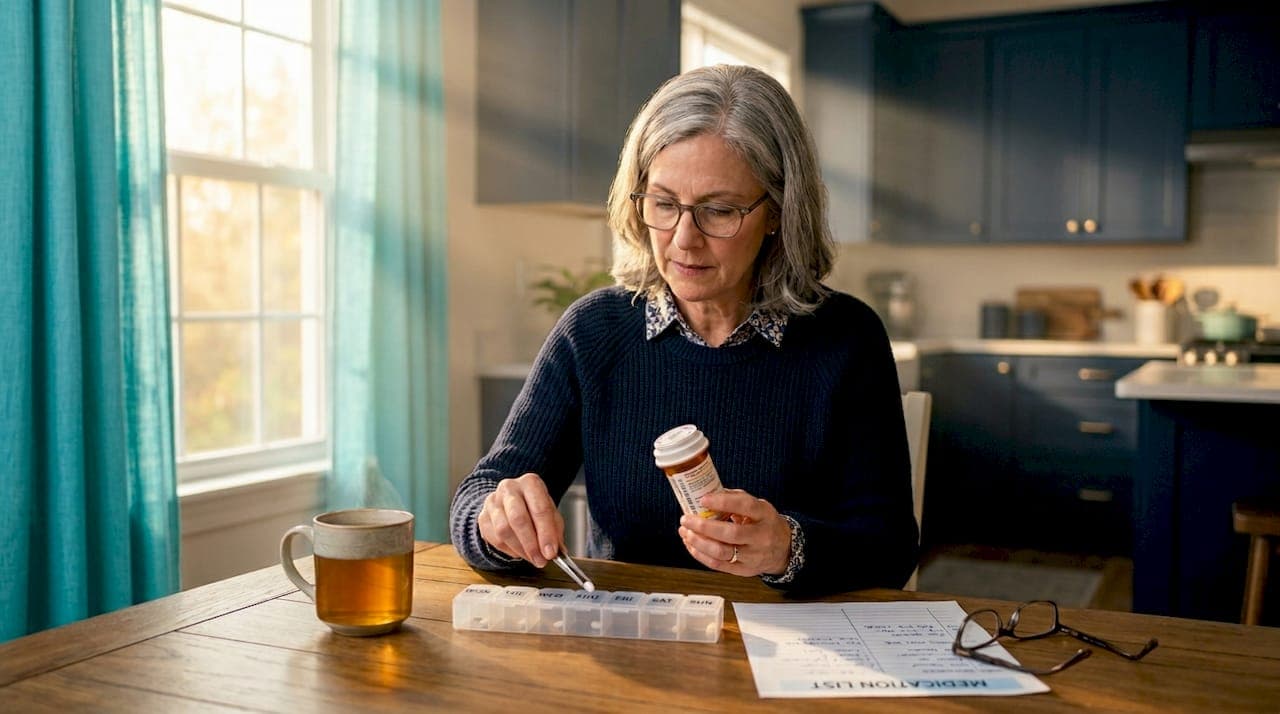
Living alone means no one is checking whether you took your blood pressure pill this morning. No one notices if a prescription runs out. That's the quiet reality for millions of solo seniors, and it matters. To manage medications living alone, you need more than good intentions. You need a real system. The clinical term for this is medication management, and it covers everything from correct dosing and safe storage to tracking side effects and preventing dangerous interactions. This guide gives you the tools to do it well, on your own terms.
Key Takeaways
| Point | Details |
|---|---|
| Build your medication list first | Include every prescription, OTC drug, and supplement to catch hidden interaction risks. |
| Anchor doses to daily habits | Tying medications to meals or tooth brushing improves adherence more than reminders alone. |
| Use one pharmacy consistently | A single pharmacist can flag dangerous interactions across all your prescriptions. |
| Keep a medication log | Tracking doses and side effects helps you spot problems before they become serious. |
| Know when to ask for help | Recognizing your limits and using support services protects your independence, not undermines it. |
How to manage medications living alone: where to start
Before you organize a single pill, you need the right information in front of you. Think of this as laying the foundation. Without it, even the best pill organizer in the world can let you down.
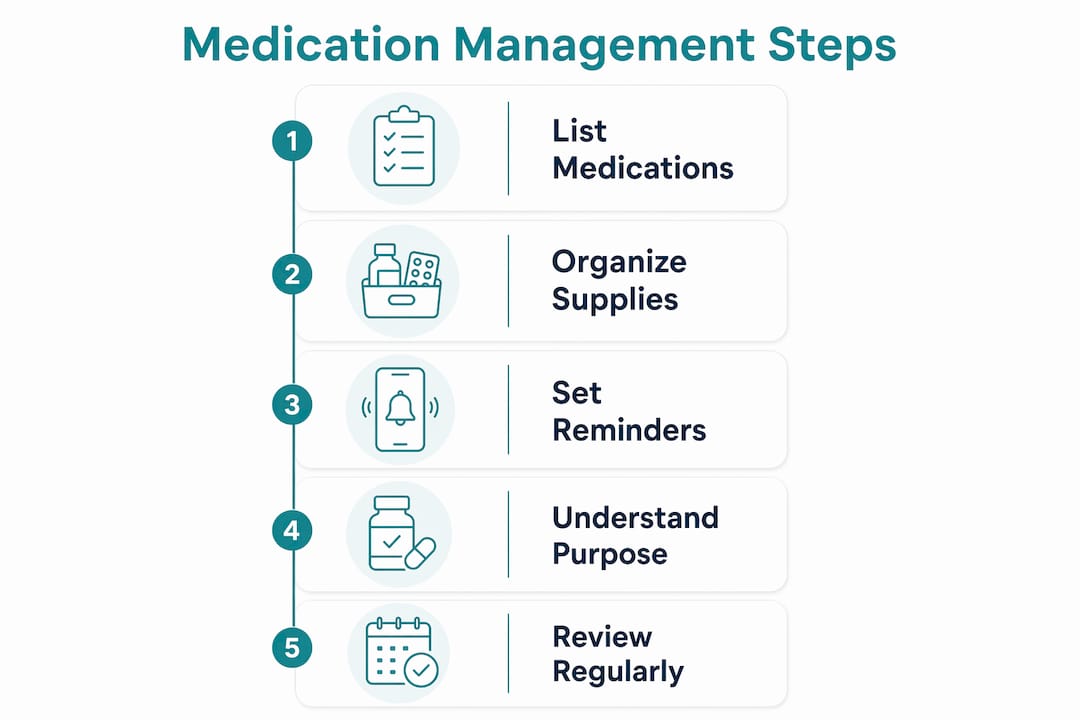
Start with a complete, written medication list. This means every prescription drug, every over-the-counter product, and every supplement you take regularly. That includes vitamins, herbal remedies, and the antacid you reach for after dinner. OTCs and supplements cause more hidden interaction problems than most people realize, yet they rarely make it onto official medication records. Write them all down.
Your list should include:
- The name of each medication (brand and generic)
- The dose and how often you take it
- What it is for
- Any special instructions (take with food, avoid sunlight, etc.)
- The prescribing provider's name
Once your list is complete, share it with every doctor, specialist, and pharmacist you see. An updated medication list shared across all your providers is one of the most effective safety tools available to you.
Next, gather your supplies. A weekly pill organizer with compartments for morning, noon, evening, and bedtime is a practical starting point. If your routine is more complex, an automatic pill dispenser that locks and alerts you at dose time is worth considering. You can explore tech tools for seniors that make this even simpler.
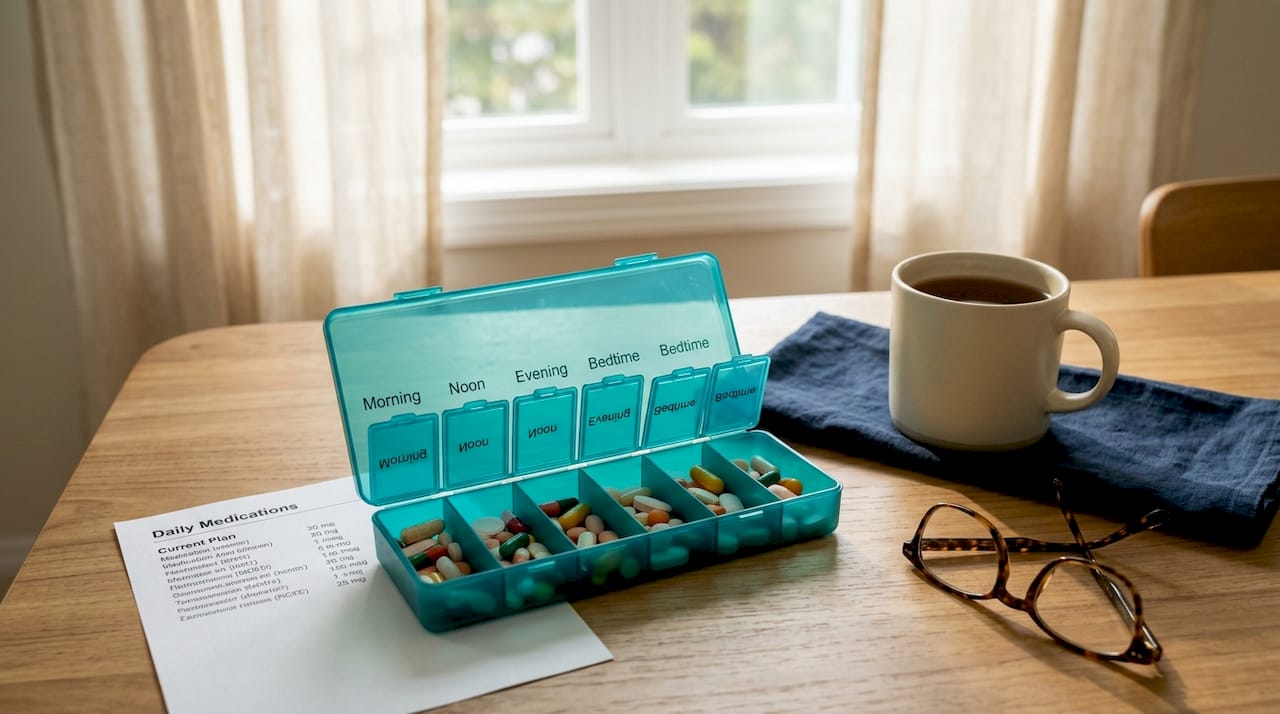
Pro Tip: Before your next doctor's appointment, bring every bottle, blister pack, and supplement container in a bag. Lay them all out together. Many people are surprised to discover duplicates, outdated prescriptions, or potential conflicts they never noticed.
Finally, make sure you understand why you are taking each medication. Knowing the purpose helps you notice when something feels off. If anything is unclear, call your pharmacist. They are genuinely one of the most accessible and underused resources available to you.
Daily steps for taking medications correctly
Knowing what to take is only half the equation. The other half is actually doing it, consistently, every single day. Here is a steady method that works.
-
Use a pill organizer. Fill it once a week, ideally on the same day. Sunday mornings work well for many people. Seeing the week laid out visually removes the guesswork and makes it easy to tell at a glance whether you took a dose.
-
Anchor your medications to a daily habit. Tying medication times to existing routines improves adherence far more reliably than alarms alone. Breakfast, brushing teeth, and bedtime are natural anchors. If you take a morning pill, put it next to the coffee maker. If it is a bedtime med, put it on your nightstand.
-
Set a phone alarm or use a reminder app. Even with a solid routine, reminders add a layer of protection. Your phone's built-in clock app works fine. If you want something designed specifically for this, there are apps that log each dose so you always know where you stand.
-
Fill all prescriptions at one pharmacy. This is not just about convenience. Consolidating at one pharmacy means your pharmacist can review your entire medication profile and catch dangerous interactions before they reach you.
-
Store medications properly. Most medications should be kept in a cool, dry place. The bathroom medicine cabinet sounds right, but humidity from showers can degrade pills faster than you think. A bedroom drawer or kitchen cabinet away from the stove is usually a better choice. Keep medications in their original labeled containers when possible.
-
Review your medication list regularly. Every time a provider adds, removes, or changes a prescription, update your list the same day. Bring your updated list to every appointment.
Pro Tip: If you travel, even for a weekend, use the travel safety checklist from Agingsolo to make sure your medications are packed, labeled, and accessible. Running out of a critical prescription away from home is a preventable problem.
Living alone safely after 50 is largely about building systems that work when no one is watching. This daily routine is exactly that kind of system.
Preventing the most common medication mistakes
Mistakes happen even with the best system. What matters is knowing which errors are most serious and how to handle them without panic.
-
Missing a dose. If you forget a dose, check the medication's instructions or call your pharmacist before doubling up. For some medications, taking a missed dose late is fine. For others, it is safer to skip and continue as normal. Never assume.
-
Taking the wrong dose. This often happens when switching between a brand-name and generic version, or when a prescription changes. Take medications exactly as prescribed and confirm the new instructions clearly with your provider before leaving any appointment.
-
Crushing or cutting pills. Not every pill can be safely modified. Some are designed with a coating that controls how the drug is released in your body. Crushing them changes how they work and can cause serious harm. Always ask your pharmacist before altering a tablet.
-
Overlooking high-risk medications. Some medications require extra care. Blood thinners, insulin, and certain heart medications carry a higher risk if doses are missed or doubled. Research shows that 46% of older adults with cognitive impairment living alone take high-risk medications, often without adequate support. If you are managing one of these, talk to your provider about whether additional safeguards make sense for your situation.
-
Ignoring side effects or interactions. Unusual symptoms after starting or changing a medication should never be brushed off. Keep a note of anything new, and contact your provider if something concerns you.
"You should take medicines exactly as prescribed, avoid known food and drug interactions, and use reminders or smartphone apps to stay on track." — Cleveland Clinic
Being proactive here is not about being anxious. It is about staying in the driver's seat.
Building habits that last over time
Getting organized is a start. Staying organized is the real work. The good news is that once the habits are in place, they take far less effort than you might expect.
Here is how to build a system that holds:
-
Keep a simple medication log. A small notebook or a notes app on your phone works well. Record each dose and any side effects you notice. Over time, this log becomes a useful record for your healthcare providers and a personal check on how things are going.
-
Schedule medication reviews. At least once a year, ask your doctor or pharmacist to review your entire medication list with you. This is sometimes called a medication reconciliation. It is the right time to ask whether each medication is still needed, whether doses are appropriate, and whether anything can be simplified.
-
Update your list after every change. When a provider adds or removes a medication, update your written list the same day and share it with your other providers. Research confirms that maintaining a shared medication list across all your providers dramatically reduces the risk of harmful interactions.
-
Recognize when you need more support. 3 out of 4 Americans do not take their medications as prescribed. That statistic includes people who are trying. If your current system is not working, that is information, not failure. A pharmacist, visiting nurse, or trusted person in your support circle can step in without taking over your independence. Knowing when to ask is a strength.
-
Know the warning signs. If you are regularly unsure whether you took a dose, if your pill organizer is frequently wrong, or if side effects are going untracked, these are signals that your system needs adjustment.
Living independently with medications is something millions of people do well. The ones who do it best treat it as a living system that evolves with their needs.
My honest take on managing meds alone
I've spent a lot of time thinking about what actually makes medication management harder for solo seniors, beyond just the mechanics of remembering pills. What I've seen again and again is that the real challenge is the absence of a second set of eyes. When you live with someone, there is an informal backup system running quietly in the background. When you live alone, that backup disappears.
What I've learned is that the best replacement for that informal backup is a deliberate, personal system. Not elaborate. Not expensive. Just steady and consistent. The people who manage this well are not necessarily the most organized people in the world. They are the ones who decided that their health was worth a little intentional effort each week.
I also think we underestimate how much pharmacists can help. They review your full medication profile in a way most doctors do not have time to do. Calling your pharmacist with a question is free, fast, and often more useful than waiting for an appointment.
If you are staying active and independent as a solo ager, medication management is not a burden on that goal. It is part of what makes that goal sustainable. Get the system right, and it fades into the background of your life, which is exactly where it belongs.
— Mike
Resources at Agingsolo to support you
Managing medications is one piece of a larger picture. If you are aging alone and thinking seriously about your safety, your routines, and your independence, Agingsolo has practical, people-centered resources to help you think through all of it.

The solo ager's guide to aging in place is a strong place to start. It covers safety planning, daily routines, emergency readiness, and more for solo seniors who want to stay in control of their lives. You can also explore how to build a support circle so that when you do need backup, you have the right people in place before a crisis forces the decision.
The goal at Agingsolo is not to make you feel dependent. It is to help you stay as independent as possible for as long as possible, with a real plan behind you. Because the best safety net is the one you build before you need it.
FAQ
What is the safest way to organize medications at home?
Use a weekly pill organizer with separate compartments for each dose time. Store medications in a cool, dry place away from humidity, and keep them in their original labeled containers when possible.
How do I remember to take medications when living alone?
Anchor your medication schedule to an existing daily habit like breakfast or brushing your teeth. Set a phone alarm as a backup, and use a pill organizer so you can always see at a glance whether a dose was taken.
What should I do if I miss a dose?
Check the instructions on your medication label or call your pharmacist before deciding whether to take the missed dose or skip it. Never double up without professional guidance, since the right answer varies by medication.
Why should I use only one pharmacy?
Using a single pharmacy means your pharmacist can review your entire medication profile together and flag dangerous interactions before they reach you. It also simplifies refills and keeps your medication records in one place.
When should I ask for outside help with my medications?
If you are regularly unsure whether you took a dose, if managing medications feels confusing, or if you are taking high-risk medications without support, it is time to talk to your pharmacist, doctor, or a trusted person in your life about additional safeguards.