

TL;DR:
- Solo aging involves growing older without a spouse or nearby adult children to provide support. Preparing requires intentional financial, legal, social, and housing plans built well before crises occur. Steady commitment to early planning enhances independence and quality of life for solo agers.
Solo aging is defined as growing older without a spouse, partner, or nearby adult children to serve as your built-in support system. The term "solo ager," widely used by AARP and elder care professionals, describes millions of adults who are choosing or finding themselves in this position. Preparing for aging without a spouse means taking deliberate control of your finances, healthcare decisions, social networks, and legal documents before you need them. The good news is that independence in your elder years is absolutely achievable. It just requires a plan that is steady, intentional, and built well in advance.
How to prepare for aging without a spouse financially
Money is the foundation everything else rests on. Without a spouse's income or pension as a backup, your financial plan needs to be built tighter and with more cushion than the standard advice suggests.
Solo agers should maintain an emergency fund of 12 to 18 months of living expenses, compared to the 3 to 6 months typically recommended for couples. That extra buffer exists because there is no second income to absorb a surprise medical bill, a home repair, or a gap in care coverage. Think of it as your personal safety net, sized for one.
Here are the financial priorities worth building around:
- Maximize Social Security by waiting. Financial experts recommend claiming Social Security at age 70 for the highest guaranteed monthly payout. For a solo ager, that monthly check is often your most reliable income source, so squeezing every dollar out of it matters.
- Contribute steadily to retirement accounts. If you are still working, max out your 401(k) or IRA contributions. A Health Savings Account (HSA) is especially valuable because it covers qualified medical expenses tax-free, and healthcare is one of the largest costs solo agers face.
- Budget for paid help now. Even if you are healthy today, build a line item in your budget for future care costs. Home health aides, grocery delivery, and transportation services are real expenses that couples often split. You will carry them alone.
- Avoid the "I'll figure it out later" trap. Solo agers who delay financial planning often face crisis decisions under pressure, which leads to costly mistakes. Review your financial safety checklist annually.
Pro Tip: If you are within 10 years of retirement, meet with a fee-only financial planner who has experience with single retirees. They will spot gaps in your plan that generic retirement calculators miss entirely.
What legal and healthcare documents do solo agers need?
Legal preparation is the area where solo agers are most vulnerable, and most likely to procrastinate. The consequences of waiting are serious.
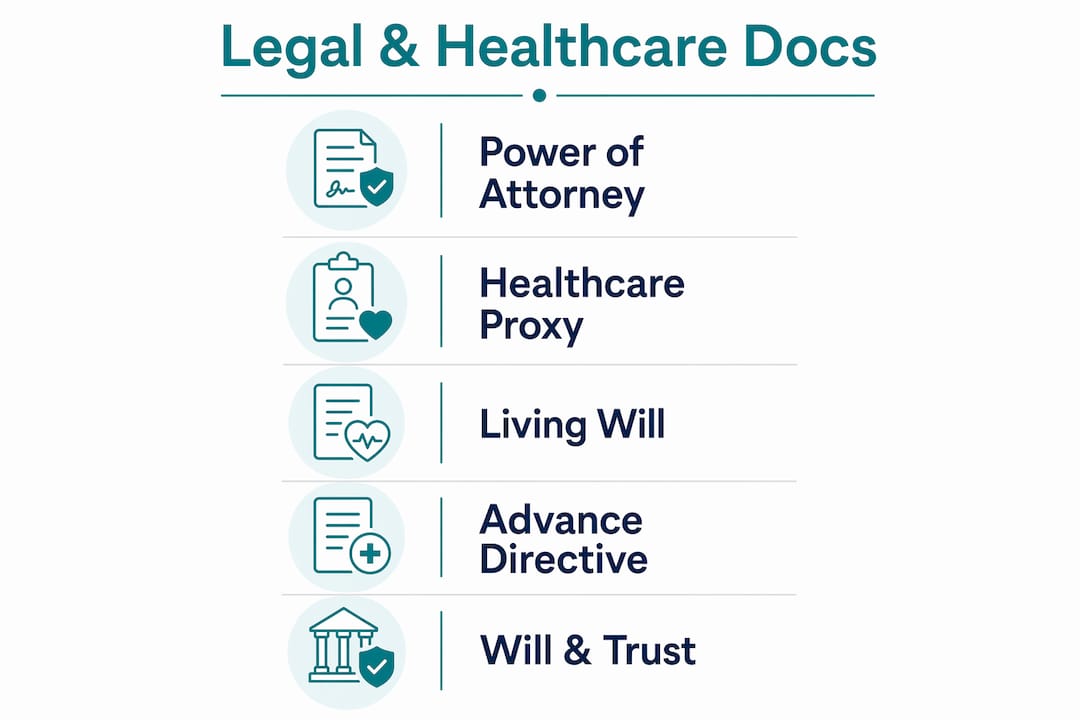
Failing to appoint durable powers of attorney and medical proxies can result in court-mandated guardianship if you become incapacitated. That means a judge, not you, decides who manages your money and your medical care. No one wants that outcome, and it is entirely preventable.
Here is the order in which to build your legal safety net:
- Appoint a durable power of attorney for finances. This person manages your bank accounts, pays your bills, and handles financial decisions if you cannot. Choose someone you trust completely, and make sure they are willing to do the job.
- Designate a healthcare proxy. This is your medical decision-maker. They speak for you when you cannot speak for yourself. The role requires someone calm under pressure, not just someone you love.
- Create an advance directive or living will. This document spells out your wishes for end-of-life care, resuscitation, and life support. It removes the burden of guessing from whoever is acting on your behalf.
- Sign HIPAA release forms. A living will alone is not enough. HIPAA releases and durable power of attorney tailored to your state are required by hospitals before they will share your medical information with anyone, including your chosen proxy.
- Consider a professional fiduciary. If no trusted friend or family member is available, hiring a professional fiduciary is a legitimate and increasingly common option. These licensed professionals handle legal and financial roles for solo agers who need a neutral, qualified advocate.
Review all of these documents every two to three years, or whenever your health, finances, or relationships change significantly. Laws vary by state, so work with a local elder law attorney to make sure everything is valid where you live.
Pro Tip: Store your legal documents in a fireproof box and give your healthcare proxy a copy. A document no one can find in a crisis is the same as no document at all.
How do you build a social support network when aging alone?
Isolation is one of the most underestimated risks of solo aging. It affects mental health, physical health, and your ability to get help when you need it. Building connection is not optional. It is part of your care plan.
A functional support network for solo agers ideally involves 3 to 5 different people covering different roles, from financial oversight to daily check-ins to emotional support. Relying on one person for everything is a fragile system. Spread the weight.
- Join structured community groups. Senior centers, faith communities, hobby clubs, and volunteer organizations all create regular contact with people who know your name. The benefits of community groups for solo agers go beyond friendship. They create accountability and visibility.
- Set up regular touchpoints. A weekly coffee call, a standing dinner with a neighbor, or a monthly check-in with a friend creates rhythm. These touchpoints also serve as informal wellness checks.
- Use technology to stay connected, not to replace connection. Video calls, group chats, and social platforms like Facebook Groups for local seniors can supplement in-person contact. Technology tools work best when they are simple, reliable, and easy to maintain without technical help.
- Address isolation directly. If you notice the quiet getting heavier, that is a signal, not a personal failing. Agingsolo has a detailed resource on common isolation challenges and how to work through them.
Planning for what you are retiring to, including purpose and social connection, is as important as financial readiness. A full bank account and an empty calendar is not a good retirement plan.
What housing options work best for solo agers?

Your home is more than a place to live. For solo agers, it is also a safety system. The question is whether your current home can keep up with your needs as you age.
Start with a home safety audit. Grab bars in the bathroom, improved lighting in hallways, and non-slip surfaces on stairs and floors are low-cost upgrades that significantly reduce fall risk. Falls are the leading cause of injury-related death among adults over 65, and most happen at home. These modifications are worth doing now, not after an incident.
Planning housing transitions early eases the logistics and decisions before physical or cognitive limitations arise. A crisis move, made under pressure after a health event, almost always results in worse outcomes and higher costs.
| Housing option | Best for |
|---|---|
| Aging in place with modifications | Those with a safe, accessible home and a strong local support network |
| Senior apartment communities | Those wanting social connection with reduced home maintenance |
| Continuing Care Retirement Communities (CCRCs) | Those who want a single location that covers independent, assisted, and memory care |
| Co-housing with friends | Those who value shared costs and mutual support in a home-like setting |
If you own your home, understand your equity position. A reverse mortgage can provide income in retirement, but it comes with conditions that require careful review with a financial advisor before committing.
Pro Tip: Visit at least two or three housing alternatives before you think you need them. Familiarity with your options makes the eventual decision far less stressful.
How do daily routines and technology support solo aging?
Structure is a quiet form of self-protection. Structured daily routines reduce the risk of health crises by helping solo agers manage medications, meals, and social interactions consistently. When your day has shape, it is easier to notice when something feels off.
A few habits worth building into your routine:
- Medication management. Use a weekly pill organizer or an app like Medisafe to track doses. Agingsolo has a dedicated guide on managing medications safely when living alone.
- Automated check-in systems. Daily check-in systems like reply-to-text improve the sustainability of support networks without burdening participants. A simple daily text that requires a reply takes 10 seconds and provides real peace of mind.
- Medical alert devices. Systems like Life Alert or Apple Watch fall detection give you a direct line to emergency services without needing to reach a phone.
- Annual plan reviews. Annual review and adjustment of plans is critical to accommodate evolving physical and cognitive needs. Set a date each year, perhaps your birthday, to review your finances, housing situation, legal documents, and support network.
Pro Tip: Pair your annual review with a visit to your primary care doctor. Physical changes often signal when other parts of your plan need updating too.
Key takeaways
Preparing for solo aging successfully requires building financial reserves, legal documents, social networks, and housing plans well before you need them.
| Point | Details |
|---|---|
| Build a larger emergency fund | Solo agers need 12 to 18 months of expenses saved, not the standard 3 to 6 months. |
| Secure your legal documents early | Durable power of attorney, healthcare proxy, and HIPAA releases must be in place before a crisis. |
| Spread your support network | Identify 3 to 5 people for distinct roles to prevent any one person from being overwhelmed. |
| Plan housing before you must | Evaluate alternatives and make modifications now, while decisions are calm and unhurried. |
| Review your plan every year | Annual reassessment keeps your finances, health, and support systems aligned with your actual needs. |
What I have learned about aging solo
I have spent years talking with solo agers, reading their plans, and watching what actually works versus what sounds good on paper. The single biggest mistake I see is waiting. People tell themselves they will sort out the legal documents next year, or start building their social network after they retire. Then a health event happens, and suddenly decisions that should have taken months get made in days, under pressure, with limited options.
The solo agers who do this well share one trait. They treat their independence as something worth protecting, not something they can assume will just continue. They build their support network the way you build any good relationship: slowly, intentionally, and before they need it badly.
Aging without a spouse is not a problem to be solved. It is a life arrangement that requires a different kind of planning. The people I have seen thrive in solo aging are not the ones with the most money or the biggest families nearby. They are the ones who got honest with themselves early, made a plan, and kept updating it. That is entirely within your reach.
— Mike
How Agingsolo can help you build your plan
Agingsolo is built specifically for adults who are growing older without a built-in support system. Whether you are just starting to think about solo aging or you are ready to get specific about housing, legal documents, and daily routines, the resources here are designed to meet you where you are.
Start with what every solo ager needs to know, a foundational guide covering financial, healthcare, social, and legal planning in one place. From there, explore the life care plans guide to build a living document that grows with you. If you are thinking further ahead, the end-of-life planning guide for solo agers walks through the decisions most people avoid until it is too late. Agingsolo exists so you do not have to figure this out alone.
FAQ
What does it mean to be a solo ager?
A solo ager is an adult growing older without a spouse, partner, or nearby adult children to serve as a default support system. The term is widely used by AARP and elder care professionals to describe people who need to build intentional support networks and legal structures in place of traditional family caregiving.
How much money should a solo ager have saved?
Solo agers should maintain an emergency fund of 12 to 18 months of living expenses, significantly more than the 3 to 6 months recommended for couples. This larger cushion covers unexpected medical costs, home repairs, and care gaps without a second income as backup.
Who should a solo ager appoint as a healthcare proxy?
A healthcare proxy should be someone calm under pressure who understands your values and is willing to advocate for your wishes in a medical setting. If no suitable family member or friend is available, a professional fiduciary is a licensed alternative that solo agers increasingly use.
When should I start planning for solo aging?
The best time to start is your 50s, well before any health or cognitive changes make decisions harder. Early planning gives you time to build a support network, secure legal documents, and evaluate housing options without the pressure of a crisis driving the timeline.
How can technology help solo agers stay independent?
Medical alert devices, automated check-in systems, and medication reminder apps all support daily independence for solo agers. Technology works best when it is simple and reliable, complementing human connection rather than replacing it.