

TL;DR:
- Most adults over 50 want to age independently but lack confidence in obtaining the necessary support. True independence involves deliberate planning, accessible housing, and a reliable support network, not just living alone. Building early plans, home modifications, community resources, and technology can help preserve independence and safety over time.
Independent aging is the ability to live on your own terms, with safety, health, and real connection, by building the right plans, environments, and support before you need them. Most adults over 50 want exactly that. 93% of U.S. adults 65+ live in their own homes, yet only 37% feel confident they can stay there with the support they need. That gap between wanting independence and actually sustaining it is where intentional planning makes all the difference. Agingsolo exists to close that gap with practical tools, honest guidance, and a clear path forward.
What does independent aging really mean?
Independent aging is not the same as living alone. That distinction matters more than most people realize. True autonomy in later life, what experts call intentional independence, means you have made deliberate choices about your home, your support circle, and your backup plans. It is not reactive. It does not wait for a fall or a health scare to trigger action.
Experts warn that equating living alone with independence is one of the most common and costly mistakes older adults make. Real autonomy requires accessible housing, steady social routines, and backup assistance that is already in place. Without those elements, living alone is just isolation with a good address.
The concept of senior self-sufficiency is also often misunderstood. Self-sufficiency does not mean doing everything yourself. It means having the right resources available so you can make your own decisions. A person who has a trusted neighbor, a weekly check-in call, and a written emergency plan is far more self-sufficient than someone who refuses all help and has no plan at all.
Here is what genuine independence actually requires:
- A proactive support network. Friends, neighbors, and local services you have already connected with, not people you hope will show up in a crisis.
- A safe, accessible home. Modifications made before an emergency, not after one.
- A written plan. Emergency contacts, medical preferences, and financial arrangements documented and shared.
- Regular social routines. Scheduled connection that prevents isolation from quietly taking hold.
Pro Tip: Write down the names of three people who would notice within 24 hours if something happened to you. If you cannot name three, that is your first planning task.
How can your home support aging in place?
Your home is either your greatest asset or your biggest risk. Only 5% of U.S. homes are truly accessible for aging adults. That means the vast majority of people planning to age in place are living in homes that will eventually work against them.
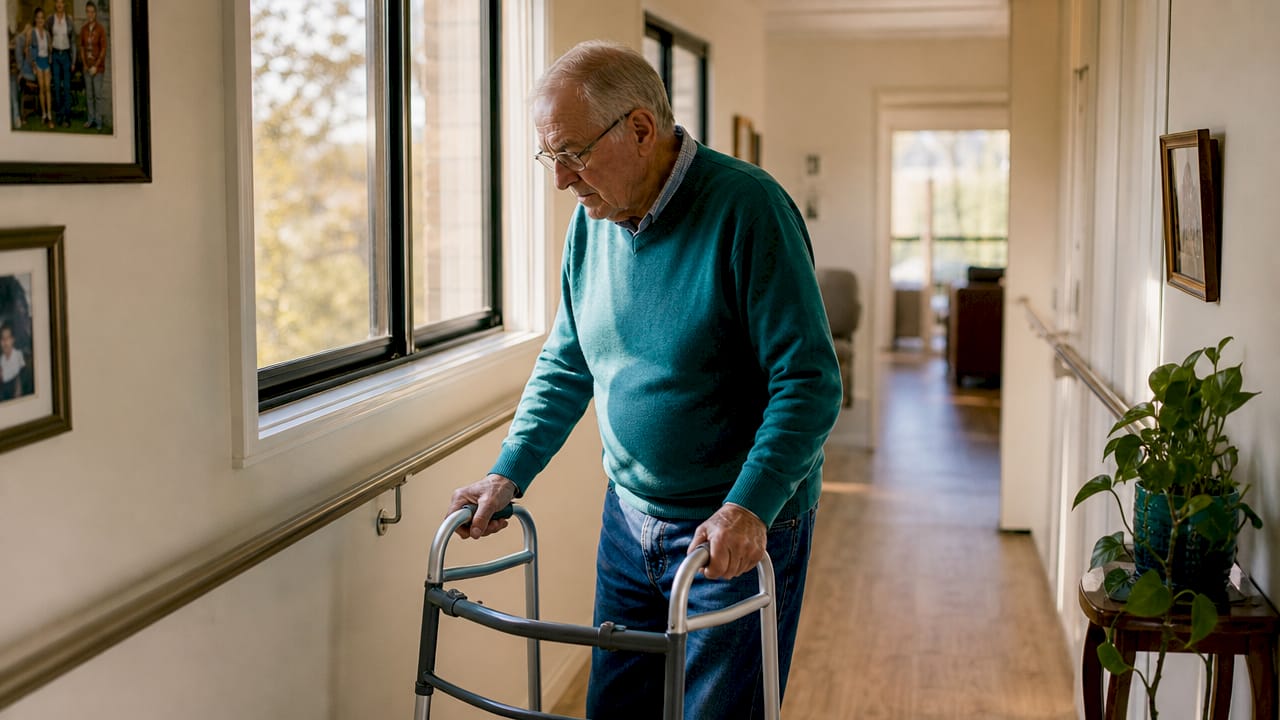
The good news is that targeted modifications change that equation significantly. Universal design principles, such as wider doorways, no-step entries, and lever-style door handles, make a home safer without making it look clinical. Grab bars in bathrooms, better lighting in hallways, and a first-floor bedroom option are among the most effective and affordable changes you can make.
Smart home technology adds another layer of protection. Nearly 85% of adults 55+ say they would adopt smart home technology if it improved their safety, health, or social connection. That willingness is a real opportunity. Devices like Amazon Echo, Google Nest, and Apple HomePod can set medication reminders, make calls hands-free, and connect you to family instantly. Medical alert systems from companies like Life Alert and Bay Alarm Medical provide emergency response at the push of a button. Telehealth platforms let you see a doctor from your living room, which matters enormously when driving becomes difficult. Agingsolo covers telehealth for solo adults in detail if you want to understand how to add that layer to your plan.
Here is a practical sequence for home readiness:
- Assess your current home. Walk through every room and identify trip hazards, poor lighting, and hard-to-reach storage.
- Prioritize the bathroom and bedroom. These are where most falls happen. Address them first.
- Add technology gradually. Start with one device that solves a real problem, then build from there.
- Fund modifications intentionally. Medically necessary home modifications can be funded through early 401(k) withdrawals if properly documented. Talk to a financial advisor about this option.
- Reassess every two years. Your needs will change. Your home plan should too.
| Modification | Estimated benefit | Cost range |
|---|---|---|
| Grab bars (bathroom) | Reduces fall risk significantly | Low |
| No-step entry ramp | Enables wheelchair or walker access | Moderate |
| Smart lighting with motion sensors | Reduces nighttime fall risk | Low |
| Medical alert system | Immediate emergency response | Low monthly fee |
| Stair lift | Maintains access to full home | High |
Pro Tip: Contact your local Area Agency on Aging before paying out of pocket for modifications. Many offer free assessments and can connect you to grant programs or low-cost contractors.
What community resources support elderly independence?
No one ages independently without community. Local Area Agencies on Aging (AAA) provide free or low-cost assessments and connect older adults to tailored programs including PACE (Program of All-inclusive Care for the Elderly), meal delivery, transportation, and caregiver respite services. These agencies are often the most underused resource available to adults planning to age in place.
Understanding the differences between your options helps you plan realistically:
| Living arrangement | Level of support | Best for |
|---|---|---|
| Aging in place at home | Self-directed with chosen services | Adults with strong networks and accessible homes |
| Independent living community | Social programming, no personal care | Active adults wanting community without medical support |
| Assisted living | Daily personal care and supervision | Adults needing regular help with daily tasks |
| PACE program | Full medical and social day services | Adults with complex needs who want to stay home |
One fact that catches many people off guard: waitlists for assisted living facilities often span 2–3 years. That means the time to research your options is now, not when a health event forces a decision. Knowing what is available in your area, and getting on a waitlist early if needed, keeps your choices open.
Home care services through agencies like Home Instead and Visiting Angels can fill gaps without requiring a move. Meals on Wheels operates in most U.S. counties and provides both nutrition and a daily human check-in. Volunteer driver programs through organizations like ITNAmerica address transportation gaps that often accelerate isolation.
- Research your local AAA at eldercare.acl.gov to find free services near you.
- Ask about PACE eligibility if you have Medicare and Medicaid.
- Look into senior centers for social programming, which directly counters isolation challenges that erode independence over time.
What planning steps help you age independently and safely?
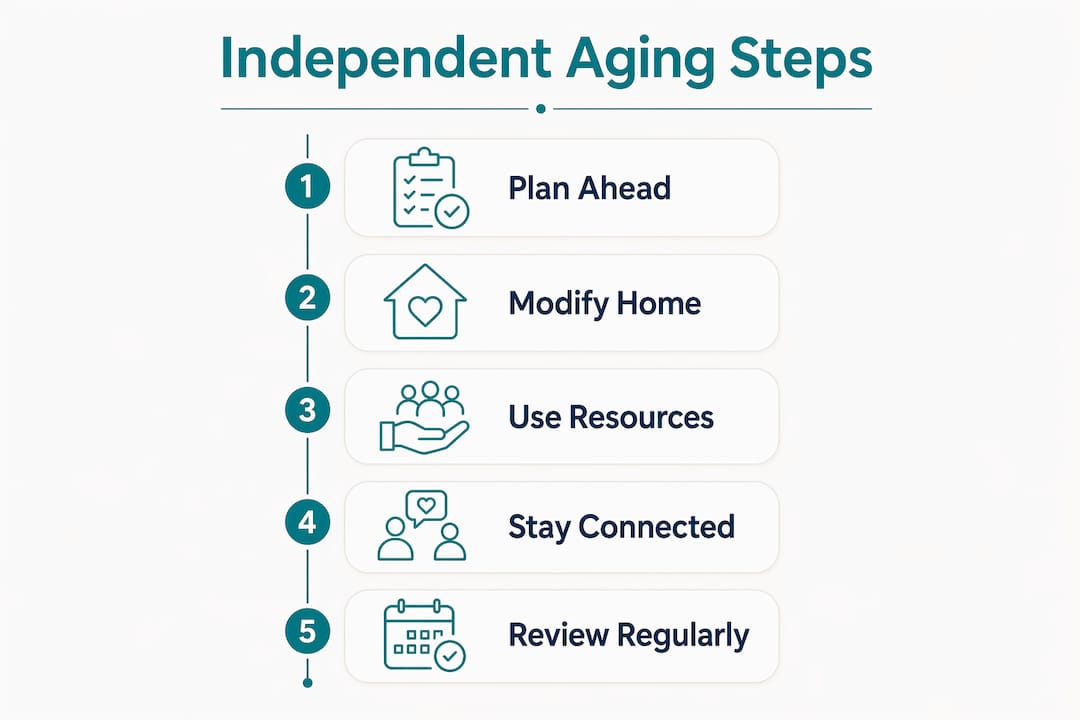
The single most protective thing you can do is plan before you need to. Solo agers achieve better stability and well-being with early, written plans and regular support contacts. A plan does not have to be complicated. It has to be real, written down, and shared with people who will act on it.
Solo agers face unique challenges because family diaspora means fewer nearby people to call on. Building a local support circle before you reach your 80s is not optional. It is the foundation of everything else.
Follow these steps to build a plan that actually holds:
- Create an emergency contact list. Include at least three people who have a key to your home and know your medical history. Update it annually.
- Set up a regular check-in system. A daily text, a weekly call, or a buddy system with a neighbor creates a safety net that does not depend on anyone noticing something is wrong.
- Review your finances. Only 21% of adults 65+ have long-term care insurance. If you are in your 50s or early 60s, this is the window to explore coverage before premiums become prohibitive. A financial safety checklist is a good starting point.
- Build your social calendar deliberately. Weekly commitments, whether a class, a volunteer shift, or a standing lunch, keep you connected and give others a reason to notice your absence.
- Review and update your plan every year. Your health, your finances, and your relationships change. Your plan needs to keep up.
Pro Tip: Tell at least two people where you keep your important documents, including your advance directive, insurance cards, and emergency contacts. A plan no one can find is not a plan.
Key takeaways
Independent aging succeeds when it is treated as a planned, supported lifestyle rather than a solo act of willpower.
| Point | Details |
|---|---|
| Independence requires planning | Living alone without a written plan is risk, not freedom. |
| Most homes need modification | Only 5% of U.S. homes are accessible; address your home before a crisis forces it. |
| Community resources are underused | Area Agencies on Aging offer free assessments most adults never request. |
| Financial gaps are common | Only 21% of adults 65+ have long-term care insurance; review coverage in your 50s. |
| Early planning preserves options | Assisted living waitlists run 2–3 years; research options now while choices remain open. |
Why I believe independence is a team sport
I have seen the same pattern repeat itself. Someone in their 60s decides they are fine, that they do not need a plan yet, that planning feels like giving up. Then something shifts, a health event, a move, a loss, and suddenly the options that were available five years earlier are gone. The waitlist is full. The insurance window has closed. The neighbors they meant to get to know are strangers.
The adults I have seen age well share one trait. They stopped thinking of independence as something you protect by keeping people out. They started thinking of it as something you build by letting the right people in. A neighbor who has your spare key. A friend who calls every Sunday. A written plan your doctor has seen. That is not dependence. That is a safety net you built yourself, on your own terms.
The other thing worth saying plainly: independence is not a permanent state you either have or lose. It is a spectrum, and where you land on it at 80 depends heavily on decisions you make at 55. The adults who plan earlier consistently have more options, more dignity, and more genuine freedom later. That is not an opinion. That is the pattern.
— Mike
Agingsolo has the tools to help you build your plan
Planning for independent aging does not have to feel like a solo project. Agingsolo offers practical guides, checklists, and real-world tools built specifically for adults who are growing older without a traditional support system nearby.

Whether you are just starting to think about your future or you are ready to put a full plan in place, Agingsolo meets you where you are. From a complete aging in place guide to resources on staying safe and connected as a solo ager, the site covers the decisions that matter most. You deserve a plan that reflects your values, your home, and your life. Agingsolo helps you build exactly that.
FAQ
What is independent aging?
Independent aging is the ability to live autonomously in later life by combining intentional planning, accessible housing, and a reliable support network. It is not the same as living alone without help.
How is aging in place different from independent aging?
Aging in place refers specifically to staying in your own home as you grow older. Independent aging is a broader concept that includes home, finances, social connection, and formal support systems working together.
What resources help seniors age independently at home?
Local Area Agencies on Aging offer free assessments and connect older adults to services like PACE, meal delivery, transportation, and home care. You can find your local agency at eldercare.acl.gov.
When should I start planning for independent aging?
The best time to start is in your 50s or early 60s, before a health event forces decisions. Assisted living waitlists can run 2–3 years, and long-term care insurance becomes significantly more expensive after age 65.
What technology supports independent aging at home?
Medical alert systems, smart home devices, and telehealth platforms are the three most practical technology categories for older adults aging at home. Each addresses a different layer of safety, health monitoring, and social connection.