

Paying your bills on time feels like enough. You've managed your home for years, and the utilities just... work. But living alone changes the math in ways that catch even the most organized people off guard. A shutoff notice, a silent gas leak, a carbon monoxide alarm you haven't tested in two years — these aren't just inconveniences. For someone living solo, they can become genuine emergencies with no one nearby to notice or help. The good news is that a handful of steady, intentional steps can close most of those gaps and give you real peace of mind.
Table of Contents
- What every solo ager needs to know about home utilities
- Preventing utility shutoffs: Your essential action plan
- Detecting and preventing home utility hazards
- Creating an emergency-ready home: Alarms, exits, and real tests
- The overlooked link: Independence means blending utility safety and support
- Ready to make your home safer — and your plan stronger?
- Frequently asked questions
Key Takeaways
| Point | Details |
|---|---|
| Utility risks are twofold | Protecting yourself means addressing both physical hazards and billing/shutoff threats. |
| Early action expands options | Acting quickly on shutoff notices or health protections opens up more support and avoids emergencies. |
| Detection saves lives | Proper smoke and carbon monoxide alarms and annual checks are lifesavers for solo agers. |
| Clear exits are non-negotiable | Always have two clear and accessible exits in case you need to evacuate your home. |
| Support networks boost safety | Connecting with trusted friends or advisors makes your safety plans stronger and more reliable. |
What every solo ager needs to know about home utilities
Most people assume that if the lights are on and the bill is paid, they're safe. That's only half the picture.
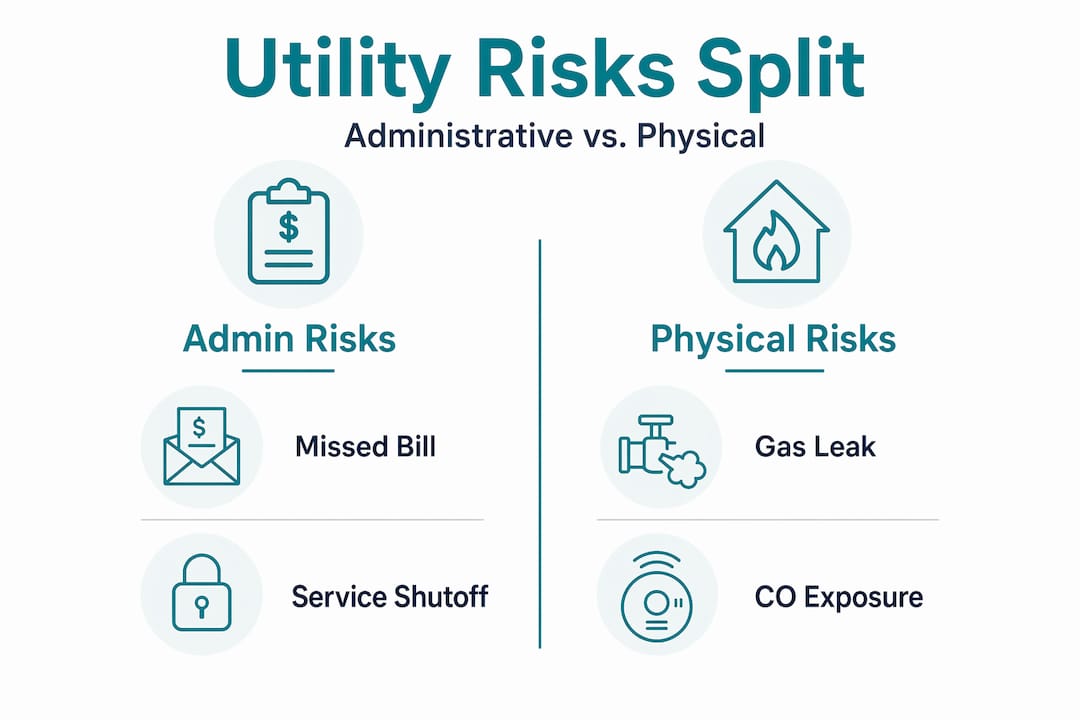
Utility safety actually has two distinct sides, and understanding both is what makes the difference between being reactive and being prepared.
The two sides of utility safety:
- Administrative risks involve service shutoffs due to missed payments, billing disputes, or failed automatic payments. These are manageable with the right plan, but they can escalate quickly if you're not watching.
- Physical hazards involve dangers like gas leaks, carbon monoxide (CO) buildup, and fire. These are silent, invisible threats that don't wait for a convenient moment.
The important insight here, noted by utility safety advocates, is that prevention at the point of hazard (detectors, venting, alarms) is an entirely different strategy than preventing shutoffs through administrative and financial steps. You need both layers working together.
Here's a simple way to think about it:
| Risk type | Example | Primary action |
|---|---|---|
| Administrative | Shutoff notice for unpaid bill | Call utility, apply for assistance |
| Physical (gas) | Gas appliance leak | Annual inspection, know shutoff valve |
| Physical (CO) | Carbon monoxide buildup | Install CO detector, test monthly |
| Physical (fire) | Kitchen or electrical fire | Smoke alarm on every floor, clear exits |
Staying active and independent as a solo ager means keeping your home running smoothly on both fronts. Neither side can be ignored.
Preventing utility shutoffs: Your essential action plan
With the risks clarified, the next step is learning exactly how to keep vital utilities running, no matter what life throws your way.
A shutoff notice is stressful. But what many people don't realize is that the moment that notice arrives, you still have more options than you think — as long as you act quickly.
The key insight from emergency utility assistance guidance is this: contact your utility company immediately for options like payment plans, due date extensions, or disconnection holds, and at the same time apply for emergency energy assistance such as LIHEAP (Low Income Home Energy Assistance Program). Doing both at once maximizes your options.
Your step-by-step shutoff prevention plan:
- Call your utility company the same day you receive a shutoff notice. Ask specifically about payment plan options, due date extensions, and any disconnection holds available.
- Apply for LIHEAP or other local emergency energy assistance programs. Don't wait to see if the payment plan is approved first. Apply simultaneously.
- Search for local utility assistance funds. Many electric and gas companies have their own hardship programs that aren't widely advertised. Ask directly.
- Contact a local community action agency. These organizations often know about emergency funds that aren't on the utility company's website.
- Request a protected payment arrangement in writing. Verbal agreements don't always hold. Get the terms confirmed by email or letter.
- Set up alerts. After the crisis passes, set up account alerts for every upcoming due date so you're never caught off guard again.
Statistic callout: LIHEAP serves millions of households annually, but many eligible people never apply because they don't know it exists. If your income has dipped, or if you're spending more than 10% of it on heating and cooling costs, you may qualify.
If you have a medical condition that depends on electricity or temperature control, there's an additional and critically important layer to this. According to medical shutoff protection guidelines, you should ask your utility company about medical-necessity protections early, provide clinician documentation as soon as possible, and understand that some of these protections are time-sensitive. Some states also allow you to designate a trusted third party to receive shutoff notices on your behalf, giving you a backup system if mail goes unnoticed.
Pro Tip: If you rely on a home medical device like an oxygen concentrator, CPAP machine, or dialysis equipment, register that fact with your utility company now, before any problem occurs. Many utilities have a medical baseline program or priority response list. Being on it can make a real difference.
Your health and emergency planning approach should include this step as a standard part of your annual home review.
Detecting and preventing home utility hazards
Of course, keeping the lights on is just part of the equation. Let's turn to how you can physically protect yourself from the most common in-home utility hazards.
Gas and carbon monoxide are the ones that worry people most, and for good reason. Carbon monoxide is colorless and odorless. You can't see it, smell it, or taste it. It can build up from faulty furnaces, gas stoves, water heaters, or even attached garages where a car idles briefly.
American Red Cross guidance on carbon monoxide poisoning is direct: make sure fuel-burning appliances are properly vented, have your heating system, chimney, and vents inspected by a professional every year, and if a CO alarm sounds continuously, evacuate immediately and call 911 from outside.
That last point cannot be overstated. Do not investigate. Do not open windows and wait. Get out first, then call.
Here's a quick reference for alarm placement and replacement:
| Alarm type | Placement | Test frequency | Replace after |
|---|---|---|---|
| Smoke alarm | Every floor, inside bedrooms | Monthly | 10 years |
| CO alarm | Every floor, near sleeping areas | Monthly | 5 to 7 years |
| Combination alarm | Every floor | Monthly | Per manufacturer label |
Alarm placement guidance for older adults emphasizes that mounting location matters. Smoke alarms should generally be ceiling-mounted. CO alarms can go on walls at about waist height, or near the floor in some cases, depending on the model. Read the manufacturer instructions for your specific unit.
"If your CO alarm sounds continuously, don't pause to investigate. Leave the home immediately, get to fresh air, and call emergency services from outside."
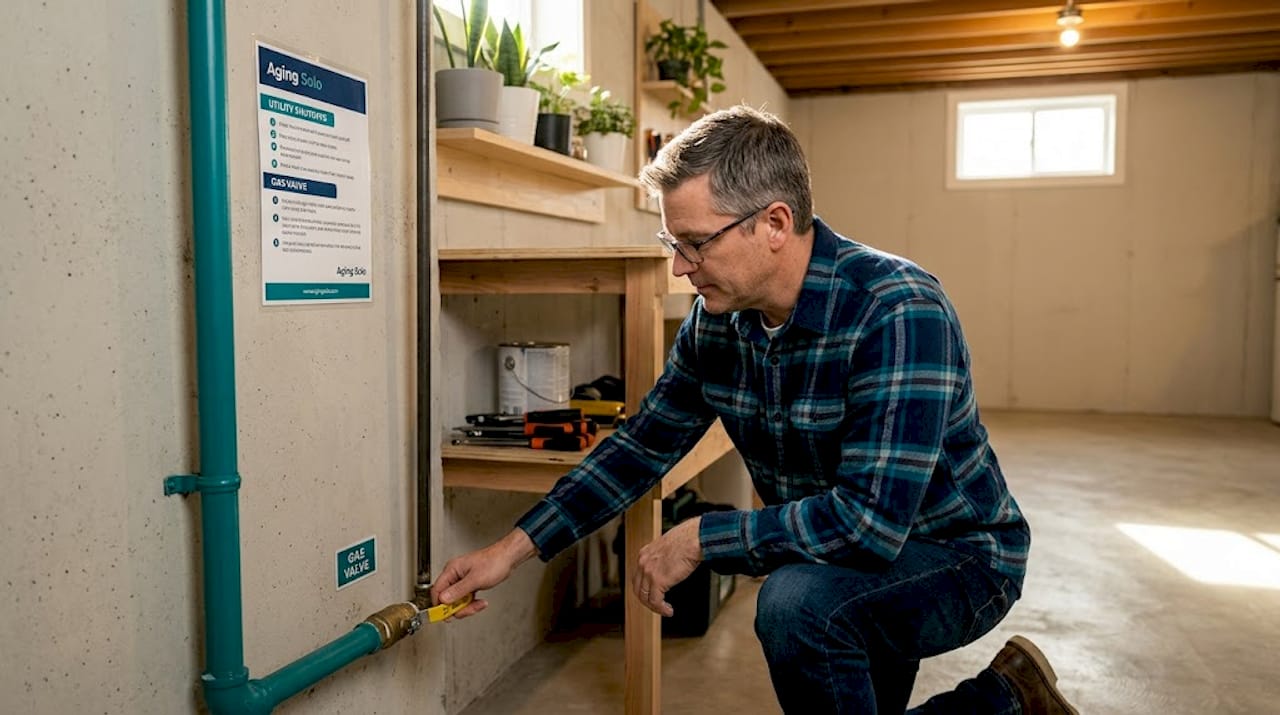
For gas specifically, know where your main shutoff valve is located. If you're unsure, ask a plumber or your gas company to show you. It takes about two minutes to learn, and that knowledge could matter enormously in an emergency. Also consider that regular ear checkups are important for older adults, since good hearing directly affects your ability to hear alarms when they go off.
For broader home safety tips that connect to your daily routines, there are helpful resources tailored specifically to solo agers.
Pro Tip: When you replace a battery in a smoke or CO alarm, write the date on a piece of tape stuck inside the cover. You'll always know exactly when it was last changed without having to guess.
Creating an emergency-ready home: Alarms, exits, and real tests
With alarms and inspection routines set, the final piece is ensuring you can respond confidently if an emergency strikes at home.
Knowing you have alarms is not the same as knowing they work. And knowing there's an exit is not the same as knowing you can actually use it in the dark, in a hurry, or when you're not feeling your best.
Fire safety guidance from UMass Memorial Health recommends routine alarm checks, consistent battery replacement habits, and being familiar with how to manage emergency exits. For solo agers, this is especially important because there's no one else in the home to compensate for a gap in the plan.
Your emergency readiness checklist:
- Test every alarm monthly. Put it in your calendar. Use the test button. If it doesn't sound clearly, replace the alarm.
- Walk both of your exits right now. Are they clear? Are there boxes, furniture, or clutter blocking either path?
- Know where your utility shutoffs are. Gas main, electrical panel, water shutoff. Label them if they aren't already.
- Keep a flashlight by your bed. Emergencies don't care what time it is.
- Practice your exit plan. This sounds strange when you live alone, but actually walking out both exits at least once a year helps your brain know the route under stress.
Key things to check around your home:
- Smoke alarm batteries replaced within the last year
- CO alarm within its rated lifespan (check the label on the back)
- Two clear, unobstructed paths out of your home
- Mobility aids or assistive devices kept close to your bed at night
- Emergency contacts posted near your front door or saved on your phone
- Main utility shutoff locations known and accessible
One often-overlooked detail: if you use a walker, cane, or other mobility aid, it should be within reach from your bed before you go to sleep. In a real emergency, fumbling for it in the dark costs you time you may not have.
The daily living safety checklist available through Aging Solo can help you build these habits into a routine that feels natural, not burdensome.
The overlooked link: Independence means blending utility safety and support
Here's something most home safety guides never say out loud: no alarm, detector, or checklist fully replaces having another person who knows your situation.
That's not meant to discourage you. It's meant to be honest with you.
Most guides treat physical home safety and financial bill management as separate topics. And most people address them separately too, if they address them at all. But real independence as a solo ager comes from weaving both together and then adding a third layer: human connection and documentation.
Think about the edge cases. What if you're in the hospital and your automatic payment fails? What if your CO alarm goes off while you have a bad cold and your instincts are foggy? What if you're one of the many people who depends on home medical equipment and a power outage lasts longer than expected? The gadgets matter. The routines matter. But your backup plan, the person or people who know your situation and can step in, matters just as much.
Building your support network is not about admitting you can't manage alone. It's about building the kind of thoughtful, realistic plan that means you rarely have to test your limits.
This is also where documentation becomes powerful. Write down your utility account numbers, your emergency contacts, your medical equipment needs, and where your shutoff valves are. Put it somewhere a trusted friend or neighbor can find it. That piece of paper is as important as any detector on the wall.
Life care planning pulls all of this together in a way that goes far beyond utilities. It's the broader structure that lets your safety routines actually hold up over time, especially during the moments you didn't see coming.
Independence isn't about doing everything alone. It's about having a plan steady enough that you rarely need to call for help and clear enough that when you do, the right people know exactly what to do.
Ready to make your home safer — and your plan stronger?
Utility safety is one piece of a bigger picture — and you've already taken the most important step by reading this far.

At Aging Solo, we believe that the most powerful thing you can do for your independence is to build a real safety net, one practical layer at a time. Whether you're looking for home safety resources and checklists, guidance on staying independent as life changes around you, or a complete solo aging 101 guide to get your planning on solid ground, it's all here in one place. You don't have to figure this out from scratch. Take the next step at your own pace, with tools designed for exactly where you are right now.
Frequently asked questions
What should I do first if I get a utility shutoff notice?
Contact your utility company right away to ask about payment extensions or holds, and apply for emergency energy assistance the same day to maximize your options.
Can I prevent a utility shutoff if I have a medical condition?
Yes, in many locations you can request special protections or delay a shutoff by submitting medical documentation before the shutoff date, so start that process early.
How often should I test smoke and CO alarms?
Test your alarms monthly and replace batteries as recommended; consistent testing is a key part of fire safety for seniors and helps ensure alarms work during an actual emergency.
What does a continuous carbon monoxide alarm mean?
A continuous CO alarm sound signals real danger: leave your home immediately and get to fresh air, then call 911 from outside rather than investigating inside.
Do I need a second way out of my home in an emergency?
Yes, always keep at least two exits clear and accessible; fire safety guidance recommends knowing and practicing both exit routes so you can move quickly if needed.