

TL;DR:
- Effective retirement planning involves early financial, emotional, and practical preparations to maintain independence and well-being. Strategies include delaying Social Security, tracking expenses, building a support network, and creating routines before retirement. Starting these steps years in advance reduces risks and helps solo agers build a meaningful, secure retirement lifestyle.
Navigating retirement is the process of managing your finances, emotions, and lifestyle choices to maintain independence and well-being as you age. For adults 50 and older, especially those aging without a built-in support system, this process requires more than a savings account and a vague plan. It means making deliberate decisions about Social Security, daily spending, emotional health, and long-term independence. The first 24 months after retirement carry the highest risk of costly financial and behavioral mistakes. Starting your planning now, before you reach that window, is the single most protective step you can take.
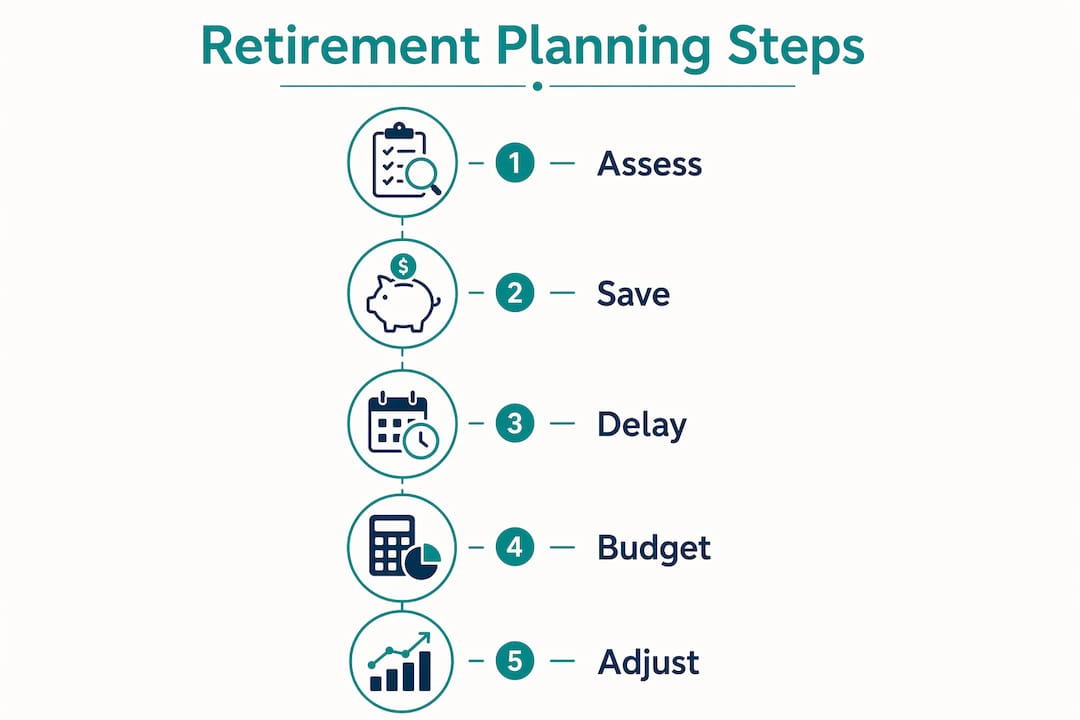
What are the essential financial preparations for navigating retirement?
Sound financial preparation is the foundation of a stable retirement. Without it, even the best emotional and lifestyle planning falls apart. The good news is that a few clear strategies cover most of the ground.
Social Security timing matters more than most people realize
Delaying Social Security beyond your full retirement age increases your monthly payment by about 8% per year until age 70. You can claim as early as 62, but doing so permanently reduces your benefit. For solo agers without a spouse's income to fall back on, waiting until 70 is often the strongest move available. That extra monthly income acts as a steady floor under everything else.
Build your budget from actual expenses, not guesses
Many retirees underestimate their daily expenses, which leads to earlier portfolio depletion than expected. The fix is straightforward: track your real spending for 6–12 months before you retire. The commonly cited rule that retirees need about 80% of pre-retirement income is a starting point, not a final answer. Your actual number depends on your health, housing, and how you plan to spend your time.
Highly active retirees who travel frequently and pursue hobbies may need about 15% more in their retirement budget than average. That gap is easy to miss when you are planning on paper but not tracking real behavior.
Key financial preparation steps
- Track spending now. Log every expense for at least six months before retiring.
- Delay Social Security if possible. Each year you wait past full retirement age adds roughly 8% to your monthly benefit.
- Keep a cash buffer. Holding at least 5 years' worth of income needs in liquid assets prevents forced selling during market downturns.
- Use dynamic spending. Adjust withdrawals each year based on market conditions rather than pulling a fixed amount regardless of performance.
- Secure predictable income. Sources like Social Security or annuities support stable spending and reduce anxiety about discretionary costs.
| Financial Tool | Purpose | When to Use |
|---|---|---|
| Expense tracker | Measure real spending before retirement | 6–12 months pre-retirement |
| Cash buffer (liquid assets) | Protect against forced selling in downturns | Ongoing throughout retirement |
| Social Security delay strategy | Maximize monthly lifetime income | Decide by age 62 |
| Dynamic withdrawal plan | Preserve portfolio during down markets | Annual review |
| Annuity or guaranteed income | Provide predictable baseline income | At or before retirement date |
Pro Tip: Work with a fee-only financial advisor, such as those listed through NAPFA (National Association of Personal Financial Advisors), to build a retirement income plan tailored to your specific expenses and timeline.
How can retirees manage the emotional and psychological transition into retirement?
The financial side of retirement gets most of the attention. The emotional side catches most people off guard. Retirement is one of the largest identity shifts an adult experiences, and the feelings that come with it are real and worth preparing for.

Common emotional stages in the transition
Most retirees move through a recognizable pattern. The early weeks feel like a long vacation. Then the quiet feels heavier than expected. Identity questions surface: Who am I without my job title? Anxiety about money, purpose, and social connection often peaks in months three through six. Acceptance and genuine enjoyment tend to follow, but only for those who build something intentional to move toward.
Strategies that help:
- Name what you are feeling. Acknowledging anxiety or grief about leaving work is not weakness. It is the first step toward moving through it.
- Build a new routine early. Structure reduces the disorientation that comes with unscheduled days.
- Invest in social connections. Isolation is one of the most serious risks for solo agers. Joining a community group, volunteering, or taking a class creates regular contact with others.
- Redefine your identity. Your value is not tied to your job title. Retirement is a chance to build an identity around what you care about, not what you were paid to do.
- Give yourself a realistic timeline. Most people need 12–18 months to feel genuinely settled in retirement.
"The retirees who thrive are not the ones who planned the most money. They are the ones who planned the most meaning."
Pro Tip: Start building your post-retirement identity before you retire. Identify two or three activities, communities, or projects that will give your weeks shape and purpose from day one.
Resilience in retirement is not a personality trait you either have or do not. It is a skill you build through small, consistent choices: keeping a routine, staying connected, and allowing yourself to adapt without judgment.
What lifestyle choices and practical steps support independence while aging in retirement?
Independence in retirement does not happen by accident. It requires deliberate choices about your health, your home, your social life, and how you spend your time and money.
-
Stay physically active. Regular movement, even walking 30 minutes a day, reduces fall risk, supports cognitive health, and improves mood. Physical activity is the single most evidence-backed tool for extending independent living.
-
Plan your home for safety now. Grab bars, better lighting, and removing trip hazards cost very little but prevent injuries that can end independent living quickly. Agingsolo's guide on aging in place safely walks through the most practical home modifications for solo agers.
-
Use technology intentionally. Medical alert devices, medication reminder apps, and video calling tools all extend independence. Agingsolo covers the most useful technology for solo agers in plain language, without the sales pitch.
-
Build a real support network. For solo agers, this means identifying specific people who can help in an emergency, not just a vague sense that someone would show up. A neighbor, a friend, a community organization. Name them. Tell them your plan.
-
Budget for leisure sustainably. Travel and hobbies matter for well-being, but they need to fit within a plan that accounts for healthcare costs rising over time. Guaranteed income sources make leisure spending more confident and less stressful.
-
Plan for healthcare proactively. Solo agers need to think about Medicare enrollment timing, supplemental coverage, and long-term care options earlier than most. A life care plan helps you map out healthcare costs against your actual income.
Pro Tip: Review your home safety setup once a year, ideally in the fall before winter weather arrives. Small updates made consistently are far less disruptive than a single major renovation after an injury.
Which tools and resources help retirees plan and adjust over time?
A retirement plan is not a document you write once and file away. It is a living system that needs regular attention. The right tools make that easier.
Practical tools worth using
- Budgeting and expense tracking apps. Tools like Mint or YNAB (You Need a Budget) give you a clear picture of where your money goes each month. Seeing real numbers removes the guesswork that leads to overspending.
- A fee-only financial advisor. The Consumer Financial Protection Bureau (CFPB) recommends proactive financial planning as cognitive and physical capacity changes with age. A trusted advisor becomes more valuable over time, not less.
- Legal documents. A durable power of attorney and a healthcare proxy are not optional for solo agers. They are the mechanism by which your wishes get carried out if you cannot speak for yourself. Agingsolo's legal and financial basics guide covers exactly what you need and how to get it done.
- Annual financial reviews. Schedule a formal review of your spending, withdrawals, and investment allocation at least once a year. Semi-annual reviews are better if your health or market conditions change significantly.
- A written retirement plan. Putting your income sources, spending targets, and contingency plans in writing forces clarity. It also gives a trusted person or advisor something concrete to work from if they ever need to step in.
The CFPB also notes that aging affects financial decision-making capacity over time. Setting up your legal and financial structures while you are fully capable is one of the most protective things you can do for your future self.
Pro Tip: Keep a single folder, physical or digital, with your key financial documents, legal papers, and contact list for your advisor, attorney, and trusted support person. Update it every january.
Key Takeaways
Successful retirement planning requires financial preparation, emotional readiness, and practical lifestyle choices made well before you stop working.
| Point | Details |
|---|---|
| Delay Social Security if possible | Waiting until age 70 increases your monthly benefit by roughly 8% per year beyond full retirement age. |
| Track real expenses before retiring | Log spending for 6–12 months to build an accurate budget and avoid early portfolio depletion. |
| Keep a cash buffer | Hold at least 5 years of income needs in liquid assets to avoid forced selling during market downturns. |
| Plan emotionally, not just financially | Build routines, social connections, and a new sense of purpose before you retire, not after. |
| Set up legal documents early | A power of attorney and healthcare proxy protect your independence when you need it most. |
What I have learned from watching people get retirement right and wrong
Most retirement advice focuses on the number. Save this much. Withdraw that percentage. Hit this target. What it misses is that the number is the easy part. The hard part is the transition itself.
The people I have seen struggle most in retirement are not the ones who ran out of money. They are the ones who ran out of structure. They left a career that gave them identity, routine, and social contact, and they replaced it with nothing. The quiet that followed was not peaceful. It was disorienting.
The people who thrive share a few things in common. They started planning their life in retirement, not just their finances, at least two years before they stopped working. They identified what would give their weeks shape. They were honest about who their support network actually was, not who they hoped it would be.
For solo agers specifically, the stakes are higher. There is no partner to catch a mistake, absorb a bad month, or notice when something is off. That is not a reason to feel anxious. It is a reason to plan with more intention than the average retirement guide suggests. Solo agers who plan earlier consistently end up with more options, not fewer.
The one thing I would tell anyone reading this: do not wait until retirement feels urgent to start. Start now, with whatever piece feels most manageable. The financial piece, the legal piece, the social piece. Pick one and move. Momentum matters more than perfection.
— Mike
Agingsolo has practical resources built for solo agers
Retirement planning looks different when you are doing it without a partner or nearby family. Agingsolo is built specifically for that reality.

Whether you are working through your finances, thinking about home safety, or figuring out how to stay active and independent as you age, Agingsolo offers guides and checklists written in plain language for adults 50 and over. The Soloist's Toolkit brings together the most useful resources in one place, from legal planning basics to daily living safety. You do not need to figure this out alone.
FAQ
When should I start preparing for retirement?
Start at least two to three years before your target retirement date. The first 24 months after retiring carry the highest risk of financial and behavioral mistakes, so earlier preparation reduces that risk significantly.
What is the best age to claim Social Security?
Waiting until age 70 maximizes your monthly benefit. Claiming before full retirement age permanently reduces your payment, while each year you delay past full retirement age adds roughly 8% to your benefit.
How much money do I need to retire comfortably?
A common starting point is 80% of your pre-retirement income, but your actual number depends on your real spending habits. Track your expenses for 6–12 months before retiring to get an accurate figure.
What legal documents does a solo ager need before retiring?
A durable power of attorney and a healthcare proxy are the two most critical documents. They designate someone to manage your finances and medical decisions if you cannot do so yourself.
How do solo agers build a support network in retirement?
Identify specific people, not just a general hope that someone will help, who can assist in an emergency. Neighbors, friends, community organizations, and local senior services all count. Name them, tell them your plan, and stay in regular contact.