
TL;DR:
- A consistent nighttime safety routine for living alone includes physical checks, a daily check-in, and community support to foster confidence. These deliberate habits help the brain recognize the home as secure, reducing anxiety and improving sleep quality. Practicing emergency plans, keeping safety tools accessible, and building a trusted network are essential for genuine safety and calm at night.
A solid nighttime safety routine for living alone comes down to a handful of deliberate habits done consistently, not a complicated system or expensive gear. Lock the doors. Charge your phone. Check in with someone. Simplify your path to the bathroom. That's the core. Everything else builds on it.
For older adults aging without a nearby family member, the quiet after dark can feel heavier than expected. But that feeling isn't a sign something is wrong. It's a signal to build a routine that answers your brain's questions before they become worries.
Table of Contents
- What your nighttime safety routine living alone should cover
- How to build these habits so they actually stick
- Why a consistent routine helps you feel calmer at night
- How neighbors and trusted contacts make you safer at night
- Emergency preparedness for nighttime incidents
- Personal self-defense measures for nighttime
- Protecting yourself from fire and carbon monoxide at night
- Key Takeaways
- FAQ
What your nighttime safety routine living alone should cover
A good night starts before you get into bed. Linking safety steps to habits you already have, like your bedtime cup of tea or brushing your teeth, makes them automatic within weeks. You're not adding a task. You're attaching a behavior.
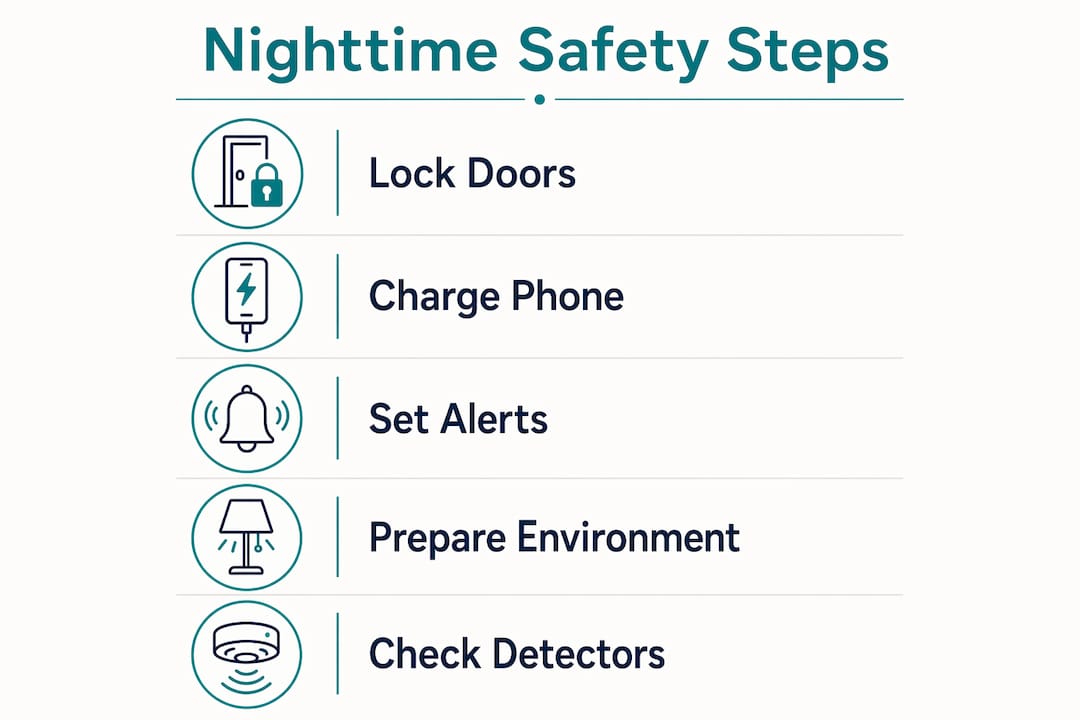
Here are the core elements every solo ager's evening routine should include:
- Daily check-in with a trusted contact or app. If something happens overnight, the sooner someone knows, the better. Apps like I'm Alive send automatic alerts if you miss your daily check-in, creating a safety net that requires almost no effort.
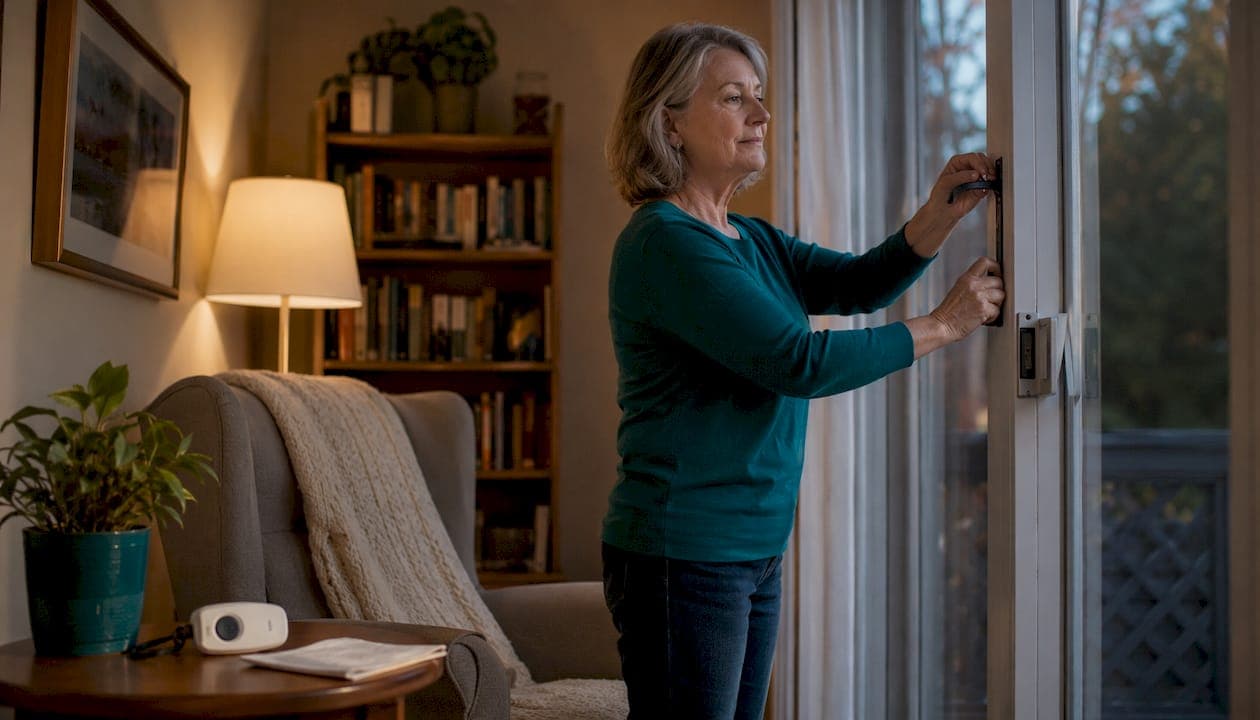
- Physical lock check. Don't just glance at the door. Turn the deadbolt and pull the handle. That physical confirmation tells your brain the door is actually secured, not just probably closed.
- Close the blinds. Leaving windows uncovered at night lets passersby observe your routine and see what's inside. Closing curtains is one of the simplest privacy steps you can take.
- Phone charged and within reach. Your phone is your emergency system. Plug it in on your nightstand, not across the room.
- Emergency numbers accessible. Keep key contacts saved in your phone and posted somewhere visible, like the refrigerator.
- A calming wind-down step just for you. Read a page. Stretch for two minutes. This teaches your brain that nighttime is yours, not something to get through.
How to build these habits so they actually stick
Knowing what to do is one thing. Making it automatic is another. The trick is to attach each safety step to something you already do every night.
- Lock the front door right after you turn off the kitchen light.
- Check windows in your bedroom as part of changing into pajamas.
- Plug in your phone when you set your alarm.
- Do your check-in after your last glass of water for the evening.
Pro Tip: If you ever get into bed and wonder whether you locked the door, get up and check. Every time. It feels annoying at first, but after a few weeks of always checking, you'll stop forgetting. Your brain learns to trust the routine.
A nighttime environment that's already set up for you also helps. Place a glass of water by the bed so you're not wandering through a dark apartment at 3 AM. Position nightlights along the path to the bathroom. These small setups reduce unnecessary movement and lower fall risk.
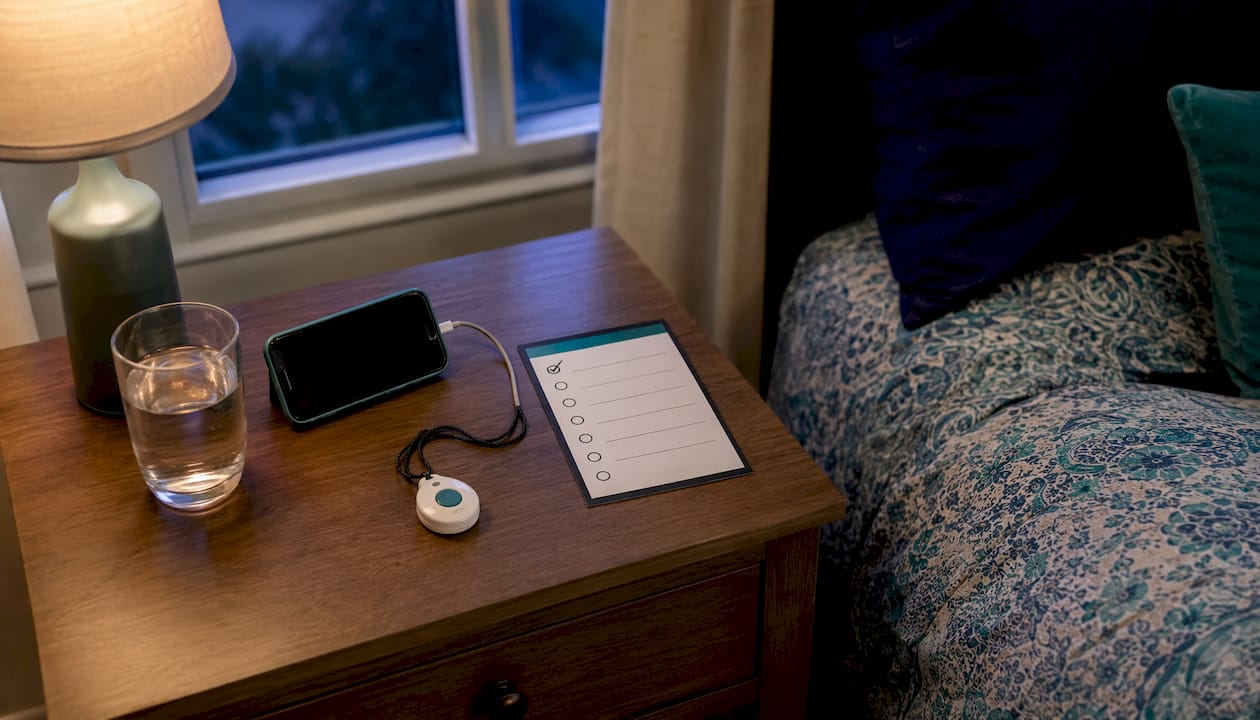
For those who want a tech layer, a wearable medical alert device or a check-in app adds quiet, automatic backup. An SOS ID tag, for example, can carry your critical medical information and emergency contact details in a form first responders can access immediately.
Why a consistent routine helps you feel calmer at night
Safety routines do something that locks and apps alone cannot. They teach your brain that your home is a secure place, not a source of ongoing vigilance. When the routine is done, your brain has a finish line. The scanning stops.
"Most of feeling safe at night isn't about adding more locks or more apps or more alarms. It's about teaching your brain that you've got it handled. The routine, the door fixes, the window alarms, the phone setup — they're not just security upgrades. They're proof." — Knockli / Alone Actually
That shift from fear to confidence is real and measurable in how well you sleep. Anxiety about what might happen keeps the nervous system alert. A completed routine signals that the work is done. You checked. You confirmed. You're okay.
Agingsolo's approach to safe independent aging is built on exactly this: replacing vague worry with specific, repeatable actions that give you genuine control.
How neighbors and trusted contacts make you safer at night
You don't have to handle nighttime safety entirely on your own. In fact, the most resilient solo agers build a small circle of people who know them and notice when something seems off.
- Exchange phone numbers with at least one neighbor. Agree to check on each other if something looks unusual, like lights on at an odd hour or mail piling up.
- Give a spare key to a trusted local contact. This person doesn't need to live next door, but they should be reachable and willing to help in an emergency.
- Join or start a neighborhood group chat. These informal networks catch things no security camera does, like an unfamiliar car parked outside for days.
- Tell one trusted person your general routine. They don't need a minute-by-minute schedule, just enough to notice if you go quiet unexpectedly.
Community connections add a layer of social vigilance that technology can't replicate. A neighbor who knows you lives alone and checks in when your car hasn't moved is worth more than most gadgets. For deeper guidance on building that circle, Agingsolo's support network guide walks through exactly how to do it.
Emergency preparedness for nighttime incidents
Preparation done calmly in advance means you won't have to think under pressure. A clear plan, practiced ahead of time, becomes automatic when you actually need it.
- Map your exit routes. Walk each one in the dark. Know which door you'd use for a fire in the kitchen versus one in the hallway.
- Keep a go-bag accessible. It doesn't need to be elaborate. Medications, a flashlight, a phone charger, and a copy of key documents cover most emergencies.
- Test smoke and carbon monoxide detectors monthly. The U.S. Fire Administration recommends testing detectors at least once a month. Dead batteries are the most common reason detectors fail.
- Keep pathways clear every night. Shoes, bags, and furniture in the hall become hazards in a dark, rushed exit.
- Position a flashlight within arm's reach of your bed. Power outages happen. You want light immediately, not after searching.
- Review your emergency plan seasonally. Update your contact list, restock your go-bag, and walk your exit routes again. Conditions in your home change.
Pro Tip: Practice your exit plan once, out loud, while calm. Say your address aloud. Identify your safe room. Decide who you'd call first. When you've already answered "what would I do if..." your brain stops asking the question at 2 AM.
For a full framework on emergency planning built specifically for adults 50 and older, Agingsolo has a dedicated guide.
Personal self-defense measures for nighttime
Self-defense for solo agers isn't about confrontation. It's about having options and knowing how to use them before you need them.
A personal alarm is the most accessible starting point. Small enough to keep on a nightstand or keychain, a loud alarm can deter an intruder and alert neighbors without requiring physical strength. Pepper spray is another widely available option, though it requires some practice to use effectively under stress.
Your phone's emergency SOS feature is one of the most underused tools available. On most iPhones, pressing and holding the side button and a volume button triggers an automatic call to 911 and texts your location to emergency contacts. Android devices have similar shortcuts under Settings. Knowing this shortcut by heart, and having your phone charged on the nightstand, means help is seconds away.
A self-defense class designed for older adults builds both skill and confidence. Many community centers and senior programs offer them. The goal isn't to become a fighter. It's to feel less helpless and more grounded if something unexpected happens.
Protecting yourself from fire and carbon monoxide at night
These two risks are among the most serious for solo agers, and both are largely preventable with consistent habits.
Fire: Never leave the stove on when you go to bed. Make it part of your lock check. Smoke detectors should be on every level of your home, inside each bedroom, and outside sleeping areas. Monthly testing and an annual battery replacement keep them reliable. If you use candles, extinguish them before leaving any room.
Carbon monoxide: This odorless gas is produced by gas appliances, furnaces, and attached garages. A carbon monoxide detector on each level of your home, especially near sleeping areas, is the only reliable way to catch it. If your detector sounds at night, leave immediately and call 911 from outside. Don't stop to investigate.
Both detectors are inexpensive and widely available. Treating their monthly test as part of your night safety checklist for solo living keeps the habit consistent and the protection current.
Agingsolo's full guide to home safety and daily living covers these and other risks in depth, with practical checklists built for solo agers.
Key Takeaways
A consistent nighttime safety routine for living alone combines physical checks, a daily check-in, clear emergency plans, and community connections to replace anxiety with genuine confidence.
| Point | Details |
|---|---|
| Daily check-in is foundational | A missed check-in triggers an alert, limiting any delay in emergency response to hours rather than days. |
| Physical lock confirmation matters | Turning the deadbolt and pulling the handle gives your brain conscious proof the door is secured. |
| Routines reduce nighttime anxiety | Completing a set routine signals to your brain that the work is done, supporting calmer, more restful sleep. |
| Neighbors are a real safety layer | Exchanging numbers and agreeing to watch for each other adds social vigilance no app can replicate. |
| Emergency plans must be practiced | Walking exit routes and saying your address aloud while calm makes the response automatic under pressure. |
FAQ
What should a nighttime safety routine for living alone include?
Lock all doors and windows with a physical check, charge your phone on the nightstand, close blinds, complete a daily check-in with a trusted contact or app, and set up nightlights along any path you'd walk in the dark.
How do check-in apps help solo agers stay safe at night?
Apps like I'm Alive send automatic alerts to your designated contacts if you miss a daily check-in, reducing the time between an emergency and someone knowing about it.
How often should smoke and carbon monoxide detectors be tested?
Test both detectors at least once a month and replace batteries annually. Position them on every level of your home and inside or near each sleeping area.
Does a nighttime routine actually reduce anxiety?
Yes. Completing a consistent routine gives your brain a clear signal that security checks are done, which reduces the scanning and vigilance that cause nighttime worry and disrupted sleep.
What personal safety tools are most practical for older adults at night?
A personal alarm or pepper spray on the nightstand, your phone's emergency SOS shortcut memorized and the phone kept charged nearby, and a medical alert device if you have fall or health risks are the most practical starting points.