
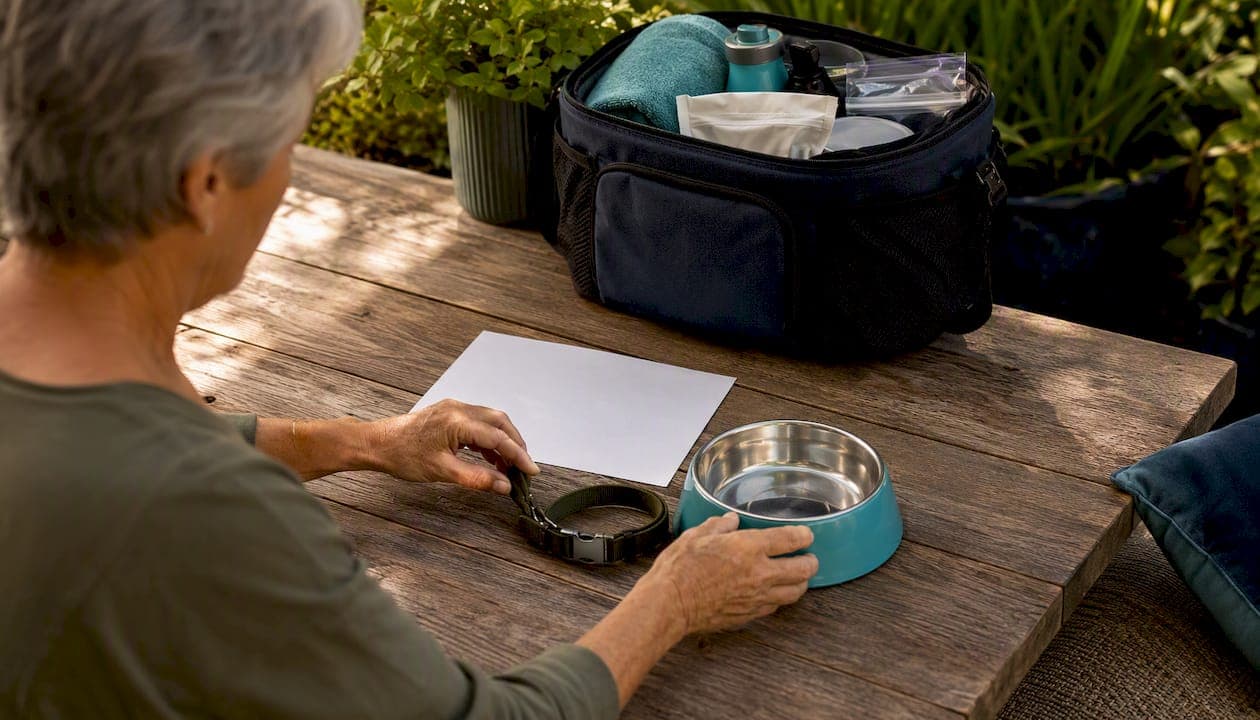
If you live alone with a dog who waits by the door or a cat who knows your footsteps on the stairs, the question that keeps you up some nights isn't abstract: who feeds them if you don't come home tonight? The answer is simpler than the worry suggests. Name a primary caregiver and a backup, give at least one of them a way into your home, write down what your pet needs in one place, and set up a daily check-in that flags trouble fast. That's the whole plan. Everything else is detail.
The urgency is real for a specific reason: most pets can go a day, maybe two, before things get dangerous. If you're the only name on the list and that person is traveling or sick, nobody's coming. That's why AVMA guidance points to a two-person rule, a primary and a backup, so one unavailable friend doesn't leave your cat alone for a week.
Three calls to make this week:
- Ask a neighbor or close friend to be your primary contact and give them a key or a key safe code.
- Ask a second person, maybe a relative a bit further away, to be your backup.
- Tell your vet's office who's authorized to make decisions if you can't.
Key Takeaways
A hospitalization pet care plan works when a named caregiver has home access, a written dossier, a funding source, and a daily check-in that catches trouble fast.
| Point | Details |
|---|---|
| Name two caregivers | Designate a primary and a backup so one unavailable person doesn't leave your pet stranded. |
| Give home access | Provide a spare key or secure key safe code to at least one caregiver now. |
| Build the dossier | Write down feeding, meds, vet contacts, and behavior notes, then store printed and digital copies. |
| Set up detection | Use a daily check-in habit or service so a missed check runs a same-day alert. |
| Fund it in advance | Set aside a small pet emergency fund or pre-authorized vet card so care never waits on payment. |
| Get a tailored plan | Book Aging Solo's Clarity Session for a one-page pet care plan built around your caregivers and pet. |
Table of Contents
- What Belongs in a Pet Care Plan for Hospitalization
- How to Build a Tiered Pet Care Network for Longer Absences
- How Do You Authorize Vet Care and Payment in Advance?
- How Fast Can Someone Detect You're Hospitalized?
- Storing Your Plan So Someone Finds It Fast
- Watching for a Pet Medical Emergency While You're in the Hospital
- Helping Your Pet Cope With the Sudden Change
- Budgeting for the Unexpected Cost of Pet Care
- Aging Solo's Take on Planning With Dignity
- How Aging Solo Can Help You Finish the Plan
- Sources
- FAQ
What Belongs in a Pet Care Plan for Hospitalization
Think of this as the document that lets a near stranger walk into your home and take over without a single phone call to you. That's the real test of whether it's good enough.
Split it into two parts. The first is a "first 24 hours" page, short enough to read standing in your kitchen. The second is a fuller ongoing-care section for anyone stepping in for more than a couple of days.
Your first-24-hours page needs:
- Pet profile. Name, species, breed, age, and weight, so a vet or sitter who's never met your pet isn't guessing.
- Feeding schedule. Brand, exact portion, and times, not "she eats twice a day."
- Medications. Name, dose, time, and any trick to getting a pill down (a lot of cats need it hidden in something specific).
- Vet and emergency clinic contacts, with phone numbers, not just names.
- Microchip number, in case your pet bolts during the chaos of an ambulance or a move to a sitter's home.
- Behavioral notes. Bites when nervous, hides under the bed, needs a slow approach.
- Where things live. Leash, carrier, litter box supplies, food storage.
The ongoing-care section adds grooming needs, exercise routines, and anything about your pet's personality that helps a caregiver keep them calm for weeks rather than days. PetNPrep's template is a reasonable starting structure if you want something ready-made rather than building from scratch.
Print a copy and tape it inside a cabinet near your entry door. Save a digital copy in a shared folder your caregivers can open from their phones. Our own emergency pet care plan guide walks through a version built specifically for solo agers, with fields already laid out.
Pro Tip: Add a line to your phone's medical ID app with your pet's name and your primary caregiver's number. Paramedics check that screen before they check anything else.
How to Build a Tiered Pet Care Network for Longer Absences
One caregiver covers a bad afternoon. A tiered network covers a bad month. Think of it in three layers, each one activating only if the last one can't hold.
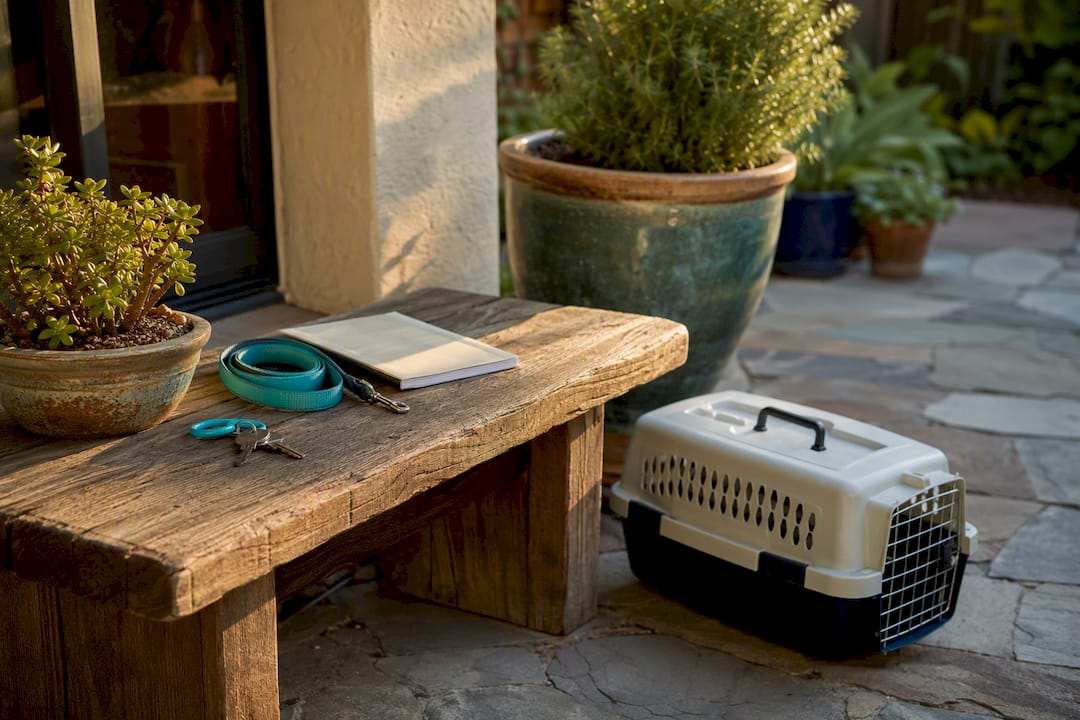
Tier one, measured in hours, is your neighbor or close friend with that spare key. Their only job is speed: get in, feed, secure the animal, and text you're handled.
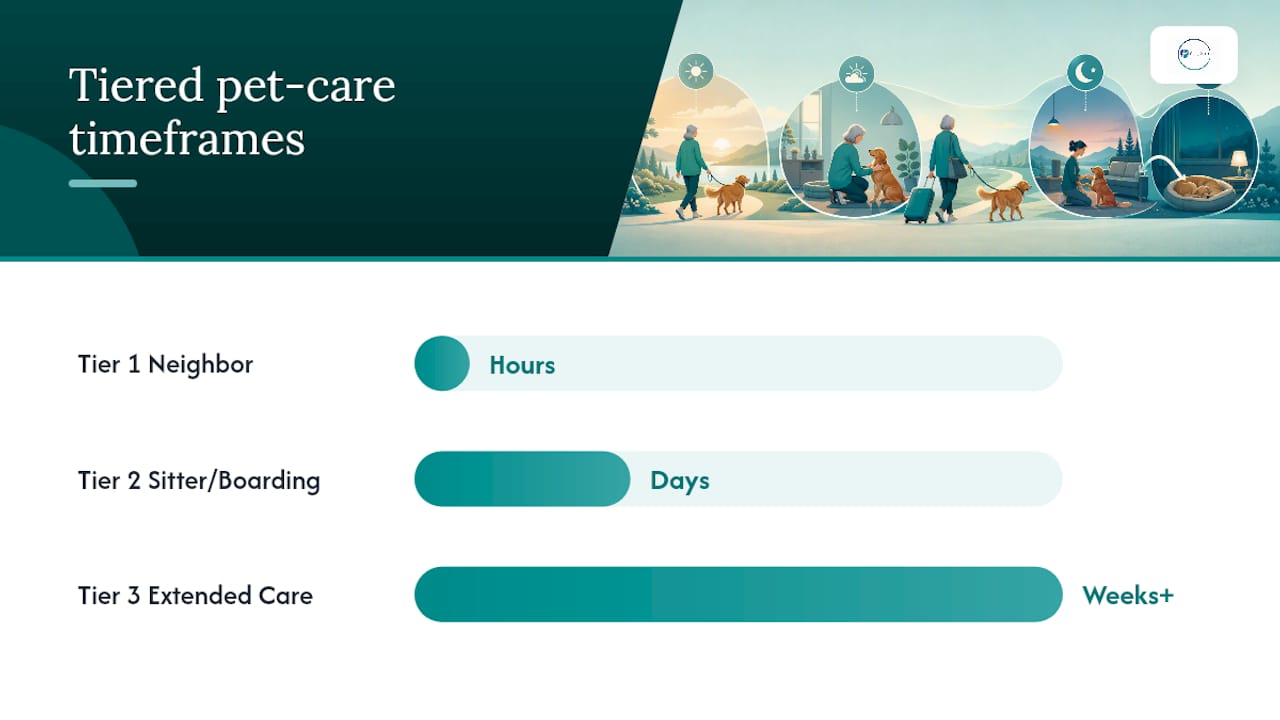
Tier two, measured in days, is a pet sitter or boarding facility you've already confirmed will take your pet, not one you're calling for the first time from a hospital bed. Pre-registering with a boarding facility matters because facilities often prioritize animals they already have on file when space is tight.
Tier three, measured in weeks or longer, covers real recovery time: extended veterinary boarding, a foster arrangement through a senior-focused program like PACT or a similar local organization that places seniors' pets temporarily, or a named long-term guardian if you're facing a longer road back.
Three moves make this network real instead of theoretical:
- Get a "yes" in writing, even a text message, from each tier, not a verbal maybe.
- Pre-register with a boarding facility before you need one.
- Book a trial overnight stay if the facility offers it, so both you and your pet know the place before an emergency forces the introduction.
Pro Tip: A trial stay does double duty. It tells you whether the facility is a good fit, and it gets your pet's scent and file into their system, which speeds up intake later.
How Do You Authorize Vet Care and Payment in Advance?
A vet can't legally act on a stranger's say-so, which is exactly the problem if your named caregiver shows up without paperwork. A signed authorization letter naming that person and giving them permission to approve treatment closes that gap. Keep a copy in your dossier and give your clinic one for their file.
Money is the other half of this. Sort out funding before you need it:
- A small dedicated pet emergency fund, even a few hundred dollars set aside, covers the first vet visit without anyone fronting cash.
- A pre-authorized card on file at your regular clinic lets your caregiver approve care without a payment argument mid-crisis.
- Basic pet insurance can offset larger bills, worth a look if your pet is young or prone to health issues.
- Name an authorized payee in writing, someone allowed to use that fund or card on your behalf.
If you're thinking years out, not just weeks, a pet trust or formal guardianship arrangement is worth a conversation with an estate attorney, especially if your pet is young and could outlive your ability to care for it.
How Fast Can Someone Detect You're Hospitalized?
The gap that sinks most pet plans isn't the plan itself. It's nobody knowing you're in the hospital in the first place. A daily check-in habit, whether that's a call to a friend or a dedicated check-in service, turns a missed morning text into same-day action instead of a three-day mystery.
Give your check-in contact exactly three things:
- Who to call first (your primary caregiver) and who's next in line.
- Where the key or key safe code is.
- Where the dossier lives, printed and digital.
Add your pet's name to your phone's medical ID, and mention your pet to hospital intake staff if you know a stay is coming. It takes ten seconds and it's often the detail that gets someone to your door hours sooner.
Storing Your Plan So Someone Finds It Fast
A plan nobody can locate is worse than no plan, because it wastes precious time while someone searches. Keep the finding part dead simple.
- Call your primary caregiver.
- Call your backup if the primary can't respond.
- Give door access, key or key safe code.
- Feed and medicate per the dossier instructions.
- Call your vet if anything looks off.
Store one printed copy on the fridge or taped inside a cabinet by the door, one digital copy in a shared cloud folder, and a condensed version as a wallet card and phone medical ID note. Review the whole thing every six months, and any time a medication, vet, or caregiver changes, send an updated copy to everyone on the list that same day.
Watching for a Pet Medical Emergency While You're in the Hospital
Your caregiver needs to know what "call the vet now" looks like, not just what to feed and when. Vomiting that doesn't stop, refusing food for more than a day, labored breathing, sudden limping, or a swollen abdomen are signs that warrant an immediate call, not a wait-and-see approach.
Give your caregiver two numbers, not one: your regular vet for daytime hours and a 24-hour emergency animal hospital for nights and weekends. Write both directly into the dossier, along with your pet's known health conditions, because a caregiver who knows your dog has a heart murmur reacts differently to labored breathing than one who doesn't.
If your own hospitalization is planned, even a same-day surgery, call your vet's office ahead of time. Many clinics will flag your file so a caregiver calling on your behalf isn't starting from zero. If it's unplanned, that's exactly why the authorization letter and the pre-authorized card matter. A caregiver standing in an emergency vet's waiting room needs to be able to say yes to treatment without tracking you down first.
Helping Your Pet Cope With the Sudden Change
Pets notice absence, and a lot of them don't handle it quietly. A dog used to your routine might stop eating, pace, or bark more than usual. A cat might hide, stop using the litter box reliably, or become clingy with whoever's checking in. None of this means the arrangement is failing. It means the animal is grieving a disruption it doesn't understand.
The behavioral notes in your dossier matter here more than almost anything else. If your caregiver knows your dog calms down with a specific blanket, or your cat needs the bedroom door shut to feel safe, they can head off a lot of the stress before it becomes a bigger problem. Keeping feeding times and walk schedules as close to normal as possible, even with a different person handling them, does more to steady an anxious pet than anything else you can control from a hospital bed.
If you know a stay is coming, a short trial run, having your caregiver take over meals for a weekend beforehand, gives your pet a chance to get used to the change while you're still around to answer questions.
Budgeting for the Unexpected Cost of Pet Care
A hospital stay is expensive enough without a surprise boarding bill on top of it. Costs creep in from places you might not expect: a boarding facility charging by the night, a sitter's mileage, medication refills your caregiver has to pick up, or an emergency vet visit that wasn't in anyone's plan.
This is where that dedicated pet emergency fund earns its keep. Even a modest cushion, set aside specifically for this and untouched otherwise, means your caregiver isn't paying out of pocket and hoping you'll reimburse them later. Pair it with a card on file at your regular clinic so routine costs don't stall while you're unreachable.
If your pet has ongoing health issues, run the numbers on basic pet health insurance now, while you're not under pressure to decide. Premiums are easier to plan for than a $2,000 emergency bill nobody budgeted for.
Aging Solo's Take on Planning With Dignity
There's a particular kind of relief in walking through your own front door and having your dog meet you at it, tail going, like nothing happened. That moment is the whole point of this plan. Not the paperwork, the moment.
Planning for your pet isn't about bracing for the worst. It's about making sure the parts of your life you love most, including the animal who greets you every single day, keep going even when your body needs a pause. Our guide on pet care for people aging alone goes deeper into building that kind of continuity, and our health and emergency planning resources connect pet care to the rest of your post-hospital picture.
You don't have to build the whole thing today. Call one person. Give them a key. That's enough for now.
— Mike
How Aging Solo Can Help You Finish the Plan
A downloadable checklist gets you started, but a lot of solo agers get partway through their emergency pet care plan and stall on the details specific to their own situation, a medication schedule that's genuinely complicated, or a caregiver network that needs a second set of eyes.
That's what the Solo Aging Clarity Session is for. It's a 45-minute Zoom conversation where you walk through your actual circumstances, your pet, your caregivers, your health picture, and come away with a tailored one-page pet care plan plus clear next steps you can hand to whoever needs it. It's built for solo agers who want the plan finished, not just started, and who'd rather talk it through with someone than stare at a blank template. If you're ready to stop circling the same worry and get it settled, book a Solo Aging Clarity Session and walk away with a plan that's actually done.
Sources
- AVMA — Who’s in charge of your animal’s care while you’re away?
- PetNPrep — Emergency pet care plan
- SnugSafe — Safety plan for pet owners who live alone
- Alley Cat — Including pets in your family's disaster plan
FAQ
What Is the Most Important Part of a Pet Care Plan?
Naming a primary and backup caregiver, and giving at least one of them home access, matters more than any other piece, because without access nothing else in the plan can happen.
Who Should Have a Copy of the Pet Care Dossier?
Both caregivers, your regular vet's office, and a trusted neighbor should each have a copy, printed or digital, so no single lost document stalls care.
How Do I Pay for Pet Care if I'm Hospitalized?
A small dedicated pet emergency fund, a pre-authorized card on file at your vet, or basic pet health insurance can all cover costs without forcing a caregiver to pay out of pocket first.
How Quickly Will Someone Know I'm Hospitalized?
A daily check-in routine or service flags a missed check within hours, which is far faster than waiting for someone to notice you're simply not answering the phone.
Can Aging Solo Help Me Build My Own Plan?
Yes. Aging Solo offers a downloadable emergency pet care plan template and a 45-minute Clarity Session for solo agers who want a plan built around their specific caregivers, pet, and situation.