

Living alone after 50 can feel rewarding and free. But some days, the quiet feels heavier than expected. If you have been wondering whether a pet could genuinely change that, the answer is more interesting than you might think. Living alone pet ownership benefits explained in real research tell a striking story: 70% of pet owners aged 50 and older say their pets help them connect with others, reduce stress, and stay more active. Yet many solo agers still hesitate, worried about cost, care demands, or what happens in an emergency. This guide walks you through the real benefits, the honest challenges, and how to decide if a pet fits your life right now.
Table of Contents
- How pet ownership enhances health and well-being when living alone
- Physical and cognitive health benefits of pets supported by science
- Balancing pet ownership benefits with practical challenges and costs
- Companion alternatives: Robotic pets and innovative support for solo agers
- Choosing the right pet: Matching your lifestyle and needs as a solo ager
- Rethinking pet ownership in solo aging: Challenges and untapped opportunities
- Support for solo agers exploring pet companionship and well-being
- Frequently asked questions
Key Takeaways
| Point | Details |
|---|---|
| Health benefits | Pet ownership improves physical activity, reduces stress, enhances social connections, and slows cognitive decline. |
| Financial considerations | Pet care costs can strain budgets, so solo agers must carefully assess affordability before adopting. |
| Choosing the right pet | Different pets offer unique benefits; matching pet choice to lifestyle maximizes rewards and minimizes challenges. |
| Alternatives exist | Robotic pets provide companionship and mental health benefits when live pet ownership is not feasible. |
| Plan responsibly | Successful pet ownership includes preparing for care during emergencies and gradual pet introductions. |
How pet ownership enhances health and well-being when living alone
The benefits of pets for singles living alone are not just about having company in the house. They run deeper than that. Pets give you a reason to get up, a routine to anchor the day, and a living presence that responds to you. That matters more than most people realize.
Loneliness and social connection
One of the clearest impacts of pets on solo living is how they pull you outward. A dog requires walks, and walks lead to conversations with neighbors, other dog owners, and people in the park. Even a cat or a small bird can spark a conversation with a visitor or a home health aide. Research from the University of Michigan found that pet owners aged 50 and older report improved social connection (70%), reduced stress (63%), increased physical activity (44%), and a strong sense of purpose (87%). That last number is worth sitting with. Purpose is not a small thing when you are combating loneliness on your own.
Mental health and emotional grounding
Caring for another living thing shifts your attention outward. On hard days, a cat on your lap or a dog pressing against your leg is a quiet anchor. It is not therapy, but it is real. Pet ownership advantages for emotional health are well-documented, and the sense of being needed by a creature who depends entirely on you can interrupt patterns of rumination and isolation.
Physical movement and staying active
Dog owners walk more. That is not a guess. The advantages of having a pet extend to physical habits that are difficult to build through willpower alone but easy to maintain when a dog is waiting at the door. Regular walking supports staying active and independent as you age, which is one of the most important things you can do for your long-term health.

Physical and cognitive health benefits of pets supported by science
Understanding the biological effects of pet ownership helps you see why this is more than a feel-good story. Your body actually responds differently when you interact with a pet.
Heart health and stress hormones
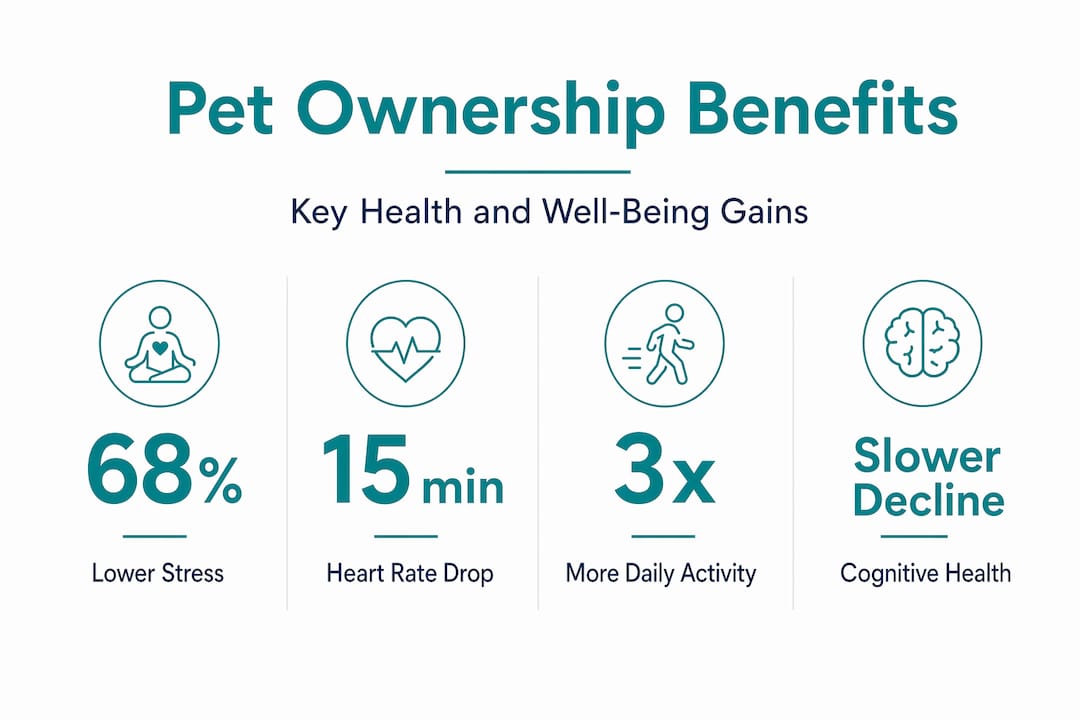
Spending just 15 minutes with a friendly dog reduces heart rate and cortisol, the primary stress hormone. Cat owners show a particularly striking pattern: cat ownership lowers heart attack risk by roughly 30%. That is a cardiovascular benefit that rivals many lifestyle interventions doctors recommend.
Cognitive protection
Here is something most people have not heard. Studies show that pet ownership slows cognitive decline, especially in older women who have recently experienced social loss such as widowhood or an empty nest. Verbal memory and executive function (the ability to plan, organize, and make decisions) both benefit. Pet owners also average 30% fewer doctor visits than non-owners. Part of that is likely because stress is lower and activity is higher. Part of it may also be that having a pet keeps you mentally present and engaged.
| Health benefit | What the evidence shows |
|---|---|
| Stress reduction | 15 min with a dog lowers cortisol and heart rate |
| Heart health | Cat ownership linked to 30% lower heart attack risk |
| Cognitive decline | Slower verbal memory loss in pet-owning older adults |
| Doctor visits | Pet owners average 30% fewer visits |
| Physical activity | 44% of pet owners 50+ report more movement |
| Sense of purpose | 87% of pet owners 50+ say pets give them purpose |
Pro Tip: If you live alone safely after 50 and are thinking about pet ownership, start with a low-energy dog breed or an adult cat from a shelter. Puppies and kittens are wonderful but demanding. An adult animal often slots into a quieter household far more smoothly, and you can assess their temperament before bringing them home. Learn more about living alone safely as you plan this step.
Balancing pet ownership benefits with practical challenges and costs
The impact of pets on solo living is genuinely positive for many people. But honesty matters here. Pet ownership is a commitment, and it comes with real challenges that are worth naming directly.
The financial side
31% of pet owners aged 50 and older say that pet care puts a strain on their budget. Monthly costs typically run between $50 and $150 for food, supplies, and routine care. Emergency vet bills can reach into the thousands without warning. Pet insurance can help, but it adds to monthly costs. Before you bring an animal home, build a rough budget that includes a small emergency fund.
Health and mobility considerations
If your mobility is limited or you are managing a health condition, some pets will suit you better than others. Large dogs that need vigorous exercise may not be the right fit. A fall caused by a dog pulling on a leash is a real risk for some solo agers. Be honest with yourself about what you can manage safely and consistently.
Common challenges to plan for:
- Budget for routine and emergency vet costs before adopting
- Consider what happens to your pet if you are hospitalized
- Assess your home for pet-related fall risks (leashes, litter boxes, food bowls on the floor)
- Ask your building management about pet policies if you rent
- Think about who will care for your pet when you travel or recover from a procedure
Steps to introduce a pet safely to your home:
- Research breeds or species suited to your activity level and living space
- Visit a shelter and spend time with the animal before committing
- Follow AKC guidance on introducing pets if you already have another animal
- Set up a safe, contained area for the new pet during the first few days
- Establish a routine for feeding, exercise, and vet checkups from day one
Pro Tip: Check your community for low-cost vet clinics, pet food banks, or senior pet adoption programs. Many shelters offer reduced adoption fees for adults over 60, and some communities have volunteer networks that help seniors with dog walking on difficult days. The aging solo resources page is a good place to start when researching local support.
Companion alternatives: Robotic pets and innovative support for solo agers
Not everyone can care for a live animal. That is a real situation, not a failure. Health conditions, housing restrictions, allergies, or tight budgets can all make traditional pet ownership genuinely impractical. The good news is that emotional support pets for singles no longer means only live animals.
Robotic and AI-based companion pets are a growing option for older adults, particularly those in assisted living or memory care settings. They are also worth considering for solo agers at home who want connection without the full weight of animal care.
What robotic companions offer:
- Consistent, low-maintenance interaction that does not require feeding or vet visits
- Anxiety and mood benefits that AI-based robotic pets have been shown to provide in clinical settings
- Particularly useful for those with cognitive decline or mobility limitations
- No allergy concerns, no fall risks from unexpected movement, no emergency vet bills
"Robotic pets won't replace the bond you build with a living animal. But for someone in a memory care facility or dealing with severe mobility limits, a responsive, soft robotic companion can meaningfully reduce anxiety and improve daily mood." — summarized from published research on AI companions for older adults
The technology for aging solo section of Aging Solo covers tools like these in more depth, including how to evaluate which options are worth the investment.
Choosing the right pet: Matching your lifestyle and needs as a solo ager
This is where the living alone pet guide gets personal. The best pet for you is the one that fits your actual life, not the one that sounds appealing in theory.
A quick comparison to help you decide:
| Pet type | Best for | Key benefit | Main consideration |
|---|---|---|---|
| Dog | Active solo agers | Social connection, daily walks | Time, cost, mobility needs |
| Cat | Low-energy or smaller homes | Calm presence, heart health | Independence, less interaction |
| Fish or aquarium | Minimal care needed | Lowers blood pressure, calming effect | Limited bonding |
| Small bird | Social, vocal company | Stimulation, routine | Noise, cage cleaning |
| Robotic pet | Health or housing barriers | Anxiety reduction, mood | No live bond |
Questions worth asking yourself before choosing:
- How much daily activity can you realistically commit to?
- Do you want a pet that needs you, or one that is more self-sufficient?
- What is your living situation, and does it allow pets?
- Do you have a plan for the pet if your health changes?
Pro Tip: Think about your five-year picture, not just today. A high-energy dog may fit your life perfectly right now. But solo aging well-being planning means choosing a pet whose care you can manage even if your circumstances shift. A calmer breed or an adult cat often ages alongside you more gracefully.
Rethinking pet ownership in solo aging: Challenges and untapped opportunities
Here is an honest take you will not often hear: pet ownership is not a guaranteed health boost for every solo ager. The research is strong, but it carries a nuance that gets lost in the enthusiastic headlines.
Many studies comparing pet owners to non-owners are complicated by selection bias. In plain terms: healthier, more active, more socially engaged people are simply more likely to get pets in the first place. The pet may not be creating the health benefits so much as following someone who already has them.
More importantly, a pet that becomes a burden can actually create stress that chips away at the very benefits you were hoping for. An animal you cannot afford to care for properly, or one whose needs exceed your physical capacity, can become a source of guilt and anxiety rather than comfort. That matters.
What this means in practice is that the decision should be individualized and honest. The advantages of having a pet are real and meaningful for the right person in the right situation. But the goal is not to own a pet. The goal is to live well alone with intention.
The untapped opportunity here is community. Solo agers who cannot commit to full pet ownership can still get regular animal interaction through shelter volunteering, pet-sitting for neighbors, or participating in therapy animal visits. These options deliver many of the same emotional benefits, with none of the ongoing financial or care burden. It is worth exploring those paths with the same openness you bring to ownership. Your solo aging planning should include this kind of creative thinking about support and connection, not just standard checklists.
Support for solo agers exploring pet companionship and well-being
Making a thoughtful decision about pet ownership is easier when you have the right tools and a clear picture of your overall aging plan.

At Aging Solo, we offer practical guides built specifically for people navigating life without a built-in support system. Whether you are weighing the benefits of pets for singles or thinking through your broader independence plan, our resources are designed to give you clarity, not just information. Explore our guide to well-being without family, learn how to keep staying active while aging alone, and take a look at our practical life care plans to build a fuller, safer plan for the years ahead.
Frequently asked questions
What types of pets provide the most health benefits for someone living alone over 50?
Dogs are often best for increasing physical activity and social interaction, while cats provide calming stress relief and are linked to a 30% lower heart attack risk. Fish and small pets lower blood pressure with significantly less daily care required.
Can pet ownership reduce cognitive decline in older adults?
Yes. Studies show that pet owners, especially older women experiencing social loss, have slower verbal cognition decline and better protection against cognitive frailty than non-owners.
What are common challenges solo agers face with pet ownership?
31% of pet owners 50 and older report that pet care puts a strain on their budget, with costs ranging from $50 to $150 a month plus unexpected emergencies. Health limitations and mobility changes can also affect a person's ability to meet a pet's needs over time.
Are robotic pets a good alternative for older adults who cannot care for live animals?
Yes. AI robotic pets reduce anxiety and improve mood in older adults, particularly in memory care settings, offering real emotional benefits without the demands of live animal care.
How can solo agers prepare for pet care during hospitalizations or emergencies?
Naming a trusted pet caregiver in your emergency contacts, building a written pet care plan, and discussing arrangements ahead of time can significantly reduce stress when an unexpected hospitalization or health event occurs.