
TL;DR:
- Purposeful aging involves intentionally cultivating meaning, vitality, and social connection to thrive in later life.
- Starting before age 67 maximizes health, independence, and social engagement, especially for solo agers.
Purposeful aging is the practice of intentionally cultivating meaning, physical vitality, and social connection to thrive in later adulthood. Researchers and gerontologists also call this "active aging" or "intentional aging," and the evidence behind it is striking. Adults who age with high purpose show physical performance markers equivalent to being 2.5 years younger than their peers. That gap is not cosmetic. It shows up in grip strength, walking speed, and the daily physical capacity that keeps you independent. For solo agers, adults growing older without a spouse, partner, or nearby adult children, building that purpose is not optional. It is the plan.
What is purposeful aging and why does it matter?
Purposeful aging is defined as the ongoing, deliberate effort to find and maintain meaning, contribution, and vitality across later life. The word "deliberate" carries real weight here. This is not about staying busy or filling a calendar. It is about choosing roles, habits, and relationships that give your days a reason.
The health case is hard to ignore. Strong purpose reduces the risk of functional disability by 31% and dementia by 36%. Those numbers represent real differences in whether you can open a jar, drive yourself to an appointment, or remember where you put your keys. For a solo ager without a built-in helper at home, that kind of independence is everything.
Physical health and fulfillment are deeply interdependent. When one declines, the other tends to follow. Aging with purpose keeps both moving in the right direction.
How does purposeful aging differ from default aging?
Default aging is what happens when you do not make a plan. You retire, your schedule empties, your social circle shrinks, and the days start to blur. It feels gradual at first. But the research tells a sharper story.
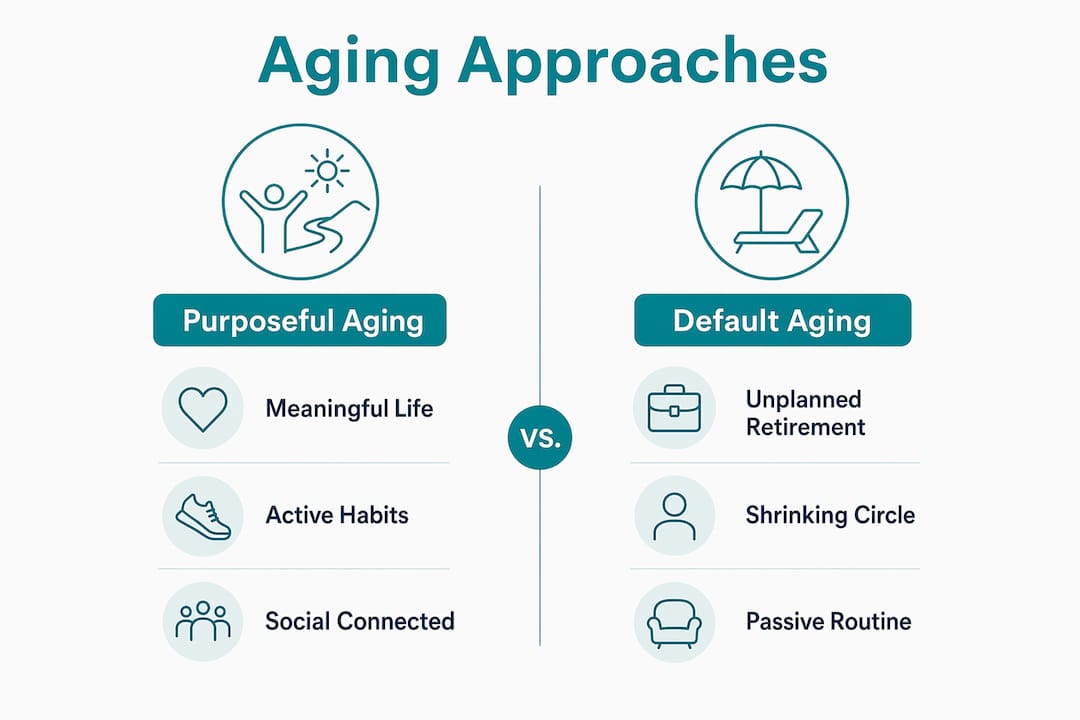
Observable differences between purposeful and default aging become clear by age 67. By age 75, the negative trajectory of default aging is largely irreversible. That is a narrow window. And for solo agers, who do not have a partner noticing the changes or nudging them back toward engagement, the window can close faster.
Here is what default aging looks like in practice:
- Shrinking social world. Contacts drop off after retirement, and no new roles replace the ones that work provided.
- Physical slowdown. Without structured activity, strength and balance decline faster than they need to.
- Identity vacuum. When your job title disappears, so does a large part of how you understood yourself.
- Psychological inertia. Days feel repetitive, motivation drops, and the effort to change feels too large to start.
Pro Tip: If you are between 60 and 67, right now is the highest-leverage moment to build intentional habits. The effort you put in today is far more effective than trying to reverse course at 75.
Solo agers face an added layer of risk. Without a partner or nearby family member to observe changes, provide encouragement, or step in during hard stretches, the slide toward default aging can go unnoticed for longer. That makes staying active and independent a skill you build before you need it, not after.
What challenges arise during the 65–69 life transition?
The years between 65 and 69 are where fulfillment most often takes a hit. Purpose drops sharply during this window, and the cause is specific: occupational identity loss. For decades, your work gave you structure, status, colleagues, and a reason to show up. When that ends, the gap is real and often underestimated.
Retirement can create a crisis of meaning unless you build an internal structure to replace what work provided. The key word is "internal." External supports like a spouse, adult children, or a tight-knit workplace community can cushion the transition. Solo agers often do not have those cushions. That means the internal work matters even more.
An identity audit is the most practical starting point. Before or just after retirement, ask yourself:
- What roles gave me the most meaning, and which of those can I carry forward in a new form?
- What skills do I have that others genuinely need?
- What projects or causes would I pursue even without pay or recognition?
- Who do I want to be known as in the next chapter, not just what I want to do?
Daily goal redesign follows from that audit. The goal is not to replicate a work schedule. It is to create a structure where each day contains at least one thing that matters beyond your own comfort. A tutoring session. A community garden plot. A mentorship call. These are not hobbies. They are anchors. The retirement lifestyle guide at Agingsolo walks through this kind of redesign in practical detail for adults navigating this exact transition.
How does physical health support aging with purpose?
Physical vitality and a sense of purpose reinforce each other. When your body works well, you show up for the roles that give your life meaning. When those roles give you a reason to move, you stay physically active. Breaking that cycle in either direction is costly.
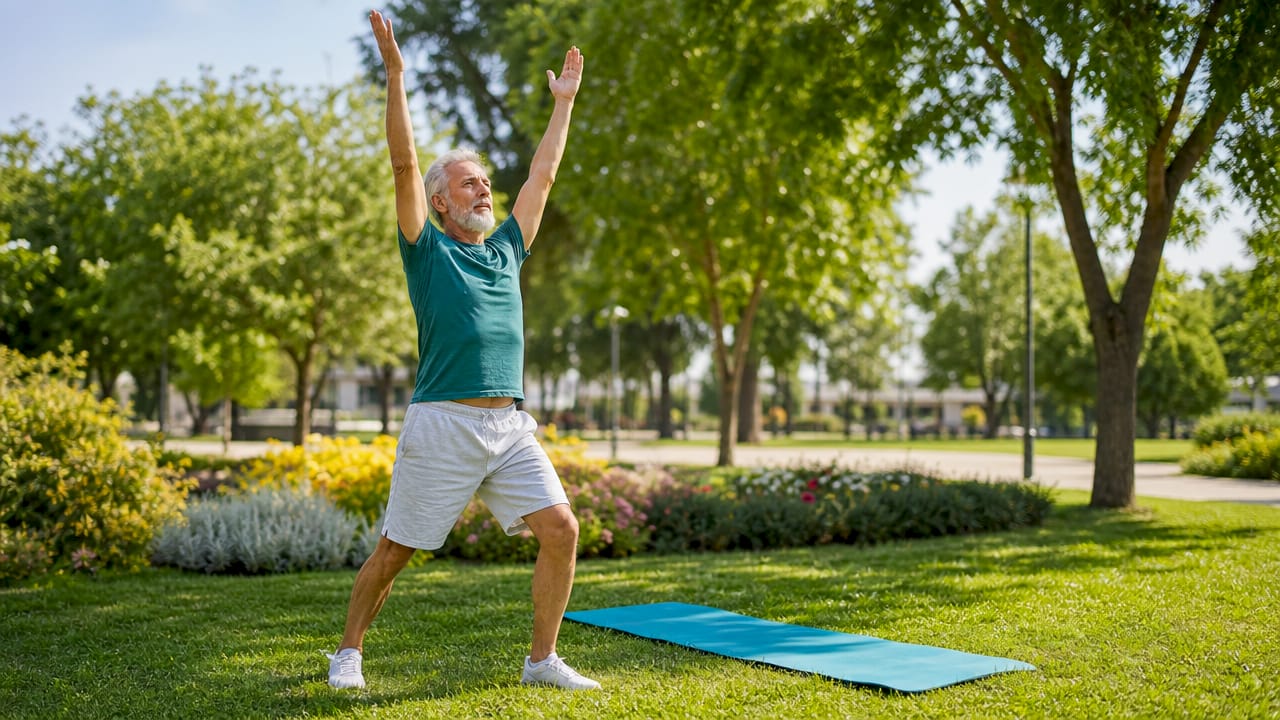
Aerobic, strength, and balance exercise together support functional independence and longevity. Each type does something different. Aerobic activity protects your heart and brain. Strength training preserves the muscle mass that keeps you out of a wheelchair. Balance work prevents the falls that send many solo agers into a cycle of fear and reduced movement.
Here is a practical starting framework:
- Aerobic activity. Aim for brisk walking, swimming, or cycling at least five days a week. Even 30 minutes of moderate effort counts.
- Strength training. Two sessions per week using bodyweight exercises, resistance bands, or light weights. Focus on legs, core, and grip.
- Balance and flexibility. Tai chi and balance drills are particularly effective for older adults. A single weekly class can produce measurable improvement within months.
- Consistency over intensity. A moderate routine you maintain for years beats an aggressive one you abandon in weeks.
Pro Tip: Grip strength is one of the most reliable predictors of overall health in later life. Add a simple hand gripper to your daily routine. It takes two minutes and tracks a metric that matters.
Maintaining independence at home depends directly on these physical capacities. The stronger and more balanced you are, the longer you can manage daily life on your own terms.
How do social connections create meaning for solo agers?
Passive socializing, attending events, watching others, chatting without commitment, does not produce the same mental health benefits as generative engagement. Generative activities reduce social isolation and create a sense of necessity. That word matters. When others genuinely need your presence, you show up differently. You feel different.
The distinction between passive and generative social roles is worth understanding clearly:
| Type of engagement | What it looks like | Effect on well-being |
|---|---|---|
| Passive socializing | Attending a club meeting, watching a class | Mild, temporary mood lift |
| Generative role | Teaching, mentoring, leading a project | Sustained sense of purpose and necessity |
| Intergenerational program | Tutoring youth, community storytelling | Stronger identity and reduced isolation |
| Community contribution | Volunteering with a defined responsibility | Accountability and belonging |
The shift from consumer to contributor is the core move. When you go from attending a community garden to running the seed exchange, your relationship to that community changes entirely. You become someone others count on. That is not a small thing. It is the architecture of meaning.
Community groups for solo agers offer structured ways to build these generative roles without starting from scratch. Agingsolo also covers the common isolation challenges that make this harder than it sounds, along with practical ways through them.
What daily habits sustain purpose and resilience while aging solo?
Purpose is a skill, not a personality trait. Intentional habits like continuous learning, creating more than consuming, and maintaining projects that outlive the day are what keep meaning alive over time. The good news is that these habits are learnable at any age.
Here are the habits that make the biggest difference for solo agers:
- Learn something new every month. A language, an instrument, a craft, a subject. Learning keeps the brain plastic and gives you something to talk about.
- Create more than you consume. Write, build, cook for others, teach. Consumption is passive. Creation leaves something behind.
- Maintain at least one project with a longer horizon. A book you are writing, a garden you are developing, a skill you are building toward mastery. These projects give tomorrow a reason.
- Audit your social circle annually. Who energizes you? Who drains you? Solo agers cannot afford to spend limited social energy on relationships that do not reciprocate.
- Build your support circle deliberately. A strong support circle does not appear on its own. You recruit it, maintain it, and invest in it the way you would any important relationship.
Early identity audits before retirement reduce psychological distress later. The solo agers who navigate the 65–69 transition most successfully are the ones who started asking identity questions at 55, not 70.
Key takeaways
Purposeful aging is the single most effective strategy solo agers have for maintaining health, independence, and meaning across later life.
| Point | Details |
|---|---|
| Start before 67 | Differences between purposeful and default aging become clear by 67; reversibility drops sharply by 75. |
| Purpose protects health | Strong purpose reduces disability risk by 31% and dementia risk by 36%. |
| Identity audit is the first step | Confronting occupational identity loss early prevents the fulfillment decline common between ages 65 and 69. |
| Generative roles beat passive leisure | Community roles that make you necessary produce stronger well-being than attending events as a bystander. |
| Physical and purposeful aging reinforce each other | Aerobic, strength, and balance exercise preserve the physical capacity that keeps purpose accessible. |
What I have learned watching solo agers navigate this
I have seen a consistent pattern over the years. The solo agers who thrive are not the ones who had the easiest circumstances. They are the ones who got honest with themselves early. They asked hard questions about identity before retirement forced the issue. They built social roles that required their presence, not just welcomed it. And they treated physical health as a non-negotiable foundation, not a bonus.
The uncomfortable truth is that independence without purpose gets lonely fast. The quiet of living alone feels heavier when there is no clear reason to fill it. But purpose without physical capacity is equally fragile. You cannot mentor a child if you cannot get to the community center. You cannot run the seed exchange if your balance is unreliable.
What I find most underrated is the internal life. Solo agers often focus on logistics, housing, finances, emergency plans. Those matter. But the internal structure, the sense of who you are and why your presence matters, is what holds everything else together. Build that first. The logistics become easier when you know what you are planning for.
If you are reading this at 55 or 60, you have a real advantage. Use it.
— Mike
Agingsolo has practical resources for every step
Solo agers who want to age with purpose need more than inspiration. They need a plan.
Agingsolo is built specifically for adults growing older without traditional family support. The guides cover everything from safe, independent aging to building the social and physical foundations that make purpose sustainable. Whether you are just starting to think about the next chapter or already navigating the 65–69 transition, Agingsolo offers calm, practical tools designed for your situation. The growing old alone guide is a strong place to start. It covers safety, connection, and independence in one place, without the noise.
FAQ
What is purposeful aging?
Purposeful aging is the deliberate practice of cultivating meaning, physical vitality, and social contribution in later life. It is associated with measurable health benefits, including physical performance equivalent to being 2.5 years younger than peers who age without intention.
When should I start aging with purpose?
The best time to start is before 67. Research shows that differences between purposeful and default aging become visible by that age, and the negative trajectory of default aging is largely irreversible by 75.
How does purpose affect physical health in older adults?
Strong purpose reduces the risk of functional disability by 31% and dementia by 36%. Physical markers like grip strength and walking speed are also significantly better in adults who age with high purpose.
What is the difference between active aging and purposeful aging?
Active aging refers broadly to staying physically and socially engaged in later life. Purposeful aging is more specific: it emphasizes cultivating meaning and generative roles, not just activity. The two overlap, but purpose adds the "why" that sustains the effort.
How can solo agers find purpose without family support?
Solo agers build purpose through generative community roles, intentional social circles, continuous learning, and physical routines that preserve independence. Resources like Agingsolo offer structured guides for building these foundations without relying on family as the primary support system.