
TL;DR:
- Senior confidence is the belief in your ability to handle daily life independently as you age. It relies on accurate self-assessment and consistent small actions rather than fearlessness. Building it involves gradual physical practice, cognitive reframing, maintaining social connections, and respecting autonomy.
Senior confidence is the cultivated ability to trust your judgment, strengths, and capacity for independent living as you age solo. It is not the same as feeling fearless. It is closer to what psychologists call self-efficacy: the belief that you can handle what comes next, even when you are not certain how. For solo agers, this kind of steady self-trust matters more than most people realize. Without a partner or nearby family to lean on, your confidence in your own decisions becomes a daily resource. Agingsolo is built around exactly this need, offering practical tools for adults who want to age confidently after 50 with clarity and a realistic plan.
What makes senior confidence different from younger confidence?
Senior confidence is rooted in accurate self-assessment, not optimism. Younger people often feel confident because they have energy, time to recover from mistakes, and a general sense that things will work out. That kind of confidence is useful, but it is fragile. It depends on things going well.
Confidence after 50 works differently. It comes from knowing your actual strengths and limits, and choosing to act anyway. Psychologists describe this as a durable foundation because it does not collapse when something goes wrong. You have already seen hard things. You know you can get through them.
One concept worth understanding is the confidence-competence gap. A 2026 study of adults aged 60 and older found a measurable gap between how capable people believed they were and how capable they actually were in areas like digital security. That gap matters because overconfidence in one area and underconfidence in another both lead to poor decisions. The goal is accurate seeing, not inflated self-belief.
Several patterns tend to erode confidence after 60:
- Comparing current ability to past ability. You are not competing with your 45-year-old self.
- Treating a bad day as permanent evidence. One shaky morning is not a trend.
- Waiting until you feel ready. Readiness rarely arrives before action does.
- Ignoring real progress. Small wins count, even when they feel ordinary.
Honest self-awareness, paired with a willingness to act, is the core of building confidence in seniors that actually lasts.
How can older adults rebuild physical confidence after health setbacks?
Physical confidence is often the first to take a hit after a fall, illness, or surgery. The good news is that it responds well to a gradual, structured approach. Physical confidence can begin to improve meaningfully within 2–4 weeks of consistent, gentle practice. Deeper gains in balance and strength typically follow after 8–12 weeks of regular training.
The method that works best is called graded exposure, sometimes called a confidence ladder. You start with activities that feel manageable, not terrifying, and repeat them until they feel safe. Then you move one step up.
Here is how to apply it practically:
- Rate the fear, not just the difficulty. Choose a starting activity that feels about 3–5 out of 10 in terms of fear. Walking to the mailbox, stepping onto a porch, or using stairs with a handrail are common starting points.
- Repeat until it feels routine. Do not move up the ladder until the current step feels genuinely comfortable, not just tolerable.
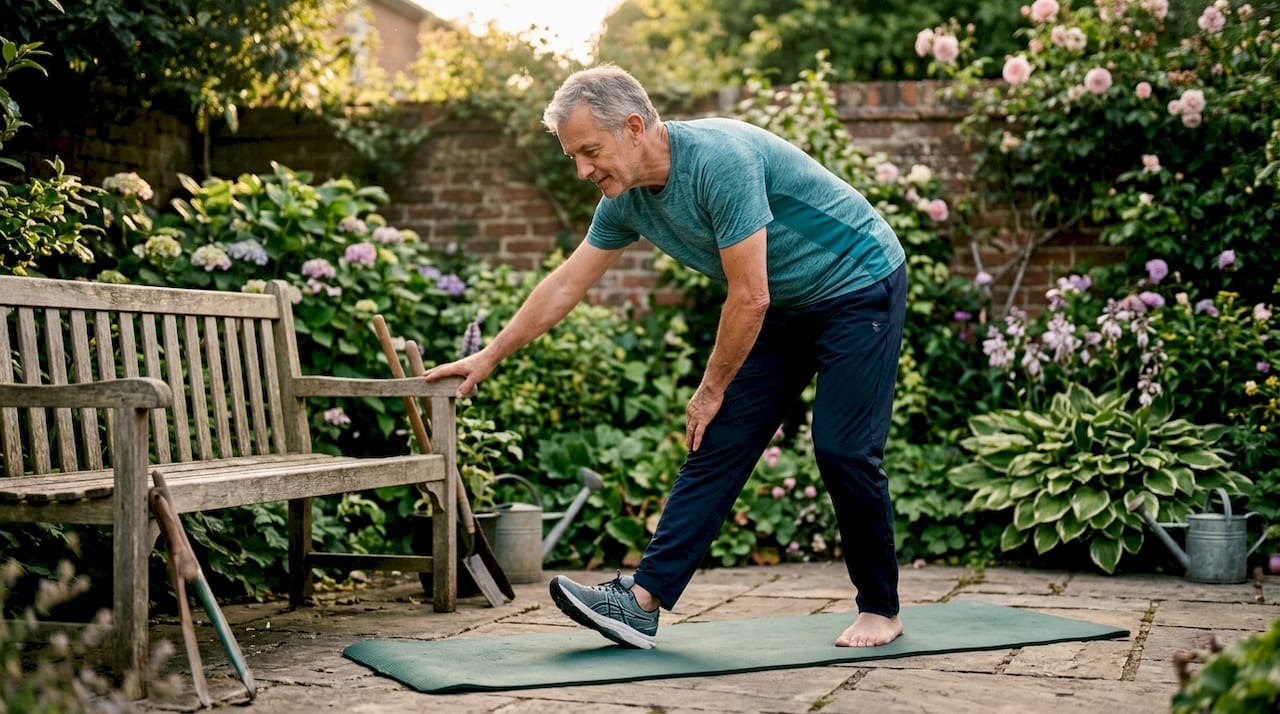
- Add balance and strength work. Standing on one foot near a counter, heel-to-toe walking, and seated leg raises all build the physical base that supports confidence.
- Distinguish real risk from perceived risk. A surface that feels slippery may simply feel unfamiliar. Checking the actual environment matters.
- Work with a podiatrist or physical therapist if foot pain is involved. Foot problems are a leading cause of fall fear in older adults. Podiatry for seniors can address pain that limits movement and undermines physical self-trust.
Pro Tip: The confidence ladder approach works because it replaces all-or-nothing thinking with measurable progress. Each small step creates real evidence that you can do this.
| Training type | Timeline for early gains | Primary benefit |
|---|---|---|
| Graded exposure | 2–4 weeks | Reduces fear response |
| Balance training | 4–8 weeks | Improves stability |
| Strength training | 8–12 weeks | Builds physical capacity |
What role do mindset and interpretation play in building senior confidence?
The way you interpret events shapes your confidence more than the events themselves. Interpretation distortions like catastrophizing, all-or-nothing thinking, and mind-reading are common after 60. They cause people to read normal age-related discomfort as evidence of serious decline. That reading is usually wrong, and it quietly drains self-trust.
Cognitive reframing is the practice of creating a pause between what happens and the story you tell about it. When your knee aches after a walk, the first thought might be "I'm falling apart." The reframe is: "My knee is sore. That is normal after activity. It does not mean I am declining." The fact stays the same. The interpretation changes.
A few techniques that genuinely help:
- Name the distortion. When you catch yourself thinking in absolutes ("I always," "I never"), label it. Naming it creates distance.
- Look for counter-evidence. What did you do well today? What worked? Build a running list.
- Soften the internal narrator. Speak to yourself the way you would speak to a friend facing the same situation.
- Act before you feel ready. Confidence comes from accumulated experience, not from waiting until certainty arrives.
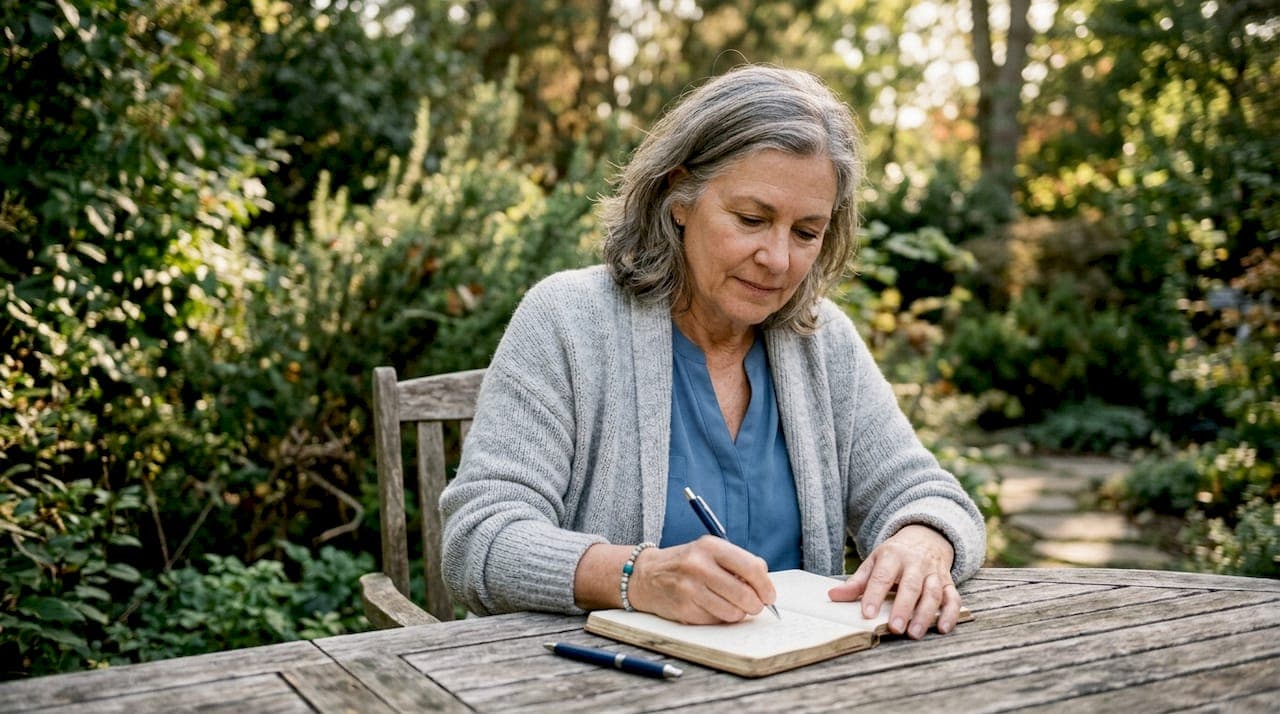
Pro Tip: Keep a small notebook for three days and write down one thing you handled well each day. Reading it back at the end of the week builds real evidence of your own capability.
Reassurance from others helps briefly, but it does not build lasting self-trust. Action does. Each time you do something you were uncertain about, you add a brick to the foundation.
How do social connections and autonomy support boost confidence in solo aging?
Social isolation increases the risk of depression and cognitive decline in older adults. That is not just a health statistic. It means that loneliness actively erodes the self-belief you need to stay independent. Connection is not a luxury for solo agers. It is part of the infrastructure.
Meaningful social contact does not require a large social circle. A regular phone call with a trusted friend, a weekly class, or a neighborhood check-in can all provide the emotional grounding that keeps confidence steady. The key is consistency, not volume.
Autonomy matters just as much as connection. Self-determination is central to confidence in older adults. When people feel they have real choices, they feel capable. When others make decisions for them, even with good intentions, confidence shrinks. Solo agers benefit from environments and relationships that respect their right to choose.
Practical ways to protect both connection and autonomy:
- Seek advice, not permission. Ask trusted people for input, then make your own call.
- Celebrate small wins out loud. Telling someone "I handled that myself" reinforces your own sense of capability.
- Set clear boundaries with helpers. Support that respects your decisions strengthens confidence. Support that overrides them does not.
- Validate your own feelings first. You do not need others to confirm that your experience is real.
For solo agers building a support network, independence does not mean isolation. A well-chosen circle of people who respect your autonomy is one of the strongest confidence-building tools available.
What practical steps can solo agers take to sustain and grow their confidence daily?
Daily habits are the engine of lasting confidence. Big leaps feel motivating, but small, consistent actions are what actually build self-trust over time. The goal is not to do everything perfectly. The goal is to show up for yourself regularly.
Here is a practical framework for solo agers:
- Create daily anchors. Routine anchors reduce decision fatigue and create a sense of control. A morning walk, a set meal time, or a consistent bedtime all count. Predictability is calming, and calm supports confidence.
- Set one stretch goal per week. Choose something that requires effort but is genuinely achievable. Mastery experiences, where you attempt something and succeed, are the most direct path to stronger self-efficacy.
- Track progress without overtesting. Notice what you can do now that you could not do a month ago. Avoid daily self-assessment, which amplifies small fluctuations and creates unnecessary anxiety.
- Move your body every day, even briefly. Balance exercises, a short walk, or gentle stretching all reinforce physical self-trust. Staying active and independent is one of the most direct ways to protect confidence long-term.
- Stop comparing your pace to others. Your rhythm is your own. Progress measured against your own baseline is the only comparison that builds anything useful.
Group activities also deliver results faster than solo effort alone. Research found that targeted group activities significantly improved self-esteem and reduced depression symptoms in elderly participants within a single week. That speed of change is worth paying attention to.
Key Takeaways
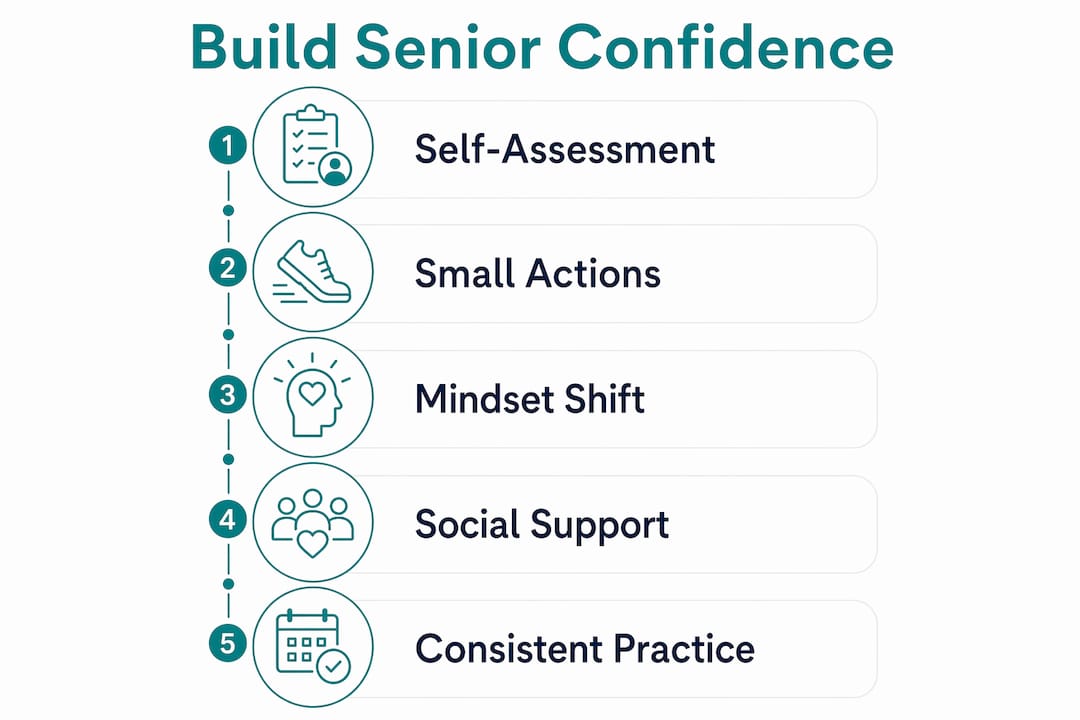
Senior confidence is built through accurate self-assessment, consistent small actions, and environments that protect your autonomy and connection to others.
| Point | Details |
|---|---|
| Accurate self-assessment | Honest awareness of strengths and limits creates more durable confidence than optimism alone. |
| Graded physical exposure | Starting with low-fear activities and progressing gradually rebuilds physical self-trust in 2–12 weeks. |
| Cognitive reframing | Naming interpretation distortions and building counter-evidence reduces the mental drain on confidence. |
| Autonomy over assistance | Environments that support your right to choose strengthen self-esteem more than well-meaning overprotection. |
| Daily anchors and stretch goals | Consistent routines reduce decision fatigue, and weekly mastery experiences build real self-efficacy over time. |
What I have learned about confidence after years of working with solo agers
Most people think confidence is something you either have or you do not. That belief is the single biggest obstacle I see. Confidence is a practice. It is something you do, not something you possess.
The solo agers I have seen thrive are not the ones who feel fearless. They are the ones who act despite the fear, in small ways, on ordinary days. They walk to the corner even when the sidewalk feels uncertain. They make the phone call even when they are not sure what to say. They try the new thing even when they expect to struggle.
What surprises people most is how quickly small actions accumulate. Two weeks of consistent effort changes how you feel in your body. Eight weeks changes how you think about what you can do. The timeline is real, and it is not as long as most people expect.
The other thing I would say is this: stop waiting for the right conditions. The conditions will never be perfect. The knee will not stop aching entirely. The balance will not feel completely solid before you try. You build the confidence by going, not by waiting until you feel ready to go.
Solo aging is genuinely hard. The quiet can feel heavier than expected. But the people who build real confidence are the ones who treat it as a daily practice, not a destination. Honor every step forward, no matter how small it looks from the outside.
— Mike
Planning tools for solo agers who want to age with confidence
Building confidence is one part of aging well alone. Having a clear, realistic plan for the future is the other. When you know what your options are and what steps to take, the uncertainty that quietly drains confidence starts to shrink.
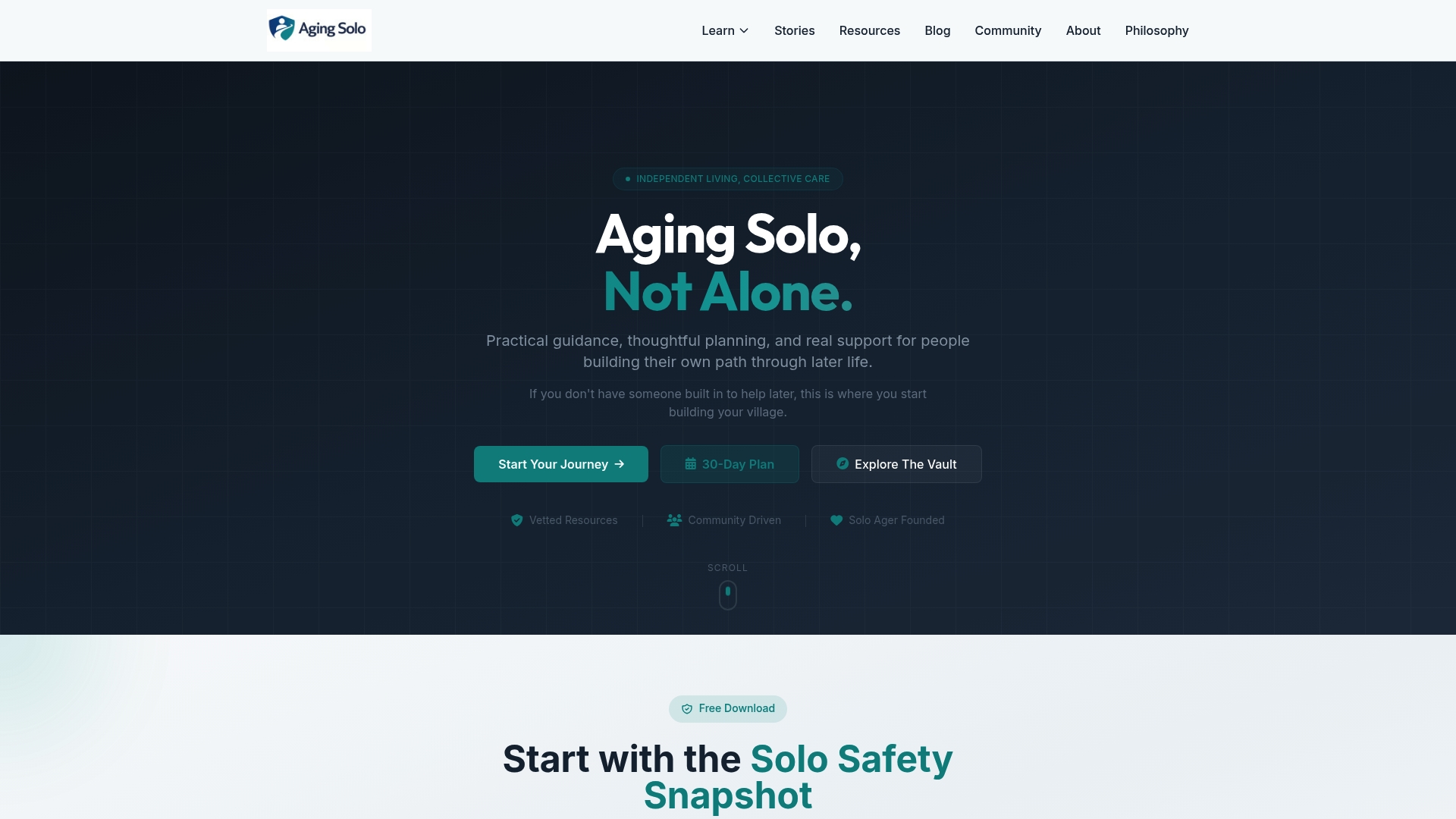
Agingsolo's elder planning guide for 2026 is built specifically for adults who are aging without a traditional support system. It covers housing, decision-making, safety, and support networks in plain language, without pressure or alarm. If you are ready to move from uncertainty to a steady, realistic plan, that guide is a good place to start. You can also explore the full range of solo aging resources to find the tools that fit where you are right now.
FAQ
What is senior confidence, exactly?
Senior confidence is the steady belief in your ability to make good decisions and handle daily life independently as you age. It is grounded in accurate self-awareness, not the absence of fear or doubt.
How long does it take to rebuild confidence after a fall?
Early improvements in physical confidence can appear within 2–4 weeks of gradual, consistent practice. Meaningful gains in balance and strength typically take 8–12 weeks of regular training.
Can social connection really improve self-esteem in older adults?
Yes. Research found that targeted group activities produced significant improvements in self-esteem and reduced depression symptoms in elderly participants in as little as one week.
What is the biggest mindset mistake that undermines senior confidence?
Interpreting normal age-related discomfort as evidence of decline is the most common error. Cognitive reframing, which separates the physical fact from the story about it, is the most direct correction.
How does autonomy affect confidence in solo agers?
Environments that support self-determination strengthen confidence in older adults. When people retain real choices about their own lives, their sense of capability stays intact. Overprotection, even well-intentioned, tends to erode it.