

TL;DR:
- Senior support consists of services that help older adults maintain independence and safety as their needs change. Building a network of care, including in-home support, assisted living, and companionship, is essential for solo agers. Combining emotional connection with practical tools fosters dignity and reduces health risks over time.
Senior support is defined as a network of tailored services that help older adults maintain independence, safety, and quality of life as their needs change over time. For solo agers, people growing older without a nearby spouse, partner, or adult children, building this network is not optional. It is the plan. The Administration for Community Living's Eldercare Locator connects older adults and families to vetted local elder care services across the country. The core goal of senior support is not to take over. It is to fill the right gaps, at the right time, with just enough help to keep you moving forward on your own terms.
What types of senior support services are available?
Elder care services fall into several clear categories. Knowing what exists is the first step to building a plan that fits your life.

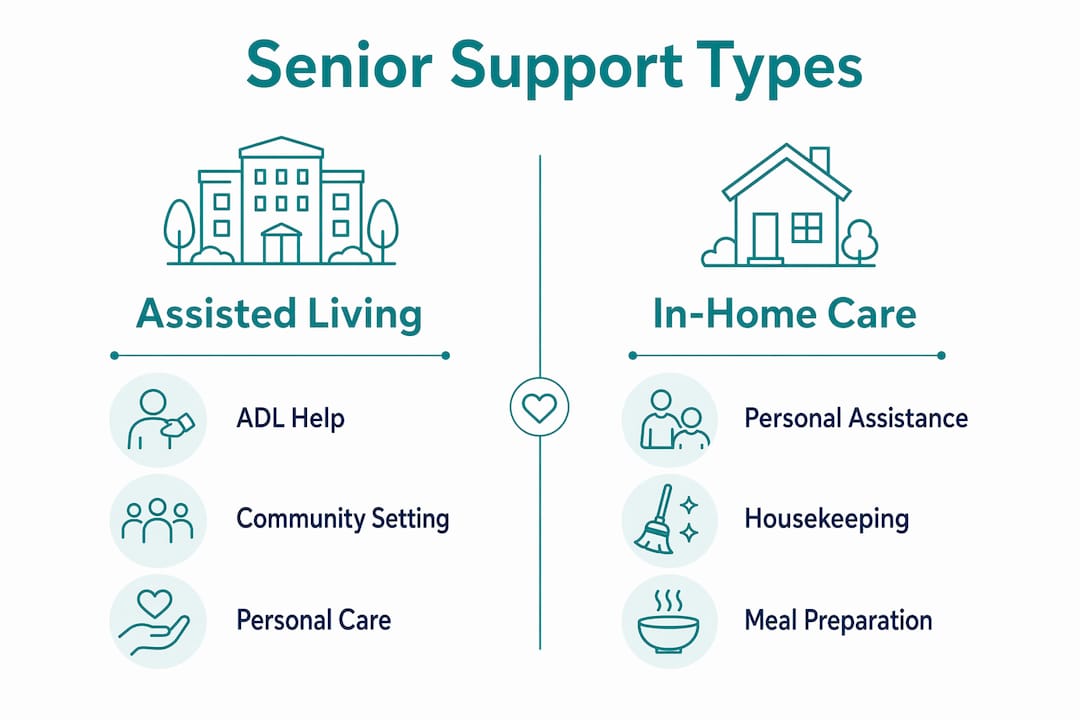
Assisted living serves mostly adults in their late 70s to late 80s who need help with one to three activities of daily living (ADLs) but do not require around-the-clock medical care. Assisted living residents typically live in private suites they furnish themselves, which keeps the setting personal and home-like. The focus is on maintaining autonomy. Assisted living support fills specific gaps like medication management or meal prep so seniors can spend their energy on social and wellness activities instead.
In-home care lets you stay in your own space while receiving help with personal care, housekeeping, meal preparation, and transportation. This option suits adults who are managing well overall but need steady, reliable help with a few tasks. It is also the most flexible category, since you can scale services up or down as your situation changes.
Technology assistance is a growing and often overlooked form of aging adult support. Device setup, troubleshooting, and digital safety coaching help seniors stay connected to family, telehealth providers, and community programs. Fear of breaking devices is one of the biggest barriers to tech adoption among older adults. Patient, step-by-step guidance removes that fear and builds real confidence.
Companionship services round out the picture. Scheduled visits, shared activities, and friendly check-ins address emotional well-being directly. These are not extras. They are core components of a complete support plan.
| Support type | Primary benefit |
|---|---|
| Assisted living | ADL help in a home-like community setting |
| In-home care | Flexible support inside your own home |
| Technology assistance | Confidence and connection through device help |
| Companionship | Emotional well-being and reduced isolation |
| Transportation assistance | Independence beyond the front door |
Pro Tip: When comparing in-home care providers, ask specifically which services are included in the base rate and which cost extra. Meal prep and transportation are often billed separately.
How do you assess and choose the right support?
Choosing the right level of support starts with an honest look at two areas: ADLs and IADLs. ADLs are basic self-care tasks like bathing, dressing, and eating. IADLs, or Instrumental Activities of Daily Living, are more complex tasks like managing medications, handling finances, cooking, and using transportation. A gap in IADLs often appears before ADL challenges do, and it is easy to miss.
A structured approach helps you match needs to options without guessing.
- List your current challenges. Write down every task that feels harder than it did a year ago, no matter how small.
- Separate safety concerns from preference. Some tasks are inconvenient. Others carry real risk. Prioritize the ones where a mistake could cause harm.
- Identify your non-negotiables. Staying in your home, keeping a pet, or maintaining a specific routine may shape which options work for you.
- Use the Eldercare Locator. The Eldercare Locator at 1-800-677-1116 connects you to local senior assistance programs, vetted by the Administration for Community Living, that match your geographic area and specific needs.
- Involve your people. Even if you are a solo ager without nearby family, a trusted friend, neighbor, or professional advocate can join care planning conversations and help you think through options clearly.
One area that surprises many people is cost. Medicare may cover specific medical therapies in assisted living settings, but it does not cover room and board. That distinction matters enormously for financial planning. Clarifying exactly what a community bills separately versus what is included prevents unexpected out-of-pocket expenses later.
Pro Tip: Ask any assisted living community for a written breakdown of base fees versus add-on services before signing anything. The difference between what is included and what is billed separately can be significant.
Personalized care plans in assisted living are reviewed and adjusted regularly as needs evolve. Family members and advocates are encouraged to participate in those reviews. For solo agers, this makes having a designated advocate, someone who can attend reviews and ask the right questions, a practical necessity rather than a nice-to-have.
Why does companionship matter as much as physical care?
Emotional health is not separate from physical health. It drives it. Companionship and shared activities help prevent isolation and reduce the likelihood that a senior will need institutional care prematurely. That is not a soft claim. It is a measurable outcome.
Isolation tends to accelerate decline. When older adults go days without meaningful social contact, the effects show up in sleep, appetite, cognitive sharpness, and motivation to manage their own health. Companionship services interrupt that cycle. They provide a reason to get up, get dressed, and engage.
Programs that address solo ager isolation challenges often combine scheduled visits with group activities, phone check-ins, and shared meals. The format matters less than the consistency. Regular, predictable contact is what builds the sense of connection that protects emotional well-being over time.
Companionship also complements physical care in a practical way. A companion who visits regularly notices changes. They see when someone seems more confused than usual, when the refrigerator is empty, or when a person has stopped doing something they used to enjoy. That kind of observation feeds directly into the broader support system.
- Scheduled in-person visits provide structure and social contact
- Group programs at senior centers or community organizations reduce loneliness at scale
- Phone and video check-ins maintain connection between in-person visits
- Shared meals, whether delivered or prepared together, combine nutrition and companionship
- Volunteer visitor programs offer low-cost options for adults on fixed incomes
How does technology strengthen senior independence?
Technology is one of the most underused tools in aging adult support. Used well, it extends independence. It connects seniors to telehealth appointments, family video calls, medication reminders, and emergency response systems without requiring them to leave home.
The barrier is rarely the technology itself. It is the fear of doing something wrong. Effective tech support for seniors works by confirming each action out loud, explaining why each step matters, and repeating the process until it feels familiar. That patience is what separates useful help from frustrating help.
Agingsolo covers technology for aging solo in depth, including which tools are worth learning and how to get comfortable with them at your own pace. The goal is not to master every app. It is to use a small set of tools confidently and consistently.
Key areas where technology support makes a real difference:
- Device setup: Getting a tablet, smartphone, or medical alert device configured correctly from the start prevents most common frustrations
- Digital safety: Learning to recognize scams and protect personal information is a critical skill for older adults online
- Telehealth access: Video appointments with doctors and specialists reduce the need for transportation and expand access to care
- Caregiver coordination: Shared apps and check-in tools keep family members or professional caregivers informed without requiring constant phone calls
Pro Tip: Start with one device and one purpose. Master video calls before adding a medication app. Confidence builds faster when you focus on one thing at a time.
Coordination between tech support providers and family caregivers matters too. When everyone uses the same tools and understands the same systems, the whole support network runs more smoothly. That coordination reduces the chance that something important falls through the cracks.
Key Takeaways
Effective senior support combines physical care, emotional connection, and practical tools to help older adults age with dignity and independence.
| Point | Details |
|---|---|
| Start with an honest needs assessment | Map your ADL and IADL challenges before choosing any support option. |
| Use the Eldercare Locator | Call 1-800-677-1116 to find vetted local elder care services matched to your area. |
| Clarify costs before committing | Medicare does not cover room and board in assisted living; get a written fee breakdown. |
| Treat companionship as core care | Regular social contact prevents isolation and slows physical and cognitive decline. |
| Build tech confidence gradually | Focus on one device and one purpose at a time to reduce fear and build real skill. |
What I've learned about building support that actually holds
Most people wait too long. They start looking for elder care services after a fall, a health scare, or a crisis that forces the decision. By then, the options narrow and the stress multiplies. The adults I have seen navigate aging most successfully are the ones who built their support network before they needed it urgently.
The second thing I have learned is that communication loops are not optional. Care providers who report subtle changes in a senior's health or behavior to family members or advocates are doing something most people underestimate. Those small observations, a change in appetite, a new hesitation on the stairs, a shift in mood, are often the earliest signals of a bigger change. Without a formal loop in place, those signals disappear.
Emotional health gets treated as secondary. It is not. Approximately 40% of family caregivers experience burnout, which means the people providing informal support are often running on empty. Professional support does not just help the senior. It protects the whole network.
The most common oversight I see is people assuming their insurance covers more than it does. Medicare's limits on assisted living costs catch families off guard repeatedly. Know what you are paying for before you commit to anything.
— Mike
Planning your next step with Agingsolo
Agingsolo is built for adults who are aging without a traditional built-in support network and want a clear, realistic plan before they need one urgently.

The aging in place guide walks you through the practical steps of staying home safely as your needs change, covering everything from home modifications to caregiver coordination. If you are ready to think about your broader support circle, the build your support circle resource helps you identify who belongs in your network and how to make those relationships reliable. Agingsolo also offers a clearinghouse of resources for solo agers at every stage of planning. You do not have to figure this out alone.
FAQ
What is senior support?
Senior support is a network of services that help older adults manage daily tasks, maintain independence, and stay safe. It includes in-home care, assisted living, companionship, and technology assistance.
How do I find local elder care services?
The Eldercare Locator at 1-800-677-1116, operated by the Administration for Community Living, connects older adults and families to vetted local senior assistance programs.
Does Medicare pay for assisted living?
Medicare may cover specific medical therapies in assisted living but does not cover room and board. Always request a written breakdown of fees from any community you consider.
What is the difference between ADLs and IADLs?
ADLs are basic self-care tasks like bathing and dressing. IADLs are more complex tasks like managing medications, finances, and transportation. IADL challenges often appear first.
Why is companionship considered part of senior care?
Companionship prevents isolation, which directly affects physical and cognitive health. Regular social contact reduces the risk of premature decline and the need for institutional care.
Recommended
- Aging in Place: A Solo Ager's Guide to Safety and Independence | Aging Solo
- Older Adults Living Alone: A Practical Guide to Safe, Independent Aging | Aging Solo
- Retirement Lifestyle Guide for Adults 50+: Staying Active, Connected, and Independent | Aging Solo
- Aging Parent Driving Safety: A Practical 2026 Guide | Aging Solo