

Building a practical safety and support plan for aging in place without nearby family often leaves solo adults unsure which tools or guides are actually usable. Many online resources either focus only on generalized senior advice with little step-by-step guidance or restrict actionable materials to narrow local regions. This article compares four senior safety and planning websites so you can decide which matches your need for checklists, community support, and actionable planning whether you are aging solo or helping someone else.
Table of Contents
- Aging Solo Today
- Elderinfo (ElderHelpers.org)
- Senior Home Helper
- SeniorCanvas
- Comparative Analysis of Independent Aging Resources
Aging Solo Today
At a Glance
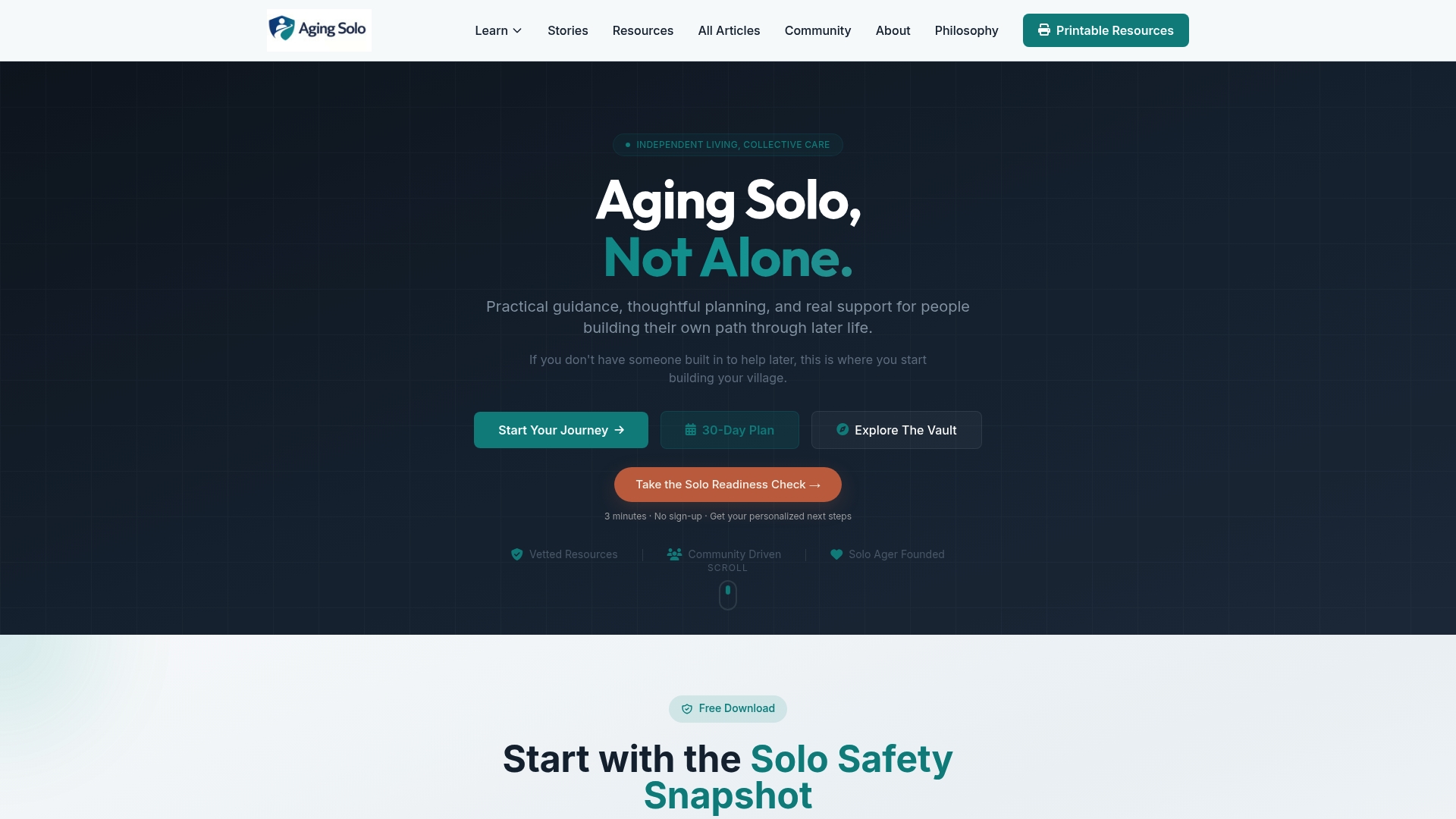
Downloadable checklists and the Solo Safety Snapshot let you convert an afternoon into a documented safety and support plan. The site focuses on small, practical steps that reduce overwhelm for people planning to age independently without family nearby.
Core Features
- Guides on home safety, legal and financial planning, technology, and community building.
- Checklists and downloadable templates for safety, support circles, and legal documents.
- Personal stories and case studies that show how people actually implemented plans.
- Educational articles that explain next steps in plain language for solo agers.
- Step-by-step tools designed to start small and build resilience over time.
Key Differentiator
Provides comprehensive, step-by-step guidance and resources specifically designed for solo agers to proactively prepare for aging independently. The emphasis is on pragmatic, nonmedical safety-first guidance rather than clinical advice.
The content groups planning into discrete projects you can finish one at a time. That makes the site a practical workbook rather than a long list of things you should do someday.
Pros
-
The checklists and templates let you produce concrete deliverables like a support circle contact sheet or a home safety checklist in under a day. That reduces decision fatigue and creates visible progress.
-
Guidance is tailored to people without a built-in support network. Articles and tools address housing, decision making, communication, and emergency readiness with scenarios solo agers face.
-
Personal stories and case studies show specific steps other members took. Those examples help you model realistic timelines and avoid guesswork.
-
The site nudges small steps over big plans. That approach keeps changes manageable and sustainable for someone living alone.
-
Community and connection features encourage building nearby supports and peer advice so you do not feel you have to implement a plan in isolation.
Cons
- The site does not offer direct professional or legal services; users who need formal documents or financial advice will still need to hire a professional.
Who It's For
Solo individuals aged 40 and above who intend to age in place without nearby family and want clear, practical guidance. Also useful for caregivers and neighbors who want to help a solo ager set up safety, legal, and support systems.
Unique Value Proposition
The Solo Safety Snapshot and downloadable templates turn planning into a do-able project you can finish quickly. That single feature changes planning from vague worry into a set of completed documents and contacts.
Aging Solo is a practical, people-centered resource for adults who are growing older without a traditional built-in support system like a spouse, partner, or nearby adult children. It focuses on helping solo agers proactively plan for safety, daily living, and long-term support so they can remain as independent as possible while still having a thoughtful, realistic plan for when they need help. Through guides, checklists, and real-world tools the site addresses housing, decision making, support networks, communication, and emergency readiness using calm, nonmedical, safety-first guidance. Its goal is to give solo agers and those who care about them clarity and confidence to age in place with dignity, strong boundaries, and a reliable, sustainable plan for the future.
Real World Use Case
A 65 year old single woman downloads the Solo Safety Snapshot, organizes her legal documents using the templates, and builds a support circle of neighbors and friends. She then schedules two small home modifications and sets a weekly check in with one contact.
Website: https://agingsolo.today
Elderinfo (ElderHelpers.org)

At a Glance
Supports five languages: English, Spanish, Russian, Chinese, and Vietnamese, which makes local outreach easier for Boston neighborhoods with recent immigrant seniors. The site links to nonprofit partners for services but user reviews raise concerns about legitimacy and responsiveness.
Core Features
- Resource and referral services for elder care in Boston, with categorized links to home care and social programs.
- Multilingual support across major community languages to help non English speakers find services and complete forms.
- Partnership with Elder Care Alliance for program delivery and referrals to trusted nonprofit services.
- Online referral and application forms for home care, caregiver support, and specialized programs that let caregivers start requests without a phone call.
Key Differentiator
Elderinfo centers on neighborhood level referrals and language access rather than national guidance. Its strength is local reach: materials and forms tailored to Boston populations and community agencies, which is narrower than Agingsolo’s wider planning focus. That local tilt helps when you need immediate, neighborhood-specific contacts.
Pros
-
Local focus speeds practical help. If you live in Boston, the listings and partner connections cut down the time spent hunting municipal and nonprofit numbers.
-
Multilingual content reduces the friction of applying for services for non English speakers and often includes translated forms and instructions.
-
Visible links to nonprofit partners give a clear handoff point when an elder needs home care or financial management services.
-
Online referral forms let caregivers submit intake information after hours, which matters when daytime calls are hard to schedule.
-
The platform can act as a single starting point for community organizations looking to coordinate referrals.
Cons
-
Several user reviews question the organization’s nonprofit status and overall transparency, which lowers trust for potential donors or volunteers.
-
Some users report difficulty canceling recurring donations and encountering unresponsive customer service when they try to resolve issues.
-
Reports of charging for volunteer access and slow service responsiveness have been mentioned by multiple reviewers.
-
Public information about specific programs and formal accreditation is limited compared with established city agencies.
When It May Not Fit
If you need nationwide guidance or a step by step plan for long term legal and medical planning, this site is too narrowly local. If you require clear nonprofit verification before donating or signing up volunteers, those transparency gaps could be a deal breaker. Also, expect follow up calls rather than fully managed placements.
Who It's For
Boston elders, family caregivers, and small community providers who need quick, language friendly referrals to local programs and home care options. Not ideal for people outside the Boston area or those who want audited nonprofit credentials before engaging.
Real World Use Case
A caregiver in Dorchester finds a Spanish language referral form, submits basic intake details online, and receives contact information for a local Elder Care Alliance coordinator to arrange a home care assessment. The online start saves a morning phone call.
Website: https://elderinfo.org
Senior Home Helper
At a Glance
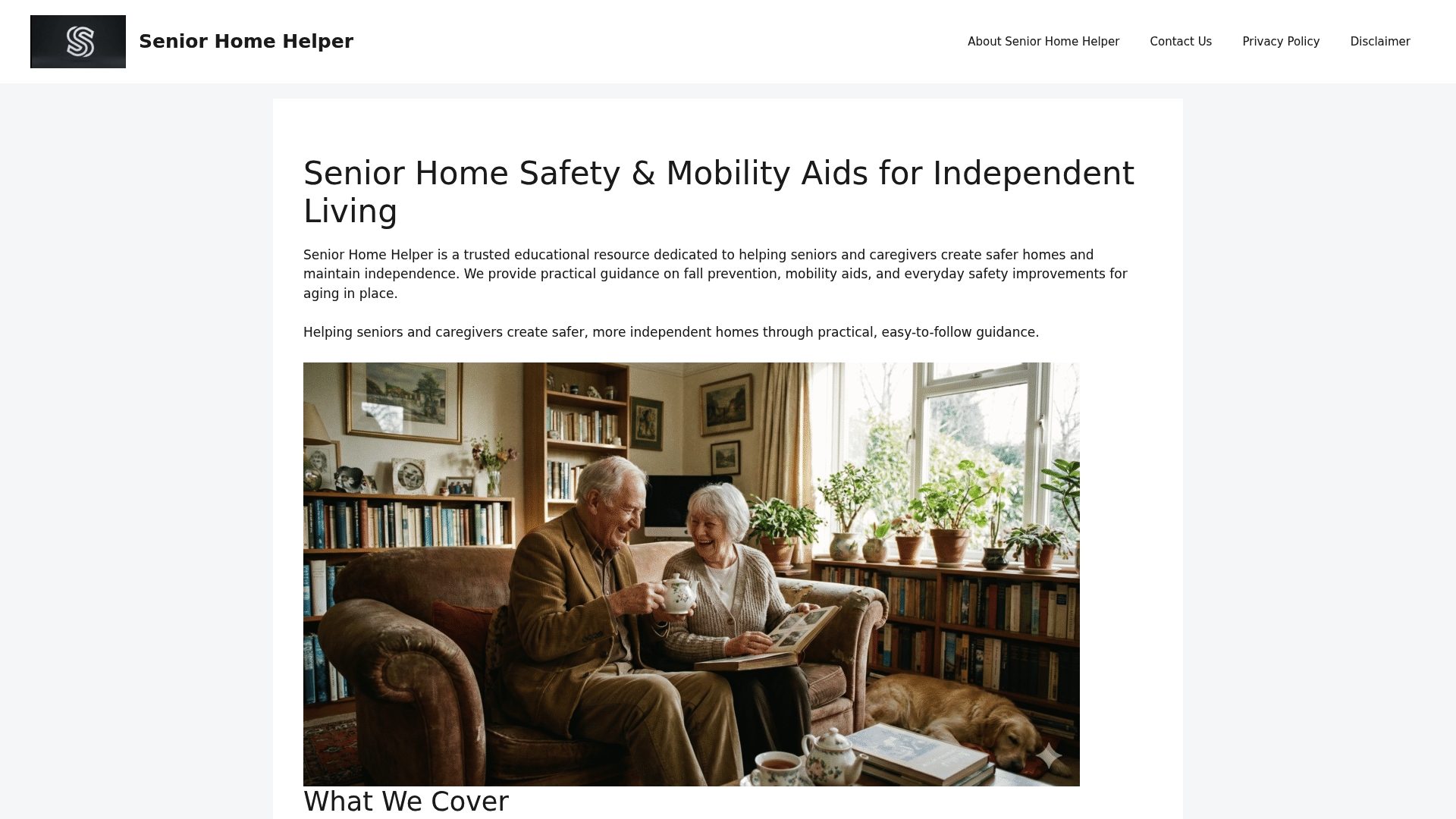
Authored by Margaret Collins, the site says she brings 15+ years of senior care experience to its articles, which focus strictly on noncommercial home safety guidance. The site publishes practical safety how-tos and does not sell products or services.
Core Features
- Educational content on fall prevention, mobility aids, and home modifications written for nontechnical readers.
- Mobility aid guides that compare walkers, canes, and rollators and explain safe usage and selection.
- Home safety tips covering bathroom grab bars, lighting, trip hazards, and basic retrofit ideas.
- Expert-authored articles that the site reports are regularly reviewed for accuracy and clarity.
Key Differentiator
The primary angle is single topic depth: expert-written, narrowly focused safety guidance intended to be practical and unbiased. Compared with Agingsolo, which targets solo agers with planning tools, checklists, and broader aging-in-place strategy, Senior Home Helper narrows its scope to home safety and mobility specifics.
Pros
- Focused topic coverage makes finding specific retrofit advice faster than digging through broader aging resources. A caregiver can find step-by-step bathroom suggestions in one place.
- Content is written in plain language without medical jargon so seniors and family members can read it without a clinician present.
- The site emphasizes practical tips over product hype which reduces pressure when you are comparing purchase options at a hardware store.
- The author background and review cadence give the material a professional tone that reads like field experience rather than opinion.
- Regular updates are claimed, which helps keep recommendations aligned with current safe-practice approaches.
Cons
- No direct services, vendors, or installers are offered so readers must localize recommendations themselves and hire help separately.
- The site does not provide personalized home safety assessments or interactive tools that measure risk for a specific floor plan.
- There are no user testimonials or third-party reviews listed to corroborate the effectiveness of the suggested changes.
When It May Not Fit
If you need an on-site assessment, contractor referrals, or an interactive checklist tied to your house plan, this resource will feel incomplete. Also skip it if you want community forums or crowd-sourced product feedback; the content is expert authored but not interactive.
Who It's For
Seniors, family members, and caregivers who want plain English, expert-oriented guidance on reducing falls and improving mobility at home. It fits people ready to act on advice themselves or who will hire local help to implement specific changes.
Real World Use Case
A daughter reads the grab bar placement and non-slip mat guidance, measures the bathroom herself, and hires a handyman to install two bars in the exact recommended locations. The retrofit stops frequent near-misses in a few weeks.
Pricing
Not applicable. The content is informational only and the site does not advertise products, subscriptions, or services for sale. Readers should plan for installation or product costs separately when following retrofit recommendations.
Website: https://seniorhomehelper.com
SeniorCanvas
At a Glance
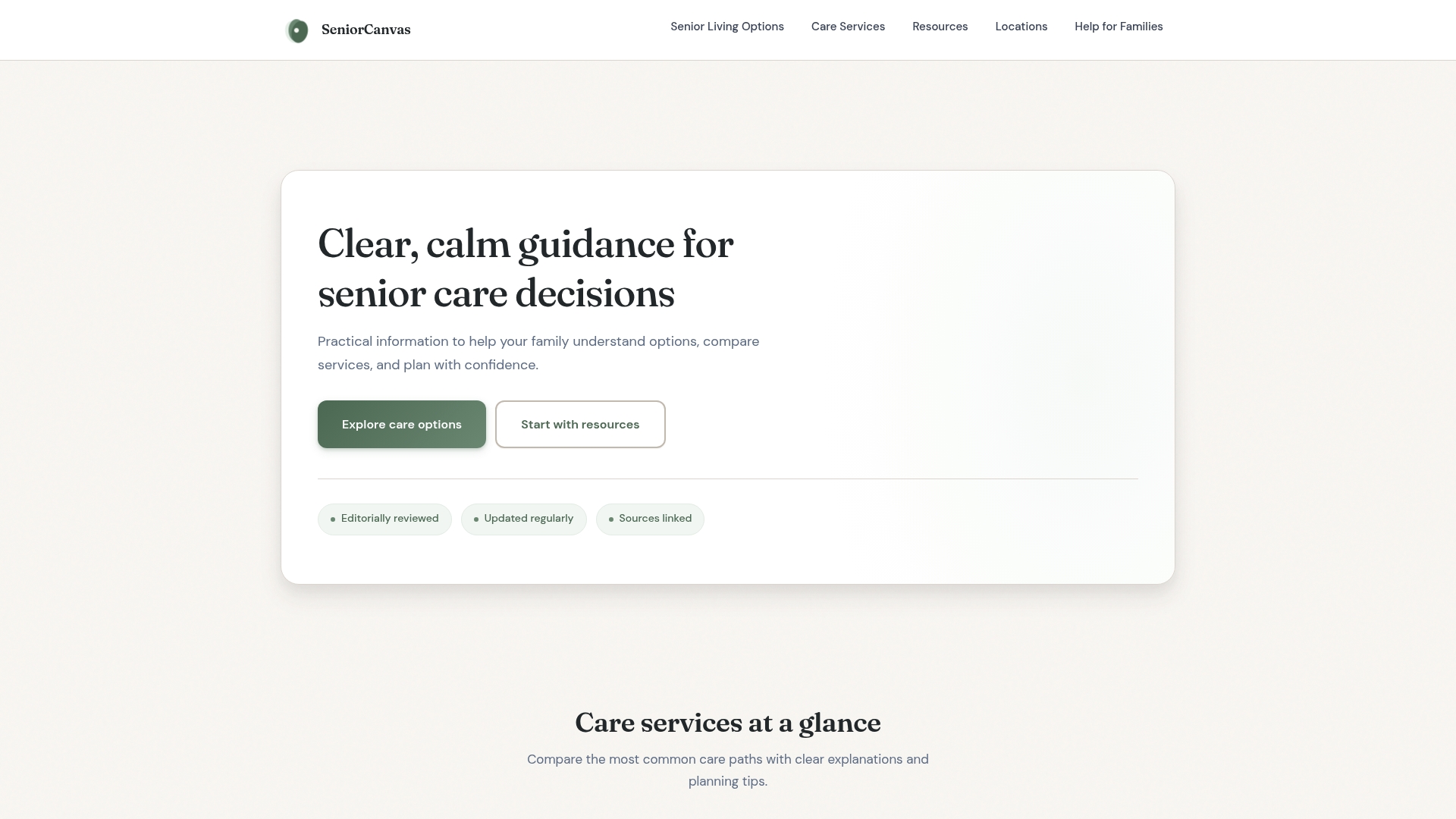
SeniorCanvas states its content is editorially reviewed and regularly updated, presenting complex senior care topics in plain language for families and caregivers. The site groups guides, checklists, and resource links so you can move from uncertainty to a concrete next step.
Core Features
- Comprehensive guides on senior living options and care services that break down assisted living memory care and nursing home differences.
- Practical checklists for care planning home safety upgrades and legal steps to organize documents and conversations.
- Resource links to medical alert systems mobility aids and local services so you can follow up on specific vendors.
Key Differentiator
SeniorCanvas focuses on editorially vetted guidance for families supporting aging loved ones. Unlike Agingsolo which centers on solo agers planning independent supports SeniorCanvas orients content toward family decision makers and caregivers who need checklists and side-by-side comparisons.
Pros
- Organizes complex topics into short digestible guides. That clarity helps families prioritize what to tackle first when a diagnosis or mobility change arrives.
- Includes actionable checklists so conversations with providers and visits to communities are more productive and less stressful.
- Links to local services and product categories reduce the time you spend hunting for recommendations and vendor pages.
- The editorial process is highlighted on the site which increases trust for readers who want vetted information rather than forum hearsay.
- Coverage spans both aging in place and facility options so you can compare retrofit work for a house against moving to assisted living.
Cons
- No substantive third party user reviews are available in the product data so independent reports of user experience are limited.
- Content is informational and does not replace professional medical legal or financial advice so you will still need to consult specialists for final decisions.
- The site does not appear to publish external product or service evaluations from review platforms which makes vendor selection reliant on the linked sources.
When It May Not Fit
If you need hands on evaluations or verified user ratings before selecting a specific provider SeniorCanvas will feel incomplete. The platform does not substitute for a home safety inspection a lawyer or a clinical assessment.
Who It's For
Families and caregivers who want trustworthy plain language explanations and step by step checklists for senior care decisions. Also useful for professionals who need a concise primer to share with clients or family meetings.
Real World Use Case
A daughter compares two assisted living communities using SeniorCanvas guides then prints a safety checklist for a home visit. She uses the linked medical alert information to prepare questions for vendors and to shortlist two systems to trial.
Website: https://seniorcanvas.com
Comparative Analysis of Independent Aging Resources
Aging independently introduces unique challenges. The solutions examined here—Aging Solo Today, Elderinfo, Senior Home Helper, and SeniorCanvas—each offer particular advantages tailored to specific needs. Below, we analyze dimensions where these platforms excel and provide guidance on selecting the ideal resource based on individual circumstances.
Local Specificity and Language Accessibility
While Elderinfo focuses heavily on localized assistance by providing targeted referrals within Boston, it further enhances its utility through multilingual support across five languages, a critical feature for serving diverse communities. In contrast, Aging Solo Today offers practical, generalist tools applicable to a nationwide audience, making it more suitable for those beyond Elderinfo's geographic focus. Potential users must weigh the importance of location-specific referrals against broadly applicable self-guided preparation.
Depth of Educational Content
Senior Home Helper specializes in providing in-depth, expert-written guidance on home safety and mobility. For users who prioritize detailed walkthroughs and practical modification tips for their homes without a broader scope beyond safety, this platform delivers exceptional targeted value. However, Aging Solo Today diversifies its content by embedding safety measures within aging-in-place strategies, making it an excellent option for users seeking an integrated planning approach.
Planning Resources
SeniorCanvas excels in aggregating and organizing detailed guides that explore senior living, care facilities, and home safety, particularly designed for family caregivers managing complex choices. This approach contrasts with Aging Solo Today's more individualized focus on empowering solo agers to craft and maintain personal safety and support networks. Families deciding collectively may benefit more from SeniorCanvas's structured guidance.
Best Fit Recommendations
- Choose Aging Solo Today if you are planning for independent aging without family support and prefer tools for turning plans into projects.
- Opt for Elderinfo when seeking localized, multilingual eldercare referrals specifically within the Boston area.
- Select Senior Home Helper for direct, narrowly focused advice on retrofitting home environments for safer aging.
- Go with SeniorCanvas if your goal is to explore and compare broader senior living options with checklists aiding family decision-making.
Our Pick: Aging Solo Today
While all platforms shine in their domains, Aging Solo Today stands out for its tailored, guidance that empowers solo agers to take proactive steps without relying heavily on external networks or professionals. However, individuals within Boston requiring immediate local resources might prefer Elderinfo, demonstrating the importance of matching resources with specific needs.
Resources for Aging Independently Comparison
Discovering the best resource requires understanding how they align to specific needs and objectives of solo agers.
| Resource | Key Differentiator | Best For | Core Features | Limitations |
|---|---|---|---|---|
| Aging Solo Today | Step-by-step guidance for solo agers focusing on safety | Individuals planning to age autonomously | Home safety checklists, legal guides, support plan tools | Does not provide direct professional services |
| Elderinfo | Multilingual, locality-focused elder service referrals | Boston-based elders needing language-specific aid | Local elder care services, nonprofit translations | Concerns about legitimacy and operational transparency |
| Senior Home Helper | Expert-reviewed focus on non-commercial safety advice | Caregivers needing practical home modification tips | Plain English safety tips, mobility aids comparison | Does not offer service providers or assessments |
| SeniorCanvas | Editorially reviewed guides for family caregivers | Families researching senior care options | Actionable checklists, resource links for vendors | Lack of user interaction and external product reviews |
Practical Support for Aging Alone with Agingsolo
Facing the challenges of aging without a nearby family support system requires focused, clear guidance. This article highlights common struggles like legal planning, home safety, and building support networks that can feel overwhelming for solo agers. Agingsolo steps in with straightforward checklists and real-world tools designed specifically to reduce uncertainty and help you create a safety-first plan you can complete step by step.
If you want to turn concern into confidence and craft a realistic, manageable plan for aging in place, explore what Agingsolo offers. Visit Aging Solo to download your Solo Safety Snapshot and begin organizing your home safety, legal documents, and support circle today.
Frequently Asked Questions
What specific features does Agingsolo offer to assist solo agers?
Agingsolo provides step-by-step tools designed to help users create documented safety and support plans. This includes checklists and templates for safety, support circles, and legal documents, making the planning process manageable for individuals without nearby family. Users should start with the Solo Safety Snapshot to increase clarity and confidence in their planning efforts.
How does Agingsolo compare to Elderinfo for local referrals?
Elderinfo specializes in neighborhood-level referrals and support services, which helps Boston-area seniors access local home care and social programs effectively. In contrast, Agingsolo focuses on broader planning tools for solo agers seeking to establish independent safety and support networks, making it the better choice for those not in need of immediate local resources but rather structured planning guidance.
Which platform offers greater focus on home safety modifications?
Senior Home Helper delivers in-depth educational content on home safety modifications and fall prevention for caregivers and seniors. While Agingsolo provides safety guidance, its main focus is on planning for aging in place and creating support systems rather than home safety specifics. Readers looking for detailed guidance on home modifications may find Senior Home Helper more aligned with their needs.
Can I find support for legal planning with Agingsolo?
Agingsolo includes resources on legal planning, offering downloadable templates for legal documents that solo agers may need as they age. This feature helps users take proactive steps toward organizing essential documents and provides a clear plan without the need for immediate professional legal advice. However, those seeking complete legal services will still need to consult a lawyer.
What are the community-building features available on Agingsolo?
Agingsolo encourages users to create support circles by providing tools and templates that help them build connections with neighbors and friends. This community-focused approach enables solo agers to establish a network for support and assistance, enhancing their independence as they age. This aspect is a unique strength compared to other platforms that may not focus as heavily on community connections.