
TL;DR:
- Living alone after 50 requires deliberate safety planning to maintain control and independence. Essential steps include legal document preparation, home safety modifications, and building an intentional support network. Proactive planning ensures you stay secure, connected, and autonomous on your own terms.
Living alone after 50 can feel surprisingly manageable — until something happens and you realize the plan you assumed was in place simply isn't. Solo aging safety planning explained clearly comes down to one thing: building a deliberate, realistic structure for your health, home, legal protection, and support before you need it. This isn't about fear. It's about staying in control of your own life on your own terms. Whether you're newly single, never had children, or simply live far from family, this guide walks you through the practical strategies that give you real security.
Table of Contents
- Key takeaways
- Solo aging safety planning explained: the legal foundation
- Home safety strategies to prevent falls
- Housing options and how to evaluate them
- Building your support circle
- My honest take on solo aging safety planning
- Start building your plan with Agingsolo
- FAQ
Key takeaways
| Point | Details |
|---|---|
| Legal documents are non-negotiable | Without a medical power of attorney, hospitals may defer to courts rather than your wishes. |
| Falls are the top physical threat | Over 79% of fall-related deaths in adults 65+ occurred in 2023, making home safety a priority. |
| Home changes are manageable | Simple fixes like grab bars and motion-sensor lighting significantly reduce fall risk. |
| Support networks are built, not found | A reliable circle of people requires intentional cultivation, not luck. |
| Early planning preserves independence | Starting safety planning now gives you the most choices about how and where you age. |
Solo aging safety planning explained: the legal foundation
Legal preparation is not the most exciting topic. But if you skip it, you leave your future self exposed in ways that are hard to undo.
Here is the core issue: legal decision-making authority is not automatic. If you become incapacitated and haven't designated someone to act on your behalf, a hospital may seek court involvement to make decisions for you. Those decisions may not reflect what you would want. Courts and government agencies can step in when there's no health care surrogate or financial power of attorney on file. That gap is one of the most serious risks in solo aging.
The documents you need in place include:
- Health care proxy or medical power of attorney: This designates someone to make medical decisions for you when you can't speak for yourself.
- Durable financial power of attorney: This gives a trusted person authority over your finances if you become incapacitated.
- Living will or advance directive: This records your wishes about end-of-life care, so your voice is heard even if you can't speak.
- HIPAA authorization: This allows your designated person to access your medical records and actually communicate with providers.
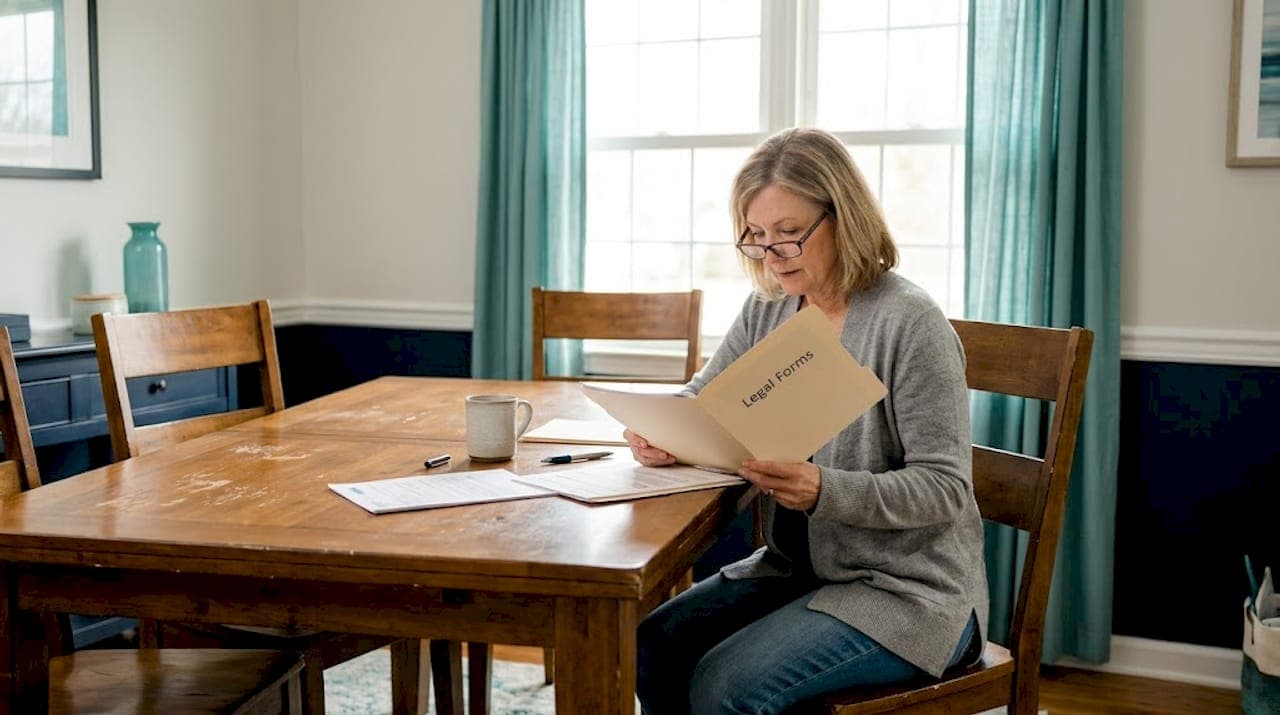
Having these documents is only half the job. The other half is making them accessible. A crisis packet — a physical folder or digital file with all your key documents, provider contacts, medication lists, and account information — is what turns legal paperwork into real-world protection. Keep it somewhere your designated contacts can actually find it.
Pro Tip: Name a backup designee for each legal role. Primary contacts get sick, move, or become unavailable. Having a second person named keeps your plan intact when life gets unpredictable.
Think of solo aging planning as a team structure. You are the decision-maker. The legal documents are the rules. The trusted people you designate are the players. All three need to work together.
Home safety strategies to prevent falls
Your home is where you feel most in control. It's also where most serious injuries happen.
In 2023, 41,341 of 52,269 deaths among U.S. adults aged 65 and older were related to falls. That number is sobering. But falls are not inevitable. They are largely preventable with the right adjustments, habits, and tools.
The highest-risk zones in your home are the bathroom and the path you travel at night. Bathrooms and nighttime pathways are where functional challenges most often lead to falls. That's where your attention should go first.
Start with these practical changes:
- Bathroom: Install grab bars beside the toilet and inside the shower. Use a non-slip mat on the floor inside and outside the tub or shower. Consider a shower chair if balance is a concern.
- Nighttime paths: Place motion-sensor lights along any path you take between the bedroom and the bathroom. This is a simple fix with outsized impact.
- Flooring: Remove throw rugs. They are among the most common tripping hazards in the home. Replace them with non-slip surfaces or secured mats.
- Entryways and stairs: Add handrails on both sides of any staircase. Keep entryways clear of shoes, bags, or clutter that could catch a foot.
A room-by-room safety checklist can help you see hazards you've grown too used to noticing. Most people find at least five changes they hadn't considered once they actually walk through their space with fresh eyes.
Technology adds another layer. Medical alert systems and fall-detection wearables are more discreet and reliable than they were a decade ago. But here's what matters most: alert devices work only when paired with a designated contact who is ready to respond. The tech is only as useful as the human system behind it.
Pro Tip: Research shows that grip strength is associated with significantly lower odds of falls in older women. Simple hand and wrist strengthening exercises done a few times a week can quietly reduce your fall risk over time.
Housing options and how to evaluate them
At some point, you will ask yourself whether your current home is still the right place to age. That's a healthy question, not a sign of defeat.
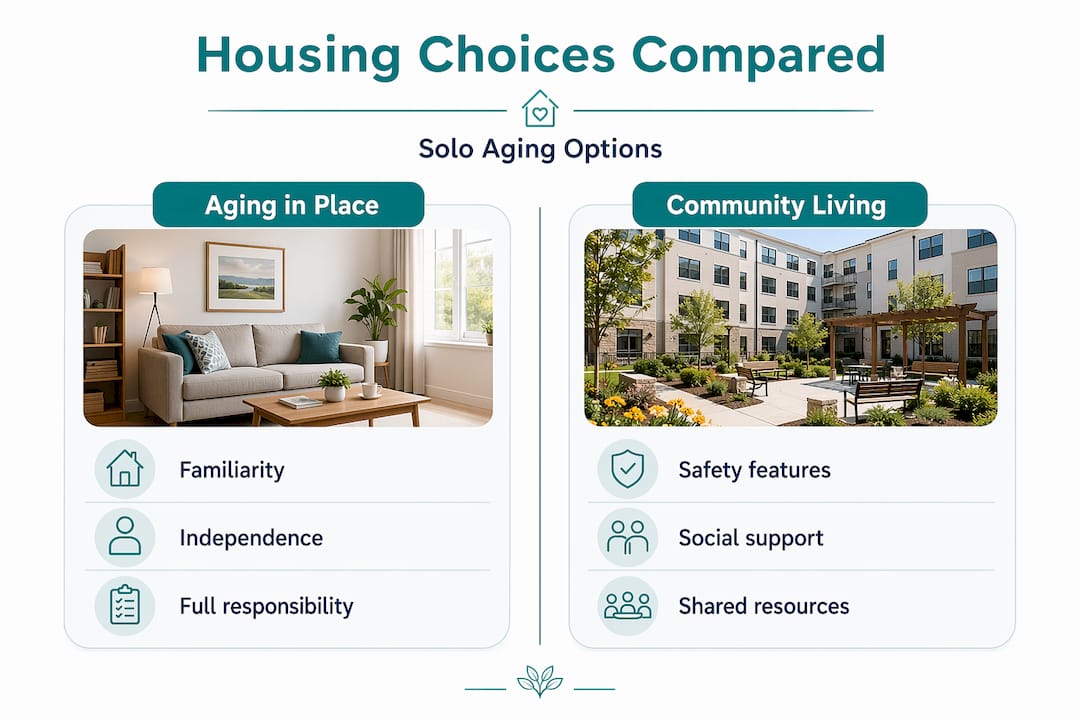
Aging in place gives you continuity, familiarity, and independence. But it also means you bear full responsibility for safety modifications, maintenance, and building your own support network. Independent living communities, by contrast, offer built-in safety features, social connection, and professional support. The right choice depends on your specific situation.
| Factor | Aging in place | Independent living community |
|---|---|---|
| Safety modifications | Your responsibility to arrange | Often built in (grab bars, nonslip floors, emergency systems) |
| Social connection | Requires active effort | Built into daily environment |
| Maintenance burden | Fully on you | Handled by the community |
| Cost structure | Variable, home-dependent | Monthly fee, typically all-inclusive |
| Flexibility | High | Moderate, depends on community |
| Wellness checks | Must be arranged separately | Often standard |
Independent living communities offer safety and social benefits that are genuinely hard to replicate when living alone in a conventional neighborhood. Smart lighting, grab bars, and regular wellness checks are standard features in many communities. For some solo agers, the built-in social structure is as valuable as the physical safety.
The smartest move is to evaluate your options before a health event forces the decision. Looking at communities or planning home modifications from a position of good health means you get to choose. Waiting until there's a crisis means someone else may choose for you.
Building your support circle
Solo aging does not mean being alone. It means being intentional about who is in your corner and how you stay connected.
A well-built support network functions like a real safety net. It catches you before you fall through the cracks. And building one takes deliberate effort, not luck. Here's a practical approach:
-
Identify your anchor contacts. These are two or three people who know your situation, have access to your crisis packet, and can be reached quickly. They don't have to be family. Close friends, neighbors, and trusted colleagues all count.
-
Cultivate your neighborhood layer. A neighbor who checks in, notices if your car hasn't moved, or picks up your mail when you're sick is genuinely valuable. These relationships grow from small, consistent acts of reciprocity over time.
-
Connect to community resources. Senior centers, faith communities, volunteer programs, and local aging services can provide regular contact and practical help. Many offer check-in calls, transportation, and peer connection.
-
Use technology to stay connected across distance. Video calls, safety apps for solo agers, and wellness check-in platforms can help people who are geographically distant stay meaningfully present in your life.
-
Create a communication protocol for emergencies. Decide in advance who gets called first, what information they need, and what steps they should take if they can't reach you. Write it down and share it.
Successful solo aging financial and safety planning consistently points to the same pattern: a combination of clear documentation and a real human team. The paperwork protects your legal authority. The people protect your daily life. You need both.
My honest take on solo aging safety planning
I've spent years watching people approach this topic from two very different places. Some come in proactive, curious, and ready to build a real structure for their independence. Others come in after something went wrong, when choices are narrower and stress is high.
What I've learned is that the biggest barrier isn't logistics. It's a quiet assumption that planning is for people who are more vulnerable than you feel right now. That assumption is the real risk.
The adults I've seen navigate solo aging with the most confidence share one trait: they stopped waiting until they "needed" a plan and started treating planning as a normal part of living well. They got their legal documents in order before there was any urgency. They made small home adjustments before any falls. They built relationships with neighbors and community contacts while they still had the energy to invest in those connections.
There's something else I've noticed. People often fear that using a medical alert device or moving into a supportive community signals a loss of independence. In reality, the opposite tends to be true. Having the right tools and the right people around you is what keeps you independent longer. Fear of the tools is what leaves people isolated and exposed.
If you've made it this far in this article, you're already the kind of person who takes this seriously. That matters. Start with one thing. Get your legal documents done. Install a grab bar. Name an emergency contact. One step at a time, you're building something real.
— Mike
Start building your plan with Agingsolo
If this article has helped clarify the path forward, Agingsolo has the tools to help you take the next steps with confidence.
At Agingsolo, you'll find guides, checklists, and practical frameworks covering every area of solo aging safety: legal planning, home modifications, housing decisions, support networks, and technology tools. Whether you're just starting to think about how to prepare for solo aging or you're ready to get into specifics, the resources are built for exactly where you are right now. Explore safe living for seniors and get a clear starting point for your planning. You don't have to figure this out alone. Agingsolo is here to walk alongside you.
FAQ
What does solo aging safety planning include?
Solo aging safety planning covers legal documents, home modifications, housing choices, and support networks. It's a proactive approach to staying safe and independent without relying on traditional family support systems.
What legal documents does a solo ager need?
At minimum, you need a medical power of attorney, a durable financial power of attorney, and an advance directive or living will. Without these, courts may make decisions that don't reflect your wishes.
How can I reduce fall risk at home?
Start with the highest-risk areas: install grab bars in the bathroom, add motion-sensor lighting along nighttime pathways, and remove throw rugs. A room-by-room safety review helps identify hazards you may have stopped seeing.
Is it safer to age in place or move to a community?
It depends on your health, social needs, and home setup. Independent living communities offer built-in safety features and social connection, while aging in place offers flexibility. Planning early means you get to make that choice on your own terms.
How do I build a support network as a solo ager?
Start with two or three anchor contacts who know your situation and can respond in an emergency. Then layer in neighbors, community resources, and technology tools. Intentional connection is the foundation of safe solo aging.