

TL;DR:
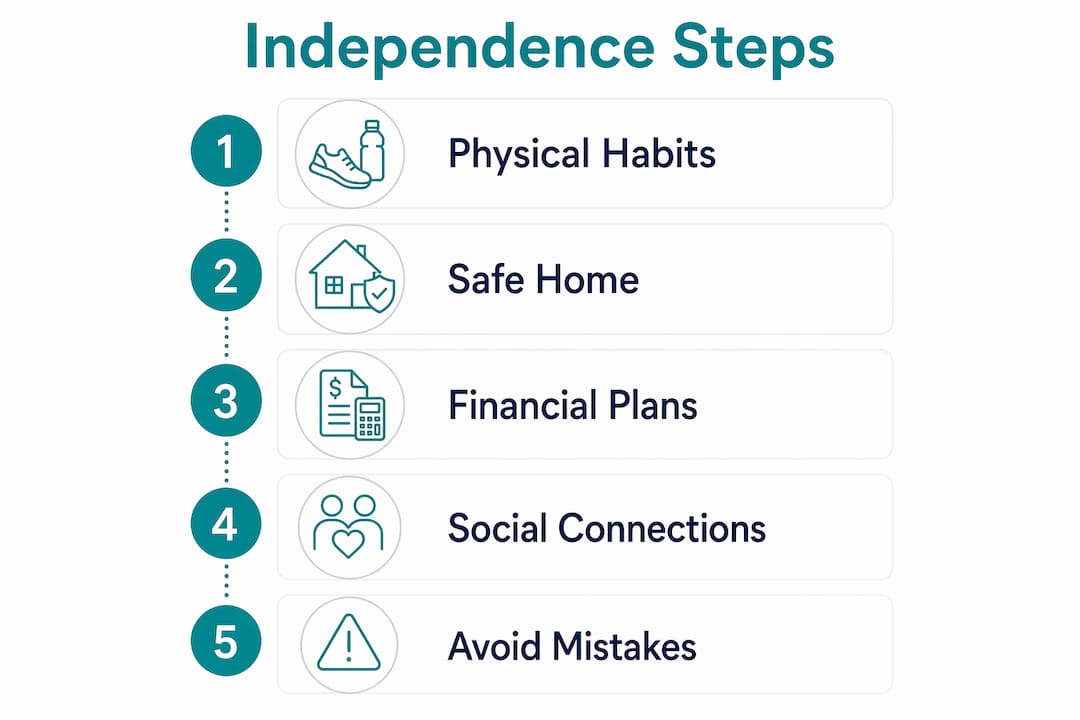
- Staying independent involves actively managing health, environment, and finances to maintain control and autonomy. Building consistent physical habits, creating a safe home, organizing finances, and maintaining social connections are crucial for long-term self-reliance. Starting early with small, deliberate actions helps prevent crises and preserves independence as one ages alone.
Staying independent is defined as actively managing your health, environment, and finances so you can live on your own terms without relying on others by default. For solo agers, the adults growing older without a spouse, partner, or nearby adult children, this is not a passive state. It is a deliberate practice. True independence is intentional self-governance, where you actively manage your resources and decisions rather than waiting for circumstances to force your hand. The good news is that the habits, tools, and plans that protect your autonomy are available to you right now, no matter where you are starting from.
What physical and mental habits support staying independent long-term?
Your body is your most important asset for living autonomously. Protecting it is not about perfection. It is about consistency.

Strength and balance training are the two physical habits with the most direct impact on independence. Chair squats, resistance band exercises, and wall push-ups build the muscle you need to get up, carry groceries, and recover from stumbles. Balance and gait training significantly reduce fall risk, which is the primary physical threat to independence in older adults. A fall that leads to a fracture can change everything in a matter of seconds.
Nutrition is just as critical, and most people underestimate it. Older adults need 68–88 grams of protein daily for a 150-pound individual to prevent sarcopenia, the gradual muscle loss that makes daily tasks harder over time. That translates to roughly 20–30 grams of protein per meal, which means eggs at breakfast, Greek yogurt at lunch, and a palm-sized portion of chicken or fish at dinner. Most people eating light or skipping meals are falling short without realizing it.
Here are the core physical and mental habits to build into your week:
- Strength training: 2–3 sessions per week using bodyweight or resistance bands
- Balance practice: Daily heel-to-toe walking, single-leg stands while holding a counter
- Aerobic activity: 30 minutes of walking, swimming, or cycling most days
- Cognitive engagement: Reading, puzzles, learning a new skill, or taking a class
- Protein at every meal: Aim for 20–30 grams per sitting to meet daily targets
- Sleep consistency: 7–8 hours on a regular schedule supports both physical recovery and mental sharpness
Pro Tip: Set a weekly phone reminder to check in on your protein intake for three days. Most people discover they are eating far less than they think, and a simple adjustment like adding a hard-boiled egg or a handful of nuts makes a real difference.
Mental habits matter just as much as physical ones. Cognitive engagement, whether through reading, learning a language, or playing a strategy game, keeps your mind sharp and your confidence high. Confidence is not a small thing. It directly affects your willingness to manage your own affairs.
How to create a safe home environment for independent living
Your home either supports your independence or quietly works against it. A thoughtful setup reduces physical strain, lowers accident risk, and makes daily life easier without requiring help from others.
A home safety audit is the right place to start. Walk through each room and ask yourself: Where could I slip? What requires more strength or reach than I comfortably have? What would happen if I had a bad day physically? Effective aging in place requires planning for help with daily tasks like cleaning, meal prep, medication management, and personal care before help is strictly necessary. Waiting until something goes wrong is the most common and costly mistake solo agers make.
The table below compares common home modifications by cost and impact:
| Modification | Estimated cost | Independence impact |
|---|---|---|
| Nonskid bath mats and shower grab bars | $30–$150 | High: prevents falls in highest-risk area |
| Handrails on both sides of stairs | $100–$400 | High: critical for daily safe movement |
| Lever-style door handles | $20–$60 per door | Medium: reduces strain for arthritic hands |
| Raised toilet seat | $30–$80 | Medium: supports safe transfers |
| Grocery and meal delivery services | $10–$20 per order | High: removes a physically demanding task |
| Medical alert device (wearable) | $25–$50 per month | High: provides emergency backup when alone |
Grocery delivery services like Instacart, meal kit services like HelloFresh, and transportation apps like Lyft reduce the physical demands of daily life without requiring you to give up control. You are still making every decision. You are just outsourcing the effort.
Pro Tip: Schedule a home walkthrough with a trusted friend or neighbor once a year. Fresh eyes catch hazards you have stopped noticing, like a loose rug edge or a dim hallway light.
Finding reliable in-home support before you need it urgently is one of the smartest moves a solo ager can make. Vetting a house cleaner, a handyman, or a personal care aide takes time. Doing it calmly, on your schedule, is very different from doing it in a crisis.
What financial and organizational strategies help sustain independent living?
Financial stability and daily organization are the backbone of living autonomously. Without them, even the healthiest person can find their independence slipping.
Sustainable independent living is a continuous practice of micro-habits, not a single event. That means building routines around your money and your schedule the same way you build routines around exercise.
Start with a realistic monthly budget that accounts for the services that protect your independence:
- Home maintenance and cleaning: Budget for regular help, not just emergencies
- Grocery and meal delivery: Factor in convenience costs as a health investment
- Medical appointments and prescriptions: Use a calendar app or a simple paper planner to track every visit and refill date
- Emergency fund: Aim for three to six months of living expenses set aside specifically for unexpected needs
- Technology tools: A medical alert device, a smartphone with a large-display setting, or a voice assistant like Amazon Alexa can reduce daily friction significantly
Digital tools make organization far more manageable. Google Calendar, Apple Reminders, or even a dedicated medication app like Medisafe can send you alerts for appointments and prescriptions. You do not need to be tech-savvy to use them. You need to set them up once and let them work.
For solo agers without family nearby, the financial safety checklist at Agingsolo is a practical starting point. It covers everything from automatic bill pay to emergency contact documentation. Having your financial life organized means fewer crises and more control.
One often-overlooked step is identifying a trusted person who can step in for financial decisions if you are temporarily unable to manage them. This does not mean giving up control. It means having a backup plan that you designed.
How to cultivate social connections when aging independently
Independence is not the same as isolation. The most resilient solo agers build what researchers call interdependent networks, circles of people and services that provide reliable support without creating dependence.
Successful solo agers build anchor points with neighbors, friends, and community resources that strengthen autonomy rather than undermine it. An anchor point is simply someone who knows your situation and checks in regularly. It could be a neighbor who notices if your lights are not on by a certain time. It could be a friend who calls every Sunday. It could be a community center you visit weekly.
Here are practical ways to build and maintain your social network:
- Identify two or three anchor neighbors: Introduce yourself, exchange numbers, and agree on a simple check-in signal
- Join a recurring group: A walking club, a library book group, or a faith community creates consistent contact without requiring effort every time
- Use technology intentionally: Video calls with FaceTime or Zoom, online communities for solo agers, and social media groups keep you connected when getting out is not possible
- Volunteer locally: Giving time to others builds relationships and gives your week structure and purpose
- Schedule social contact like an appointment: Treat it as non-negotiable, the same way you would a doctor's visit
Loneliness is a genuine health risk. Research consistently links social isolation to faster cognitive decline and poorer physical health outcomes. Building connection is not a luxury. It is part of your independence plan.
What common mistakes undermine independence, and how to avoid them?
Most people do not lose their independence all at once. It slips away gradually, through small decisions and delayed actions. Knowing the patterns helps you catch them early.
Here are the most common mistakes solo agers make, and what to do instead:
- Waiting for a crisis to plan. Proactive, iterative planning is the single most effective protection against losing autonomy. Identify tasks that are becoming harder now, before they become unsafe.
- Confusing independence with doing everything alone. Maintaining control while accepting support for physically demanding tasks is a strategic choice, not a concession. Outsourcing yard work or heavy cleaning preserves your energy for what matters.
- Ignoring gradual physical decline. Skipping exercise for a few weeks becomes a few months. Muscle loss accelerates after 60. Small, consistent effort beats occasional bursts of activity every time.
- Letting routines go rigid. Your needs will change. A plan that worked at 60 may need adjusting at 70. Build in an annual review of your habits, your home setup, and your support network.
- Underestimating nutrition. Eating less as you age is common, but it accelerates muscle loss. Protein, hydration, and regular meals are not optional extras. They are infrastructure.
"It's never too late to adopt habits that protect your independence. Consistent balance and gait training have been shown to lower fall risk substantially, even when started later in life." — Stanford Medicine
The mindset shift that matters most is this: planning for support is not giving up. It is how you stay in charge.
Key takeaways
Staying independent as a solo ager requires daily physical habits, a safe home environment, financial organization, and a deliberate social network working together as one system.
| Point | Details |
|---|---|
| Physical habits are non-negotiable | Strength training, balance work, and adequate protein protect your ability to function daily. |
| Home setup determines risk | Grab bars, nonskid mats, and delivery services reduce accidents and physical strain before they become problems. |
| Financial organization protects autonomy | Budgeting for services and tracking appointments keeps you in control of your own life. |
| Social anchors prevent isolation | Two or three reliable contacts who check in regularly are more valuable than a large, passive network. |
| Plan before crisis, not after | Identifying support needs early gives you time to vet options and stay in the driver's seat. |
What I have learned from watching solo agers thrive
I have spent years reading about, writing about, and talking with adults who are aging without a traditional support system. The ones who do it well share one quality that has nothing to do with money or health. They are honest with themselves early.
They do not wait until a fall to add grab bars. They do not wait until they are overwhelmed to find a house cleaner. They look at their life clearly, spot the weak points, and address them while they still have options. That is not pessimism. That is the most empowering thing I have seen anyone do.
What surprises most people is how small the daily actions are. It is not a dramatic overhaul. It is 20 minutes of exercise, a protein-rich breakfast, a weekly call to a neighbor, and a calendar reminder for a prescription refill. Those micro-habits, repeated consistently, build a life that holds together.
The other thing I want to say plainly: asking for help is not the opposite of independence. It is part of how independence works in practice. The solo agers who struggle most are the ones who confuse self-reliance with doing everything alone. The ones who thrive know that aging in place successfully means building a system around yourself, not going it entirely alone.
Start where you are. Pick one habit, one home fix, one person to call. Then build from there.
— Mike
How Agingsolo helps you build your independence plan
If you are ready to move from thinking about independence to actually building it, Agingsolo has the tools to help you get there.

Agingsolo is built specifically for solo agers who want practical, calm, and realistic guidance. The aging in place guide covers home safety, support planning, and daily routines in one place. The solo ager resource hub connects you to vetted services, checklists, and planning tools designed for adults 50 and older who are doing this without a built-in support system. You do not have to figure it all out alone. You just need a place to start, and Agingsolo is that place.
FAQ
What does staying independent really mean for solo agers?
Staying independent means actively managing your health, home, and finances so you remain in control of your daily life. It is not about doing everything alone. It is about making deliberate choices that preserve your autonomy.
How much protein do older adults actually need?
A 150-pound adult needs 68–88 grams of protein daily to prevent muscle loss that threatens independence. Most older adults eating light meals fall well short of this target.
When should I start planning for in-home support?
Start planning before you need it urgently. Identifying tasks that are becoming harder now gives you time to vet reliable help on your own terms rather than in a crisis.
Can accepting help actually protect my independence?
Yes. Outsourcing physically demanding tasks like cleaning or yard work preserves your energy and reduces injury risk. Accepting the right support keeps you in control longer, not less.
What is the single most important habit for living autonomously?
Consistency beats intensity every time. Daily movement, regular meals with adequate protein, and a weekly check-in with at least one anchor contact form the foundation that sustains long-term autonomy for solo agers.