

TL;DR:
- Most older adults prefer aging in place because it allows safe, independent living at home. Building a proactive support system with community and home-based services helps maintain independence and reduces crisis risks. Starting early planning provides more choices, more control, and peace of mind over future care needs.
Support for older adults is the coordinated combination of personal care, professional services, and community resources that enables safe, independent living at home as you age. The formal term for this approach is "aging in place," and over 75% of adults over age 50 prefer it to any institutional alternative. That preference is not wishful thinking. With the right plan, it is entirely achievable. The U.S. Administration for Community Living and the Eldercare Locator exist precisely to connect older adults with the services that make it real. Whether you have family nearby or you are aging solo, building that plan now gives you far more choices later.
What types of support and services are available to older adults?
The range of services available to older adults is wider than most people realize. Services fall into two broad categories: home-based and community-based. Understanding both helps you build a plan that fits your actual life.
Home-based services cover everything from help with bathing, dressing, and meals (personal care aides) to skilled nursing visits, physical therapy, and medication management. Non-medical home care averages $35 per hour nationally as of 2026. That figure matters because it is dramatically lower than the $9,581–$10,798 per month cost of a private nursing home room, making home care a financially sound choice for most older adults who plan ahead.
Community-based programs fill the gaps that home care does not cover. Meal delivery programs like Meals on Wheels address nutrition. Adult day services provide structured social engagement and supervision during daytime hours. Transportation assistance programs help older adults reach medical appointments and grocery stores without relying on family drivers. Area Agencies on Aging, which operate in every region of the country, serve as the front door to most of these programs.
| Service type | What it covers | Typical cost range |
|---|---|---|
| Non-medical home care | Personal care, housekeeping, companionship | ~$35/hr |
| Skilled home health | Nursing, therapy, wound care | Varies; often Medicare-covered short term |
| Adult day services | Social programs, supervision, meals | $75–$100/day (varies by region) |
| Meal delivery | Nutrition support at home | Low cost or free via local programs |
| Transportation assistance | Medical and errand trips | Free to low cost via local agencies |
| Assisted living | Housing plus daily support | ~$6,200/month national average |
Pro Tip: Call your local Area Agency on Aging before you assume a service is unaffordable. Many programs are income-based or free, and a single call can connect you to a dozen resources at once.
How can older adults assess their support needs and plan proactively?
Geriatric experts emphasize that proactive assessment before a crisis is the most effective way to prolong independent living. Waiting until something goes wrong narrows your options and puts you in reactive mode. Starting the conversation early keeps you in the driver's seat.
The first step is recognizing the signs that your needs are shifting. These are not signs of failure. They are information.
- Difficulty with activities of daily living (ADLs) such as bathing, dressing, cooking, or managing medications
- Increased fatigue after tasks that used to feel routine
- Recent falls or near-falls, or a growing fear of falling
- Cognitive changes like missed appointments, unpaid bills, or confusion with familiar tasks
- Social withdrawal or a sense that the quiet feels heavier than expected
- Trouble driving safely or getting to appointments independently
Home safety is the second area to assess. Home modifications such as grab bars in the bathroom, improved lighting in hallways, and removing loose rugs significantly reduce fall risk. These are not expensive renovations. Most cost under a few hundred dollars and can be installed in an afternoon. Early home modifications are also proven to delay nursing home placement and reduce hospitalizations, which makes them one of the highest-return investments you can make.
Emotional readiness matters too. Many older adults resist planning because it feels like admitting vulnerability. Reframing helps. Requesting help is a deliberate choice, not a surrender of independence. The adults who maintain the most autonomy are the ones who build support before they desperately need it.

Pro Tip: A Professional Geriatric Care Manager can provide an objective, expert assessment of your medical, housing, and social needs before any crisis forces the issue. This is especially valuable for solo agers who do not have a family member to spot early warning signs.
What practical steps can older adults take to build a support network?
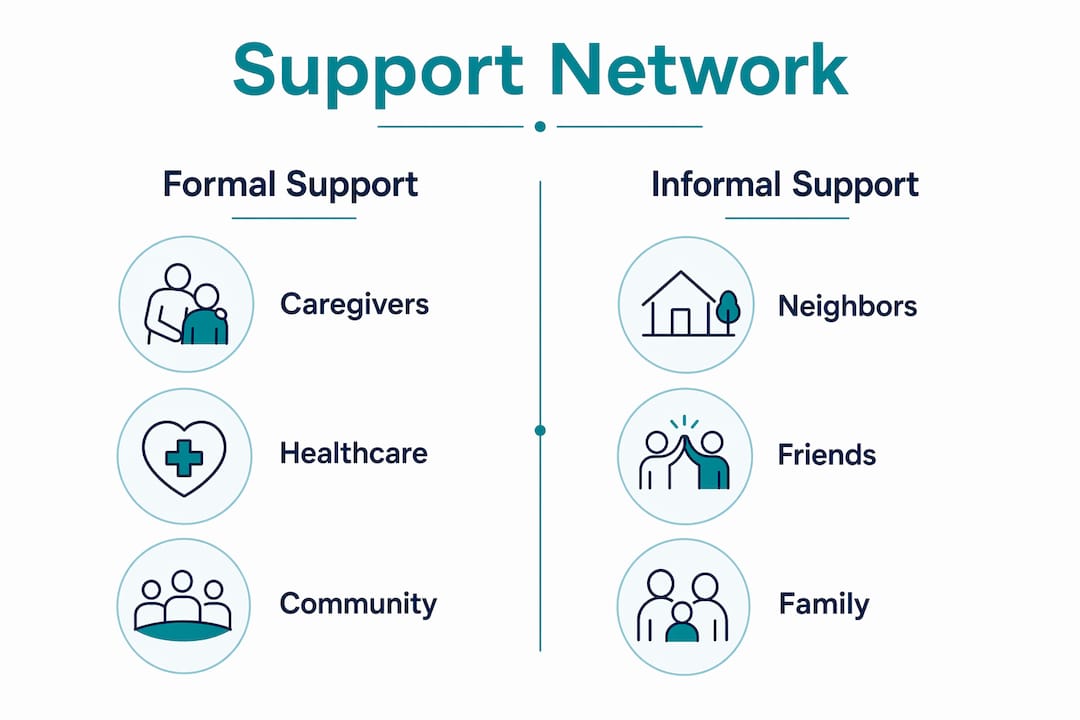
A strong support network combines informal connections (family, friends, neighbors) with formal resources (agencies, professionals, and programs). About 1 in 6 adult children provide care to a parent at some point. For solo agers without that built-in support, building formal connections is not optional. It is the plan.
- Map your current circle. Write down who you could call in an emergency, who checks on you regularly, and who could help with errands or transportation. Gaps on that list are your starting point.
- Contact the Eldercare Locator. The U.S. Administration for Community Living operates the Eldercare Locator at 1-800-677-1116. You can reach it by phone, text, or chat. It connects you to local services in minutes.
- Register with your local Area Agency on Aging. They maintain lists of vetted home care providers, transportation programs, meal services, and volunteer visitor programs.
- Build neighbor relationships intentionally. A neighbor who knows your routine is one of the most practical safety nets you can have. A simple agreement to check in every few days costs nothing.
- Use technology as a layer, not a replacement. Medical alert devices, video check-in apps, and medication reminder tools extend your independence without replacing human connection. Agingsolo covers technology for solo agers in detail if you want to explore specific tools.
- Plan your transportation options now. Knowing your options before you stop driving removes a major source of anxiety. Local transit programs, rideshare services, and volunteer driver networks all exist in most communities.
| Network component | Role | How to connect |
|---|---|---|
| Trusted neighbor or friend | Daily check-in, emergency contact | Personal outreach |
| Area Agency on Aging | Gateway to local programs | eldercare.acl.gov or 1-800-677-1116 |
| Professional Geriatric Care Manager | Objective assessment and care coordination | Aging Life Care Association |
| Medical alert system | Emergency response | Various providers; Agingsolo reviews options |
| Volunteer visitor program | Social connection, wellness checks | Local senior centers or faith communities |
| Transportation program | Medical and errand trips | Area Agency on Aging referral |
How to choose and manage support services for sustained independence
Choosing the right caregiver or service is not just about credentials. It is about fit. A caregiver who communicates well, respects your preferences, and understands your cultural background will serve you far better than one with an impressive resume but poor chemistry.
Medicare covers very little in the way of long-term, non-medical home care. Budget for these services as out-of-pocket expenses from the start. Waiting to discover this gap after you need care creates real financial stress.
When interviewing caregivers or agencies, ask these questions:
- What specific training does this caregiver have, and is it verified?
- How does the agency handle scheduling gaps or caregiver illness?
- What is the process for addressing concerns or changing caregivers?
- Are caregivers trained by physical or occupational therapists in safe mobility assistance?
- What does the contract say about minimum hours, cancellation, and rate increases?
Caregiver burnout is a serious and predictable outcome when caregiving demands are high and relief is absent. If a family member is providing care, respite services give them scheduled breaks. This protects both the caregiver and the quality of care you receive. Respite care is available through most Area Agencies on Aging and many nonprofit organizations.
The transition from informal to professional care is not a one-time decision. Needs shift. Revisit your plan at least once a year, and after any significant health event.
Key Takeaways
Building a proactive, layered support system is the single most effective way for older adults to maintain independence and age safely at home.
| Point | Details |
|---|---|
| Start assessing early | Proactive planning before a crisis gives you more choices and keeps you in control. |
| Know your service options | Home care, meal delivery, adult day services, and transportation programs all support independent living. |
| Build a formal network | Solo agers especially need formal connections through agencies like the Eldercare Locator. |
| Budget for home care costs | Non-medical home care averages $35/hr; Medicare covers very little of this expense. |
| Revisit your plan regularly | Support needs shift over time, so review your plan annually and after any health change. |
What I've learned about planning support before you think you need it
Most people wait too long. That is the honest truth I keep coming back to. The adults I see navigating aging with the most dignity and the least panic are not the ones with the most resources. They are the ones who started the conversation early, even when it felt premature.
There is a real emotional hurdle here. Thinking about needing help can feel like rehearsing loss. But I have come to see it the opposite way. Building a support plan is how you protect the life you want. It is not about giving up control. It is about keeping it.
For solo agers especially, the absence of a default caregiver is not a deficit. It is a prompt to build something more intentional. A neighbor who checks in, a geriatric care manager who knows your history, a community that sees you. That network can be more reliable than family, because you built it on purpose.
The one thing I would tell anyone reading this: do not wait for a fall, a diagnosis, or a crisis to start. The benefits of planning earlier are not abstract. They show up in real choices, real options, and real peace of mind.
— Mike
How Agingsolo helps you build your support system
Agingsolo is built for exactly this kind of planning. Whether you are just starting to think about aging in place or you are ready to formalize your support circle, the guides and tools on the site meet you where you are.

The aging in place guide walks you through safety planning, home modifications, and the practical steps that keep you independent longer. If you are a solo ager ready to map out your full support system, the solo ager planning resource covers everything from emergency contacts to financial safety. Agingsolo also offers a support circle builder that helps you identify gaps and fill them with the right people and programs. The plan you build today is the one that works when you need it most.
FAQ
What is the most affordable way to get care for elderly adults at home?
Non-medical home care averages $35 per hour nationally, which is far less than assisted living or nursing home costs. Contacting your local Area Agency on Aging can connect you to subsidized or free programs based on income.
How do I find services for seniors in my area?
The Eldercare Locator, operated by the U.S. Administration for Community Living, is the fastest starting point. Call 1-800-677-1116 or visit eldercare.acl.gov to find local programs by zip code.
What assistance is available for older adults who live alone without family?
Solo agers can access the same community programs as anyone else, including meal delivery, transportation assistance, adult day services, and volunteer visitor programs. A Professional Geriatric Care Manager can also provide personalized coordination.
Does Medicare cover home care for older adults?
Medicare covers skilled home health services (nursing, therapy) on a short-term basis after a qualifying event. It covers very little long-term, non-medical home care, so budgeting for out-of-pocket costs is necessary.
When should older adults start planning their support systems?
Geriatric experts recommend starting before any crisis occurs. Early planning extends safe independence, reduces hospitalizations, and gives older adults more control over the type of care they receive.