
TL;DR:
- A senior lifestyle assessment evaluates an older adult’s physical, cognitive, and social needs to determine appropriate care levels. It is an observational, interview-based process conducted by healthcare professionals that influences care plans and costs. Honest communication and thorough preparation improve accuracy and help prevent crises in late-stage planning.
A senior lifestyle assessment is a structured evaluation of an older adult's physical health, daily functioning, cognitive status, and social environment to determine the right level of care and support. The industry term for the most thorough version of this process is the Comprehensive Geriatric Assessment (CGA), though the phrase "senior lifestyle assessment" captures the broader, everyday version used in senior living communities and home care settings. Both approaches examine Activities of Daily Living (ADLs), Instrumental Activities of Daily Living (IADLs), and environmental factors to build a realistic picture of where you are today and what support you may need going forward. For solo agers especially, this kind of evaluation is not a formality. It is the foundation of a plan that keeps you safe, independent, and in control.
What does a senior lifestyle assessment examine?
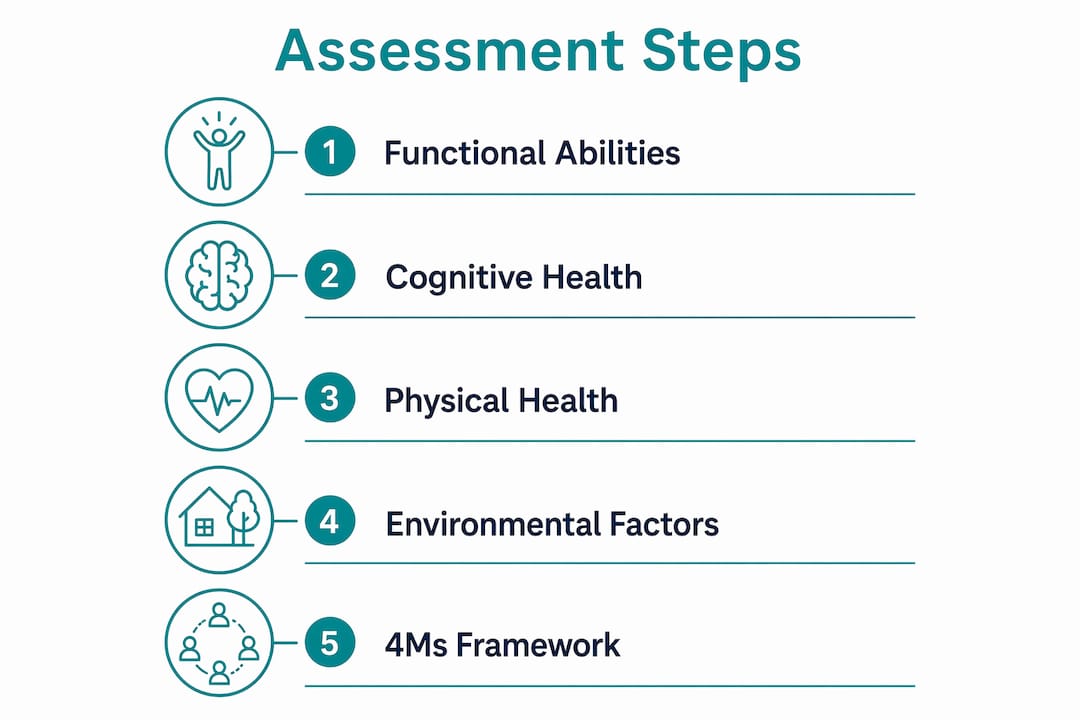
A senior lifestyle assessment covers six core areas. Each one tells a different part of the story about how you are functioning and what kind of support fits your life right now.
Functional abilities (ADLs and IADLs)
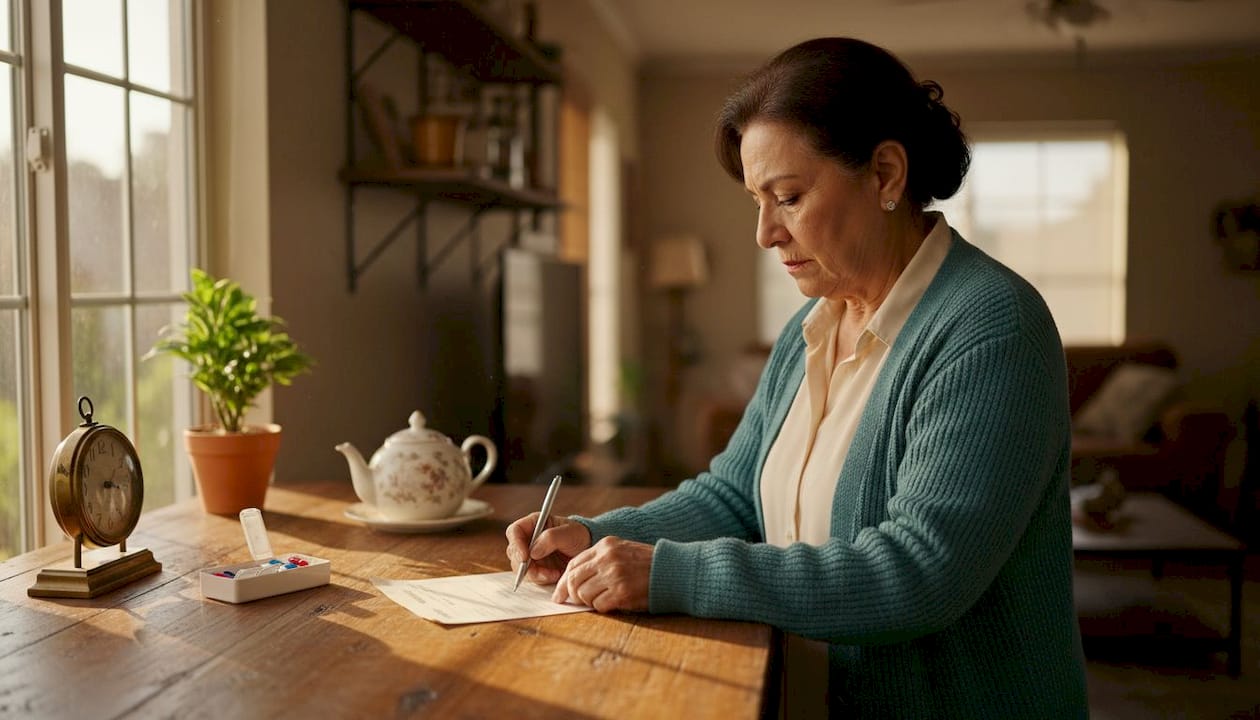
ADLs are the basic self-care tasks: bathing, dressing, eating, toileting, transferring (moving from bed to chair), and maintaining continence. IADLs are one step up in complexity: managing medications, handling finances, preparing meals, using transportation, shopping, and using the phone or computer. The distinction matters because IADLs are often the first to show signs of change, and catching that early gives you more options.
Cognitive and mental health screening
Assessors look at memory, attention, problem-solving, and mood. Standardized tools like the Mini-Cog or the Montreal Cognitive Assessment (MoCA) are commonly used. Depression screening is also standard, since untreated depression directly affects physical function and safety.
Physical health and mobility
This includes reviewing current diagnoses, medications, fall history, and gait stability. A simple timed walk or balance test can reveal fall risk that a medical chart alone would miss.
Environmental and social factors
Your home setup, neighborhood access, and support network all factor in. Living alone without nearby family or a reliable support circle raises the stakes on every other finding.
The 4Ms framework
The American Academy of Family Physicians recommends the 4Ms framework for geriatric evaluation: What Matters, Medication, Mentation, and Mobility. This structure keeps assessors focused on what actually affects your quality of life, not just clinical data points.
Lifestyle assessment vs. CGA
A standard senior lifestyle assessment is broader and less clinical than a Comprehensive Geriatric Assessment, which is reserved for frail or high-risk older adults and involves a full multidisciplinary team. The lifestyle version is the starting point most people encounter when exploring senior living options or planning ahead.
Who conducts these assessments and how long do they take?
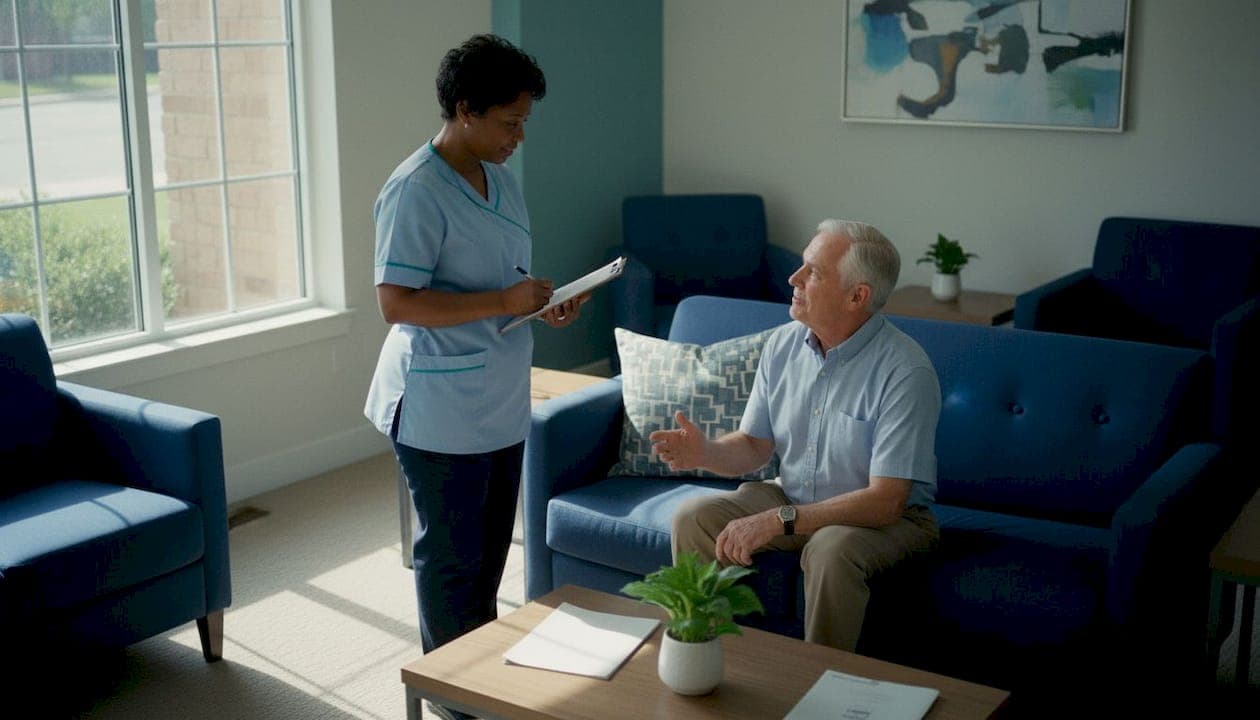
Assessments typically run 30–90 minutes and are conducted by nurses, wellness directors, or social workers depending on the setting. That range exists because the depth of the conversation varies with each person's situation.
Common settings include:
- Senior living communities conducting intake evaluations before move-in
- Hospitals completing discharge planning assessments
- Home visits arranged through home care agencies or care managers
- Primary care offices using the Medicare Annual Wellness Visit as a starting point
The process is observational and interview-based. No blood draws, no imaging, no invasive tests. The assessor asks questions, watches how you move and communicate, and may speak with family members or caregivers to fill in gaps.
Family input is welcomed and often requested. If you have a trusted person who sees you regularly, their observations carry real weight in the evaluation.
Pro Tip: For older adults who tire easily, multiple sessions may be needed to complete a thorough assessment without fatigue affecting the results. Do not hesitate to ask for a break or a follow-up session if you feel worn out.
Why are senior lifestyle assessments important for care planning?
A senior wellness assessment does more than describe where you are today. It directly shapes the care plan and the costs attached to it. Assessments determine care levels that influence daily support and monthly billing in senior living communities. Getting the level right matters financially and practically.
Here is why the evaluation carries so much weight:
- Care matching. An accurate assessment places you in the right level of support, whether that is independent living, assisted living, or memory care. A mismatch in either direction creates problems.
- Cost accuracy. Care levels tie directly to monthly costs. Families who understand how ADLs and IADLs are measured can advocate for accurate billing and avoid overpaying for services not needed.
- Safety and fall prevention. Proper assessments help prevent falls, hospital readmissions, and unsafe discharges by aligning care to actual needs.
- Independence protection. Identifying what you can still do well is just as important as identifying where you need help. A good assessment protects your autonomy by not over-prescribing care.
- Ongoing tracking. Assessments happen at intake, at regular intervals, and after significant health events such as a hospitalization or a fall. This ongoing rhythm catches changes before they become crises.
A senior lifestyle assessment is not a pass/fail test. It is a neutral tool designed to match the right care to your current reality. The goal is accuracy, not judgment. Viewing it that way changes everything about how you show up for the process.
The misconception that assessments are tests to pass or fail causes real harm. People underreport struggles to appear capable, which leads to under-supported care plans and preventable crises down the road.
How can you prepare for a senior lifestyle assessment?
Preparation is not about performing well. It is about giving the assessor an accurate picture so the resulting plan actually fits your life. Here is how to approach it:
- Know what ADLs and IADLs cover. Review the full list before your assessment so nothing catches you off guard. Bathing, dressing, meal prep, and medication management are all fair territory.
- Gather your medical information. Bring a current medication list, a summary of recent diagnoses, and notes on any falls or hospitalizations in the past year.
- Be honest about daily challenges. If getting dressed takes twice as long as it used to, say so. If you skip meals because cooking feels like too much, that matters.
- Describe your support network clearly. Who checks on you? How often? Do you have a neighbor with a key, a friend who drives you to appointments? These details shape the plan.
- Ask questions throughout. You have every right to ask what each question is for and how the answer affects your care level.
- Check your home safety in advance. A home safety preparation guide can help you identify hazards the assessor may flag, so you are not surprised.
Pro Tip: The 4Ms framework puts "What Matters" first for a reason. Before your assessment, write down two or three things that are most important to your daily quality of life. Sharing that list with your assessor anchors the entire evaluation in your actual priorities, not just clinical benchmarks.
Connecting your Medicare wellness visit to your lifestyle assessment preparation is a practical move. The Annual Wellness Visit covers health risk screening that overlaps with many lifestyle assessment components, and having that documentation ready saves time.
Key Takeaways
A senior lifestyle assessment is the most direct tool available for matching your current abilities to the right level of care and support, before a crisis forces the decision.
| Point | Details |
|---|---|
| Core purpose | Assessments evaluate ADLs, IADLs, cognition, and environment to determine the right care level. |
| Not a medical exam | The process is observational and interview-based with no invasive tests involved. |
| Affects costs directly | Care levels set by the assessment tie to monthly billing, so accuracy protects your budget. |
| Reassessment is ongoing | Evaluations repeat every few months and after major health events to track real changes. |
| Preparation builds accuracy | Honest answers and gathered medical information lead to a plan that actually fits your life. |
Why I think most people approach these assessments backward
Most people walk into a senior lifestyle assessment trying to look as capable as possible. I understand the instinct. Admitting that something is harder than it used to be feels like giving something up. But that instinct works against you.
The assessment does not decide whether you are "okay." It decides what kind of support fits where you are right now. If you minimize your challenges, the resulting care plan will be built on incomplete information. That plan will eventually fail you, usually at the worst possible moment.
What I have seen work consistently is treating the assessment as a planning conversation, not an evaluation. You are not being graded. You are giving a professional the information they need to build something useful for you. The more honest and specific you are, the more the plan reflects your actual life.
Solo agers face a particular version of this challenge. Without a spouse or nearby adult child to fill in gaps, the assessor relies almost entirely on what you share. That makes your preparation and honesty even more critical. Agingsolo's guide to aging alone addresses exactly this dynamic, including how to build the kind of support network that makes assessments more accurate and care plans more sustainable.
Early assessments also give you something crisis-driven assessments never can: time. When you assess before things get difficult, you have room to make thoughtful choices about housing, support, and care. That window closes fast once a health event forces the issue.
— Mike
Planning ahead with Agingsolo
Agingsolo is built for adults who are aging without a built-in support system and want a clear, realistic plan before they need one.

If a lifestyle evaluation has raised questions about your living situation, care options, or what independent aging actually looks like in practice, Agingsolo has practical guides that go deeper. The aging alone resource covers the full picture of solo aging, from safety and housing to decision-making and support networks. For readers ready to build a formal plan, the life care planning guide walks through how to translate assessment findings into a written, workable plan. Both resources are written in plain language, without clinical jargon, and designed for people who want to stay in control of their own future.
FAQ
What is a senior lifestyle assessment used for?
A senior lifestyle assessment evaluates an older adult's daily functioning, cognitive status, and care needs to determine the right level of support. The results directly shape care plans and, in senior living settings, monthly costs.
How is a lifestyle assessment different from a medical exam?
A lifestyle assessment is observational and interview-based with no blood draws or imaging. It focuses on functional independence, not clinical diagnosis.
Who performs a senior lifestyle assessment?
Nurses, wellness directors, and social workers typically conduct these evaluations in senior living communities, hospitals, and home settings.
How often does a senior need to be reassessed?
Reassessments occur at regular intervals, often every 90 days or annually, and after significant health events like a fall or hospitalization.
Can a senior lifestyle assessment affect monthly care costs?
Yes. The care level assigned through the assessment ties directly to billing in senior living communities, making accuracy and family advocacy genuinely important.