
What is post-hospital discharge planning?
Post-hospital discharge planning is the coordinated process of preparing a patient to leave the hospital safely and continue recovering at home or in another care setting. Think of it as a bridge between your hospital stay and whatever comes next. Without it, that transition can feel overwhelming, and the risks of something going wrong are real.
In the United States, discharge planning is required for hospital accreditation. The goal is straightforward: improve your quality of life by making sure care continues without gaps, and reduce the chance of an unplanned return to the hospital. A good discharge plan is personalized to you. It covers your medications, your activity limits, your follow-up appointments, and who to call if something feels wrong.
Here is what a discharge plan typically addresses:
- A complete, updated medication list with any new prescriptions clearly noted
- Instructions for wound care, mobility, or other specific health needs
- Scheduled follow-up appointments with your doctor or specialists
- Contact information for clinical questions or emergencies
- Home care services or medical equipment you may need
- Education materials written in plain, everyday language
The process involves a team of professionals working together, including physicians, nurses, social workers, case managers, and therapists. Each one plays a specific role in making sure you leave the hospital with a plan that actually work for your life.

Who is responsible for your discharge plan?
Discharge planning is a team effort, and understanding who does what can help you ask the right questions at the right time.
- Physicians determine when you are medically ready to leave and create the overall discharge plan in collaboration with the rest of the team.
- Nurses provide hands-on education about your condition, medications, and wound care. They also confirm that you understand your instructions before you go.
- Pharmacists review your medications for accuracy and safety. Because most post-discharge complications involve medications, pharmacists often follow up by phone after you leave to catch any problems early.
- Social workers and case managers coordinate community services, home health referrals, and insurance approvals. If you need a home health aide, medical equipment, or a short stay in a rehabilitation facility, they handle that coordination.
- Occupational and physical therapists assess whether your home is safe for your current physical condition and whether you need rehabilitation before or after discharge.
- You and your caregiver are active participants, not passive recipients. Your input about your home situation, your support network, and your daily routine shapes the entire plan.
For solo agers especially, the social worker or case manager is often the most important person to connect with early. They can identify gaps in your support system and help fill them before you leave the building.
What a thorough discharge plan should include
A discharge plan is only as useful as the information it contains. Vague instructions lead to confusion, and confusion leads to preventable complications.
Medicare requires hospitals to provide written discharge instructions in plain language. Those instructions must cover your medications, your activity restrictions, wound care guidance, follow-up appointment details, and emergency contact information. That is the legal floor. A genuinely good plan goes further.
| Component | What to look for |
|---|---|
| Medication list | Every drug listed with dose, timing, and purpose; new or changed medications highlighted |
| Activity instructions | Clear guidance on mobility, lifting, driving, and wound care |
| Follow-up appointments | Specific dates, provider names, and phone numbers |
| Emergency contacts | Who to call for clinical questions and what symptoms require emergency assistance |
| Home care services | Home health aide, physical therapy, or nursing visits arranged before discharge |
| Medical equipment | Wheelchair, walker, oxygen, or other supplies confirmed and delivered |
| Patient education | Written materials matched to your reading level and preferred language |
| Community resources | Meal delivery, transportation assistance, or caregiver support programs |
One detail that often gets missed: ask your care team to highlight any medications that are new or that have been stopped. That single step prevents a surprising number of errors at home.
Pro Tip: Request a printed copy of your discharge instructions before the day you leave. Reading them in advance gives you time to ask questions while your care team is still right there.
How to prepare for discharge before you leave the hospital
The best time to start thinking about discharge is the day you are admitted, not the morning you are told you can go home. Early discharge preparation can reduce your length of stay, your readmission risk, and your overall stress.
Here are the steps that make the biggest difference:
- Ask about discharge planning on day one. Tell your nurse or social worker that you want to be involved in planning from the start. This signals that you are engaged and gives the team time to address your specific needs.
- Write down all your medications. Bring a current list from home or ask the hospital pharmacist to reconcile what you were taking before admission with what you are being prescribed now.
- Confirm your follow-up appointments before you leave. Do not leave the hospital with instructions to "call your doctor next week" without a specific appointment already scheduled.
- Arrange transportation in advance. You may not be able to drive yourself, and rideshare apps are not always appropriate if you need assistance getting in and out of a vehicle.
- Prepare your home environment. If you use a walker or wheelchair, clear pathways before you arrive. Ask whether you need a shower chair, grab bars, or a hospital bed at home.
- Request written instructions in your preferred language. You have the right to language assistance and written materials you can actually understand.
- Bring a trusted person to your discharge conversation. A caregiver, friend, or family member can take notes, ask follow-up questions, and help you remember what was said.
- Ask your care team to walk through the instructions out loud. Do not just sign the paperwork. Ask them to explain each section in plain language.
Pro Tip: Use the teach-back method: after your nurse or doctor explains something, repeat it back in your own words. This simple step confirms understanding and catches miscommunications before they become problems at home.
Common challenges during discharge and how to handle them
Even well-intentioned discharge processes run into problems. Knowing what to watch for puts you in a better position to speak up.
- Rushed timelines. Hospitals often communicate discharge information on the day you leave, when you are tired, anxious, and processing a lot at once. If you feel overwhelmed, say so. Ask for a few extra minutes or request that a nurse review the key points again.
- Medication errors. One study found that 1 in 10 discharges include errors in instructions or medications. A pharmacist review before you leave is one of the most effective safeguards.
- Communication gaps between providers. Your hospital team may not automatically send your discharge summary to your primary care doctor before your first follow-up appointment. Ask your care team to confirm that your records have been transmitted. Communication failures between hospitals and outpatient providers are a documented source of patient harm.
- Unclear follow-up instructions. Up to half of patients told to schedule a follow-up appointment do not fully understand why or how to do it. If the instruction says "see your cardiologist," ask the discharge planner to help you schedule that appointment before you walk out.
- Emotional and physical unreadiness. You may not feel ready to absorb information when you are in pain or frightened. Let your care team know. Discharge education should happen throughout your stay, not just at the end.
- Missing caregiver involvement. If a family member or friend will be helping you at home, they need to be part of the discharge conversation. Advocate for their presence, even if it means asking the team to wait until that person can be there.
Evidence-based strategies that improve outcomes after discharge
Research consistently shows that certain approaches make a real difference in how well people recover after leaving the hospital.
The teach-back method is one of the most studied tools in discharge education. When patients repeat instructions back in their own words, clinicians can catch misunderstandings before they turn into complications. It sounds simple, and it is. That is exactly why it works.
Post-discharge follow-up contact is another proven strategy. Transitional care interventions that include post-discharge contact range from a single check-in session to 14 contacts over a period of one week to six months, depending on the patient's needs. Phone calls from a nurse or pharmacist after discharge help catch medication problems, answer questions, and connect patients to additional support before a small issue becomes a hospital readmission.
For solo agers, these follow-up touchpoints are especially valuable. If you live alone, a scheduled phone check-in from your care team is not just reassuring. It is a safety net. Telehealth visits can fill a similar role, letting you connect with a provider from home when getting to a clinic is difficult. Agingsolo's guide on telehealth for solo adults walks through how to get started.
Pro Tip: Before you leave the hospital, ask your care team: "Who will call me after I go home, and when?" If no one is scheduled to follow up, ask your primary care doctor's office to check in within 48–72 hours.
Patient rights matter here too. You have the right to be involved in your discharge plan, to receive instructions you can understand, and to ask questions until you feel confident. Discharge planning should feel like a conversation, not a form you sign on the way out.
What the discharge planning timeline looks like
Understanding when things happen helps you stay ahead of the process rather than reacting to it.
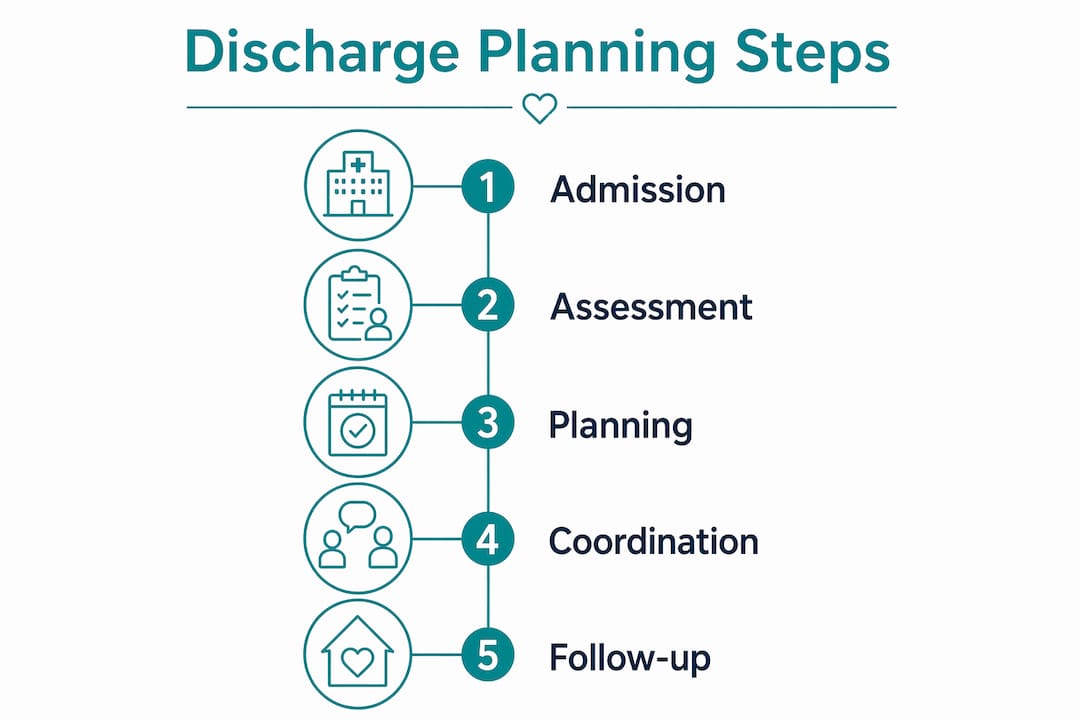
At admission. The discharge planning process ideally begins the day you are admitted. The care team conducts an initial assessment of your medical needs, your home situation, your support network, and any equipment or services you may need when you leave. For solo agers, this is the moment to be honest about your living situation.
During your stay. The team refines the plan as your condition changes. Social workers begin coordinating home health services or rehabilitation placements if needed. Nurses provide education about your diagnosis and medications throughout your hospitalization, not just at the end.
One to two days before discharge. Your physician confirms that you are medically ready to leave. The care team finalizes your medication list, schedules follow-up appointments, and arranges any equipment or home care services. This is the time to raise any concerns about your home environment or your ability to manage care independently.
The day of discharge. Your nurse reviews your written instructions with you. A pharmacist may review your medications. You receive your discharge paperwork, your prescription, and contact information for questions. Your transportation should already be arranged.
After discharge. Follow-up calls from your care team, telehealth check-ins, and your first outpatient appointment are all part of the continuum. Staying connected to your providers in the first few weeks after discharge is when post-discharge care matters most.
One important distinction worth knowing: your status as an inpatient versus an observation patient affects your rights and what Medicare covers during and after your stay. Clarifying your hospital status early can prevent unexpected costs and confusion about your discharge options.
Legal and privacy considerations you should know about
Your rights during the discharge process are protected by federal law, and knowing them gives you real leverage.
Hospitals accredited by The Joint Commission and those participating in Medicare and Medicaid are required to have a formal discharge planning process. That process must involve you. You cannot be discharged without a plan, and you have the right to participate in creating it.
Under HIPAA, your medical information cannot be shared without your consent, including with family members or caregivers. If you want a caregiver involved in your discharge planning conversations, tell your care team explicitly and ask what authorization they need from you. This is especially relevant for solo agers who may want a trusted friend or professional advocate present.
You also have the right to appeal a discharge decision if you believe you are being sent home too soon. Medicare patients can request a review by their Beneficiary and Family Centered Care Quality Improvement Organization (BFCC-QIO). You must receive written notice of your right to appeal before you leave.
Privacy also applies to your discharge summary. Ask who will receive a copy and confirm that your primary care provider gets one before your first follow-up visit. Gaps in that communication are a documented source of harm, and you can help close them by asking directly.
Technology and tools that support your recovery at home
The period right after discharge is when technology can do some of its most practical work.
Telehealth platforms let you connect with your doctor or nurse from home, which is particularly useful in the first week or two when traveling to a clinic may be difficult. Many health systems now offer video visits as a standard part of post-discharge follow-up. If yours does not, ask your primary care provider whether a telehealth appointment is available.
Medication management apps such as Medisafe help you track complex medication schedules, set reminders, and flag potential interactions. For anyone managing multiple prescriptions after a hospital stay, a dedicated app is far more reliable than memory alone. Agingsolo has a full guide on managing medications safely when you live alone.
Patient portals, such as those built on Epic's MyChart platform, give you access to your discharge summary, lab results, and upcoming appointments in one place. If your hospital uses a patient portal, ask a nurse to help you log in before you leave so you are not troubleshooting access from home.
Remote monitoring devices, including blood pressure cuffs, pulse oximeters, and glucose monitors that sync to an app or a care team's system, allow your providers to track key health indicators between visits. Some home health agencies include these as part of their service.
For solo agers, a personal emergency response system (PERS) such as a medical alert device adds another layer of safety during the recovery period. If you fall or feel suddenly unwell and cannot reach your phone, a wearable alert button can connect you to help immediately. Agingsolo's technology for aging solo page covers practical options worth exploring.
Planning ahead matters even more when you age alone
If you are a solo ager navigating a hospital stay without a built-in support system, discharge planning deserves extra attention and extra preparation. You may not have someone at home to help you manage medications, notice warning signs, or drive you to follow-up appointments. That is not a reason to feel anxious. It is a reason to plan more intentionally.
Agingsolo is built for exactly this situation. Whether you are thinking through life care plans or figuring out what solo agers need to know about aging independently, the resources there are grounded in real-world practicality, not clinical jargon.
Key Takeaways
Effective post-hospital discharge planning requires early engagement, a complete written plan, and consistent follow-up to prevent complications and avoid readmission.
| Point | Details |
|---|---|
| Start planning at admission | Discharge coordination should begin on day one, not the morning you leave. |
| Know your rights | You have the right to written instructions, language assistance, and involvement in your own plan. |
| Medication errors are common | One in 10 discharges include medication or instruction errors; a pharmacist review before leaving reduces this risk. |
| Follow-up contact improves outcomes | Post-discharge check-ins, ranging from one to 14 contacts over one week to six months, are linked to fewer readmissions. |
| Technology fills real gaps | Telehealth, medication apps, and patient portals help solo agers stay connected to care after leaving the hospital. |
FAQ
What happens during discharge planning?
During discharge planning, a multidisciplinary team assesses your medical needs, home situation, and support system, then creates a personalized plan covering medications, follow-up appointments, home care services, and activity instructions. The process ideally begins at hospital admission and continues through your stay.
What is post-hospital discharge?
Post-hospital discharge is the transition from a hospital stay back to home or another care setting. It includes the formal discharge plan, written instructions, and any arranged services or equipment needed to support safe recovery.
Do hospitals still have discharge planners?
Yes. Most hospitals employ social workers and case managers who specialize in discharge planning. They coordinate home health services, community resources, and insurance approvals as part of the interprofessional discharge team.
What are the 5 D's of discharge planning?
The 5 D's is not a universally standardized clinical framework, and definitions vary across institutions. A common version used in practice covers Diagnosis, Drugs, Diet, Discharge instructions, and follow-up appointments (Doctor visits). Ask your care team which framework your hospital uses, since terminology differs by facility.
How can I reduce my risk of being readmitted after discharge?
Understanding your discharge instructions, attending your follow-up appointments, having a pharmacist review your medications, and staying in contact with your care team in the first weeks after leaving are the most consistently supported strategies for reducing readmission risk.