

TL;DR:
- Funeral preplanning allows individuals to legally document and arrange their end-of-life wishes before a crisis occurs.
- For childless adults, this is essential to ensure their preferences are honored and to avoid burdens on friends and authorities.
Funeral preplanning is the process by which you legally document and arrange your end-of-life wishes before a crisis forces someone else's hand. For childless adults, this isn't optional preparation. It's the difference between your wishes being honored and a stranger making decisions about your remains within 48 hours of your death. Only about 20% of Americans have pre-planned their funerals, yet over 60% want their wishes documented to spare others the burden. That 40-point gap is where real harm happens, and it falls hardest on solo agers who have no adult children to step in. Understanding why childless adults need funeral preplanning starts with understanding what happens when no plan exists.
What unique funeral challenges do childless adults face without preplanning?
Childless adults face a specific and serious gap in end-of-life protection that most people never think about until it's too late.

When you die without a named agent or family member to claim your body, the state steps in fast. Legal decisions about body disposition can happen within 48 hours of death. That means a public administrator, not a close friend or chosen family member, may control what happens to your remains before anyone you love even knows you're gone.
Without a plan, the risk of a public health or indigent burial is real. These arrangements are handled by county officials with no input from you or anyone who knew you. Your preferences for burial, cremation, or a specific memorial service simply don't exist in the official record.
Friends and distant relatives face a different kind of burden. They may want to honor you but have no legal authority to act. Funeral homes require authorization from a legally recognized person. Without that, even the most devoted friend is turned away.
There's also a financial risk. Funeral costs decided under pressure, without advance research or contracts, are almost always higher. Families and friends scrambling to arrange services in grief rarely negotiate well.
- No named agent means the state decides. A public administrator takes over within 48 hours.
- Friends have no legal standing. Without formal authorization, they cannot direct your arrangements.
- Costs spike without advance planning. Last-minute decisions rarely result in the best pricing.
- Your will arrives too late. Wills enter probate weeks after death, long after burial decisions are made.
- Distant relatives may override your wishes. Without legal documentation, next of kin by blood can claim authority even if you were estranged.
Pro Tip: Don't assume a close friend will automatically have the right to handle your arrangements. Friendship carries no legal weight at a funeral home. You must formally designate that person in writing.
Which legal tools ensure your funeral wishes are honored?
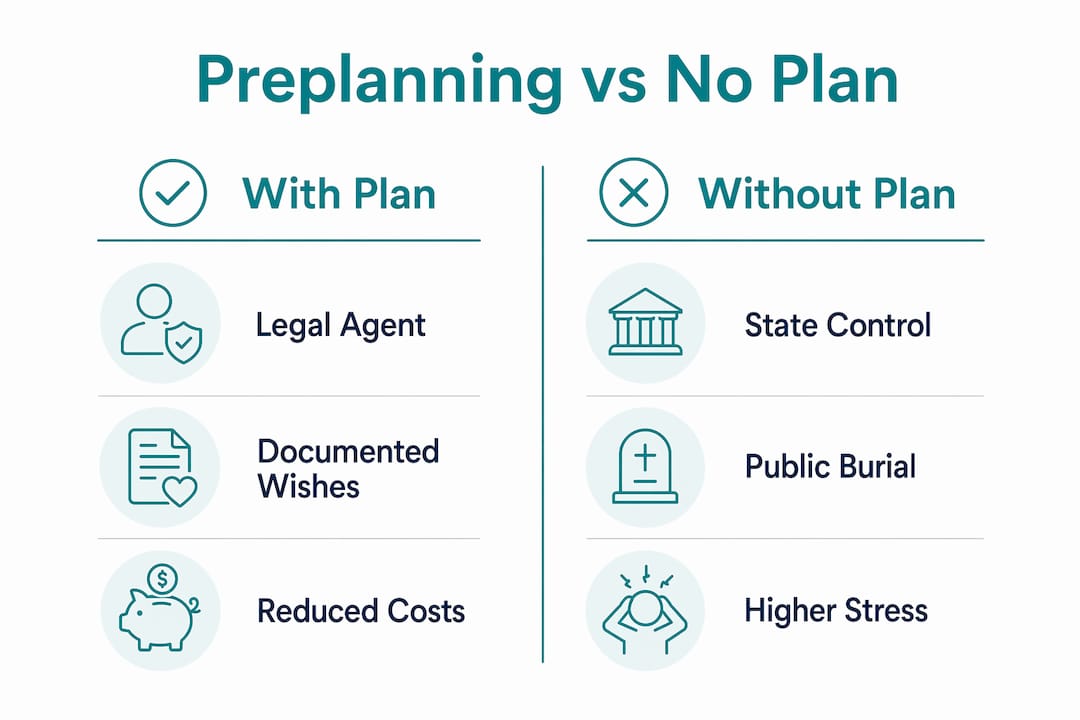
The most important legal step you can take is naming a Legal Representative for Disposition, sometimes called an agent for disposition. This is not the same as naming an executor in your will.
A designated agent specifically carries out funeral instructions and has legal authority to act immediately after your death. An estate executor handles financial and property matters, which move through probate on a much slower timeline. For funeral arrangements without children, these are two completely separate roles, and you need both.
Your will is not a reliable vehicle for funeral wishes. Wills are often read weeks after death, long after burial decisions are finalized. Writing your funeral preferences into a will gives you a false sense of security. The document that actually protects you is a signed, witnessed authorization naming your chosen representative.
Advance directives also matter here. These documents, which you may already associate with medical decisions, can include your preferences for body disposition. Pairing an advance directive with a formal agent designation creates a clear, legally grounded record.
Here's a quick comparison of the key documents:
| Document | What It Controls | When It Takes Effect |
|---|---|---|
| Will | Property and financial assets | Weeks after death, through probate |
| Agent for Disposition | Funeral and burial decisions | Immediately upon death |
| Advance Directive | Medical and end-of-life care | When you lose capacity or die |
| File of Intent | Documented funeral preferences | Guides officials if no agent is present |
- Name a Legal Representative for Disposition in a signed, witnessed document.
- Keep a copy with your agent, your attorney, and your primary care provider.
- Create a File of Intent at a local funeral home. A documented funeral plan provides a roadmap for public administrators and increases the likelihood your wishes are followed, even without prepayment.
- Review your documents every three to five years or after any major life change.
On prepaid funeral plans: they offer convenience, but the Funeral Consumers Alliance warns that funds may be locked, state consumer protections vary widely, and changes in funeral home ownership can complicate your arrangements. Prepaying is not required for a valid plan. Documentation and legal authorization matter far more than a financial contract with a single provider.
Pro Tip: Direct cremation is worth serious consideration for solo agers. It simplifies coordination, reduces costs, and removes the need for complex family logistics. Direct cremation is a practical and dignified choice that many childless adults find gives them the most control with the least burden on others.
How do you plan financially for your funeral without burdening others?
Funeral costs are not small. Basic funeral services in 2026 start around $8,000 and regularly exceed $10,000 once burial and memorial costs are added. Costs rise annually by 2%–4%, which means waiting five years to plan adds real money to the final bill.
The good news is that you have several funding options, and none of them require you to hand money to a single funeral home today.
Funding options for solo agers:
- Prepaid funeral plans lock in today's prices with a specific provider. They work well when you're confident you'll stay in the same area and the funeral home is financially stable. Given the risks of prepaid plans tied to a single provider, research the company carefully and confirm your state's consumer protection laws before signing.
- Burial insurance (also called final expense insurance) is a small whole life policy designed to cover funeral costs. Premiums are fixed, coverage doesn't expire, and the benefit goes directly to your named beneficiary.
- Payable-on-death accounts let you set aside funds in a dedicated bank account that transfers immediately to your chosen representative upon your death, bypassing probate entirely.
- Life insurance policies with a named beneficiary can cover funeral costs if the benefit amount is sufficient and the beneficiary knows to use it for that purpose.
- Revocable funeral trusts hold funds specifically for funeral expenses and offer more flexibility than prepaid contracts if you move or change providers.
The most overlooked step is communication. Funding a plan means nothing if your chosen representative doesn't know where the money is, how to access it, or what you want it spent on. Write it down. Share it. Review it together.
The living alone financial safety checklist from Agingsolo is a practical starting point for building this kind of financial clarity into your broader solo aging plan.
What are the practical steps to start your funeral preplanning?
Starting feels harder than it is. Most people who complete a funeral plan say the process took less than a few hours spread across a couple of weeks. Here's a clear path forward.
- Decide your core preferences. Burial or cremation? A formal service or a simple gathering? A specific location that matters to you? Write these down in plain language before you talk to anyone else.
- Choose your representative. This is the person you trust most to carry out your wishes. It doesn't have to be a family member. A close friend, a member of your community support network, or a professional advocate all qualify.
- Make it legal. Sign a formal Agent for Disposition document in your state. Requirements vary, but most states require a witness and notarization. An estate attorney can prepare this document quickly and affordably.
- Create a File of Intent. Visit a local funeral home and document your preferences on file. This costs nothing and gives officials a reference point if your agent is unreachable.
- Fund your plan. Choose the funding method that fits your financial situation and confirm your representative knows how to access it.
- Share everything. Give your representative a copy of all documents. Tell at least one other trusted person where the originals are stored.
- Review every few years. Preferences change. Funeral homes close. Representatives move. A plan that isn't updated can create the same confusion as no plan at all.
The end-of-life planning guide at Agingsolo walks through each of these steps with specific guidance for childless adults navigating this process without a default family structure.
Pro Tip: The Funeral Consumers Alliance offers free guidance on pre-planning and advance directives, including state-specific information on consumer protections. It's one of the most reliable nonprofit resources available for solo agers working through this process independently.
Key takeaways
Childless adults who document their funeral wishes and legally authorize a trusted representative protect their dignity, reduce costs, and spare their chosen family from impossible decisions.
| Point | Details |
|---|---|
| Legal authorization is critical | Name an Agent for Disposition, not just an executor, to ensure immediate authority after death. |
| Wills don't protect funeral wishes | Probate takes weeks; funeral decisions happen within 48 hours of death. |
| Documentation beats prepayment | A File of Intent guides officials without locking funds into a single provider. |
| Financial planning reduces burden | Burial insurance, payable-on-death accounts, and trusts all fund arrangements without probate delays. |
| Communication completes the plan | Your representative must know your wishes, your documents, and your funding before they're needed. |
Why this is one of the most loving things you can do
I've spent years working with solo agers on planning questions, and funeral preplanning is the topic most people put off the longest. The reason is understandable. It feels morbid. It forces you to sit with your own mortality in a way that most daily planning doesn't.
But here's what I've seen again and again: the people who complete a funeral plan don't feel worse afterward. They feel lighter. There's something genuinely freeing about knowing that the people you love won't be left scrambling, making guesses, or arguing with a county official about what you would have wanted.
For childless adults specifically, this matters more than most planning guides acknowledge. You don't have a default person. You have chosen people, and those relationships deserve protection. Leaving your arrangements undocumented puts the people you care most about in an impossible position at the worst possible moment.
The legal piece is simpler than most people expect. Naming an agent for disposition takes one document and one conversation. Creating a File of Intent takes one visit to a funeral home. Neither requires a lawyer, though having one helps. Neither requires spending money today.
What it does require is deciding that your wishes matter. They do. And the people in your life who would step up for you deserve the clarity that only you can give them.
— Mike
How Agingsolo supports your funeral preplanning
Agingsolo is built for exactly this kind of planning. If you're a solo ager working through end-of-life decisions without a default family structure, you don't have to figure it out alone.

The solo aging resource hub at Agingsolo covers funeral preplanning alongside legal proxies, financial safety, life care plans, and the full range of decisions that childless adults face as they age. It's practical, calm, and written specifically for people in your situation. Whether you're just starting to think about this or ready to finalize your documents, Agingsolo gives you the tools to move forward with confidence and clarity.
FAQ
What is a legal representative for disposition?
A Legal Representative for Disposition is a person you formally authorize to make funeral and burial decisions immediately after your death. This role is separate from an estate executor and carries legal authority that a will or informal request does not provide.
Does a will cover funeral arrangements?
A will does not reliably protect funeral wishes because it enters probate weeks after death, long after burial decisions are made. A signed Agent for Disposition document and a File of Intent are far more effective for solo agers.
How much does funeral preplanning cost?
Creating a funeral plan costs little to nothing. Basic documentation, including a File of Intent at a funeral home, is typically free. Funding options like burial insurance or payable-on-death accounts vary, but basic funeral services in 2026 start around $8,000, making advance planning a clear financial benefit.
What is a file of intent?
A File of Intent is a written record of your funeral preferences kept on file at a funeral home. It guides public administrators and funeral directors in the absence of a named agent and does not require prepayment to be valid.
Can a friend handle my funeral without legal authorization?
A friend has no legal standing to direct your funeral arrangements without formal authorization. Funeral homes require a legally recognized person to give consent. Naming your friend as your Agent for Disposition in a signed document gives them the authority they need to act on your behalf.