
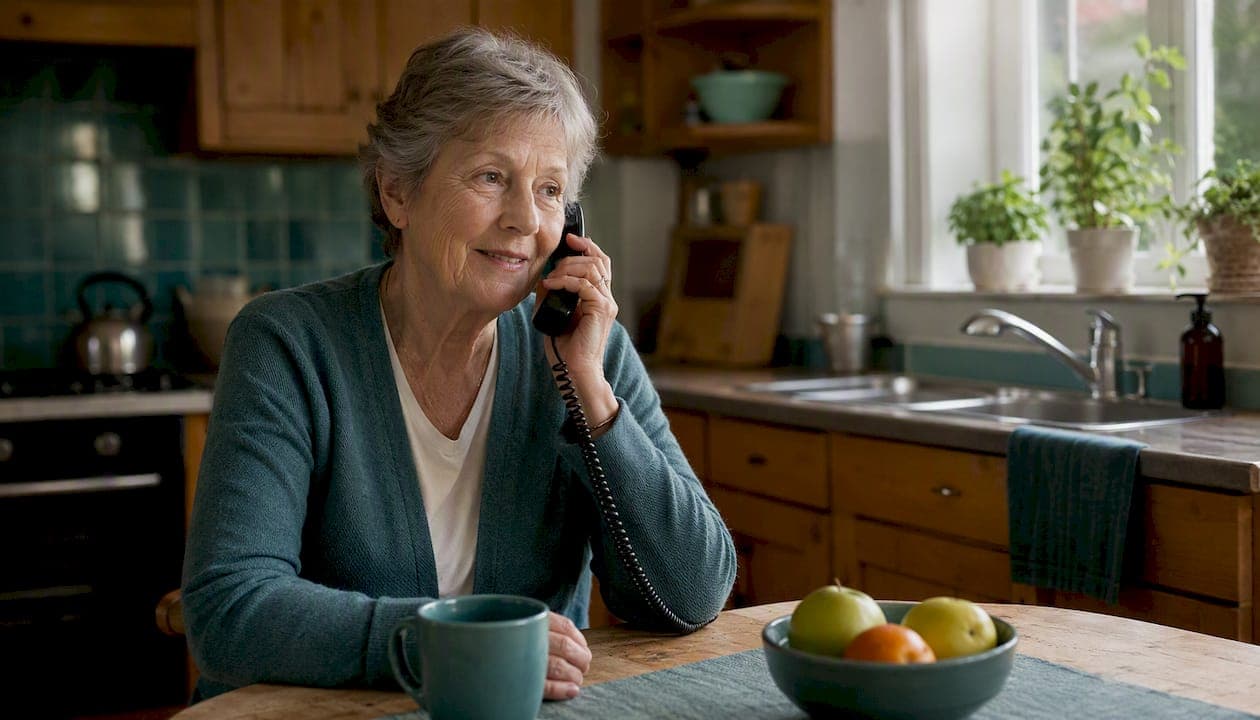
A calls program is a scheduled phone or video check-in, usually run by trained volunteers or staff, that gives older adults regular social contact and a simple wellness touchpoint. Most are free. Three ways to find one right now:
- Call 211 (United Way's national helpline) and ask for telephone outreach programs near you.
- Contact your local Area Agency on Aging (AAA) through the Eldercare Locator or by searching "Area Agency on Aging" plus your county name.
- Check your county Office for the Aging (OFA) website for a Friendly Calls or companion-calling program.
Calls typically happen weekly or daily, run 20–30 minutes, and volunteers go through orientation before their first call. The National Institute on Aging links social isolation in older adults to depression and poorer health outcomes, which is exactly the gap these programs are designed to close.
Key Takeaways
Calls programs are one of the most accessible, free tools available to reduce isolation and connect older adults to services they may not know they need.
| Point | Details |
|---|---|
| What a calls program is | Scheduled volunteer or staff phone check-ins that provide social connection and basic wellness monitoring. |
| Fastest way to find one | Call 211 or contact your county Office for the Aging to locate a local program within minutes. |
| Volunteer commitment | Typically one 20–30 minute call per week; training covers empathy, privacy, and escalation procedures. |
| Calls as a gateway | Outreach projects show calls regularly surface unmet needs and lead to food, transport, and medical referrals. |
| Agingsolo's role | Agingsolo's free tools and Clarity Session help solo agers build a full support plan with calls as one steady layer. |
Table of Contents
- What does a calls program actually look like?
- Where can you find a calls program in the United States?
- How to enroll yourself or a loved one as a participant
- How to apply as a volunteer caller
- Safety, privacy, and what to do when a call raises a concern
- What research shows about the benefits and limits of calls programs
- Practical tips for caregivers to get the most from a calls program
- Why calls programs matter for solo agers
- Agingsolo can help you build a plan around calls programs
- Sources
- FAQ
What does a calls program actually look like?
Programs vary, but the shape is consistent: a trained caller reaches out on a set schedule, has a real conversation, and checks in on how the participant is doing. No scripts. No sales pitch. Just a steady, familiar voice.
Common organizers include:
- County Offices for the Aging running Friendly Calls programs (often 8-week cycles with weekly calls)
- Area Agencies on Aging, which coordinate or fund local telephone outreach programs
- Meals on Wheels partners, who often layer wellness calls alongside food delivery
- Nonprofits and faith communities such as DOROT and AllThrive 365 (formerly Friendly Callers)
Formats range from a weekly companionship chat to a daily reassurance check-in. Some programs focus purely on connection; others include a brief wellness screen. Eligibility is broad: older adults living alone, homebound individuals, or anyone who simply wants a reliable point of contact. The vast majority of programs charge nothing.
Where can you find a calls program in the United States?
The fastest path is almost always a phone call, not a web search.
Start with these national hubs:
- Dial 211. This free United Way service connects you to local social services, including telephone outreach programs, in every state.
- Use the Eldercare Locator at eldercare.acl.gov or call 1-800-677-1116 to find your nearest Area Agency on Aging.
- Search your county's Office for the Aging website for "Friendly Calls" or "telephone reassurance."
Local sources worth checking:
- Meals on Wheels local chapters often run or refer to companion-call programs.
- Senior centers and community nonprofits frequently host their own calling initiatives.
- Maryland's Senior Call Check is one example of a free daily check-in service run at the state level; many other states have similar models.
Before you call, have this ready:
- Full name and phone number of the participant
- Preferred call times and days
- Any hearing or language needs
- Questions to ask: Is the program free? How often will calls happen? Are volunteers screened or background-checked?
How to enroll yourself or a loved one as a participant
Signing up is usually simple. Here is what the process looks like at most programs:
- Contact the program by phone or online form. Start with 211, your county OFA, or a local AAA.
- Complete a brief intake. Staff will ask for basic contact information, preferred call times, any health or communication needs, and emergency contact details.
- Give consent. You or your loved one will confirm that calls are welcome and agree to any data-sharing terms.
- Get matched. The program pairs participants with a volunteer or staff caller based on availability and sometimes shared interests.
- Receive your first call. Most programs confirm the schedule in writing or by phone before the first contact.
Typical programs run weekly calls for 6–12 weeks, though many offer ongoing weekly or daily check-ins with no fixed end date. County OFA Friendly Calls programs commonly use an eight-week structure with the option to continue. Cost is almost always free. For participants without internet access, phone enrollment is standard.
How to apply as a volunteer caller
Volunteering for a calls program is one of the most flexible commitments available. Most programs ask for one 20–30 minute call per week, and you can do it from home.
What to expect when you apply:
- Minimum age varies by program; many accept volunteers 18 and older, and some senior-focused programs welcome older volunteers specifically.
- Application form with basic contact details and availability.
- References or a background check for some programs, particularly those serving vulnerable adults.
- Orientation and training before your first call.
What training covers:
- Empathy and active listening techniques
- How to open a conversation naturally (more on this below)
- Privacy rules and what participant information stays confidential
- Escalation procedures: when and how to report a concern to program staff
The New York State Office for the Aging offers free Friendly Calls volunteer training materials, including videos and manuals, that any program or individual can use. These cover all the topics above and are a reliable starting point even if your local program has its own orientation.
Research from a home health outreach project that placed over 4,000 calls found that callers trained in empathy and given background on participants produced more personalized conversations and were better at identifying unmet needs.
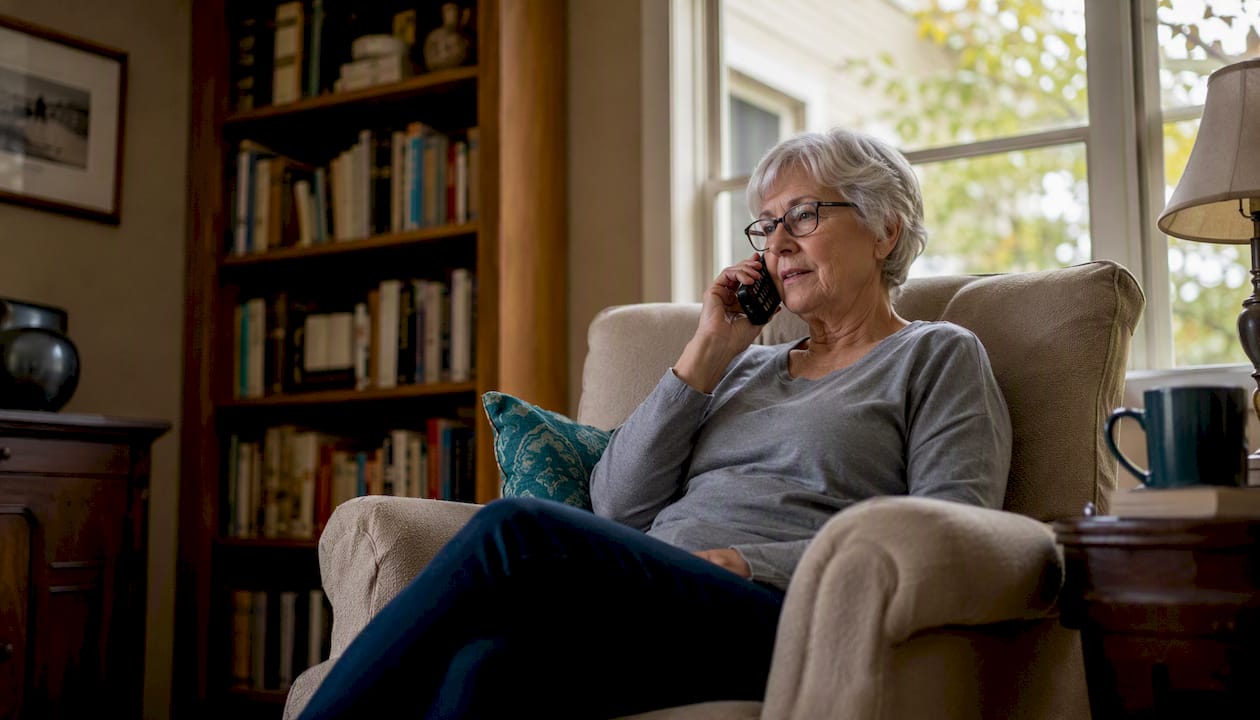
Pro Tip: Open with something open-ended like "How have you been getting on this week?" rather than a yes/no question. That one shift consistently produces richer conversations and helps you notice if something feels off.
Safety, privacy, and what to do when a call raises a concern
Good programs build safety in from the start, not as an afterthought.
Standard privacy safeguards:
- Volunteers receive only the information they need: first name, phone number, and any relevant context.
- Personal details are not shared outside the program without consent.
- Calls are not recorded without explicit permission.
How escalation works:
- A volunteer notices something concerning during a call (confusion, mention of a fall, talk of going without food).
- The volunteer does not try to handle it alone. They report to a program coordinator after the call.
- The coordinator assesses and, if needed, contacts the participant's emergency contact or local services.
- In a genuine emergency during a call, the volunteer calls 911 and then notifies the program.
Red flags worth documenting and reporting:
- Sudden confusion or memory gaps that weren't present before
- Mentions of new falls, pain, or difficulty moving
- Signs of skipped medications or missed meals
- Talk of feeling unsafe at home
Caregivers can ask program coordinators directly: "What is your escalation protocol if my family member seems unwell during a call?" A clear answer is a sign of a well-run program.
What research shows about the benefits and limits of calls programs
The evidence is encouraging, with some important nuance.
The CDC identifies social isolation among older adults as a public health concern linked to higher risks of heart disease, depression, and cognitive decline. Calls programs are one of the community-based responses it recommends.
Real-world programs show measurable impact. A telephone outreach project run by the Healthier Black Elders Center in Detroit reached more than 1,300 members during COVID-19, connected participants to community resources, and reported strong positive feedback.
A quality-improvement study using a four-call series in a Medicare population found significant improvement in perceived social isolation. One loneliness measure, however, paradoxically rose. Most participants still wanted to continue calls after the program ended.
| Outcome | What the evidence shows |
|---|---|
| Social isolation | Improved in structured call series |
| Perceived loneliness | Mixed: one measure rose temporarily |
| Resource referrals | Calls frequently surface unmet food, transport, and medical needs |
| Participant interest | High: most want calls to continue |
The temporary rise in perceived loneliness is worth understanding. Contact can make a person more aware of what they are missing. Programs that pair calls with pathways to deeper community engagement tend to produce more lasting results than short pilots alone.
Practical tips for caregivers to get the most from a calls program
A little preparation makes a real difference in how well a match works.
Before enrollment, prepare a simple info sheet for the coordinator:
- Preferred name (not just legal name)
- Best call times and days
- Hearing or vision considerations
- Topics the participant enjoys (gardening, sports, family stories)
- Topics to avoid (recent losses, health anxieties)
- Emergency contact name and number
During the program:
- Let the participant know calls are coming so they are not caught off guard.
- Check in gently after the first few calls: "Did you enjoy talking with them?"
- If something seems off after a call, contact the program coordinator the same day.
Calls work best as one layer of a broader plan. Pairing a weekly companion call with telehealth check-ins or a buddy system creates a more complete safety net. No single program covers everything, but together they add up to something steady.
Pro Tip: Ask the coordinator whether the volunteer has any shared interests with your loved one. Programs that make intentional matches based on personality or hobbies tend to produce calls that both people look forward to.
Why calls programs matter for solo agers
Solo agers face a specific version of the quiet that comes with living alone. There is no one in the next room to notice a bad day, and no built-in check-in when things go sideways. A calls program does not replace a full support network, but it fills a gap that is easy to underestimate.
What makes calls particularly valuable for solo agers is not just the conversation. It is the regularity. A weekly call from a familiar voice is a low-cost, low-effort way to stay connected to the wider world and to have someone who will notice if you stop picking up. That is a real layer of safety, not just comfort.
Calls also work well alongside other supports. They complement a Circle of Care and a buddy system rather than competing with them. Think of a calls program as the steady baseline, and other tools as what you build on top.
For solo agers dealing with isolation challenges, starting with a single weekly call is often the most practical first step.
Agingsolo can help you build a plan around calls programs
Calls programs are one piece of a larger picture. If you are a solo ager or a caregiver trying to put together a plan that actually holds, Agingsolo offers free downloadable checklists, planning guides, and practical tools designed specifically for people aging without a built-in support system.
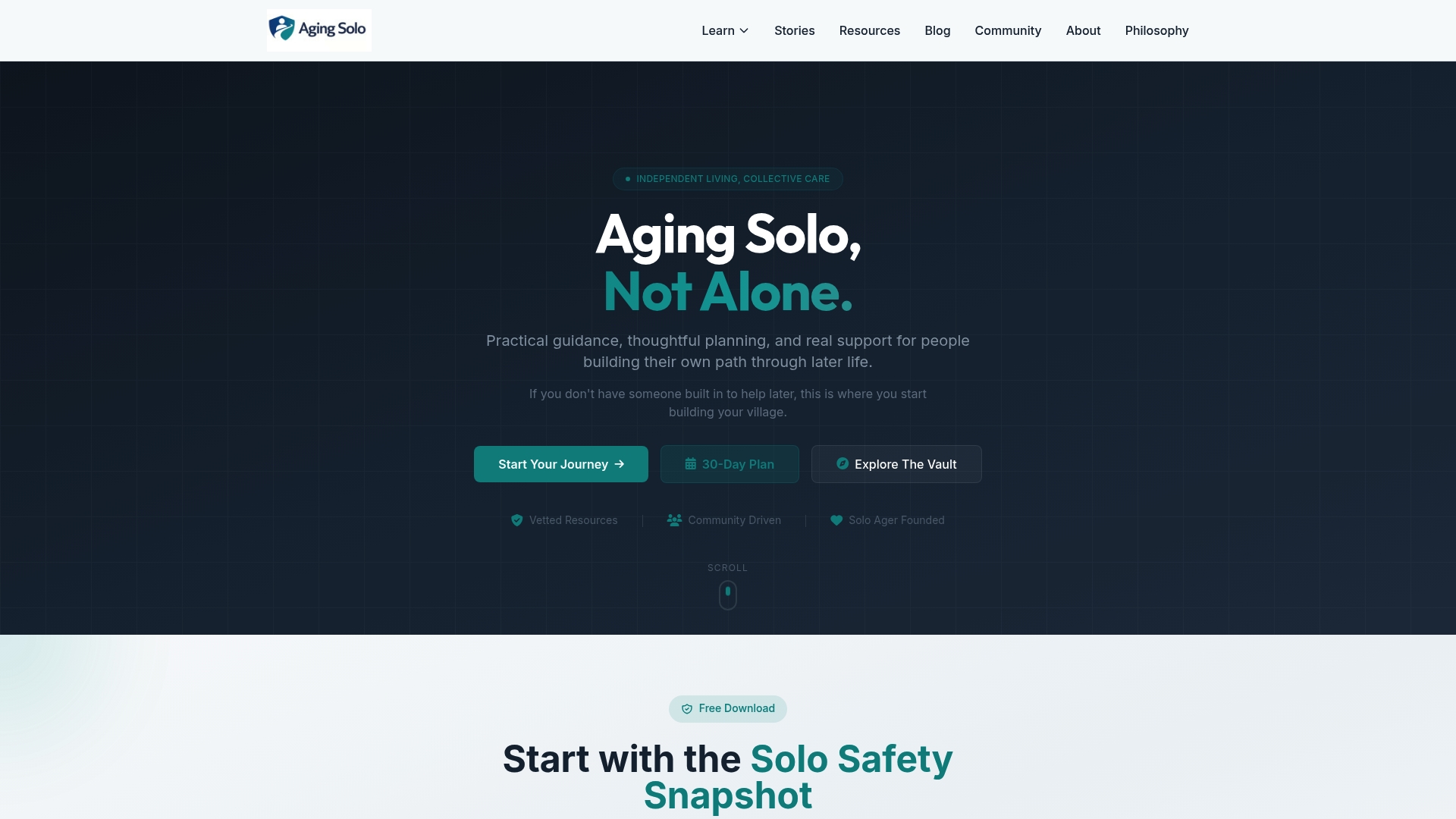
The Compassionate Clearinghouse is a good starting point: it brings together Agingsolo's most useful resources in one place, including guides on building a support network, staying safe at home, and planning ahead with confidence. For readers who want personalized guidance, a 45-minute Solo Aging Clarity Session via Zoom gives you a focused conversation about your specific situation and what to prioritize next. You can find both at Agingsolo.
Sources
Save these for fast access when you are ready to act:
- An innovative telephone outreach program to seniors in Detroit, a city facing dire consequences of COVID-19 - PMC
- Social isolation, loneliness in older people pose health risks (NIA)
- Friendly Calls Volunteer Training | Office for the Aging - NY.gov
FAQ
What is a friendly calls program for seniors?
A friendly calls program pairs older adults with trained volunteers who phone them on a regular schedule for conversation, companionship, and a simple wellness check. Most programs are free and run through county Offices for the Aging, Area Agencies on Aging, or nonprofits.
Is there a daily check-in service for seniors?
Yes. Some programs, such as Maryland's Senior Call Check, offer daily automated or live check-in calls for older adults living alone. Call 211 or contact your state's Office on Aging to find a daily reassurance program near you.
How do I volunteer to help a lonely older adult?
Contact your county Office for the Aging, a local Area Agency on Aging, or a nonprofit like DOROT and ask about their volunteer caller program. Most require a short application, basic training, and a commitment of roughly one 20–30 minute call per week.
Are there services that will call an older person just to say hello?
Yes, and they are more common than most people realize. Friendly Calls programs run by county OFA offices, AllThrive 365, and DOROT all provide regular social calls to older adults at no cost. Dial 211 to find one in your area quickly.
What assistance is available for seniors who feel isolated?
Area Agencies on Aging coordinate a range of free services including telephone outreach programs, meal delivery, transportation, and referrals to medical and social services. Calling 211 or visiting eldercare.acl.gov connects you to local options within minutes.