
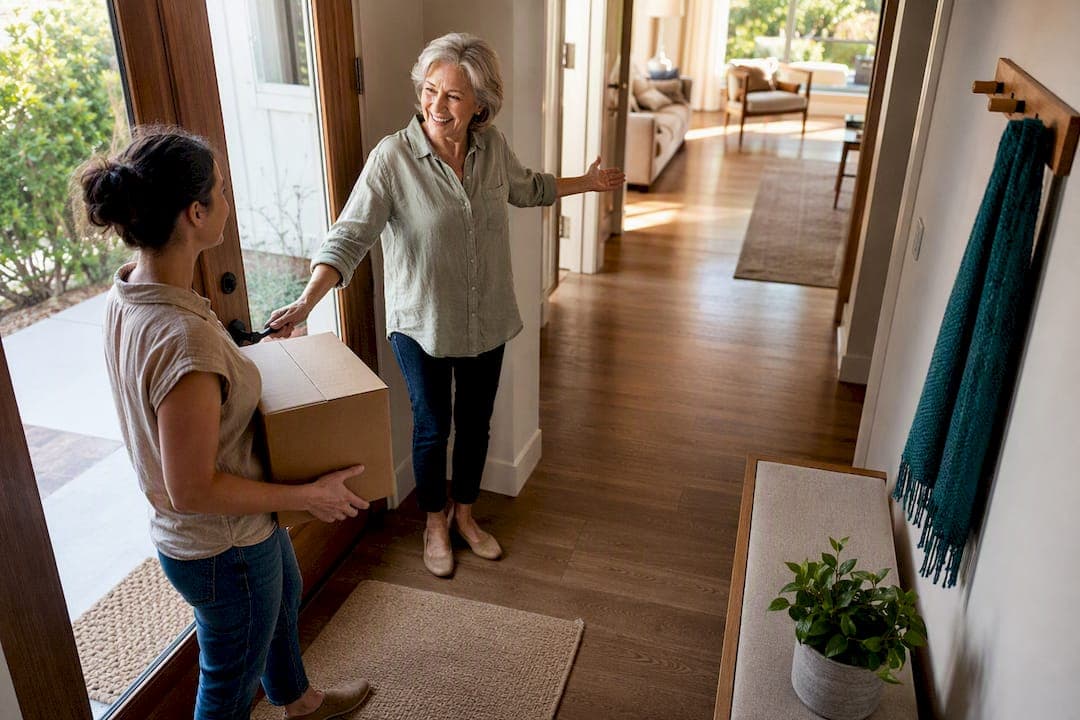
Homeshare for seniors is a genuinely practical option right now, especially if you're weighing income, company, or both against the cost of staying in your own home. The trade-off is real: you're sharing your space, your kitchen, sometimes your evenings, and that only works with clear boundaries. The sections ahead walk through matching, screening, money, and where to find a program that does this well.
TL;DR:
- Homeshare programs often pay a monthly income between 600 and 850 dollars for providers, with arrangements including cash rent or chore-based reductions.
- Matching involves detailed screening of lifestyle, background checks, and multiple pre-match meetings, with a trial period averaging three months to ensure compatibility.
- Risks primarily stem from unclear boundaries around caregiving roles, underscoring the importance of a written agreement and defined exit procedures.
- Nonprofit programs tend to be free or low-cost, with a preference for services involving geriatric social workers and ongoing support after move-in.
- Start your search with the National Shared Housing Resource Center and prioritize programs that follow strict standards for screening, agreements, and trial periods.
Table of Contents
- What Is Homeshare for Seniors, and How Does It Work?
- What Are the Real Benefits of Homesharing for Older Adults?
- How Does Matching and Screening Work for Seniors?
- How Much Does Senior Home Sharing Cost?
- What Are the Risks of House Sharing, and How Do Programs Reduce Them?
- Where Can You Find Vetted Homeshare Programs Near You?
- How Do You Prepare Your Home and Yourself for a Housemate?
- What Does Everyday Life Actually Look Like?
- Want Help Thinking Through the Homeshare Decision First?
- Where to Learn More About Homeshare Programs
- Sources
- FAQ
What Is Homeshare for Seniors, and How Does It Work?
Homeshare for seniors pairs an older homeowner or renter, often called the "home provider," with a housemate who pays rent, trades chores for reduced rent, or offers some mix of both. It is not personal care. A reputable program will say so outright, and you should expect that same clarity in writing before anyone moves a box.
A few common models show up again and again. Some are simple cash-rent arrangements, no different from a standard lease. Others reduce rent in exchange for light housework, errands, or a set number of hours of companionship each week. Intergenerational matches, often a college student or young professional paired with an older adult, are increasingly common. You'll also find both nonprofit-run programs and for-profit platforms, and the difference between them matters more than most people expect.
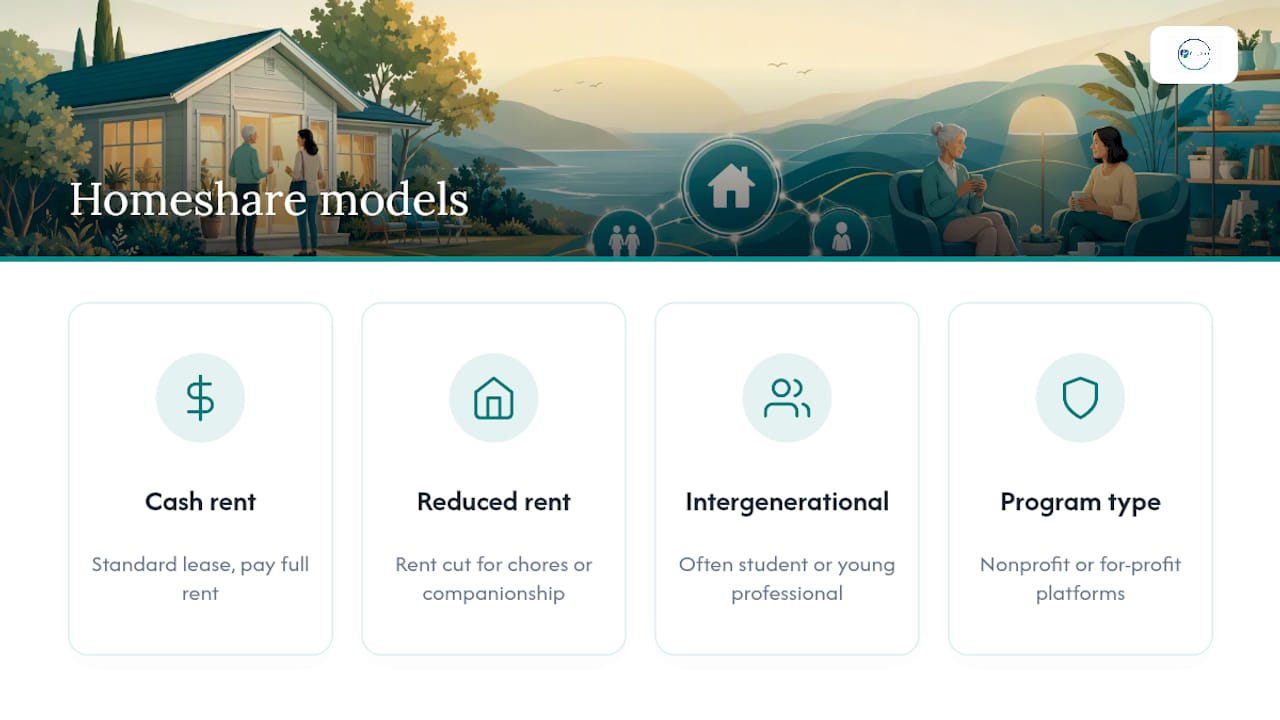
Programs typically serve two groups: people with a spare bedroom who want income or company, and people looking for affordable housing who can offer help or rent in return.
What Are the Real Benefits of Homesharing for Older Adults?
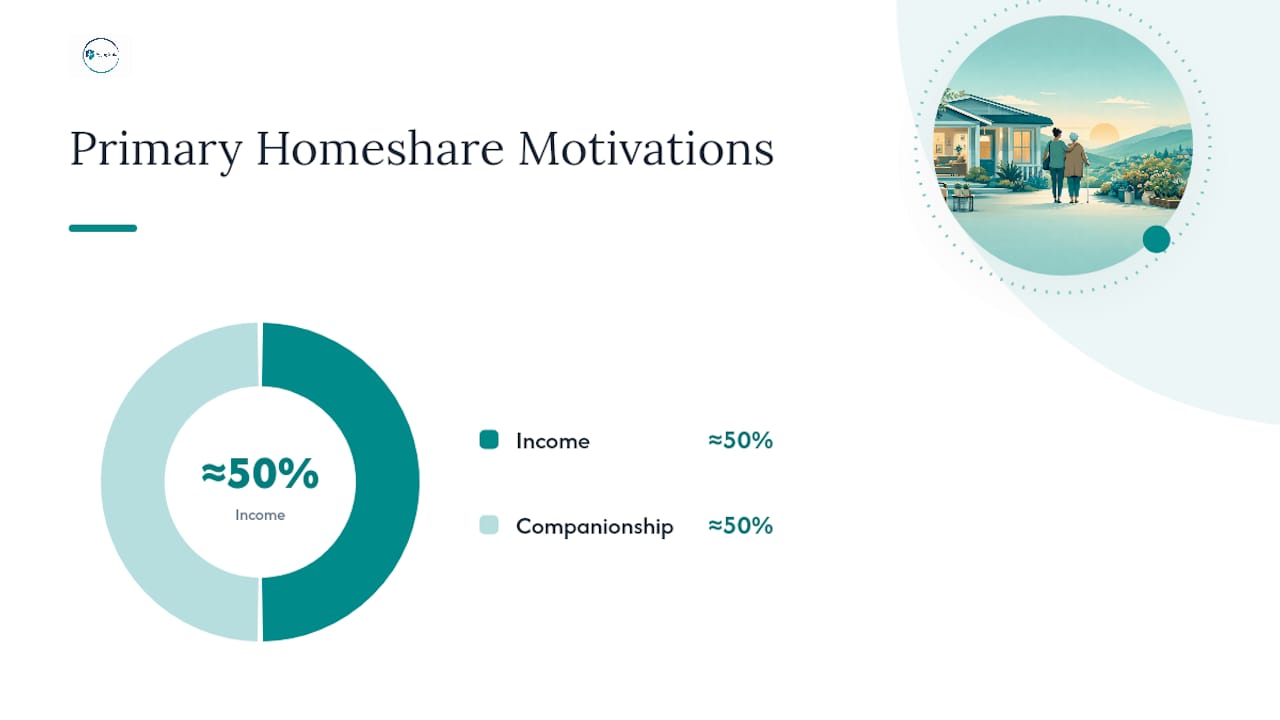
The financial case is the one most people hear about first, but it's rarely the whole story. HomeShare Oregon reports that home providers split almost evenly between two motivations: about half share for income, and half for companionship. That's worth sitting with. A lot of solo agers assume homeshare is only for people who need the money. Plenty do it because an empty house gets loud in a different way.
The practical upsides tend to cluster into three areas:
- Affordability: extra monthly income or reduced rent can be the difference between staying in a paid-off home and having to sell it.
- Companionship: a housemate in the next room changes the texture of daily life, from someone to share dinner with to a familiar voice during a rough week.
- Practical help: light chores, grocery runs, or a hand carrying something up the stairs, all short of caregiving.
One HomeShare Oregon match paired a widow with a spare room and a graduate student who needed affordable housing near campus. She got a lighter grocery bill and someone to walk with in the evenings; he got rent he could actually afford. Neither needed the other to become a caretaker.
How Does Matching and Screening Work for Seniors?
This is the part that separates a well-run program from a risky one, and it's also the part most people skip researching until something's already gone sideways.
- Intake and lifestyle screening. Expect detailed questions about pets, smoking, overnight guests, noise tolerance, and daily schedule. This isn't small talk. HomeShare Oregon's own guidance treats compatibility on things like schedule and pets as just as important as the financial terms.
- Background checks and references. Criminal background checks, reference calls, and often income verification are standard at legitimate nonprofits.
- Professional involvement. Many nonprofit programs staff geriatric social workers who lead intakes and stay involved after the match, not just before it.
- Pre-match meetings. Both parties meet, often more than once, to walk through house rules before anyone commits.
- Trial period. A short trial, often 30 to 90 days, with a defined exit clause and access to mediation if friction shows up.
Time-to-match through nonprofit programs runs around three months on average, so this isn't a fast process, and that's by design.
Pro Tip: During the trial period, keep a simple running note of anything that bothers you, even small things like thermostat settings or dish habits. Small friction points, not big blow-ups, are usually what end a match early.
How Much Does Senior Home Sharing Cost?
Money changes hands in a few different shapes, and none of them is universal. Straight cash rent is the most common, priced at or below local market rate. Reduced rent in exchange for a set number of chore hours per week is close behind. Some arrangements split utilities evenly; others fold utilities into a flat monthly number.
Reported figures vary by program and region, but HomeShare Oregon reports average provider income typically falls within a moderate range in some matches. That's a range, not a guarantee, and your local cost of living will shift it.
Fees differ by program type. Nonprofit agency matching is often free or low cost. For-profit platforms sometimes charge a small join fee. Before committing to either, it's worth a call to a HUD-approved housing counselor, especially if you're on a fixed income or wondering whether a housing voucher could apply to your situation.
What Are the Risks of House Sharing, and How Do Programs Reduce Them?
The single biggest misunderstanding in homesharing is caregiving creep. A housemate is not a home health aide, and a homeshare agreement should say that in plain language. Without that boundary written down, it's easy for "can you grab my prescription" to slowly turn into an unpaid caregiving role nobody agreed to, which creates real liability and real resentment.
Watch for these warning signs before you sign anything:
- No background check or reference process.
- No written agreement covering rent, chores, and house rules.
- Vague or verbal-only financial terms.
- Pressure to move in fast, with no trial period offered.
The fix for most of this is procedural, not complicated: a written agreement, a defined trial period, an exit clause, and a family member looped in on the decision. Demand shows the model is holding up under pressure. Many organizations across the country now run structured home-sharing programs, and that number has grown as housing costs climbed.
Where Can You Find Vetted Homeshare Programs Near You?
Start with the National Shared Housing Resource Center, which maintains a directory of member programs that follow the written agreement, pre-match meeting, and trial period standards described above. That's the difference to look for: an agency doing all of it, versus a listing site connecting strangers with none of it.
From there:
- Search for a local nonprofit homeshare program by city or county name plus "home sharing," and ask directly whether they do background checks, involve a social worker, and offer mediation.
- Ask if they run pre-match meetings and how long trial periods last.
- Contact a HUD housing counselor if affordability or a voucher is part of your decision.
- Lean toward nonprofit or agency matching over for-profit platforms when you want ongoing support after move-in, not just an introduction.
How Do You Prepare Your Home and Yourself for a Housemate?
Before anyone tours your spare room, walk through it with fresh eyes. Is there a lock on the door? A clear path to the bathroom? A conversation about parking, shared groceries, and who's paying for what internet plan?
Questions worth asking any prospective housemate directly:
- What does your typical week look like, work hours, visitors, noise?
- How do you feel about pets, smoking, and shared meals?
- What would you want to happen if either of us needed to end this early?
One Colorado match paired a retired teacher with a nursing student. They agreed early that "helping" meant carrying groceries in, not managing medications, and wrote it into their agreement. Eighteen months later, that boundary is still what makes the arrangement work; when the student graduated and needed to give notice, the exit clause they'd set up made the transition calm instead of chaotic.
Pro Tip: Write your caregiving boundary into the agreement even if it feels awkward to bring up. The couples and pairs who skip this step are the ones most likely to end up in a fight over expectations six months in.
What Does Everyday Life Actually Look Like?
Some mornings it's just coffee, two mugs on the counter instead of one, and a quick "how'd you sleep" before she heads out the door to her volunteer shift. I won't pretend the adjustment was instant. Sharing a kitchen after years of having it entirely to yourself takes some getting used to, and there were a few weeks of feeling like a guest in my own house.
If you're circling this decision, two things you can do today: call one program on the National Shared Housing Resource Center's directory and just ask questions, no commitment. Then write down three things you'd genuinely want in a housemate, not what you think you're supposed to want. That's the whole first step. The rest, oddly, tends to sort itself out once the right person walks through the door.
Want Help Thinking Through the Homeshare Decision First?
Aging Solo doesn't run a matching service, and we're not going to pretend to be one. What we do well is help you get clear on what you actually want before you start those calls, so you walk into a program intake knowing your own answers instead of figuring them out on the spot.

Our guide on how to maintain independence while aging at home is a useful companion piece if homeshare is one option among several you're weighing. If you want a more personal gut check, a 45-minute Solo Aging Clarity Session over Zoom is built exactly for this kind of decision. We'll help you map out your must-haves, your boundaries, and the questions worth asking a prospective housemate, before you're sitting across from a stranger trying to figure it out live. Book a session through Aging Solo when you're ready to think it through out loud with someone in your corner.
Where to Learn More About Homeshare Programs
- National Shared Housing Resource Center: directory of vetted member programs nationwide.
- KFF Health News feature: reporting on the growth of "Golden Girls" style homesharing.
- Sunshine Home Share Colorado: example of a social-work-led local program.
- HUD senior housing resources: counseling on subsidies and affordable housing questions.
Sources
- To Afford Aging in Place, Older Adults Turn to ‘Golden Girls’ Housing - KFF Health News
- National Shared Housing Resource Center
- Share | HomeShare Oregon
- Home sharing is not a personal care service — Colorado Sun report
FAQ
How Much Does Senior Home Sharing Cost?
Costs vary by arrangement, but nonprofit programs like HomeShare Oregon report average provider income in the $600 to $850 per month range, often through cash rent, reduced rent for chores, or a mix of both.
What Is the Income Limit for Senior Housing?
Income limits for subsidized senior housing vary by program and region, so the most reliable next step is a call to a HUD-approved housing counselor, who can walk you through eligibility for your specific area.
What Are the Risks of House Sharing?
The biggest risk is an unclear caregiving boundary, since homesharing is not a personal-care service, followed by skipped background checks, missing written agreements, and rushed move-ins without a trial period.
How Does Senior Home Sharing Work?
A home provider and a housemate are matched through intake screening, background checks, and pre-match meetings, then typically enter a trial period of 30 to 90 days before signing a full written agreement covering rent, chores, and house rules.
Where Can I Find a Trustworthy Homeshare Program?
The National Shared Housing Resource Center lists member programs that follow written-agreement and trial-period standards, and it's a stronger starting point than an unaffiliated listing site.