
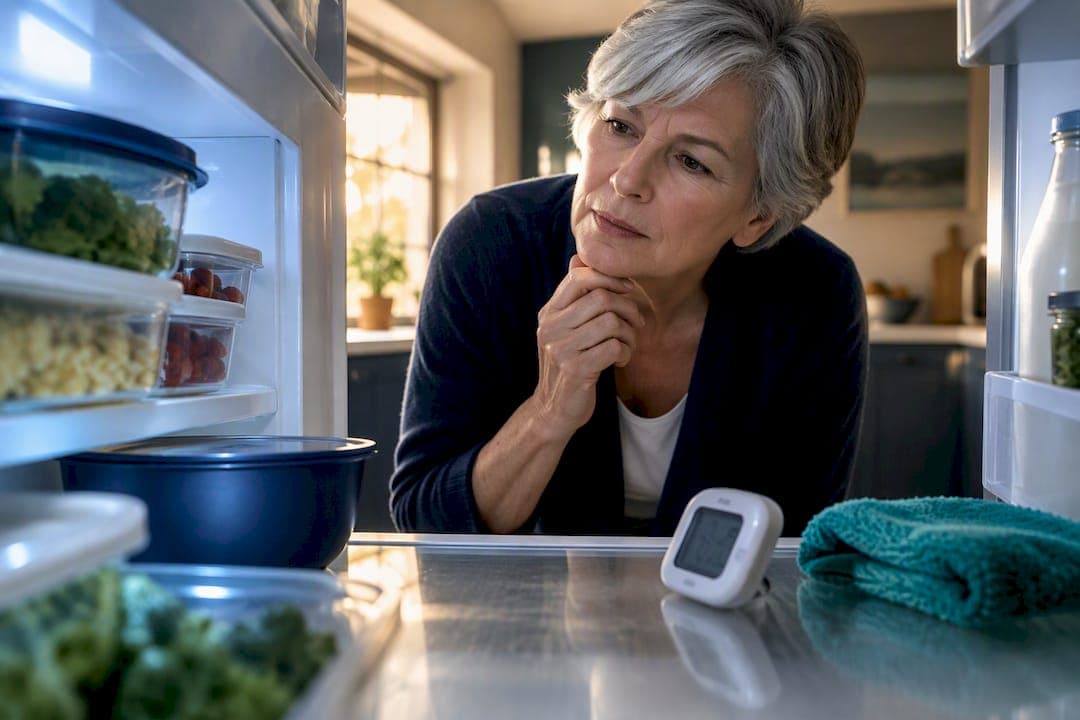
Keep this rule close: if your refrigerator door stayed shut, food is safe for about 4 hours; a full freezer holds safe temperatures for roughly 48 hours, a half-full one for about 24. Past those windows, or if anything sat above 40°F for 2 hours or more, throw it out. For frozen food, refreeze or cook it only if ice crystals are still visible or the thermometer reads 40°F or below.
TL;DR:
- Food kept above 40°F for more than 2 hours should be discarded unless it still has ice crystals or measures 40°F or below, especially for high-risk items like meat and dairy.
- A full freezer can keep food safe for approximately 48 hours, while a half-full one stays cold for about 24 hours, provided the door remains closed.
- Appliance thermometers are essential for accurate safety checks, as 44% of people incorrectly rely on smell and sight to determine if food is safe.
- During outages, remain cautious with medications and formula, discarding any food that touched floodwater and avoiding refreezing thawed food without proper temperature checks.
- After power returns, delay restocking 15-20 minutes, check temperatures first, and reheat leftovers to 165°F before consuming.
Table of Contents
- Timeline and temperature rules you need to know
- Keep vs. throw: a quick per-item guide
- What to do while the power is still out
- Special cases: medications, formula, and floodwater
- Once the power comes back on
- A short, doable checklist for solo agers
- Cleaning up safely once things are back to normal
- Restarting your fridge and freezer the right way
- What this really comes down to
- How a Clarity Session helps you plan this once, for good
- Sources
- FAQ
Timeline and temperature rules you need to know
The 4-hour rule for your refrigerator comes from how quickly a closed fridge climbs into the "danger zone," the range between 40°F and 140°F where bacteria multiply fastest. As long as the door stays shut, a full refrigerator holds safe cold for about 4 hours. Your freezer buys more time because ice itself acts as insulation: a full freezer keeps food safe for close to 48 hours, and a half-full one for about 24, again provided the door stays closed.

The danger-zone math is simple but strict. Perishable food held above 40°F for 2 hours or more, or just 1 hour if the room is hotter than 90°F, should be discarded.
A few things stretch your safe window:
- A full freezer has more thermal mass than a half-empty one, so it stays cold longer.
- Grouping items together, rather than spreading them out, helps them hold temperature as a block.
- Every time you open the door, you let cold air escape and heat in, so resist checking "just to see."
Keep vs. throw: a quick per-item guide
When power comes back, don't rely on your nose or your eyes. This is where an appliance thermometer earns its keep.
44% of people mistakenly believe food is still safe if it looks and smells normal. Pathogenic bacteria don't always change color, texture, or odor, which is exactly why the CDC recommends checking a thermometer instead of trusting your senses. When in doubt, the safest move is simply to throw it out.
Discard these once they've been above 40°F for 2 hours or more:
- Raw or cooked meat, poultry, and seafood
- Milk, soft cheeses, and anything with cream or custard
- Eggs and egg-based dishes
- Leftovers, and prepared salads like tuna, egg, or chicken salad
- Anything with a "keep refrigerated" label that's been sitting warm
A smaller group can ride out longer stretches with some judgment:
- Hard, aged cheeses like Parmesan or cheddar tend to hold up better than soft ones, though they should still be checked for smell and texture changes before use.
- Most unopened condiments, ketchup, mustard, soy sauce, are shelf-stable enough to survive a warm afternoon; check labels once power is back.
- Bread and other baked goods aren't refrigerator-dependent, so they're generally unaffected by the outage itself.
For your freezer, the rule is about ice, not time. If food still has ice crystals or reads 40°F or below on a food thermometer, you can safely refreeze it or cook it right away. If it's warmer than that and the ice is gone, it goes in the trash, including ice cream, soft cheeses, and most prepared frozen entrees, which don't refreeze safely once they've thawed.
What to do while the power is still out
Start with the tool that removes all the guesswork. Keep a thermometer in both your fridge and freezer at all times, not just during an outage, so you always have a real reading instead of a guess.
- Check the appliance thermometers first. If the fridge reads 40°F or below, or the freezer reads 0°F or below, food is still safe.
- If temperatures are climbing, pack a cooler: a layer of ice on the bottom, perishables in the middle, more ice on top, and keep the lid closed as much as possible.
- For a longer outage, dry ice extends your freezer's life significantly. Roughly 50 pounds of dry ice keeps a fully stocked 18-cubic-foot freezer cold for about two days. Wear gloves, keep it away from bare skin, and never place it directly on food.
- Before storms or known outages, freeze water bottles or gel packs and group your freezer items together. Both add thermal mass that helps you hold safe temperatures longer.
Pro Tip: Buy your appliance thermometers now, while the power is on, so you're not searching for one in the dark.
Special cases: medications, formula, and floodwater
Some situations call for stricter rules than the standard 4-hour guidance.
- Temperature-sensitive medications, like insulin or certain injectables, can lose effectiveness in heat. If yours has been warm for an extended stretch, call your pharmacist before assuming it's still good.
- For infants, ready-to-feed formula is the safer choice during an outage since it needs no water or mixing. If you're using powdered or concentrated formula, prepare it fresh each time rather than storing mixed batches.
- Any food that touched flood or storm water should be discarded outright, even if the packaging looks intact. Porous containers, cardboard, and cans that are swollen, leaking, or rusted can't be safely cleaned and should go straight in the trash.
If you manage your own medication routine and live alone, our guide on managing medications safely when living alone walks through building a simple contingency plan before you ever need one.
Once the power comes back on
Getting the power back doesn't mean everything in the fridge is automatically fine. Work through this in order:
- Check your appliance thermometers first: fridge at 40°F or below, freezer at 0°F or below.
- Use a food thermometer to spot-check anything questionable rather than guessing.
- Refreeze or cook only the items that still show ice crystals or read 40°F or below.
- Reheat leftovers to 165°F internally before eating; if you're not sure how long something sat warm, don't reheat it, just discard it.
- Bag spoiled food separately and take it out promptly so it doesn't attract pests or leave odors behind.
A short, doable checklist for solo agers
You don't need a bunker's worth of supplies to handle this well on your own. A few small habits do most of the work.
- Keep a thermometer in your fridge and freezer year round, so you never have to guess.
- If your power goes out, move any temperature-sensitive medications into a small cooler right away.
- Keep one trusted contact's number somewhere easy to find, so you can call if you're unsure about a medication or need help lifting a cooler.
- Stock a couple of frozen water bottles as backup ice, they take up little space and do double duty.
If mobility or memory makes any of this harder to manage solo, that's worth naming out loud, not powering through alone. For local support, see Top Meal Preparation Assistance Options for NYC Seniors. Our guide to emergency planning for adults living alone can help you build a plan that fits your actual life, not a generic one.
Pro Tip: Keep your medication list and pharmacist's number taped inside a kitchen cabinet, easy to grab even in the dark.
Cleaning up safely once things are back to normal
Before you restock, give your fridge and freezer a real clean, especially if anything leaked or spoiled inside. Start by removing every shelf and drawer and washing them in warm, soapy water. A simple sanitizing rinse, one tablespoon of unscented liquid chlorine bleach per gallon of water, works well on hard surfaces; let it air dry rather than wiping it off. Wipe down the interior walls and door seals with the same solution, paying attention to gaskets where spills tend to hide.

For countertops or cutting boards that touched anything questionable, the same bleach solution works, or a food-safe sanitizing spray if you prefer. Wash your hands thoroughly after handling anything you're discarding, and change out any sponges or dish towels that came into contact with spoiled food. If you're cleaning up after a flood, wear gloves throughout, since floodwater can carry contaminants beyond typical food bacteria.
Once everything is dry, it's worth checking that your appliance thermometers are still in place and reading correctly before you put fresh groceries back in.
Restarting your fridge and freezer the right way
When power comes back, resist the urge to load everything back in at once. Give your refrigerator and freezer 15 to 20 minutes to stabilize before restocking, so the compressor isn't fighting a sudden temperature swing on top of a full load.
Check that both units are actually holding their set temperatures with your appliance thermometer before trusting them with new groceries. If the fridge or freezer struggled to cool during a long outage, it may take longer than usual to return to normal, especially older units. Avoid opening the door repeatedly while it's catching up, since that resets the clock each time.
If you smell anything unusual once it's running again, or notice water pooling from a partially thawed freezer, that's worth investigating before you restock rather than after.
What this really comes down to
I think about the moment the lights flicker back on and you stand there wondering if the milk is still good. That small uncertainty is normal, not a failure of planning. One thermometer check settles it, and you get your evening back.
— Mike
How a Clarity Session helps you plan this once, for good
A clarity session can help turn scattered worry into a concrete plan you can have on hand for emergencies. In a focused conversation, a plan is developed around your specific routine, medications, and living situation rather than a generic checklist.
- A personalized emergency food and medication checklist built around what's actually in your kitchen and medicine cabinet
- A simple contingency plan for temperature-sensitive prescriptions, including who to call and when
- Practical, low-effort actions you can set up once and forget about until you need them
If you live alone and want this settled rather than half-remembered, you can book a Solo Aging Clarity Session for $97. It's one call, and then it's done.

Sources
- Making food-safety decisions after a power outage (UConn)
- Food safety during power outages (UAEX Extension)
- Eat safe food after a power outage (CDC infographic and guidance)
- Food Facts - Food and Water Safety During Power Outages and Floods (FDA)
FAQ
What is the best food to eat during a power outage?
Shelf-stable foods that don't need refrigeration, like canned goods, crackers, peanut butter, and bread, are your safest bet during an outage. Save perishables for meals right after the outage starts, while the fridge is still within its safe window.
What food spoils fastest in a power outage?
Milk, soft cheeses, eggs, meat, poultry, and seafood spoil fastest since they're the most sensitive to temperatures above 40°F. Leftovers and prepared salads like chicken or egg salad are also high risk once the fridge warms past that mark for 2 hours or more.
What condiments to throw out after a power outage?
Most unopened condiments like ketchup, mustard, and soy sauce are shelf-stable and survive a warm outage fine. Anything creamy or dairy-based, like mayonnaise-based dressings or dips, should be treated like other perishables and discarded if it's been above 40°F for 2 hours or more.
How long will eggs last in the refrigerator without power?
Eggs follow the same rule as other perishables: they're safe for about 4 hours in a closed refrigerator before they should be discarded. Once the fridge climbs above 40°F for 2 hours or more, eggs are no longer considered safe to eat.
Can I refreeze food that thawed during an outage?
You can refreeze or cook thawed food only if it still shows ice crystals or reads 40°F or below on a food thermometer. If it's warmer than that with no ice remaining, it's safer to discard it than to risk it.