
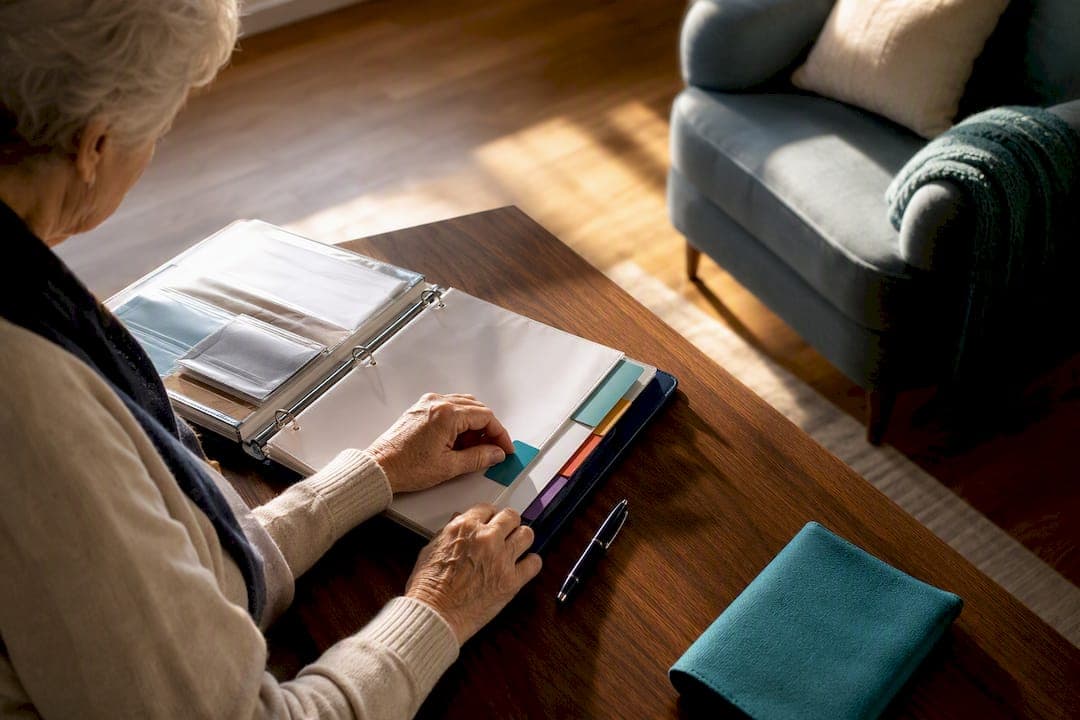
An emergency binder is an operating manual for someone else's life, not a filing cabinet for every document you own. The single most useful thing you can do today is build a one-page snapshot listing top contacts, medications, and where originals are kept, then save copies in two places. Everything else in this guide builds outward from that one page.
TL;DR:
- The emergency binder should prioritize a one-page snapshot of key contacts, medications, and document locations, with copies stored in two secure places.
- The physical emergency snapshot is best laminated and kept in an accessible location, while the deep archive should be stored securely in encrypted digital format.
- Review and update the binder quarterly, immediately after any health, legal, or financial changes, and inform trusted contacts about its location.
- Store the binder in a fireproof, water-resistant container, pair it with an encrypted digital backup, and keep an index card with essential details in your wallet.
- Building the binder in a time-boxed, four-pass process allows completion over a weekend, with a focus on core information first and detailed records second.
Table of Contents
- What Belongs in an Emergency Binder for Seniors
- Grab-and-Go Snapshot vs. the Deep Archive
- How to Build It This Weekend Without Getting Stuck
- Keeping It Safe Without Making It Useless
- How Often You Actually Need to Update It
- Who Needs to Know the Binder Exists
- Building a Binder When You're Planning Solo
- A Caregiving Moment That Changed How I Think About This
- When You Want Help Getting It Right
- Sources
- FAQ
What Belongs in an Emergency Binder for Seniors
Think of this less like a scrapbook and more like a set of tabs someone unfamiliar with your parent's life could flip through under stress and actually understand. That's the real test for every page you add.
Start with identity and legal documents. Keep photocopies of a driver's license or state ID, Social Security numbers (not the card itself), birth certificate, and advance directive or power of attorney, and write a clear note on where the originals are kept, since some institutions require the original document for legal effect. The National Institute on Aging's checklist is a solid reference for exactly which legal papers matter most.
For medical information, include a current medication list with name, dose, and purpose, along with every provider's name and phone number, the pharmacy, known allergies, and a one-page insurance summary.
Financial pages should name institutions and account types, not full numbers. List who pays which bills and how, plus contact information for an attorney or financial advisor.
Add a short home and property section: a copy of the deed or lease, insurance policy numbers, and a simple written inventory of anything valuable, alongside notes on daily care and routines covering sleep patterns, meal preferences, mobility aids, and pet care instructions.
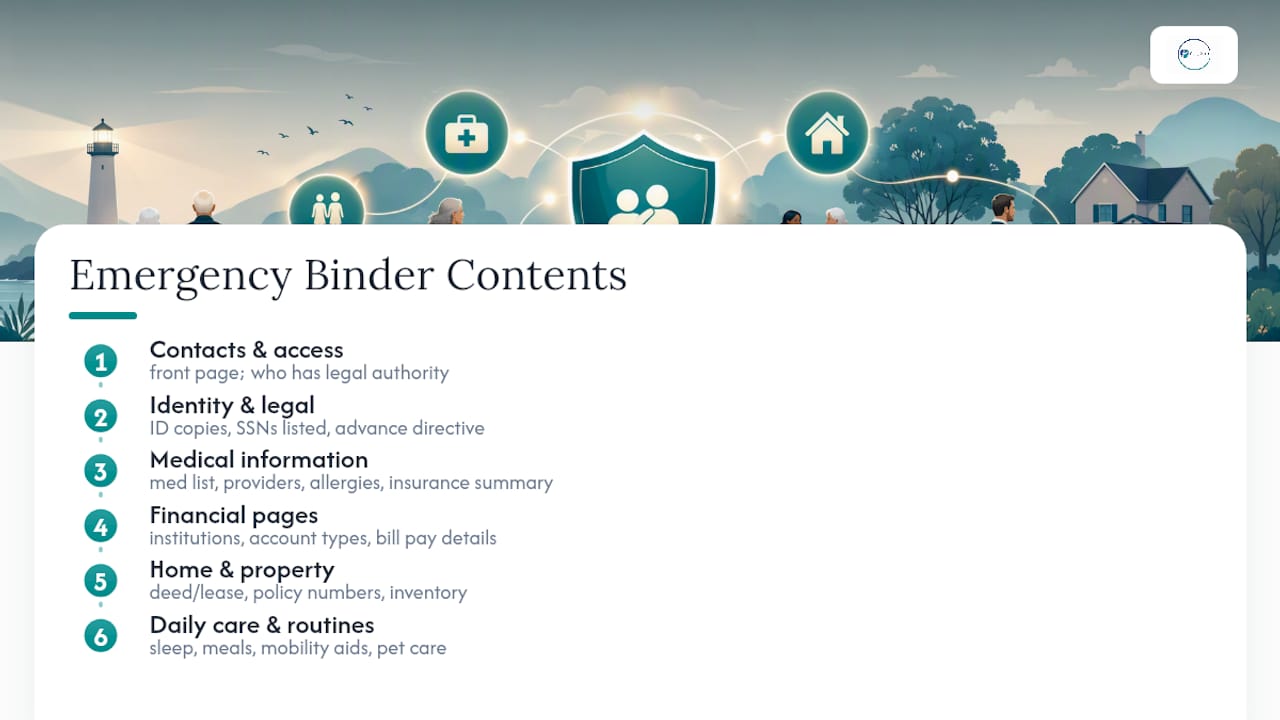
None of that matters if the contacts and access sheet is missing or buried on page twelve. This page belongs first, and it should clearly separate who has legal decision authority from who is simply informational.
One firm rule: never include actual Social Security cards, passwords, blank checks, or PINs. A family emergency binder guide from Avery recommends sheet protectors and clear dividers so nothing critical gets lost in the shuffle, and that same source treats the contact page as the binder's single most valuable item.
Grab-and-Go Snapshot vs. the Deep Archive
Not everything belongs in your back pocket during an evacuation, and not everything belongs in a drawer either. A two-tier system solves both problems at once, according to Granite's guide to family emergency binders.
- The grab-and-go snapshot fits one or two laminated pages: a photo ID, insurance card images, the current medication list, your top three contacts, and one line noting where full originals live.
- The deep archive holds everything else: full medical summaries, scanned policy pages, the home inventory, and financial records that aren't urgent in the first hour.
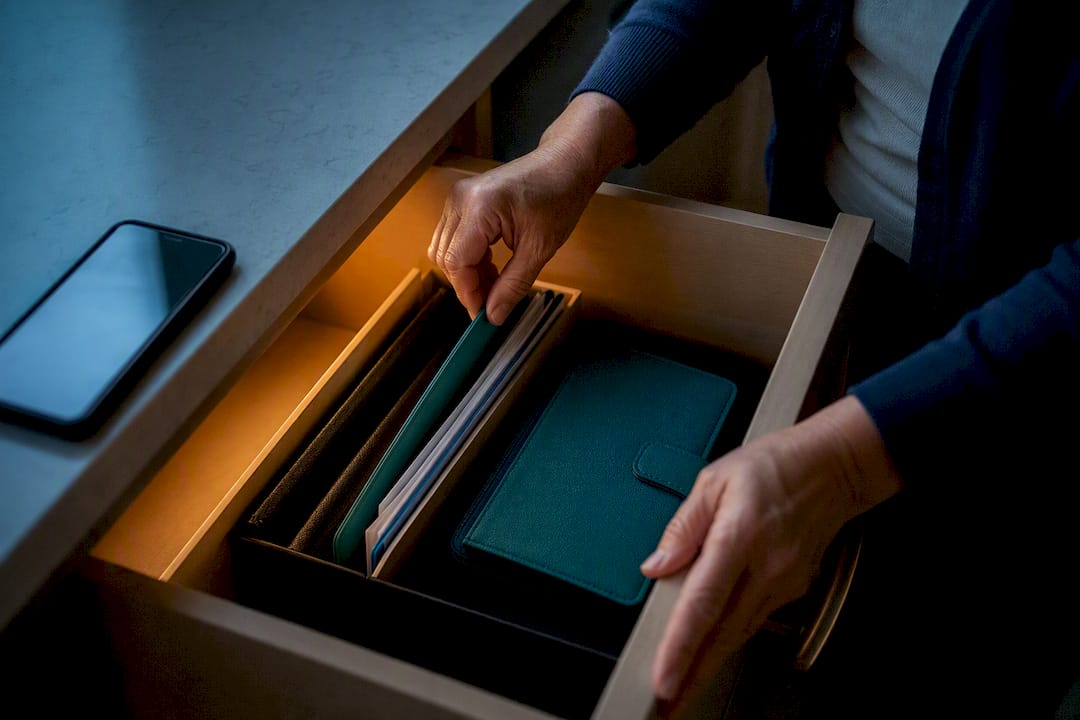
- Format each layer for its job. The snapshot works best laminated in a single pouch by the door or in a car glovebox. The archive works best as an encrypted cloud folder, with a printed note pointing to where the password manager entry lives, never the password itself.
How to Build It This Weekend Without Getting Stuck
Perfectionism is the reason most binders never get finished. A time-boxed, four-pass approach, adapted from the build-in-passes method described by Ardent Workshop, gets something usable done fast.
- Pass one, 20 minutes: write the front-page snapshot and list one trusted contact. Done beats perfect here.
- Pass two, one hour: gather medication details and provider names, then print or screenshot insurance cards.
- Pass three, one to two hours: add financial summaries, start a rough home inventory, and note where originals are stored.
- Pass four, 30 to 60 minutes: label a master index, store copies in two places, set a reminder for the next review, and tell one person exactly where the binder lives.
Keeping It Safe Without Making It Useless
A binder that's locked away too tightly fails the same way one left wide open does. It just fails quietly instead of loudly.
Physical safeguards matter first: store the binder in a fireproof, water-resistant container in a location a trusted person actually knows, and write the last review date on the laminated front page. As BinderTEK notes, the strongest setups pair that physical copy with an encrypted digital backup, not one or the other.
- Use a password manager for credentials, and note the access method in the binder rather than the password itself.
- Consider a legacy contact feature or a shared secure folder with one trusted person.
- Never print full account numbers, Social Security numbers, or blank checks anywhere in the binder.
- Reference originals by location instead of storing them loose in a folder that could go missing.
Pro Tip: Keep a single index card in your wallet with three words: "binder," a location, and one contact name. If something happens away from home, that card does the pointing for you.
How Often You Actually Need to Update It
A quarterly 20-minute review keeps the binder honest without turning it into a chore. Set a recurring reminder tied to a date you'll actually remember, since Granite's cadence guidance ties consistency directly to whether a binder stays useful under pressure.
Beyond the calendar, certain events should trigger an update immediately:
- A medication change or new diagnosis
- A hospital discharge
- A move, new insurance policy, or new financial account
- Any change to legal decision makers
Write the last reviewed date near the front, and name one backup person authorized to make updates if you're unavailable.
Who Needs to Know the Binder Exists
A binder nobody can find is just a very organized secret. Tell your primary backup, an out-of-area contact, and your healthcare proxy exactly where it lives, ranking them by how quickly each might need to act.
- Note clearly who has legal decision authority versus who is contacted for information only.
- Keep a short access note: "The binder is in [location]. [Name] has a key and knows the digital backup password location."
- Share professional caregivers or building staff only the pages they need, such as medication timing, never full financial pages.
- Review this contact list alongside your quarterly binder check, since people and roles change.
Coordinating that list with family members doesn't have to be awkward. Life Camp's guide to family emergency planning walks through practical ways to bring relatives into the loop without turning it into a heavy conversation.
Building a Binder When You're Planning Solo
If you're aging without a spouse or nearby adult children handling this for you, the binder carries more weight, and that's exactly why some specialized resources for solo agers exist around it. Our guide on what a solo aging binder actually needs walks through the adaptations that matter most when you're the one both creating and relying on this document.
Treat the whole project the same way we recommend to everyone: start with the first-hour snapshot, then build outward in passes rather than trying to finish it in one sitting.
A few starting points worth bookmarking:
- Our emergency contact plan guide covers wallet, fridge, and digital contact formats.
- If you haven't named a healthcare proxy yet, this guide walks through how to choose one along with a backup.
- Tying your review date to a memorable annual event, like a birthday, makes the quarterly habit far easier to keep.
A Caregiving Moment That Changed How I Think About This
I once sat with a woman going through her mother's kitchen drawers at 2 a.m., looking for an insurance card during a hospital transfer, phone wedged against her shoulder, hands shaking slightly from adrenaline and exhaustion. That scene is the entire reason the one-page snapshot exists.
It isn't about fear. It's about giving someone you love, or yourself, one calm document instead of a frantic drawer search. Fill out that first page this week. Tell one person where it lives. That's genuinely enough to start.
What struck me most in that kitchen wasn't the paperwork. It was how much lighter she looked once she found it, like she could finally breathe and just be present with her mother instead of hunting for a card. That's what this work actually protects: not just safety, but the ability to show up fully for the people and life you've built.
— Mike
When You Want Help Getting It Right
Building a binder alone is doable, but reviewing it with someone who knows what solo agers specifically need to plan for catches gaps you might not think to look for. That's the exact gap a Solo Aging Clarity Session fills: a focused 45-minute Zoom conversation where you walk through your binder, your contacts, and your next steps with someone who isn't guessing at your situation.
It's a good fit if you're aging without nearby family, if you've started a binder but aren't sure what's missing, or if you just want a second set of eyes before you call it finished. The session runs $97 one time, and many people leave with a clearer starter checklist than they had going in. If you've been meaning to finish this project for months, book a Solo Aging Clarity Session and bring your half-finished binder with you.
Sources
For legal document lists, the NIA's advance care planning checklist is the most authoritative form to start from. BinderTEK explains the reasoning behind pairing physical and digital backups, while Avery offers hands-on organizing tips like dividers and sheet protectors. Ardent Workshop and Granite both cover build strategy and long-term review cadence in more depth.
- Preparing for the unexpected with an emergency binder | BinderTEK
- Family emergency binder tips | Avery
- Getting your affairs in order: Checklist of documents to prepare for the future | National Institute on Aging (NIA)
- Family emergency binder: What to include before you need it | Ardent Workshop
- How to build a family emergency binder (2026 guide) · Granite
FAQ
How Do I Make an Emergency Binder?
Start with a one-page snapshot listing top contacts, medications, and where originals are kept, then build outward in passes covering medical, financial, and legal sections. The build-in-passes approach makes the project finishable in a single weekend instead of stalling for months.
What Is a Good Binder for Aging Parents?
The best format pairs a physical binder in a fireproof, water-resistant container with an encrypted digital backup, so both a person on scene and a remote family member can access what they need. BinderTEK recommends this dual approach specifically because paper alone can be lost or damaged.
What Should Be in an End-of-Life Binder?
Include advance directives, power of attorney documents, healthcare proxy information, and a note on where original legal papers are stored, following the NIA's advance care planning checklist. Add a prioritized contact sheet so whoever finds the binder knows who to call first.
Where Can I Find a Free Printable Emergency Binder Template?
Several of the sources referenced in this guide, including Avery and Ardent Workshop, offer printable layouts and section templates. Agingsolo's solo aging binder guide also walks through the specific adaptations solo agers need.
Should I Use a Binder or an App for This?
A physical binder works during power outages, dead phone batteries, and moments when a stranger needs to act fast without an app login. Most caregivers do best combining both, a lightweight paper snapshot for grab-and-go moments and an encrypted digital archive for deeper records.