
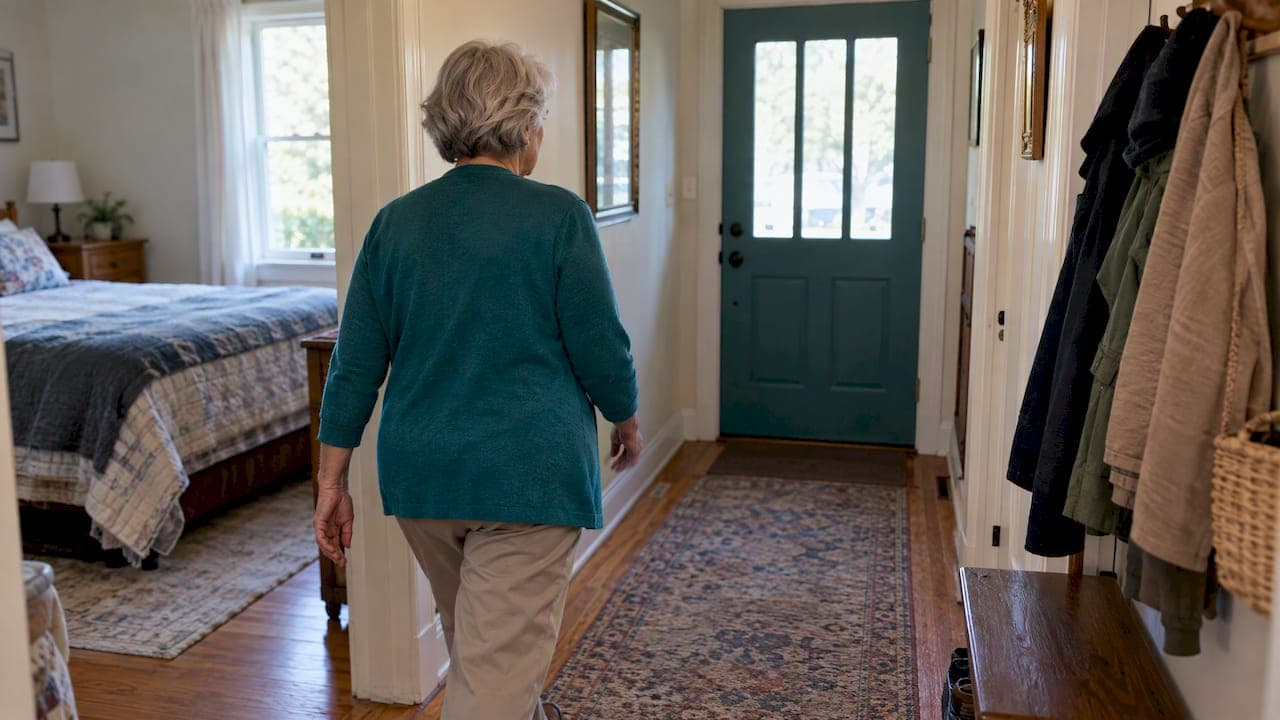
Design a simple escape plan around your senior's abilities, confirm the smoke alarms actually work, and run a gentle, senior-friendly drill at least twice a year, including one at night. Keep glasses, a phone, and hearing aids by the bed so they're never a scramble to find. We'll walk through how to build that plan, test it without stress, and adapt it to real bodies and real routines, plus a printable checklist from a solo aging resource.
TL;DR:
- Clear exit paths and functional doors and windows are essential, and walking the actual route in low light reveals practical obstacles.
- Alarms should be tested monthly and placed on every home level, with loud enough units and alternatives like bed shakers for hearing impairments.
- Running multiple practice drills annually, including at night, helps build confidence and reveals real hazards like slow wake-ups or narrow doorways.
- Support network outreach, such as giving neighbors a key and clear contact rules, significantly increases safety during actual emergencies.
- Tailoring plans for mobility, hearing, vision, or memory issues involves specific adjustments and practice with real aids, not just imagined scenarios.
Table of Contents
- How to build a senior-friendly escape plan
- Smoke alarms and getting ready for the night
- How to run a senior-friendly emergency drill
- Building a support network that actually shows up
- Adapting drills for mobility, hearing, vision, or memory changes
- Aging Solo's practical rehearsal checklist
- Communication aids for speech or hearing impairments
- What caregivers should actually do during a drill
- What a 2 AM alarm taught me about calm
- How an Aging Solo Clarity Session helps you tailor your plan
- FAQ
- Sources
How to build a senior-friendly escape plan
Start with a single sheet of paper. Draw the home's layout and mark two ways out of every room, a door and a window, a hallway and a second staircase, whatever actually exists. Then pick one outside meeting spot that's visible from the house: a mailbox, a specific tree, a neighbor's porch. Everyone should be able to picture it without thinking.
Before the plan is finished, walk the house and fix what's in the way.
- Clear exit paths of furniture, cords, and anything that could trip someone moving quickly in the dark.
- Check that doors and windows actually open easily, not just in theory.
- Move mobility aids, a cane or walker, to a spot that's reachable from the bed, not across the room.
Then test the plan against real life, not the ideal version of it. Walk the bedroom-to-exit route at night, with the lights off, the way it would actually happen. If a turn is too tight for a walker or a step is easy to miss in the dark, that's useful information now rather than during an actual fire.
Smoke alarms and getting ready for the night
Alarms only help if they're placed well, tested often, and loud enough to actually wake someone. The USFA's home fire escape guidance recommends alarms on every level of the home and in or near every sleeping area, tested monthly, with units older than 10 years replaced outright.
Night readiness matters just as much as the alarm itself.
- Keep a phone, glasses, and hearing aids within arm's reach of the bed, every single night, not just when a drill is planned.
- Run one night-time practice to see how long it actually takes to wake up, find glasses, and start moving. That number is often longer than anyone expects.
- For hearing loss, standard alarms may not be enough. Bed shakers, strobe lights, and amplified alarms are established alternatives worth discussing with a hearing specialist or the USFA's fire safety guidance for older adults, which specifically flags night drills as a way to reveal wake-up delays.
How to run a senior-friendly emergency drill
A drill isn't a test to pass. It's a rehearsal, done enough times that the body knows what to do before the mind has to think about it. The USFA points out that residents may have only moments to get out once an alarm sounds, with some modern homes allowing very little time for escape. That's the whole reason practice matters more than instinct alone.
- Trigger the alarm (or a stand-in sound) and start a timer the moment it goes off.
- Note how long it takes to begin moving. This "time to start" often reveals more than the walk itself.
- Move to the outside meeting place at a pace that matches the senior's actual ability, not a rushed version of it.
- Write down anything that slowed things down: a tight doorway, a dark hallway, a confusing turn.
- Repeat the drill focused only on that one trouble spot, rather than running the whole house again.
Keep the mood steady. Give each person a small, specific job, one person grabs medications, another calls for help, so nobody is trying to do everything at once. If a step turns out to be physically risky, stop and swap it for a guided walkthrough instead, talking through the motions without the actual rush. A scoping review on evacuation learning for seniors found that drills paired with training and repeated, low-pressure practice work better than one high-stress run, and recommends practicing at least once or twice a year.
Pro Tip: Run the first drill in daylight to build confidence, then add a night version once the daytime route feels familiar.
Building a support network that actually shows up
A plan only works if someone outside the house knows it exists. Recruit a neighbor or nearby friend and give them something concrete to do, not a vague promise to "check in some time."
- Give a trusted neighbor a spare key and a clear rule for when to use it, such as if a scheduled call goes unanswered for more than 30 minutes.
- Write a one-page emergency contact card for the fridge and the wallet, and save a digital copy in the phone. Our emergency contact plan guide walks through exactly what belongs on it.
- Ask the local fire department if they offer home safety visits, or look into whether a Fire Safe Seniors program operates nearby. The USFA's Fire Safe Seniors materials describe exactly this kind of home assessment and alarm installation support. Staying socially connected through local groups, like those highlighted in this Polk County senior activities guide, also tends to put more eyes and more willing helpers into the picture.
Adapting drills for mobility, hearing, vision, or memory changes
A drill that works for one body doesn't automatically work for another, so adjust before assuming the plan has failed.
- For mobility limits, check that hallways are wide enough for a walker or wheelchair, remove loose rugs, and practice the actual movement with the actual mobility aid rather than imagining it will go smoothly.
- For hearing or vision changes, use more than one cue: a light, a vibration, a spoken prompt. Break the drill into short segments and repeat them rather than running the whole sequence once and hoping it sticks.
- For memory changes, calm repetition beats a single thorough explanation. Assign one simple role and rehearse that role alone a few times before combining it with anything else.
When a full evacuation drill feels physically risky, bring in an occupational therapist or the local fire department for a home assessment instead of pushing through it alone.
Pro Tip: If a full walk-through causes real strain, a seated or guided talk-through of the same steps still builds the muscle memory that matters most.
Aging Solo's practical rehearsal checklist
A drill works best when it's written down somewhere simple to grab. Keep a short card near the bed with four things: bedside quick checks (phone, glasses, hearing aids, keys), grab-bag contents (meds, a copy of ID, a charger), a one-line neighbor script ("call me by 8 PM or call 911"), and a timing log with two blanks, time to start and time to reach the meeting place.

Two patterns show up constantly in real homes. A walker that clears the bedroom fine can snag on a narrower hallway doorway, something only a real walk-through reveals. And an alarm that sounds plenty loud in the kitchen can be nearly silent two closed doors away in the bedroom, which is exactly why a bed shaker or strobe alternative is worth testing before it's needed. Our living alone emergency planning guide has a fuller version of this checklist built for solo agers specifically.
Communication aids for speech or hearing impairments
If a senior has hearing loss, standard smoke alarms and shouted instructions during a drill may simply not register. Visual alarms with strobe lights and bed or pillow shakers, mentioned in the USFA's fire safety guidance, close that gap and are worth testing during a drill, not just buying and forgetting.

For speech impairments, a drill should include a backup way to call for help that doesn't rely on speaking clearly under stress. A pre-written text message ready to send with one tap, a medical alert pendant with a direct button, or a laminated card with the address and key facts held up to a neighbor all work. Practice using whichever tool is chosen during the drill itself, since the first time under real pressure is the worst time to learn an interface.
Hearing aids belong on the bedside quick-check list alongside glasses and keys, not just in a drawer for daytime use. If hearing aids aren't worn overnight, the night drill should specifically test how quickly they can be found and put in, since that delay is often the real bottleneck, not the walk to the door. Where hearing loss is significant, loop in an audiologist to confirm the chosen alarm alternative is actually loud or strong enough for that specific level of loss, rather than assuming one size fits all.
What caregivers should actually do during a drill
A caregiver's job during a drill is to support, not take over. Rushing in to do every step removes the chance for the senior to build the confidence that makes a real emergency less frightening.
Before the drill, a caregiver's role is mostly setup: confirming alarms work, checking that exit paths are clear, and agreeing in advance who calls for help and who grabs medications. During the drill, the caregiver times the steps, watches for genuine hazards like a loose rug or a stuck door, and stays quiet unless safety is actually at risk, letting the senior lead their own pace. Afterward, the caregiver's most useful job is writing down what slowed things down, a tight doorway, a confusing instruction, so the next drill can focus on fixing that one thing instead of repeating the whole routine.
If more than one caregiver or family member is involved, it helps to assign roles the same way the senior's own roles are assigned: one person is the primary timer and note-taker, another checks in by phone afterward. Clear, divided responsibility keeps a drill from turning into several people all trying to manage the same moment at once.
What a 2 AM alarm taught me about calm
A friend once described waking to her smoke detector at 2 AM, heart pounding, and realizing she'd rehearsed this exact moment. That's not a small thing. It's not fear that gets you moving well, it's familiarity.
Two small things help today: find your glasses and phone right now and set them where your hand would land in the dark, and pick one neighbor to call this week about a simple check-in arrangement. Preparation isn't the opposite of a full life. It's what lets you keep living one, fully, on your own terms.
— Mike
How an Aging Solo Clarity Session helps you tailor your plan
Building a drill that fits your actual home, your actual mobility, and your actual neighbors takes more than a checklist, and that's where a real conversation helps. We offer a clarity session that is a 45-minute Zoom call where we work through your specific routine, from doorway widths to who you'd call first, and leave you with practical templates and a neighbor script built around your life rather than a generic one.

It's an optional, paid step for solo agers who want a second set of eyes on their plan rather than guesswork. The session costs $97 one-off, and you can book your Solo Aging Clarity Session whenever you're ready to talk it through.
FAQ
What are some emergency preparedness strategies for senior citizens?
The core strategies are a simple escape map with two exits per room, working smoke alarms tested monthly, a bedside grab list of glasses, phone, and medications, and a practiced drill at least twice a year. Pairing this with a neighbor check-in arrangement, as described in the USFA's home fire escape guidance, closes the gap between having a plan on paper and actually using it.
What are some examples of emergency drills?
Common examples include a daytime fire escape drill, a night-time version that tests how quickly someone wakes and gathers bedside items, and a guided walkthrough for anyone who can't safely move fast. A scoping review on evacuation learning also recommends pairing any drill with short training sessions rather than running it cold.
What is the number one cause of fire in seniors' homes?
Cooking-related incidents are widely cited as a leading cause of home fires among older adults, often tied to distraction or stepping away from the stove. Whatever the cause, older adults face a notably higher risk of injury or death in home fires, which is part of why a practiced escape plan matters more with age, not less.
Is there a free tool to create an emergency floor plan?
A simple hand-drawn floor plan works fine. Mark two exits per room and one outside meeting place, following the approach outlined in the USFA's printable escape plan guidance, and our living alone emergency planning guide has a version built specifically for solo agers.
Sources
- Home Fire Escape Plans - USFA
- Current learning strategies in fire evacuation for seniors and people with disabilities in private seniors’ residences and long-term care homes: a scoping review - PMC