
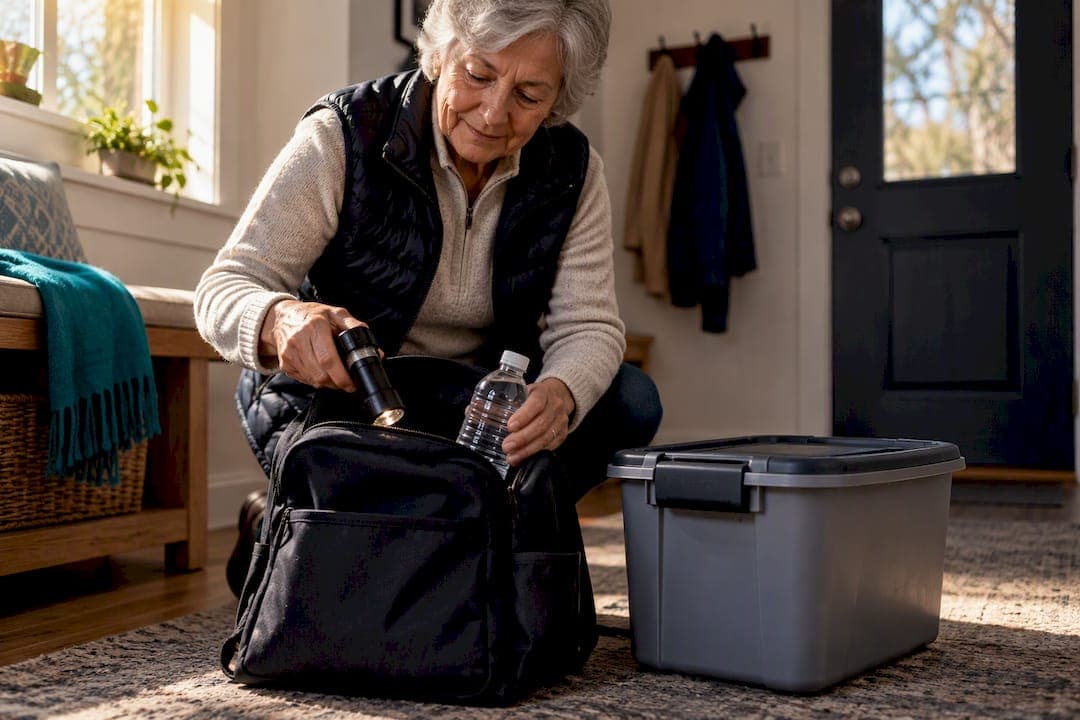
Write down one sentence right now: what would make you leave home, and who you'd call first. That's your trigger and your out-of-area contact, the two anchors of a usable evacuation plan. Add a go-bag with seven days of medication and a backup destination, and you have the core of what the National Institute on Aging and FEMA both recommend for older adults.
TL;DR:
- Older adults should have personalized evacuation triggers based on their mobility, medical equipment dependence, and power needs, not just weather reports.
- It is crucial to prepare two kits: a lightweight go-bag for immediate evacuees and a comprehensive shelter-in-place kit with essentials for days at home.
- Establish a support network with clearly assigned roles, and write down contact details on a magnet and wallet card to withstand disruptions to communication.
- Regularly rehearse evacuation procedures using multisensory methods and keep copies of important documents, prescriptions, and device manuals accessible outside the home.
- Review and update the evacuation plan annually or when major health or contact changes occur to ensure it remains tailored to current needs.
Table of Contents
- Start with an honest look at your own needs
- Decide now when you'll shelter and when you'll go
- Pack two kits, not one
- Build a support network you can count on
- Practice in a way that actually sticks
- Know where you're going before you need to
- How Aging Solo helps you personalize this plan
- Protecting your money before an emergency hits
- Legal paperwork that matters when you're evacuating
- A calm evening, one bag, one phone call
- Getting a second set of eyes on your plan
- Sources
- FAQ
Start with an honest look at your own needs
Before you plan a single route, take stock of what you actually depend on day to day. This isn't about dwelling on limits. It's about making sure your plan fits your real life instead of a generic template.
Ask yourself a few plain questions:
- Do you use a walker, wheelchair, oxygen concentrator, or other equipment that needs power or takes time to move?
- How many days of medication do you have on hand, and when is your next refill due?
- Do you have hearing, vision, or memory changes that affect how you'd receive an alert?
- Do you have a pet or service animal who needs food, carriers, or documentation?
- Could you cover a week of unexpected costs, and do you know where your insurance papers are?
Write the answers down once, on a single page: your medication list, your device models and power needs, your pharmacy and doctor's phone numbers, and your emergency contacts. Ready.gov's disaster preparedness guide for older adults frames this self-assessment as the foundation everything else builds on, and it's worth doing before you buy a single go-bag item. Aging Solo's Living Alone Emergency Planning guide walks through this same inventory in more depth if you want a companion worksheet.
Decide now when you'll shelter and when you'll go
The worst time to decide whether to evacuate is during the emergency itself. Set your triggers in advance, while you're calm and thinking clearly.
The National Institute on Aging notes that this decision should rest on your personal limits, not just the weather report. A mandatory evacuation order is one obvious trigger. So is losing power for more than 24 hours if you depend on an oxygen concentrator or other electric medical device. Once you know your triggers, the rest of the decision becomes simple.
- Pick a primary destination: a relative, friend, or accessible shelter within a reasonable drive.
- Pick a backup destination in a different direction, in case the first route is blocked.
- Confirm both locations accept pets if you have one.
- Call your clinic or home health provider to ask about their own evacuation protocol.
- Leave a copy of your route and destinations with a neighbor or your out-of-area contact.
Pro Tip: Print your route map in large text and tape a copy inside your go-bag. In a stressful moment, you don't want to be squinting at a phone screen.
Pack two kits, not one
Most evacuation advice assumes one bag does everything. For seniors, two kits work better: a lightweight bag you can grab and carry, and a fuller kit for staying put.
Your go-bag should stay light enough to lift without strain:
- Medications for several days, in a labeled pill organizer with a printed list of dosages
- Chargers and spare batteries for hearing aids, phones, and medical devices
- Copies of insurance cards, ID, and a medication list in a waterproof folder
- A change of comfortable clothing, water, and shelf-stable snacks
Your shelter-in-place kit covers a longer stretch: extra medical supplies, a refrigerator backup plan for insulin, toileting aids, and enough food and water for at least a few days at home. Keep a duplicate mini-kit in your car, since many evacuation delays happen when people can't reach their main kit in time, according to FEMA's evacuation support planning. Label every medication bottle clearly so a first responder or caregiver can act fast if you can't explain it yourself.
Build a support network you can count on
A plan on paper only works if real people know their part in it. Recruit a neighbor who can reach you quickly, an out-of-area contact who can coordinate calmly from a distance, and a friend with a vehicle if you don't drive.
Assign roles so nobody has to guess:
- A key-holder who can get into your home if you're not there
- A medication custodian who knows your refill schedule and pharmacy
- A pet caregiver, if you have an animal who needs transport or supplies
- A check-in caller who confirms you're safe once you've evacuated
Pro Tip: Write your network's names and numbers on a fridge magnet and a wallet card. Fires and floods knock out phones, but a magnet stays put. Aging Solo's Emergency Contact Plan guide has templates for exactly this.
Practice in a way that actually sticks
Standard fire drills move fast and assume everyone hears the alarm the same way. That doesn't work for many seniors, and a scoping review of evacuation training found that shorter, repeated, multisensory rehearsals hold up better than one long chaotic drill.
Run a real rehearsal once a year, with shorter refreshers every few months:
- Use simple, one-sentence cues repeated the same way each time, especially for someone with memory changes
- Add bed shakers or strobe lights for anyone who might not hear a smoke alarm
- Keep a large-print map or cue card by the door for the exact same route every time
- Practice with whoever will actually help you, not just alone
Know where you're going before you need to
Don't wait for the emergency to find out whether a shelter can handle your needs. Check with local emergency management or FEMA ahead of time about power, refrigeration, and medication support at nearby shelters.
- Ask directly whether a shelter accepts service animals and has backup power for medical equipment
- Look into accessible transportation or a community transportation network if you don't drive
- Get a written backup plan from your clinic, since providers may be unreachable during a wide disaster
- Keep copies of prescriptions and device manuals with your go-bag, not just at home
Ready.gov's caregivers preparedness guide recommends securing that written plan before you need it, not during. Aging Solo's health and emergency planning guide covers medical continuity in more detail if this feels like the piece you're missing.
How Aging Solo helps you personalize this plan
A general checklist gets you started, but your plan should reflect your actual home, your actual meds, and your actual people. Aging Solo's free guides, including the Living Alone Emergency Planning guide and the Emergency Pet Care Plan, are built to pair with the steps above rather than replace them.
- Use the pet care checklist if you have an animal who needs its own evacuation notes
- Store your finished plan somewhere two people can find it, not just in your own head
- Revisit the whole plan once a year, since medications, mobility, and contacts all change
Protecting your money before an emergency hits
Evacuations cost money fast: gas, a motel room, replacing spoiled medication. Keep a small amount of cash on hand, since ATMs and card readers can go down along with the power.
Know where your insurance policies live, both physically and digitally, including homeowners or renters coverage and any flood or wind riders specific to your area. Keep your insurance company's claims phone number in your go-bag folder, not just saved on a phone that might die. If you bank primarily online, write down your account numbers and your bank's disaster hotline somewhere secure but accessible, since branch closures during a regional emergency are common.
If a caregiver or trusted contact might need to pay a bill or access funds on your behalf while you're away from home, talk to your bank now about what that requires. Some banks allow a limited power of attorney specifically for account access, separate from broader legal authority. Setting this up calmly, before an emergency, avoids a frantic call from a shelter parking lot.

Legal paperwork that matters when you're evacuating
If you don't already have a health care power of attorney and an advance directive, an evacuation is a strong reason to get them in place. These documents let someone you trust make medical decisions if you can't, and they tell first responders and shelter staff what treatment you want if you're unable to say so yourself.
Keep signed copies in your go-bag folder, not just filed away at home or with an attorney. A digital copy stored with your out-of-area contact adds a backup if the physical copy is lost or left behind. If your named health care agent lives far away, make sure a local backup, like a neighbor or nearby friend, also knows where these documents are and what they say.
A calm evening, one bag, one phone call
Last fall I sat on my kitchen floor checking a go-bag I hadn't touched in a year. Half the batteries were dead. I called my neighbor, laughed about it, and we compared notes. That's what this really is: not fear, just two people looking out for each other.
Write your trigger down tonight. Then call your out-of-area contact and tell them where your plan lives.
— Mike
Getting a second set of eyes on your plan
Once you've written a first draft, a fresh perspective can catch gaps you won't see on your own. The Solo Aging Clarity Session is a focused 45-minute Zoom conversation where we review your evacuation plan together: your triggers, your destinations, your support network, and your go-bag list.
It's practical, not clinical, and built around your actual situation rather than a generic template. You can book a Solo Aging Clarity Session whenever you're ready to talk it through; current prices are on the pricing page.
Sources
- Disaster Preparedness and Recovery for Older Adults | National Institute on Aging
- Ready
- Current learning strategies in fire evacuation for seniors and people with disabilities in private seniors’ residences and long-term care homes: a scoping review
FAQ
What are the 5 P's of evacuation?
The 5 P's are a quick packing reminder: People, Pets, Prescriptions, Papers, and Personal needs. It's a simple way to check you haven't forgotten a category under stress, rather than a complete plan on its own.
How do I write up an evacuation plan?
Start with a self-assessment of your mobility, medical, and communication needs, then set a clear trigger for when you'll leave. Add a primary and backup destination, a packed go-bag, and a named support network, and write the whole thing on one page you can find quickly.
What are the 7 requirements of an emergency plan?
Definitions vary, but a practical version for seniors covers a needs assessment, clear triggers, chosen destinations, a go-bag and shelter-in-place kit, a support network with assigned roles, an accessible communication method, and a plan for continuity of medical care.
Do older adults need to prepare for evacuation the same way as everyone else?
The core steps are similar, but seniors often need extra lead time, medical continuity planning, and accessible alert methods that standard advice skips. The National Institute on Aging specifically recommends building triggers and alerts around personal limits like device dependence or mobility.
How often should I update my evacuation plan?
Review your plan at least once a year, and sooner if your medications, mobility, or support network changes. A plan built around who could help you last year isn't reliable if that person has moved or your needs have shifted.