
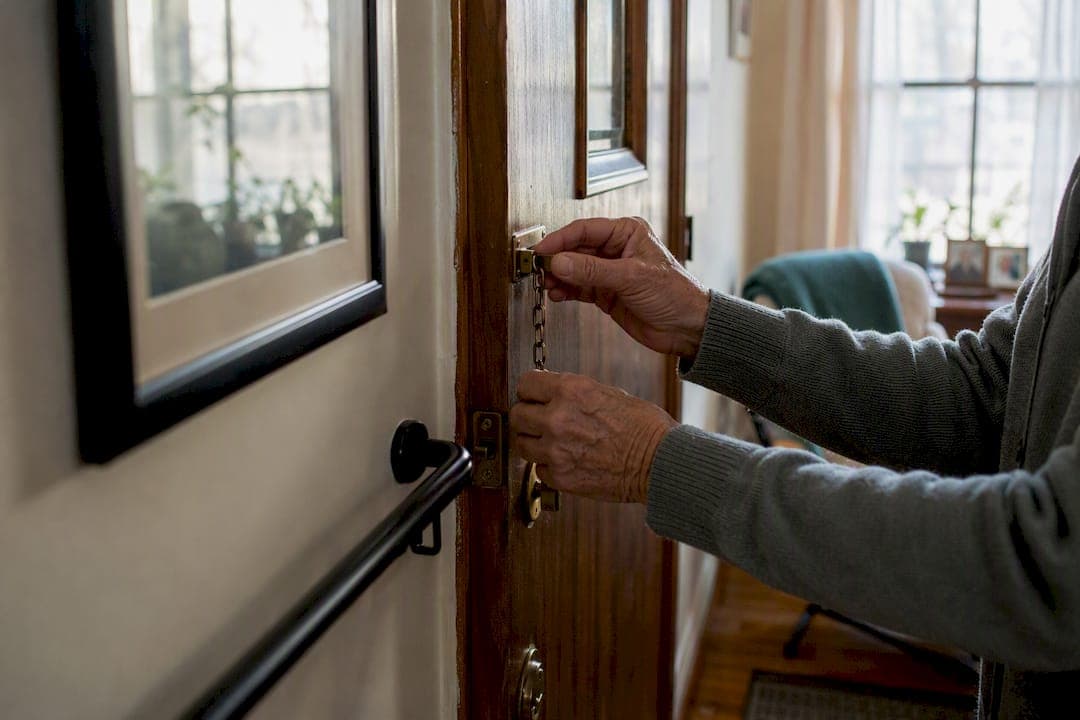
Three things protect your independence more than anything else: plan ahead, speak up clearly, and protect your final decisions. That's it. That's the whole framework behind independent senior boundaries best practices, and everything else in this article just fills in the details.
Here's where to start today:
- Write down one boundary you've been avoiding (a visit that's too long, a "helpful" family member who overreaches).
- Practice saying it out loud in one clear sentence before you say it to the person.
- Pick one room in your home to safety-check this week.
Pro Tip: Say your boundary out loud to yourself first, in the shower or the car. Awkward rehearsal beats a stammered confrontation.
Key Takeaways
Independent senior boundaries best practices work when you plan before a crisis, speak in clear I-statements, and back your words with real home-safety changes.
| Point | Details |
|---|---|
| Plan before you need to | Decide your non-negotiables and draft boundary language before a crisis forces the conversation. |
| Use I-statements | Clear, calm phrasing like "I need 48 hours' notice" reduces conflict and confusion. |
| Reframe help as strategy | Accepting targeted support can extend independence rather than end it. |
| Fix the home, not just the words | Grab bars, lighting, and reachable storage remove the safety arguments others use against you. |
| Get a personalized plan | Agingsolo's clarity session and free checklists turn these boundaries into a documented plan. |
Table of Contents
- What Healthy Boundaries Look Like for Independent Seniors
- Why Boundaries Protect Your Independence and Peace of Mind
- Common Situations Where Your Boundaries Get Tested
- Best Practices to Set and Keep Boundaries, Step by Step
- When to Adjust Your Boundaries as Life Changes
- How to Handle Pushback From Family and Caregivers
- Room-by-Room Safety Fixes That Support Your Independence
- One Boundary, One Conversation, One Win
- How Agingsolo Helps You Put These Boundaries Into Practice
- Sources
- FAQ
What Healthy Boundaries Look Like for Independent Seniors
A boundary is simply a clear line around what you will and won't accept, communicated before you're pushed past your limit. For older adults living alone or semi-independently, boundaries usually fall into five buckets:
- Physical space: who comes into your home, and when, without asking.
- Daily routines: your schedule, sleep, meals, and habits staying yours to set.
- Financial limits: how much you lend, give, or discuss with family or "advisors."
- Medical decisions: who's in the room during appointments, and who gets the final say.
- Privacy: what you share about your health, finances, or plans, and with whom.
There's a real difference between setting a boundary and refusing help you actually need. Declining an unannounced Sunday drop-in is a boundary. Refusing a grab bar after two near-falls in the shower isn't independence. It's risk dressed up as pride.
Why Boundaries Protect Your Independence and Peace of Mind
Boundaries aren't about keeping people out. They're about keeping your decision-making in your own hands. When you set them clearly, you reduce the friction that turns family concern into conflict, and you lower your own stress in the process.
Person-centered autonomy research frames this well: accepting the right kind of help, at the right time, is a strategy for staying independent longer, not a surrender of it. The PMC research on person-centered autonomy describes this as delegating energy-draining tasks so you can protect the activities that matter most to you.
- Clear boundaries reduce caregiver burnout and family friction before they boil over.
- Regular strength and balance activity, recommended by the CDC, supports the mobility that makes independence sustainable in the first place.
Statistic callout: Older adults following evidence-based practices, including home-safety fixes and medication reviews, see measurably better odds of living independently, according to AJMC's review of independent-living research.
Common Situations Where Your Boundaries Get Tested
Boundaries rarely get challenged in dramatic moments. They erode in small, everyday ones.
- An adult child insists on managing your finances "just to be safe" after one late bill payment.
- A neighbor lets themselves in with a spare key you gave them years ago, for emergencies only.
- A health scare turns into a family group chat deciding your living situation without you.
- A relative asks for a loan, framed as a one-time thing that becomes a pattern.
- A doctor addresses your adult child in the exam room instead of you.
Each of these carries an emotional undertow: guilt for saying no, fear that pushing back will cost you support later, or the practical reality that mobility or memory changes make some pushback harder to resist. None of that means you're wrong to hold the line. It means you need a plan before the moment arrives.
Best Practices to Set and Keep Boundaries, Step by Step
The sequence is simple: plan, communicate, enforce, review. The hard part is doing each step deliberately instead of reacting in the moment.
- Identify your non-negotiables. Walk through your home and your calendar. Where do you need control, and where could you actually use support? The Safety-Autonomy Grid is a useful mental model here: map each activity by safety risk and how much it matters to your independence, then decide where to hold firm.
- Draft your language before you need it. Write two or three sentences per boundary, using I-statements. "I need 48 hours' notice before visits" lands better than "You can't just show up."
- Practice active listening in return. A boundary conversation isn't a lecture. Let the other person respond, then restate your position calmly instead of escalating.
- Deliver it early, not mid-crisis. The National Institute on Aging notes that planning ahead, before you need help, consistently produces better outcomes than deciding under pressure.
- Enforce it consistently. Boundaries only work if they're kept the third time as firmly as the first.
Sample scripts that actually work:
- "I appreciate you checking in. I've got this handled, and I'll ask if I need something."
- "I'm not comfortable discussing my finances over the phone. Let's talk in person if you have concerns."
- "I know you're worried. I've made my decision about the surgery, and I need you to support it, not relitigate it."
Roleplay it once with a friend before the real conversation. It sounds strange until you notice how much smoother the real version goes.
Pro Tip: If pushback comes fast and hard, buy time with one line: "Let me think about that and get back to you tomorrow." A pause deflates most emotional pressure.
For repeat offenders, written agreements help. A simple note, "Visits by appointment only," posted where everyone sees it, removes the ambiguity that lets boundaries get "forgotten."
When to Adjust Your Boundaries as Life Changes
Boundaries aren't permanent contracts. They're living decisions you revisit as your circumstances shift.

Build in review checkpoints: every quarter, and immediately after any fall, hospital stay, or new diagnosis. Ask yourself honestly whether last year's boundary still fits this year's reality.
Watch for these signs that it's time to loosen a boundary and accept more support:
- You've had more than one near-fall or fall in the past six months.
- Medication management has become confusing or inconsistent.
- Meal prep, laundry, or bathing now takes visibly longer or feels riskier.
- You're isolating more, and the isolation itself is affecting your mood.
Pair that review with a basic safety-first home check. Small, proactive fixes let you keep more boundaries intact for longer, because they reduce the actual risk that justifies outside intervention in the first place.
How to Handle Pushback From Family and Caregivers
Respond to pushback the same way every time: state the fact calmly, then restate the boundary. Don't argue the merits again once you've made a decision.
Useful phrases for specific situations:
- Visitation: "I love seeing you. Let's plan visits so I can prepare, rather than drop-ins."
- Unsolicited help: "I'll let you know if I need a hand with that."
- Money requests: "I've set a limit on what I lend, and I'm not able to go past it."
Watch for red flags that go beyond normal concern:
- Repeated attempts to access your accounts or paperwork "for convenience."
- Guilt-tripping tied to your health decisions ("If you loved us, you'd move closer.")
- Isolating you from other friends or advisors who might disagree with them.
If a boundary gets violated more than once, escalate deliberately: restate it in writing, set a real consequence (shorter visits, no more spare key), and bring in a third party, an elder-law attorney, a geriatric care manager, or a trusted friend, if the pattern continues.
Room-by-Room Safety Fixes That Support Your Independence
Small physical changes let you hold onto more boundaries, because they remove the safety arguments people use to push past them. The AJMC review of evidence-based independent-living practices points to home-safety upgrades as one of the highest-impact, lowest-effort steps available.
- Entry: better lighting, a lever-style door handle, no loose mats near the threshold.
- Kitchen: frequently used items moved to waist-height shelves, a stable step stool nearby.
- Bathroom: grab bars near the tub and toilet, a non-slip mat, a raised toilet seat if needed.
- Bedroom: a lamp within reach of the bed, clear pathways, a phone or alert device on the nightstand.
- Stairs: secure handrails on both sides, brighter bulbs, no clutter on the treads.
Vision and hearing checkups every one to three years also belong on this list. AJMC's research links regular screenings to fewer falls and less social isolation, though Medicare coverage for these checks varies by plan.
| Fix | Why it matters |
|---|---|
| Grab bars in the bathroom | Reduces fall risk during the highest-risk daily task. |
| Better lighting at entry and stairs | Cuts nighttime fall risk at minimal cost. |
| Reachable kitchen storage | Removes the need for someone else to fetch daily items. |
| Medication review with a pharmacist | Helps reduce medication-related risks that can affect health and independence. |
One Boundary, One Conversation, One Win
A reader once put off telling her son to stop dropping by unannounced, worried it would seem ungrateful. She finally said, "I love our visits, but I need a text first, so I can be ready." He agreed instantly. No fight, no guilt trip, just relief on both sides.
Two lessons stuck: the anticipated conflict was worse than the real one, and clarity, not confrontation, is what actually changes behavior.
How Agingsolo Helps You Put These Boundaries Into Practice
Agingsolo turns the boundary work in this article into a concrete plan instead of a list of good intentions. Where most advice stops at "communicate clearly," Agingsolo gives you the checklists and the room-by-room framework to back that language up with real safety changes.

Start with the free Aging in Place guide, which walks through the same safety-first planning covered here, room by room, so your boundaries hold up under real scrutiny from family. If you want personalized help sorting out which boundaries to hold firm and which supports actually strengthen your independence, book a 45-minute Solo Aging Clarity Session. You'll walk away with a written plan covering home safety, communication scripts, and a caregiver plan, if you want one, tailored to your actual living situation. Download the checklist first, or go ahead and book your clarity session if you're ready to move faster.
Sources
- Aging in Place: Growing Older at Home | National Institute on Aging
- 5 Evidence-Based Practices to Help Older Adults Live Independently | AJMC
- Independent living with home care assistance: Balancing autonomy and support - Harvard Health
- PMC article on autonomy (person-centered autonomy) | PMC
- Physical activity guidelines for older adults | CDC
FAQ
What Are the Four C's of Setting Healthy Boundaries?
Definitions vary, but a common version centers on being clear, consistent, calm, and confident when stating a limit, so the boundary doesn't shift depending on who's pushing back.
Should a 70-Year-Old Live Alone?
It depends entirely on individual health, mobility, and support needs rather than age alone; many older adults live safely and independently with the right home-safety fixes and a support network in place.
What Is the Golden Rule of Boundaries?
State your limit clearly before you're upset, and enforce it consistently, since a boundary that's only sometimes held teaches others it's negotiable.
What Are Five Examples of Healthy Boundaries for Seniors?
Requiring advance notice for visits, setting a firm cap on money you lend, keeping your own medical decisions final, limiting who has home access, and deciding what health information you share and with whom.
How Do I Talk to My Doctor About Keeping My Independence?
Ask directly to be addressed first in appointments, bring written questions, and state your care preferences plainly. The Harvard Health guidance on balancing autonomy and support recommends choosing providers and caregivers who respect your input from the start.