
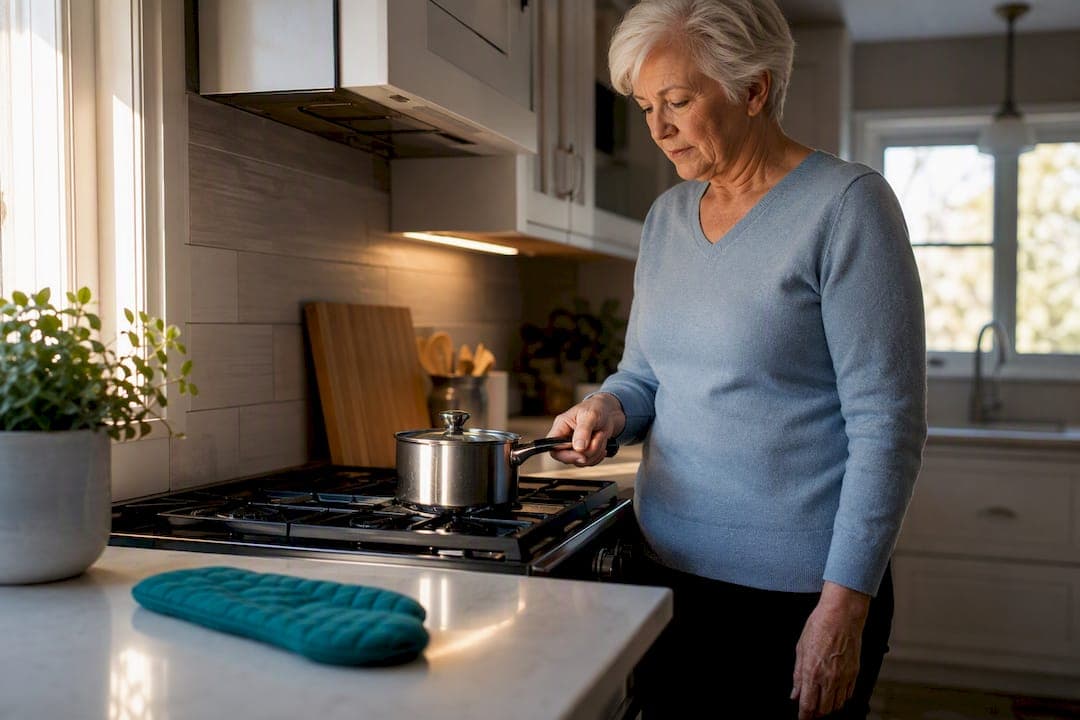
Make your kitchen safer starting today by staying present while you cook, moving your daily-use items to waist-to-shoulder height, and clearing away anything you could trip over. Check that your smoke alarms work and keep a kitchen-rated fire extinguisher within arm's reach of the stove. Those few moves handle the biggest risks. The rest of this guide walks through fire response, fall prevention, smart organizing, and food safety so you can keep cooking with confidence.
TL;DR:
- Most kitchen fires are caused by unattended cooking, so never leave pots or grills unattended and always turn pot handles inward.
- Keep walkways clear of loose rugs, cords, and clutter, and store frequently used items between waist and shoulder height to prevent falls.
- Regularly test smoke detectors and keep a fire extinguisher within arm's reach of the stove to ensure quick response during emergencies.
- Use appliances with safety features like auto-shutoff kettles and induction cooktops to reduce risks of burns and accidental activation.
- Follow food safety guidelines by cooking meats to proper temperatures and discarding leftovers after four days to prevent foodborne illness.
Table of Contents
- Everyday Kitchen Safety Habits for Seniors
- Fire and Burn Prevention in the Kitchen
- Preventing Slips and Falls in the Kitchen
- Organizing and Accessibility Upgrades That Preserve Independence
- Appliances and Tools That Lower Everyday Risk
- Food Safety Rules Every Solo Ager Should Know
- What to Do If a Pan or Oven Fire Starts
- Cooking Alone Doesn't Mean Cooking Cautiously
- Get a Personalized Kitchen Safety Plan
- Sources
- FAQ
Everyday Kitchen Safety Habits for Seniors
Most kitchen accidents trace back to a handful of small, fixable habits, not bad luck. Cooking safely at home is less about buying new gadgets and more about building a few reliable routines.
- Set a loud, physical timer every time something is on the stove or in the oven, and keep it (or your phone) within reach, not across the room.
- Never leave frying, grilling, or broiling unattended, even to answer the door.
- Wipe up spills the moment they happen, and remove or anchor throw rugs with non-slip backing.
- Add under-cabinet task lighting and swap in brighter bulbs. Matte counter surfaces cut glare better than glossy ones.
- Wear fitted sleeves instead of loose robes near burners, and keep a clear path when carrying anything hot.
Pro Tip: Keep a wearable alert button or your phone in an apron pocket while cooking, not on the counter across the room. If something goes wrong, the seconds you save reaching it matter more than you'd think.
Fire and Burn Prevention in the Kitchen
Cooking causes roughly 47% of all home fires, and unattended cooking is the biggest single factor behind them. That one statistic explains why "stay in the kitchen" is the first rule in almost every fire-safety guide, including FEMA's.
A few habits shrink that risk fast:
- Cook on back burners when you can, and always turn pot handles inward so they can't be bumped or grabbed by a sleeve.
- Keep dish towels, oven mitts, and paper towels away from the stovetop, and clean grease buildup off burners and hoods regularly.
- Test smoke detectors monthly and replace batteries on a schedule you won't forget, like the start of daylight saving time.
- Set your water heater to 120°F to lower scald risk, use long oven mitts, and keep lids nearby to block splatter.
Skip cooking altogether when you're drowsy, taking medication that affects alertness, or after alcohol. Older adults face higher risk of fire-related death and burn injury, and a cold sandwich or a meal-delivery order is a smarter call than pushing through fatigue at the stove.
Preventing Slips and Falls in the Kitchen
Falls are a leading cause of injury for adults over 65, and the CDC's fall-prevention research points to the same fixes again and again: clear paths, secure footing, and less reaching.
- Remove loose rugs entirely, or secure mats with non-slip backing, and keep cords and clutter off walkways and thresholds.
- Store everyday items between waist and shoulder height so you never need a step stool.
- Use pull-out shelves or a lazy Susan for anything stored deep in a cabinet.
- Add stable seating for tasks you can do sitting down, like chopping vegetables or peeling potatoes.
- Keep a reacher or grabber tool handy for the rare item that's still out of easy range.
Organizing and Accessibility Upgrades That Preserve Independence
A kitchen that supports your routines, instead of demanding you remember and reach around them, is the real goal here. AARP's accessible-kitchen guidance backs up what most solo agers figure out on their own: small organizing changes protect independence better than any single piece of equipment.
- Declutter the pantry first. Date and label leftovers, and donate cookware you haven't touched in a year.
- Use clear bins and color-coded labels, especially for anything tied to a specific diet or medication.
- Choose large-print labels if fine print has gotten harder to read at a glance.
- Add motion-sensor lighting under cabinets and near the stove, and pick matte finishes over glossy ones to cut glare.
- Swap round knobs for lever faucets and D-pull cabinet handles where your budget allows.
Pro Tip: Start with one drawer and one shelf, not the whole kitchen at once. Momentum matters more than speed, and you'll actually finish the project.
Appliances and Tools That Lower Everyday Risk
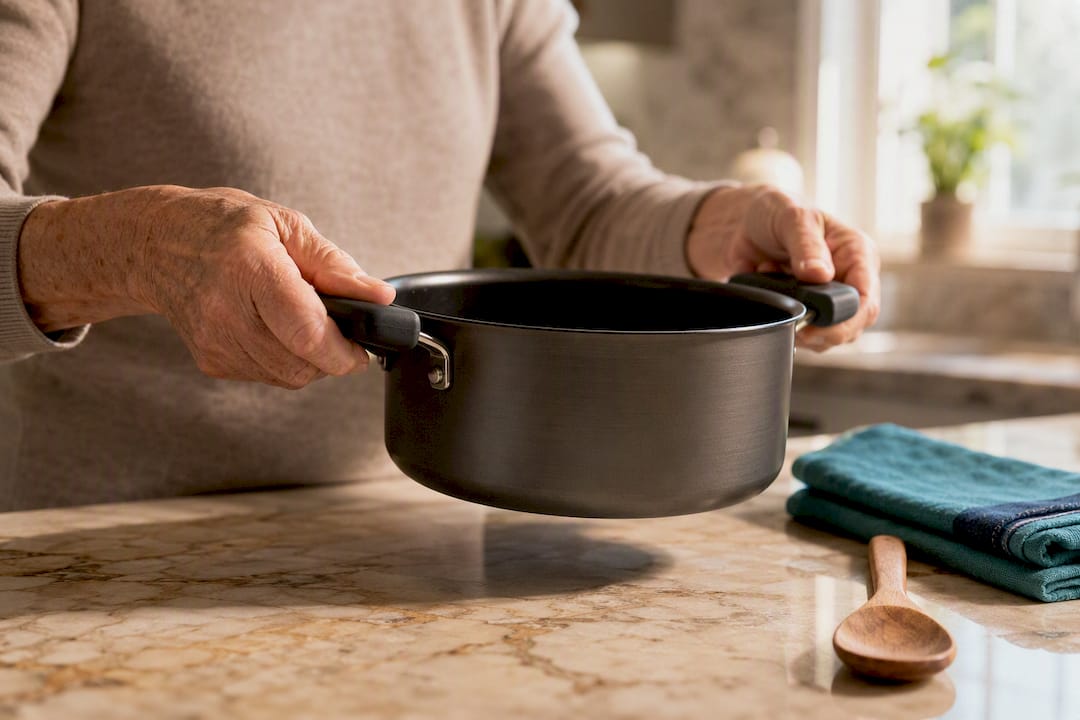
The right appliance does more for kitchen safety than a shelf full of gadgets. Induction cooktops heat the pan, not the surface around it, which cuts burn risk if you brush against it. Countertop electric kettles with auto-shutoff remove the guessing game of whether you turned off the burner.
A few add-ons are worth considering if memory lapses or dexterity are a growing concern:
- Stove knob covers prevent accidental bumps from turning on a burner.
- Stove shut-off devices and smoke-activated shutoffs cut power automatically, though they add cost and occasionally need professional installation.
- A reacher/grabber, lightweight cookware with ergonomic grips, cut-resistant gloves, and a loud audible timer cover most daily needs without any learning curve.
Food Safety Rules Every Solo Ager Should Know
Foodborne illness hits older immune systems harder, which makes a few USDA/FSIS temperature guidelines worth memorizing rather than guessing at.
- Cook poultry, ground meat, and fish to safe internal temperatures as recommended by USDA guidelines. A $10 probe thermometer removes the guesswork entirely.
- Reheat leftovers to 165°F before eating.
- Thaw meat in the refrigerator whenever possible. Cold-water thawing is an acceptable backup; microwave thawing works only if you cook the food immediately after.
- Label leftovers with the date they were made, and discard anything past four days in the fridge.
If you're cooking for one and want to cut food waste along with risk, meal planning for one person built around smaller batches makes both the fridge and the stove less of a hazard.
What to Do If a Pan or Oven Fire Starts
- Pan fire: Slide a lid over the pan, turn off the burner, and leave the lid on until it cools completely. Never carry a flaming pan or pour water on a grease fire.
- Oven or microwave fire: Keep the door closed and turn the appliance off at the source. The lack of oxygen usually smothers it within a minute.
- If flames spread beyond the pan: Use a kitchen-rated extinguisher only if you're trained and the fire is still small. Otherwise, leave immediately and call 911 from outside.
- Burns: Cool the area with lukewarm running water for several minutes, cover loosely, and seek medical care for anything deeper than a mild burn.
A fire extinguisher only helps if you can reach it in under ten seconds and remember how to use it under stress. Practice the motion once, calmly, so your hands know what to do before you ever need them.
Build an escape route that matches your actual mobility today, not the mobility you had ten years ago, and pick a meeting spot outside. A practical emergency plan gives that instinct a real structure to lean on.
Cooking Alone Doesn't Mean Cooking Cautiously
I think about the woman who told me she makes tea the exact same way every morning, down to which mug she reaches for. That kind of small, steady ritual is its own quiet proof of a life still fully hers. Move that mug to a shelf you can reach without stretching, set a timer that actually startles you, and keep doing it. Confidence in your own kitchen isn't something you plan for. It's something you practice, one ordinary morning at a time.
— Mike
Get a Personalized Kitchen Safety Plan
Agingsolo turns general safety advice into a plan built around your actual kitchen, your actual routines, and your actual concerns, not a generic checklist written for someone else's home. The 2026 planning guide walks through the same organizing and fire-prevention principles covered here, adapted to your specific layout.

If you want more than a guide, the 45-minute clarity session pairs you with someone who will walk through your kitchen setup, flag what's genuinely worth fixing first, and skip what isn't. It's built for solo agers who want a short action plan, not another binder to file away. Book a session or start with the planning guide to see what a tailored plan actually looks like for your home.
Sources
- Fire Safety for Older Adults (USFA / FEMA)
- CDC falls data and research
- Safe Temperature Chart (USDA/FSIS)
- First aid: Burns - Mayo Clinic
- How to create an accessible, organized kitchen (AARP)
FAQ
How do I make a kitchen safe for an elderly person?
Focus on three things: stay present while cooking, remove trip hazards like loose rugs, and move everyday items to waist-to-shoulder height so reaching and climbing aren't part of the routine.
What are the five most important kitchen safety rules?
Never leave cooking unattended, keep pot handles turned inward, test smoke alarms monthly, keep a fire extinguisher within reach, and clear walkways of cords, clutter, and loose rugs.
Should people over 70 eat bananas?
Yes. Bananas are a safe, easy-to-digest source of potassium and fiber for most older adults, and there's no general medical reason to avoid them unless a doctor has advised otherwise for a specific condition like kidney disease.
How often should people in their 80s shower?
Most guidance suggests two to three times a week is enough to stay clean without over-drying skin, though daily washing of the face, hands, and underarms is fine in between; personal comfort and any skin conditions should guide the final call.
What's the safest way to thaw meat at home?
Refrigerator thawing is the safest method according to USDA food safety guidance, with cold-water thawing as an acceptable backup when you're short on time.