
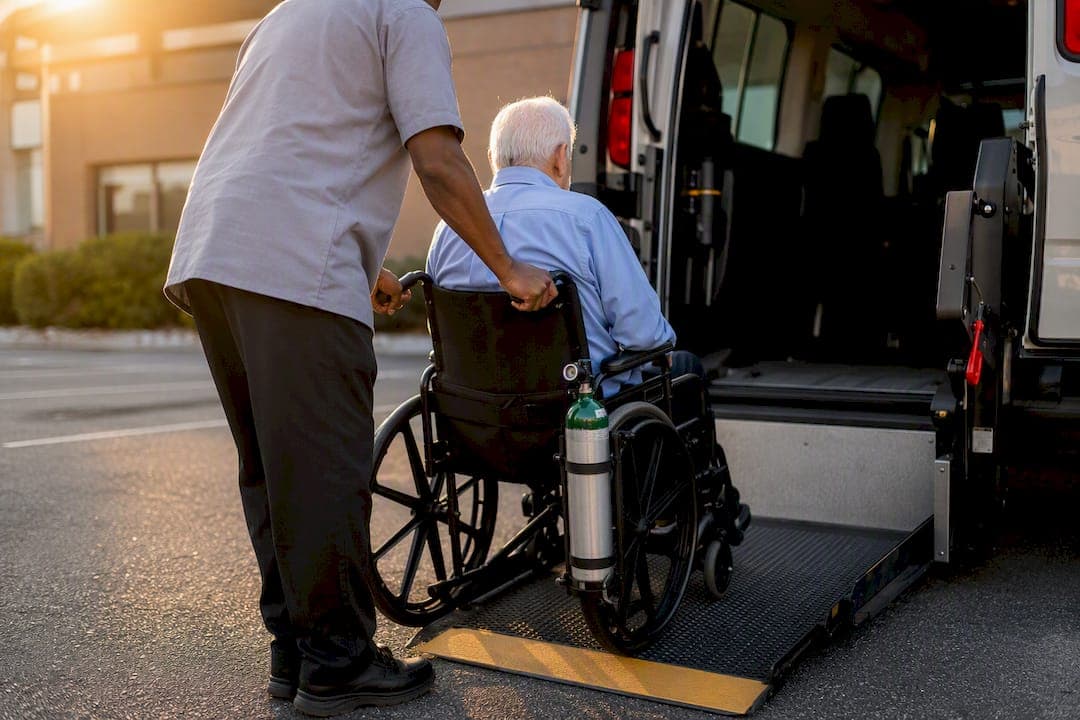
Non-emergency medical transportation is the Medicaid-covered service that gets people who can't drive or use public transit to covered medical care. Most state Medicaid programs are required to provide it for eligible enrollees who have no other way to reach a doctor's visit, dialysis session, or pharmacy pickup. If you're wondering where to start, call your state's Medicaid transportation unit or ask your provider's office to submit an authorization request today.
TL;DR:
- Most Medicaid programs offer free, scheduled rides for eligible enrollees who lack other transportation options for covered medical services, but coverage models vary widely by state.
- Access typically requires prior authorization, documentation of the lack of alternatives, and booking several days in advance, especially for routine trips.
- Transportation is provided through different models, including third-party brokers, managed care plans, or direct public transit partnerships, with shared rides being common.
- Vehicles range from standard sedans to wheelchair-accessible vans and stretcher vans, often sharing rides with multiple patients and requiring extra time for pickups and drop-offs.
- Most trips are fully covered, but individuals need to verify their specific state's procedures, and building a backup system of contacts and options improves appointment reliability.
Table of Contents
- What Is Non-Emergency Medical Transportation?
- Medicaid Coverage: Who Qualifies and How States Differ
- How Rides Get Scheduled: Brokers, Plans, and In-House Programs
- Vehicle Types and Accessibility Options
- Requesting a Ride: Forms, Timelines, and What to Expect
- Federal Programs That Fund and Guide NEMT
- What to Watch For: Costs, Limits, and Fraud
- Building a Transportation Network That Doesn't Depend on One Ride
- Where to Verify the Rules for Your State
- Non-Emergency Medical Transportation: What Actually Matters
- Sources
- FAQ
What Is Non-Emergency Medical Transportation?
Non-emergency medical transportation, often shortened to NEMT, covers rides to medical appointments for people who don't need urgent, life-threatening care but also can't safely get there on their own. Think dialysis three times a week, a chemotherapy infusion, a follow-up with a cardiologist, or a routine checkup. It's a scheduled ride, arranged in advance, using a car, van, or wheelchair-accessible vehicle rather than a 911 response.
That distinction matters because NEMT and ambulance transport sit in completely different regulatory categories. Ambulance service responds to emergencies, staffs vehicles with EMTs or paramedics, and bills under a different set of Medicaid and Medicare rules entirely. NEMT drivers aren't clinicians. They're trained to help someone transfer from a wheelchair into a van or offer an arm for a shaky walk to the door, but they're not there to manage a medical crisis.
According to CMS, NEMT exists specifically so Medicaid beneficiaries can reach services the program already covers, from primary care to specialist visits to pharmacy runs tied to a prescription.
Who actually uses it? A few overlapping groups show up again and again:
- Older adults who no longer drive and live outside reliable public transit routes
- People with disabilities who need a wheelchair van rather than a standard sedan
- Dialysis and chemotherapy patients with repeat, standing appointments
- Rural residents facing long drives to the nearest specialist or hospital
- Caregivers who can't always take time off to drive a family member themselves
Medicaid Coverage: Who Qualifies and How States Differ
Every state Medicaid program has to provide some form of NEMT to enrollees who need it and have no other transportation option. That's a federal floor, not a suggestion. What sits on top of that floor, though, varies enormously from one state to the next.
Eligibility generally comes down to three things: you're actively enrolled in Medicaid, you're heading to a Medicaid-covered service, and you genuinely lack another way to get there. That third piece trips people up more than any other. Medicaid isn't meant to function as a general taxi service, so if you have a family member nearby who could drive you or a bus route that reasonably serves your address, a broker or caseworker may deny the request. One state Medicaid plan example spells this out plainly: NEMT is for people without other transportation, and you may need to document why the obvious alternatives don't actually work for your situation.
As of 2015, many states used a brokerage model to run their NEMT programs, according to a state-by-state profile. That number has almost certainly shifted since, but it tells you something important: the broker model isn't the exception, it's closer to the rule.
How you actually access NEMT depends heavily on your state and your specific plan:
- Fee-for-service Medicaid states often use a single statewide broker
- Managed care plans frequently fold NEMT into their own member services line
- Special programs like PACE (Program of All-Inclusive Care for the Elderly) or state waiver programs often build transportation directly into the benefit package
- Some states carve NEMT out entirely and run it through a separate contracted vendor
Your state's Medicaid transportation page or your plan's member handbook will tell you exactly which model applies to you, and that single phone call is worth making before you assume anything about your coverage.
How Rides Get Scheduled: Brokers, Plans, and In-House Programs
When you call for a ride, who actually picks up the phone? That depends on your state's delivery model, and understanding it saves you a lot of frustration.
- Brokerage model. A third-party company holds the state contract, takes your call, checks eligibility, and assigns your trip to a local transportation provider. This is the most common setup nationally, and it centralizes scheduling, credentialing, and fraud checks into one call center.
- Managed care model. Your Medicaid health plan (think a managed care organization you already get your medical benefits through) handles NEMT as part of its member services, sometimes through its own transportation vendor.
- In-house or public transit model. A smaller number of states or counties run NEMT directly through the Medicaid agency or partner with the local public transit authority instead of hiring an outside broker.
- Mixed model. Many states blend approaches, using a broker in urban counties and a public transit partnership in rural ones.
The National Conference of State Legislatures notes that shifting to large third-party brokers has tightened fraud controls and centralized scheduling, but it can also mean less of the personal, familiar service you might get from a small local provider. Know your broker's name and phone number before you need it, not during a scheduling emergency.
Pro Tip: Save your broker's number in your phone under a name you'll recognize instantly, like "Medical Ride Line," not the broker's corporate name. When you're rushing to book a ride before an appointment, you don't want to be scrolling through old messages trying to remember who handles your state's NEMT.
Vehicle Types and Accessibility Options
NEMT isn't a one-size-fits-all van pulling up to your curb. States generally organize service into a few tiers based on how much physical assistance a rider needs.
- Ambulatory sedan service works for riders who can walk to the vehicle and get in and out without help. This is standard curb-to-curb transportation, similar to a regular car ride.
- Wheelchair-accessible vans come equipped with ramps or lifts and securement systems that lock a wheelchair in place for the drive. Drivers are trained specifically on safe transfers and tie-downs.
- Stretcher vans serve riders who need to stay lying down but don't require emergency medical monitoring, filling the gap between a wheelchair van and a full ambulance.
- Enhanced-assistance rides exist in some states for people who need an escort into the building, not just to the curb, sometimes called room-to-room rather than curb-to-curb service.
One reality worth knowing upfront: many NEMT rides are shared. You might not be the only passenger, and your driver may make another stop before dropping you at your appointment. That's built into how brokers keep costs manageable, and it means you should build in extra time rather than scheduling a ride that lands you at the door five minutes before check-in.
Requesting a Ride: Forms, Timelines, and What to Expect
Getting a ride scheduled usually starts with a phone call, but the paperwork behind it matters just as much.
- Get the authorization started. Many states require a provider-completed form, like Massachusetts's PT-1 form, before a broker will schedule your trip. Your doctor's office needs to submit this, so ask directly rather than assuming it happens automatically.
- Call ahead for routine trips. NC Medicaid recommends requesting routine rides two to four days before your appointment, and other states follow similar windows.
- Have your details ready. When you call, expect to give your Medicaid ID, appointment date and time, pickup address, destination, and any mobility equipment you use.
- Confirm your return trip. Many programs use "will-call" for the ride home, meaning you or the facility calls the broker once your appointment ends rather than scheduling a fixed return time.
- Escalate problems immediately. If a ride is late or never shows, call your broker's complaint line the same day, and if a request gets denied, every state Medicaid program offers an appeal process.
Urgent situations, like a same-day hospital discharge or an urgent prescription pickup, often have shorter notice requirements, but you have to ask specifically about expedited policies since they're rarely advertised upfront.
Federal Programs That Fund and Guide NEMT
NEMT doesn't run purely on state Medicaid dollars. Several federal programs and coordinating bodies shape how it gets funded and delivered nationwide.
- The Federal Transit Administration leads the Coordinating Council on Access and Mobility (CCAM), which lists FTA grant programs, including Sections 5307, 5310, and 5311, that can fund NEMT-related projects.
- CCAM's program inventory identifies more than 130 federal programs that may support human services transportation, and its technical assistance center helps states and local agencies coordinate funding rather than duplicate it.
- CMS publishes beneficiary and provider fact sheets, along with a full NEMT booklet covering delivery models, qualifying criteria, and provider standards.
- The VA funds separate transportation benefits for eligible veterans, and pilot efforts like Rides to Wellness have tested coordinated transportation models in several communities.
What to Watch For: Costs, Limits, and Fraud
NEMT rides are typically covered in full for eligible Medicaid enrollees, meaning you generally won't see a bill for a properly authorized trip. But there are real limits worth knowing before you rely on the service.
- Shared rides are common, and requesting a solo trip usually isn't an option unless your medical condition requires it
- You'll likely need to prove you lack another transportation option, especially if a broker questions your request
- If you drive yourself to an appointment, some states, including North Carolina, offer mileage reimbursement instead of arranging a ride
- Notice periods for routine trips commonly run two to four days, so same-day requests for non-urgent visits often get denied
Fraud is a real problem in NEMT programs nationally, largely because the CMS NEMT booklet has had to lay out specific provider credentialing standards and billing safeguards. Watch for drivers who ask you to sign blank forms, providers who bill for rides that never happened, or anyone requesting your Medicaid ID for anything other than the ride itself. Report anything that feels off to your state Medicaid fraud line or your broker's compliance department.
Building a Transportation Network That Doesn't Depend on One Ride
Here's what nobody tells you when you first start navigating NEMT alone: the smartest move isn't finding one perfect ride service, it's building a small web of options so no single missed call turns into a missed appointment. NEMT can be your anchor, but pairing it with paratransit, a volunteer driver network through a local Area Agency on Aging, and telehealth for visits that don't require you to be in the room gives you real breathing room.

Keep a short list somewhere you'll actually find it: your Medicaid ID number, your broker's phone number, your primary provider's office line, and a backup contact who could drive you in a pinch. Before your next appointment, ask your doctor's office directly whether they've submitted your authorization form. Don't assume it happened just because you mentioned needing a ride.
Pro Tip: Ask your provider's front desk to flag your chart for recurring NEMT authorization if you have standing appointments like dialysis. A one-time conversation can save you from re-requesting paperwork every single week.
If you want to map out your full transportation plan rather than solving it appointment by appointment, that kind of groundwork tends to pay off the first time a ride falls through.
Where to Verify the Rules for Your State
- CMS NEMT overview for federal coverage requirements
- FTA's CCAM page for funding programs and state case studies
- Your state Medicaid agency's transportation page for local forms and broker contacts
Non-Emergency Medical Transportation: What Actually Matters
Most guides on this topic read like a government pamphlet: dense, form-heavy, and written as if the reader has nothing else going on. That misses the real challenge. The mechanics of NEMT, brokers, authorization forms, scheduling windows, aren't hard to understand once someone lays them out plainly. The hard part is remembering to do any of it before you're standing in a parking lot with no ride home.

The conventional advice stops at "call your Medicaid transportation line." That's true but incomplete. What actually protects a solo ager isn't one ride booked correctly. It's having a broker's number saved, a provider's office that knows to file the paperwork without being asked twice, and at least one backup option, whether that's a volunteer driver program or a telehealth visit that skips the trip entirely.
If you take one thing from this, take this: NEMT works best as one piece of a small, deliberate system, not a single point of failure you hope holds up every time. Build the system once, and appointments stop being a source of dread. For a more personalized version of that system, an Aging Solo clarity session walks through your specific situation rather than a generic checklist.
— Mike
Sources
- Non-Emergency Medical Transportation | CMS
- Federal Transit Administration Funding and Non-Emergency Medical Transportation | FTA
- Non-Emergency Medical Transportation | NC Medicaid
FAQ
Does Medicare Pay for Non-Emergency Medical Transportation?
Standard Medicare generally doesn't cover routine NEMT, though some Medicare Advantage plans offer it as an optional supplemental benefit. Check your specific plan's benefits summary, since coverage varies by insurer, and a resource like Simply Insurance can help clarify the differences between Medicare and Medicaid coverage.
What Does Non-Emergency Medical Transportation Typically Cost?
For eligible Medicaid enrollees with proper authorization, NEMT rides are typically covered in full with no out-of-pocket cost. Costs and reimbursement rules for people paying privately or using mileage reimbursement vary significantly by state and provider.
What Is Non-Emergency Medical Transportation in the U.S.?
NEMT is a Medicaid benefit that provides scheduled rides, sedans, wheelchair vans, or stretcher vans, to people who need help reaching covered medical appointments but don't require ambulance-level emergency care. States deliver it through brokers, managed care plans, or in-house programs.
Who Are the Largest NEMT Providers?
NEMT delivery in most states runs through large third-party brokers under state Medicaid contracts rather than a single national company. The specific broker or managed care vendor assigned to you depends entirely on your state and, often, your county.