
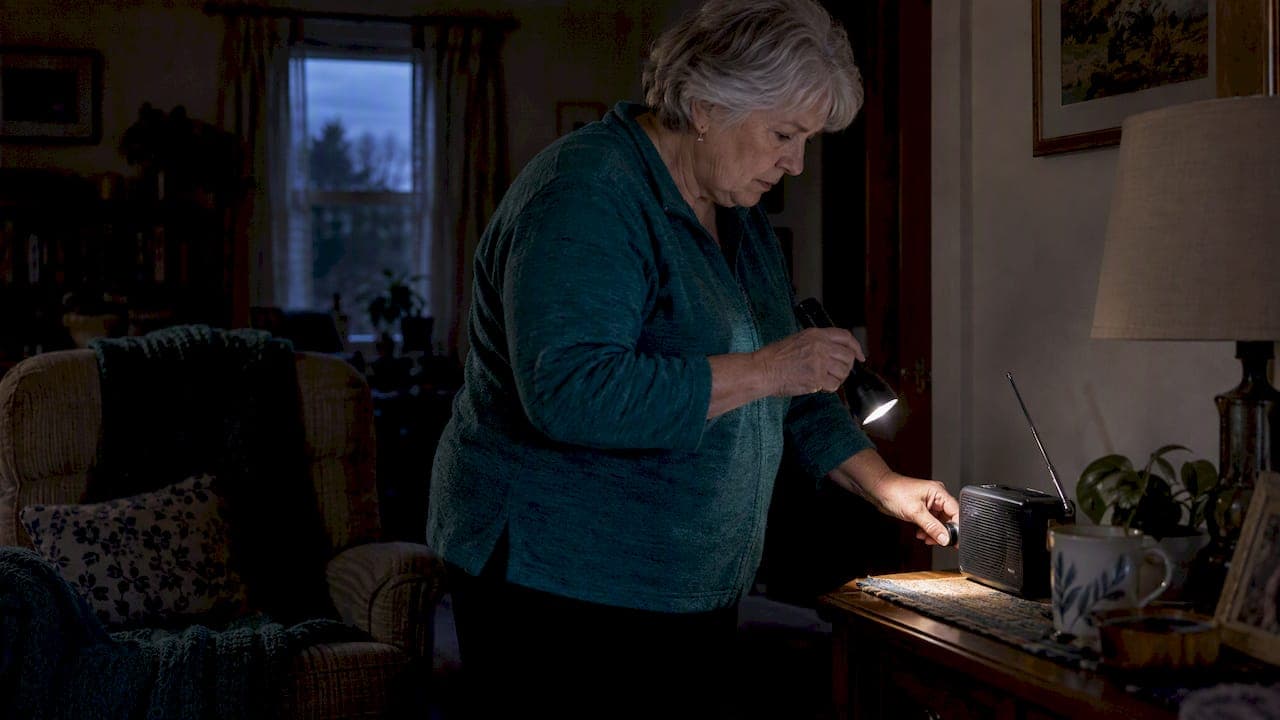
If you use electricity for medical care, or care for someone who does, the first move is simple: secure medications and any device backup, pack a 72-hour kit, and set up a daily check-in with someone you trust. These three steps cover most of what Ready and the FDA recommend for older adults facing a blackout, and they take less than an afternoon.
TL;DR:
- Backup power solutions should be matched to each medical device's specific runtime needs to ensure continuous operation during outages.
- Generators must be used outdoors at least 20 feet from windows and vents to prevent carbon monoxide poisoning, and tested regularly before use.
- A well-prepared 72-hour kit includes enough water, food, medications, and batteries, and should be stored where it can be easily accessed.
- Sign up for utility medical needs programs as a support layer, but rely primarily on personal backup plans and device-specific power solutions.
- Practicing emergency drills twice a year helps identify practical issues with your plan, such as kit weight, communication errors, or device access problems.
Table of Contents
- Why power outages hit older adults harder
- Build a senior-focused 72-hour emergency kit
- Medications and electrically powered medical equipment
- Backup power options and generator safety for seniors
- Communications and a personal support network
- Practice drills that make the plan usable
- Food safety: protecting your fridge, freezer, and medicines
- Registering with your utility's medical needs program
- Mobility and cognitive impairments during an outage
- Managing heat and cold safely without power
- Emotional support during a prolonged outage
- Emergency contacts and reaching local services
- Documents you need and how to store them
- Aging Solo perspective: preparing without losing independence
- How Aging Solo can help you plan
- FAQ
- Sources
Why power outages hit older adults harder
A blackout is an inconvenience for most people. For someone who relies on an oxygen concentrator, a CPAP machine, or refrigerated insulin, it becomes a medical event within hours. Mobility aids that charge overnight, stairlifts, and powered wheelchairs stop working too, and a phone with a dying battery cuts off the fastest way to call for help.
Home battery backups for medical equipment typically run for a few hours, not days, so timing matters more than people expect. Utility "priority" or medical-needs registries mostly promise advance notice of planned outages, not guaranteed restoration order. That distinction shapes everything else in this guide: build your own backup plan first, and treat utility programs as one layer of support, not the whole plan.
Build a senior-focused 72-hour emergency kit
A kit only works if it is built for the life you actually live, not a generic list from a camping store. Keep it close to where you sleep or sit most, and make sure it is light enough to carry if you need to move quickly.
- One gallon of water per person per day, enough for several days, plus nonperishable food that needs no cooking.
- A flashlight and extra batteries, kept together so you are not hunting for one without the other.
- Cash in small bills, since card readers and ATMs may be down.
- A multi-day supply of regular medications, even a few extra days beyond your usual refill window.
- A written medication list with dosages, a spare pill organizer, backup hearing-aid batteries, and an extra pair of glasses.
Label the bag clearly and store it somewhere you can reach without climbing, bending far, or moving furniture. A kit in the attic helps no one during a storm.
Medications and electrically powered medical equipment
Start with a one-page inventory of anything in your home that needs power to keep you safe: the device name, its watt draw, how many hours you need it to run, and how long you can safely go without it. This single page becomes the backbone of every other decision you make about backup power.
- List every powered medical device you use, from a CPAP machine to a refrigerated medicine supply.
- Call your equipment or oxygen supplier and ask, in writing if possible, how many backup hours or cylinders they can provide and what their after-hours emergency line is.
- Ask your pharmacy about emergency refill policies if a storm delays a routine pickup.
- Match each device to a backup option, battery, cylinder, or generator, based on how long it needs to run.
Ready.gov suggests talking with your healthcare provider directly about outage plans for your specific equipment and medicines, since storage limits and backup needs vary by device.
Pro Tip: Keep a printed copy of your device inventory in your kit and a photo of it on your phone, so you have it even if paper gets left behind.
Backup power options and generator safety for seniors
Not every device needs a generator. A portable power station, rated in watt hours, can often run a CPAP or charge a phone and medical alert device for a night or two, and it carries no carbon monoxide risk indoors. For bigger loads like a refrigerator or an oxygen concentrator, a generator may be necessary, but it comes with real danger if placed wrong.
- Run generators outdoors only, at least 20 feet from windows, doors, and attached garages.
- Install a carbon monoxide alarm with battery backup on every level of your home.
- Choose a power station with pure sine wave output for sensitive electronics like CPAPs.
- Test any backup system before you need it, not during the storm.
One figure worth knowing: improper generator placement near windows and vents is a recurring cause of fatal carbon monoxide poisoning, which is why distance and ventilation rules exist in the first place. Battery solutions cost more upfront but need no fuel, no venting, and far less ongoing maintenance.
Communications and a personal support network
Pick three to five people you trust and give each one a clear job: one checks in by phone, one can pick up a prescription, one can offer a ride if needed. A support network only works when the roles are specific instead of vague goodwill.
- Test your primary phone, an out-of-area contact, and one backup method like text or a walkie-talkie before you need them.
- Leave written instructions with at least one helper, including your one-page device list and a spare house key.
- Write down who calls whom first, so no one waits for someone else to act.
A simple phone tree with four to six contacts removes the guesswork when everyone is stressed and time matters. For readers who want wearable backup, contact jewelry that lists emergency information can help first responders reach the right person fast, as described by Divoti's guide on seniors and emergency contact jewelry.
Practice drills that make the plan usable
A plan on paper is not the same as a plan you can execute. The National Institute on Aging recommends practicing your emergency plan at least twice a year, because drills surface problems you would never catch otherwise: a kit that is too heavy to carry, a package you cannot open with arthritic hands, a contact whose number changed.
Rotate food and batteries, retest alarms, and refresh contact lists on the same schedule. For more structure, LifeCamp Adventure's guidance on practicing family emergency plans offers a useful model for running a drill at home.
Pro Tip: Keep a wallet copy of your plan, a fridge magnet with the short version, and a digital copy shared with your helpers, so the plan exists in three places at once.
Food safety: protecting your fridge, freezer, and medicines
A closed refrigerator keeps food safe for about four hours during an outage, and a full freezer holds safe temperatures for up to 48 hours if the door stays shut. Perishable foods that have been above 40°F for an extended time should be discarded to avoid health risks.

An appliance thermometer removes the guesswork: if your fridge reads 40°F or below when power returns, the food inside is safe. Keep a cooler and a bag of ice on hand as a backup for short outages, and find out ahead of a storm whether your community offers a cooling or refrigeration center.
Medicines like insulin often have specific temperature requirements, so ask your prescriber what range is safe and for how long. A small insulated bag with ice packs, checked regularly, can buy you time until power returns or you reach a refrigeration center.
Registering with your utility's medical needs program
Most utilities offer a medical or life-support registry that flags your address for earlier notice of planned outages and sometimes priority during restoration efforts. It is worth signing up, usually through a short form on your provider's website or a phone call to customer service.
Set your expectations accurately before you rely on it. Registering gives you communication and consideration, not a guarantee of restored power ahead of anyone else, since utilities restore service based on grid damage and safety, not individual medical status. Treat the registry as one layer of support alongside your own backup plan, never as a replacement for it.
Ask your utility three direct questions when you register: how they will contact you during an outage, whether they offer any equipment loan or battery assistance programs, and what their typical response window looks like during widespread outages versus a single-home issue. Write the answers down next to your device inventory, since you will want them in the moment, not buried in an old email.
If you use a device that cannot safely go without power for more than an hour or two, your registration should prompt a deeper conversation with your supplier about a dedicated backup cylinder or battery, not just a notation on file. The registry is a notice system, so your real protection still comes from the equipment and people you line up yourself.
Mobility and cognitive impairments during an outage
Darkness changes a familiar home into an obstacle course when you use a walker, cane, or wheelchair. Keep a flashlight at both your bed and your most-used chair, and clear a direct path between them before you ever need it in the dark.

If you live with a cognitive impairment or care for someone who does, routine matters more than during a typical day. Keep the emergency kit in the same place it always lives, use the same simple language to describe the plan each time you review it, and avoid rearranging furniture during the outage itself, since a changed layout can be disorienting on top of everything else happening.
For a caregiver, a short written script works better than a long explanation in the moment: where the flashlight is, what happens next, who is coming. If evacuation becomes necessary and standard transport is not accessible, it helps to know your options ahead of time. XactInsure's overview of emergency transport coverage for seniors is a reasonable starting point for understanding what accessible transport assistance might look like before you are in the middle of a crisis.
Managing heat and cold safely without power
Extreme heat and extreme cold are two of the most dangerous outage conditions for older adults, since the body regulates temperature less efficiently with age. In hot weather, move to the coolest room in the house, usually a basement or lowest floor, and use battery-powered fans if you have them. A cooling center, if your community has one, is a safer option than riding out a heat wave alone in an unpowered home.
In cold weather, close off unused rooms to concentrate warmth, layer blankets and clothing rather than relying on one heavy layer, and never run a generator or grill indoors for heat, since both produce carbon monoxide. If you have a fireplace, make sure it is properly vented before using it as a heat source.
Know your own limits here. If a heat wave or cold snap stretches past a day with no sign of power returning, moving to a relative's home, a shelter, or a cooling or warming center is often the safer call than waiting it out.
Emotional support during a prolonged outage
A short outage is an inconvenience. A multi-day one, especially alone, can bring on real anxiety, and that reaction is normal rather than a sign you are handling things poorly. Isolation during a blackout tends to amplify whatever stress you were already carrying, so reaching out early matters more than waiting until you feel overwhelmed.
Call one person on your support list just to talk, even if you do not need anything practical from them. A battery-powered radio can also ease the sense of isolation by keeping you connected to news and other people's voices when your phone is low on charge.
If you care for someone with memory loss, extra reassurance and a calm, steady tone help more than detailed explanations of what is happening. Keeping the routine as normal as possible, meals at the usual time, familiar music if you have a battery radio, goes a long way toward keeping everyone calm until power returns.
Emergency contacts and reaching local services
Keep a printed list of emergency numbers somewhere you do not need power to see it: on the fridge, by the phone, and inside your kit. Include your local non-emergency police line alongside 911, since 911 is reserved for true emergencies and a non-emergency line can often answer outage-related questions faster.
Add your utility's outage reporting number, your pharmacy, your primary doctor's office, and the one or two people from your support network who have agreed to be first calls. Write down the address of the nearest hospital and urgent care too, since a GPS app will not help you if your phone has no signal or charge.
If you use a medical alert device, confirm it has its own battery backup and test it during a drill, not during an actual emergency. A one-page phone tree with your emergency contacts in order of who to call first removes hesitation in a moment when clear thinking is hard to come by.
Documents you need and how to store them
Gather copies of your insurance cards, a current medication list, your prescriber's contact information, and identification, and keep them in a waterproof container inside your kit. The Ready.gov disaster preparedness guide for older adults recommends this exact approach, since paper records are often the only thing that works when systems are down.
Add a copy of your power outage plan itself, including your device inventory and support network contacts, so a helper or first responder can understand your situation quickly if you cannot explain it yourself. Keep a second set of copies with a trusted contact outside your home, in case your own copies are damaged or inaccessible.
A simple folder works fine. What matters is that it stays in one place, that you know exactly where it is, and that at least one other person knows too.
Aging Solo perspective: preparing without losing independence
Picture an ordinary Tuesday: you fill a water jug, text a friend to confirm she is your backup contact, and tuck a flashlight by your bed. That is the whole plan, not a burden. Make the one-page device list, call one helper this week, and let the living alone emergency planning guide do the rest. Preparedness, done this way, is just another form of staying connected to your own life.
— Mike
How Aging Solo can help you plan
A 45-minute clarity session gives you a direct line to work through your specific situation, whether that is sorting out device backups, building a support network from scratch, or simply knowing where to start. It fits best for someone who wants a plan tailored to their actual home and health, not a generic list.
- The Solo Aging Clarity Session runs $97 for a focused, one-time planning call.
- Download the free Living Alone Emergency Planning guide or the Emergency Contact Plan template to start today, no sign-up required.
Book a session when you are ready for a plan built around your life, or start with the free guides if you want to begin on your own tonight.
This article is general information, not a substitute for advice from a qualified doctor. Consult a qualified healthcare professional about your own circumstances before acting on anything here.
FAQ
How do you prepare for 72 hours without power?
Pack water, nonperishable food, a flashlight, batteries, and a multi-day medication supply, then confirm backup power for any medical devices you rely on. Ready.gov recommends roughly a gallon of water per person per day as the baseline for this kind of kit.
How long can you legally be without power?
There is no set legal limit on how long power can be out, since outage duration depends on storm damage, grid repairs, and local utility response rather than a fixed rule. Utilities aim to restore service as quickly as safety allows, but no law guarantees a maximum outage length.
What food should you stock for a power outage?
Choose shelf-stable items that need no refrigeration or cooking, like canned goods, crackers, nut butter, and dried fruit. Keep a refrigerator thermometer handy too, since refrigerated food stays safe for about four hours if the door stays closed, and freezer food holds for up to 48 hours if the freezer is full.
What can you do without electricity to pass the time?
Board games, puzzles, reading by flashlight or daylight, and phone calls with your support network all work well without power. A battery-powered radio also helps you stay connected to news and other voices during a longer outage.
Does registering with your utility guarantee power priority?
No, registering with a utility's medical or life-support program typically provides earlier notice of planned outages, not a guarantee of faster restoration. Your own backup power plan, built around your specific devices, remains the more reliable layer of protection.
Sources
- CPSC — Carbon monoxide information
- National Institute on Aging — Disaster preparedness for older adults