
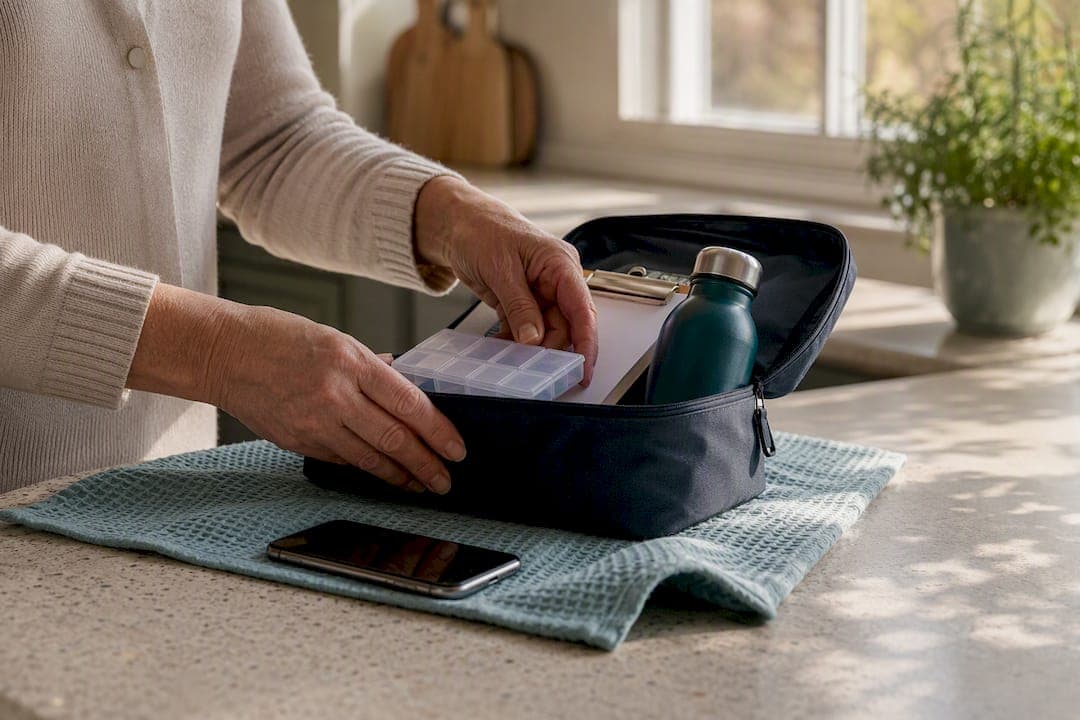
The best way to get what you need from a short doctor visit is to arrive with a prioritized top three agenda and a one-page medical summary. Write your three concerns down right now, and snap a photo of your current medication bottles and insurance card before you forget. Those two moves take five minutes and change how the whole appointment goes.
TL;DR:
- Prioritize communicating three current concerns based on what has recently changed or worsened, avoiding overload with less urgent issues.
- Bring a well-organized, concise set of documents including medication lists, ID, insurance, recent test results, and a personal health summary to maximize efficiency.
- Use specific details and questions during the visit to ensure clarity on recommended tests, medication options, and follow-up steps, while confirming understanding with teach-back.
- Write a brief follow-up summary, schedule tests or follow-ups immediately, and monitor for side effects or delayed results within the first 24 hours after the appointment.
- Consider bringing a support person for additional note-taking and observation, especially during complex or nerve-wracking visits, and prepare for telehealth with proper tech setup.
Table of Contents
- How Do You Prepare for a Doctor Appointment With Limited Time?
- What Should You Bring to a Doctor Appointment?
- What Should You Say to Your Doctor During the Visit?
- What Should You Do Right After the Appointment?
- Should You Bring Someone With You to an Appointment?
- Do Telehealth Visits Need Different Preparation?
- Preparation as a Way of Staying Connected, Not a Worry List
- Aging Solo's Tools for Your Next Appointment
- Sources
- FAQ
How Do You Prepare for a Doctor Appointment With Limited Time?
Most primary care visits are relatively brief, and that time rarely increases regardless of how much you need to cover. Trying to squeeze five or six concerns into that window usually means none of them get real attention, so the NIH recommends narrowing your agenda to your top three issues before you walk in the door.
Picking those three isn't about what's bothering you most today. Rank them by what's actually changed: a symptom that's new, one that's getting worse, or something affecting your safety or ability to function on your own. A knee that's ached for a decade can probably wait. A knee that suddenly buckled twice this week cannot.
Once your list is set, handle the logistics:
- Confirm the appointment type when you book. A physical exam needs more table time than a quick prescription refill.
- Arrive 10 to 15 minutes early so the front desk can verify your insurance and process any forms without eating into your visit time.
- If your list runs longer than three items, say so upfront. A quick call or portal message asking for a longer slot or a follow-up visit often gets you one, since many practices can accommodate extra time when they know in advance.
Pro Tip: If you're not sure whether an issue counts as a "top three," ask yourself: would I go to urgent care for this if it got worse tonight? If yes, it moves to the top of the list.
What Should You Bring to a Doctor Appointment?
A cluttered folder of loose papers helps no one, including you. What actually moves the visit forward is a short, organized set of documents you can hand over or reference in seconds.
- Your medication list. Bring the actual bottles or a typed list with the name, dose, frequency, and reason for every prescription, over-the-counter drug, vitamin, and supplement you take. NIH guidance is specific on this point: incomplete med lists lead to missed interactions.
- ID, insurance card, and any referral or advance directive paperwork your doctor's office requested ahead of time.
- Recent test results or hospital discharge summaries, especially if you've seen a specialist or been through a hospital stay since your last visit.
- A one-page medical summary covering major conditions, past surgeries, allergies, and emergency contacts. Office records go stale faster than people expect, and a personal summary fills that gap when the chart in front of your doctor is missing something important.
What Should You Say to Your Doctor During the Visit?
Open with your top concern first, not your favorite anecdote. Give specifics: when it started, how often it happens, and what seems to trigger it. Vague descriptions like "I've been feeling off" give a doctor almost nothing to work with, while "I've had dizziness three mornings this week, mostly right after standing up" gives them a real starting point. MedlinePlus recommends preparing these details in advance precisely because it keeps the conversation focused.

Share the small stuff too, not just the obvious complaint. Falls, memory slips, appetite changes, and sleep disruptions often get dismissed as "just getting older," but these quieter symptoms carry real clinical weight and are worth mentioning even when they feel minor.
Before you leave, ask direct questions:
- What tests are you recommending, and why?
- Are there other medication options with fewer side effects?
- What symptoms should send me back sooner rather than waiting?
- When and how will I get my results?
Use teach-back before you walk out. Repeat the instructions back in your own words: "So I take this twice a day with food, and I call if I get a rash?" That single habit catches misunderstandings on the spot instead of three days later when you're re-reading a scribbled note that no longer makes sense. Taking notes, or recording the conversation with permission, backs up your memory once the adrenaline of the visit wears off.
What Should You Do Right After the Appointment?
The visit isn't finished when you walk out the door. What you do in the next 24 hours often determines whether the appointment actually helped.
- Write a short after-visit summary while it's fresh, and update your medical file the same day.
- Fill any new prescriptions promptly and set a reminder if it's a medication you haven't taken before.
- Schedule recommended tests or follow-ups before you leave the building, or right after if that's not possible. Same-day follow-through reduces the odds of a recommendation quietly falling through the cracks.
- Call the office if side effects show up, symptoms worsen, or test results don't arrive when expected. A short portal message often gets a faster answer than a phone tag.
Should You Bring Someone With You to an Appointment?
A second set of ears catches things you'll miss, especially when you're nervous or the news is complicated. A support person can take notes, ask the question you forgot, and confirm the follow-up plan out loud before you leave. Harvard Health points out that companions often notice subtle changes like a new stumble or a shift in mood that the patient themselves may not think to mention.

Make sure the office has your permission on file so they can speak freely with your companion, and brief that person beforehand so they support you without talking over you.
Do Telehealth Visits Need Different Preparation?
Test your camera and microphone a few minutes early, and keep your medication list, ID, and one-page summary within reach on the desk. Position the camera at eye level with good lighting, and find a private room. If the visit calls for a physical exam, a pulse check, or a listen to your lungs, say so early and ask whether it makes more sense to switch to an in-person appointment instead.
Preparation as a Way of Staying Connected, Not a Worry List
Getting ready for an appointment isn't about bracing for bad news. It's about walking in as your own best advocate, which is its own quiet form of independence. Start with our medication list template and build from there.
— Mike
Aging Solo's Tools for Your Next Appointment
Agingsolo gives you the templates most doctor's offices assume you'll show up with but never actually hand you. The medication list card saves you the scramble of hunting down pill bottles the morning of your visit, and our broader guide on managing medications safely when living alone covers what to do between appointments, not just during them.
If your health picture involves more moving parts than a single visit can cover, a 45-minute Solo Aging Clarity Session walks you through building a full medical summary, organizing your records, and setting up a system so the next appointment takes half the prep time this one did. It's a focused conversation, not a sales pitch, built for someone planning solo. Start with our guide on maintaining independence while aging at home to see what a full plan looks like, then book a session when you're ready for a personalized walk-through.
Sources
- How To Prepare for a Doctor's Appointment — NIH
- Make the most of your doctor visit — MedlinePlus
- Making the most of a health care visit — Merck Manual (consumer)
- Taking an aging parent to the doctor — Harvard Health Blog
FAQ
What should you not do before a doctor's appointment?
Don't skip meals if you need bloodwork that requires fasting instructions, and don't wait until the waiting room to write down your symptoms and questions. Avoid making major medication changes on your own right before the visit, since your doctor needs to see your regular pattern.
What are the phrases that get a doctor's attention?
Specific, timed descriptions work best: "This started three days ago," "It happens every morning," or "It's worse than it was last month." Naming a quiet symptom directly, like a recent fall or new confusion, also prompts closer attention than vague statements.
Should you shower before the doctor?
Yes, basic hygiene is fine and expected, but skip lotions or perfumes if you're having a skin exam, since they can interfere with a dermatologist's assessment. If your visit involves a skin check, reviewing prep tips for dermatology appointments beforehand helps you avoid common mistakes like covering a mole with makeup.
Can you drink water before a doctor appointment?
In most cases, yes. Plain water is fine before a routine visit unless your doctor specifically told you to fast for bloodwork or a procedure. When in doubt, call ahead and ask, since fasting rules vary by test.
How do you organize your medical history before an appointment?
Keep a one-page summary listing your major conditions, past surgeries, allergies, and current medications, and update it after every visit rather than starting from scratch each time. Agingsolo's medication list card is built to make that update quick.