
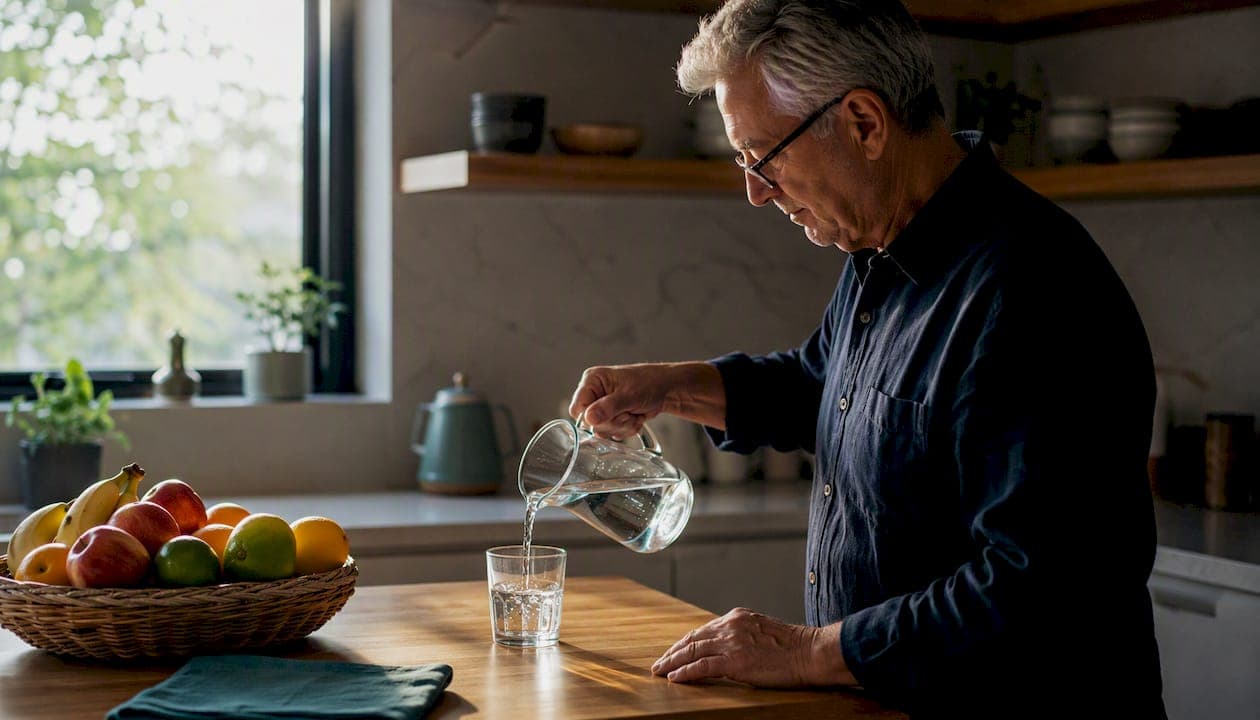
Staying properly hydrated is one of the most powerful, most overlooked things an older adult can do to protect their independence. The role of hydration in senior health touches nearly every system in the body: cognition, kidney function, fall risk, blood pressure, and even how well your medications work. Research published in PMC confirms that dehydration in older adults is associated with longer hospital stays, higher readmission rates, and increased in-hospital mortality. It is not a minor inconvenience. It is a clinical risk factor.
Up to 40% of adults over 65 may live with chronic underhydration, often without realizing it, because the thirst signal that younger people rely on becomes less reliable with age.
Three things you can do right now:
- Sip water before you read another word. Seriously.
- Place a filled water bottle within arm's reach of your usual chair or bed.
- Ask your doctor or pharmacist whether any of your current medications increase fluid loss.
Those three steps cost nothing and take under five minutes. Everything else in this article builds on them.
Key Takeaways
Hydration is a daily, modifiable habit that directly affects cognition, fall risk, kidney function, and hospital outcomes in older adults, and most people over 65 are not drinking enough.
| Point | Details |
|---|---|
| Thirst is unreliable | By the time you feel thirsty, you may already be in early dehydration; schedule drinks instead of waiting. |
| Daily fluid target | Most older adults need roughly 1.6–2.0 liters per day, including fluid from food; adjust for conditions. |
| Know the red flags | Sudden confusion, very dark urine, fainting, or no urine output for hours warrants emergency care. |
| Medications matter | Diuretics, SGLT2 inhibitors, and laxatives increase fluid loss; ask your pharmacist to review your list. |
| Agingsolo supports your plan | Free checklists and a personalized Solo Aging Clarity Session help solo agers build a safe, sustainable hydration routine. |
Table of Contents
- Why does hydration affect older adults differently?
- What raises your dehydration risk day to day?
- What dehydration actually does to an older person's body
- How to recognize dehydration before it becomes a crisis
- How much fluid do older adults actually need each day?
- Which beverages actually help, and which ones to watch
- Day-to-day strategies that actually make drinking easier
- How medications and medical conditions change what you need
- What to do when dehydration has already set in
- Simple ways to monitor hydration at home every day
- A practical hydration plan you can print and bring to your clinician
- A note from Agingsolo on why this matters for people aging alone
- Agingsolo resources to help you stay hydrated and independent
- Sources
- FAQ
Why does hydration affect older adults differently?
The physiology of aging changes how your body manages fluid, and those changes stack up in ways that make dehydration both more likely and harder to detect.
Blunted thirst sensation. As you age, the hypothalamus becomes less sensitive to rising blood osmolality, which is the signal that normally triggers thirst. Cleveland Clinic clinicians note that by the time an older adult feels thirsty, they are often already in early dehydration. Waiting for thirst is not a safe strategy.
Lower total body water. Muscle tissue holds water; fat tissue holds very little. A smaller fluid reserve means a smaller margin for error.
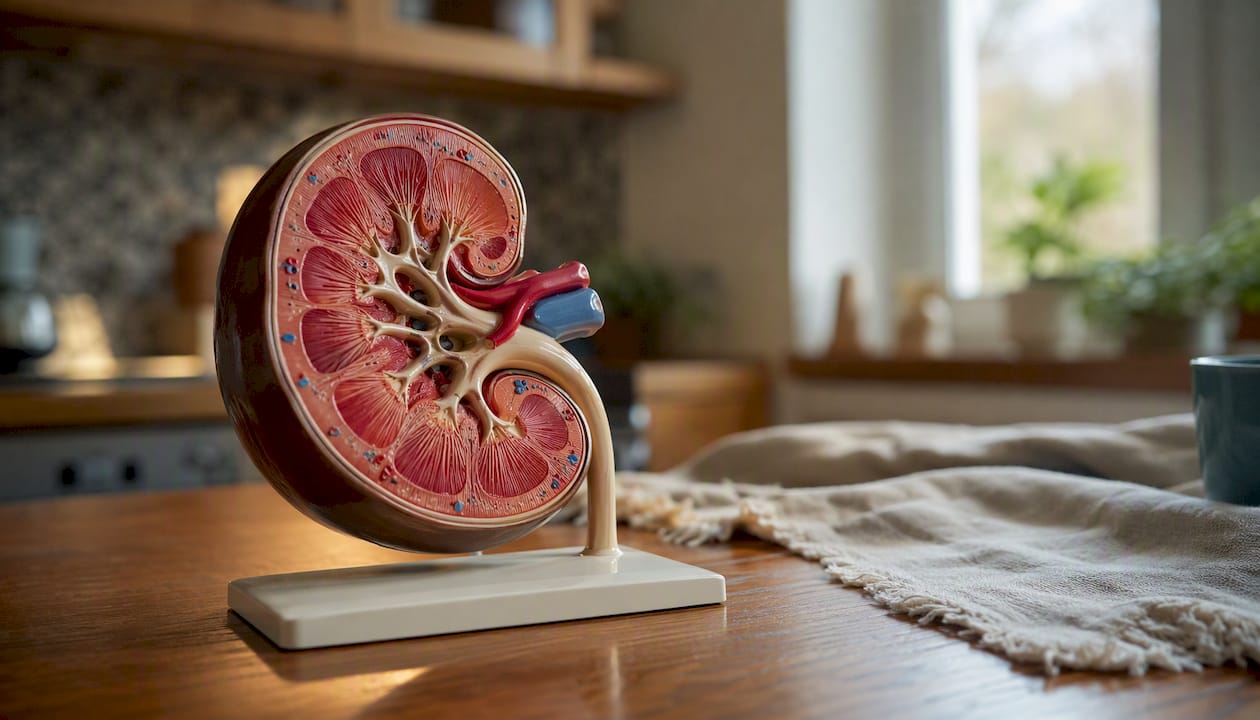
Kidney changes. Aging kidneys lose some of their ability to concentrate urine, so they excrete more water even when the body is running low. The kidneys also respond more slowly to antidiuretic hormone (ADH), the signal that tells them to conserve fluid. Think of it this way: a younger kidney acts like a smart thermostat that adjusts quickly; an older kidney is more like a manual dial that responds with a delay.
Altered hormonal signaling. The renin-angiotensin-aldosterone system, which helps regulate blood pressure and fluid retention, becomes less responsive with age. ADH levels may actually be higher in older adults, yet the kidneys respond less efficiently to it. The result is a system that is working harder but achieving less.
These changes do not happen overnight, and they are not inevitable catastrophes. But they do mean that the hydration habits that worked at 40 need a conscious update at 65 and beyond.
What raises your dehydration risk day to day?
Physiology sets the stage, but everyday factors often tip the balance. Knowing your personal risk profile makes prevention much more targeted.
Medications that affect fluid balance
Several common drug classes increase fluid loss or change electrolyte levels:
- Loop diuretics (furosemide, bumetanide) and thiazide diuretics (hydrochlorothiazide) pull fluid out through the kidneys by design. Timing matters: taking them in the morning rather than evening can reduce nighttime bathroom trips, but fluid losses still need to be replaced.
- SGLT2 inhibitors (empagliflozin, dapagliflozin), used for type 2 diabetes and heart failure, cause the kidneys to excrete glucose and water together.
- Laxatives, especially stimulant types, increase fluid loss through the gut.
- Some psychiatric medications, including certain antipsychotics and antidepressants, can affect thirst perception or cause dry mouth.
Pro Tip: Ask your pharmacist to do a medication review specifically focused on dehydration risk. Bring a complete list of every prescription, over-the-counter drug, and supplement you take. This single conversation can reveal timing changes or monitoring steps that make a real difference. Agingsolo's guide on managing medications safely when living alone walk you through how to prepare for that conversation.
Chronic conditions that change fluid needs
Heart failure and advanced kidney disease often require fluid restriction, not increased intake. Uncontrolled diabetes causes excess urination and rapid fluid loss. These conditions do not make hydration less important; they make getting the target right more important, which is why clinician guidance is non-negotiable for anyone managing them.
Practical barriers that are easy to overlook
Mobility limitations can make it physically harder to get up and refill a glass. Dental pain or difficulty swallowing can make drinking uncomfortable. Cognitive impairment can mean an older adult simply forgets to drink, or cannot communicate thirst. Sensory changes, including reduced smell and taste, can make plain water feel unappealing. None of these are character flaws. They are real obstacles that call for real solutions, most of which appear in the strategy sections below.
What dehydration actually does to an older person's body
The consequences of low fluid intake in older adults are not vague or theoretical. They show up in emergency rooms, rehabilitation units, and primary care offices every day.
Acute harms you can see quickly:
- Delirium. Dehydration is one of the most common, and most reversible, causes of sudden confusion in older adults. A PMC clinical review notes that poor hydration can mimic or trigger acute cognitive decline, and correcting it sometimes resolves the confusion rapidly.
- Falls. Low fluid volume drops blood pressure, especially when standing (orthostatic hypotension). That dizzy moment on the way to the bathroom is often dehydration at work. MDPI hydration strategy reviews link dehydration directly to higher fall risk in older adults, and falls are among the leading causes of serious injury for seniors living alone.
- Urinary tract infections. Concentrated, infrequent urine creates an environment where bacteria thrive.
- Acute kidney injury. Already-aging kidneys are more vulnerable to the stress of low fluid volume.
Longer-term and systemic effects:
Chronic mild dehydration worsens glycemic control in people with diabetes, partly through effects on the AVP (arginine vasopressin) axis. PMC metabolic research suggests that low daily water intake and elevated copeptin (a marker of AVP activity) are associated with increased metabolic risk. Over time, repeated dehydration episodes contribute to frailty, muscle loss, and poorer rehabilitation outcomes after illness or surgery.
The hospital picture is stark. PMC research documents dehydration as an independent risk factor for poor prognosis, longer stays, and higher in-hospital mortality in older patients. Preventing dehydration is not just about feeling better day to day. It is about staying out of the hospital in the first place.
How to recognize dehydration before it becomes a crisis
Catching dehydration early is far easier than managing a severe episode. The signs progress in a fairly predictable pattern, and knowing them gives you a real advantage.
Mild signs
- Dry or sticky mouth
- Dark yellow or amber urine
- Urinating less frequently than usual
- Fatigue that feels out of proportion to activity
- Mild headache
Moderate signs
- Dizziness, especially when standing
- Confusion or difficulty concentrating
- Rapid heartbeat
- Muscle cramps
- Reduced skin elasticity (though this test is less reliable in older adults, whose skin loses elasticity naturally)
Severe red flags: call for help immediately
- Fainting or near-fainting
- Severe confusion or sudden delirium
- Very little or no urine output over several hours
- Very low blood pressure or rapid, weak pulse
MedlinePlus provides a clear consumer-facing summary of these signs and when to seek emergency care. If you are a caregiver, print it out and keep it somewhere visible.
Quick daily caregiver checklist:
- Has the person urinated at least 3–4 times today?
- Is urine pale yellow (not dark amber)?
- Have they consumed fluids with each meal and at least once between meals?
- Are they alert and oriented at their usual baseline?
- Any complaints of dizziness when standing?
A "no" on any of the first three, or a "yes" on the last two, is a prompt to offer fluids and monitor closely.
How much fluid do older adults actually need each day?
The honest answer is: it depends. But there are solid starting points.
A critical review aligned with ESPEN and EFSA guidance recommends roughly 1.6 liters per day for older women and 2.0 liters per day for older men, counting fluids from both beverages and water-rich foods. That works out to approximately 6–8 cups of total fluid daily for most people.
| Scenario | Approximate daily fluid target | Notes |
|---|---|---|
| Community-dwelling older adult (typical) | 1.6–2.0 L (6–8 cups) | Includes fluid from food; adjust for heat and activity |
| Active older adult or hot weather | Add 0.5–1.0 L above baseline | Sweat increases losses significantly |
| Fluid-restricted heart failure or kidney disease | As directed by clinician | Do NOT self-increase; follow prescribed limit |
These ranges come from observational and guideline data, and the review authors are clear that individualization matters. A small, sedentary 70-year-old woman in a cool climate needs less than a larger, active 68-year-old man in summer heat. Fever, vomiting, diarrhea, and high-altitude environments all increase needs further.
One important note: current guidance relies largely on observational and mechanistic data. As the MDPI critical review acknowledges, large long-term randomized trials testing systematic water-increase interventions are still limited. The targets above are well-supported starting points, not absolute prescriptions.
Pro Tip: Track intake with simple cup math. A standard mug holds about 8 oz (240 ml). Six mugs gets you to roughly 1.4 liters; eight mugs reaches 1.9 liters. Fill a 32-oz (about 1 L) water bottle in the morning and aim to finish it twice by evening. No app required.
Which beverages actually help, and which ones to watch
Plain water is the gold standard, but it is far from the only option. And some common assumptions about what "counts" are worth clearing up.
Best choices for staying hydrated:
- Plain water, still or sparkling
- Herbal teas (caffeine-free)
- Low-sodium broth or soup
- Water-rich fruits: watermelon, cucumber, oranges, strawberries
- Water-rich vegetables: celery, lettuce, zucchini
- Low-sugar oral rehydration solutions (ORS) when mild-to-moderate losses have occurred
A word on coffee and tea: Moderate caffeine consumption (2–3 cups per day) has a mild diuretic effect, but Harvard Health guidance confirms that caffeinated beverages still contribute net fluid to your daily intake. You do not need to subtract your morning coffee from your total. Just do not rely on it exclusively.
Beverages to limit:
- Alcohol: genuinely dehydrating, suppresses ADH, and increases urine output. Even one or two drinks can meaningfully affect fluid balance in older adults.
- Very high-sugar drinks: sodas and sweetened juices can worsen blood sugar control and provide calories without meaningful hydration benefit.
On oral rehydration solutions: For mild-to-moderate fluid losses from illness, a low-sodium ORS (commercial products like Pedialyte, or a simple homemade mix of water, a small amount of salt, and a small amount of sugar) can help restore electrolytes alongside fluids. Always check with your clinician before using ORS if you have heart disease, kidney disease, or are on a sodium-restricted diet. NCOA's hydration guidance recommends including water-rich foods and monitoring urine color as practical daily checks.
Day-to-day strategies that actually make drinking easier
Knowing you should drink more and actually doing it consistently are two different things. These tactics close that gap.
Environmental fixes
- Keep a filled, labeled water bottle at every spot where you regularly sit: your favorite chair, your desk, your bedside table.
- Use attractive cups or mugs you genuinely enjoy. A cup you like is one you reach for.
- Insulated mugs keep drinks at a comfortable temperature longer, which matters if drinking slowly is easier for you.
- Place drinks at counter height or within arm's reach so mobility limitations do not become a barrier.
Behavioral anchors
This is the most reliable strategy for solo agers. Tie a sip of water to something you already do automatically:
- After every bathroom visit, drink a small glass before returning to your seat.
- Take medications with a full 8-oz glass, not just a sip.
- Start every meal with a glass of water before the first bite.
- Keep a glass of water on your nightstand and drink it before getting up in the morning.
UCLA Health research supports this approach: building hydration into existing routines creates automatic habits that are far more sustainable than willpower or reminders alone. These healthy routines for seniors work because they remove the decision entirely.
Adaptive aids
- Straw cups or sippy-style lids for anyone with hand tremors or grip challenges
- Easy-grip insulated bottles with wide openings
- Bedside pitchers with a pour spout
- Lightweight cups that are easy to carry
Pro Tip: Set three phone alarms labeled "Drink water" at roughly 9 AM, 1 PM, and 5 PM. After two weeks, the habit often becomes automatic and you can turn the alarms off. If you are aging alone, pairing hydration with a daily task like checking the mail or watching a favorite show adds another reliable anchor.
How medications and medical conditions change what you need
Some older adults need more fluid than the standard range. Others need less. Getting this wrong in either direction carries real risk.
Medication groups that increase fluid loss or shift electrolytes
- Loop diuretics (furosemide, torsemide): significant urinary fluid loss; monitor for dizziness and low blood pressure.
- Thiazide diuretics (hydrochlorothiazide, chlorthalidone): moderate fluid and potassium loss.
- SGLT2 inhibitors (empagliflozin, canagliflozin): glucose and water excreted together; dehydration risk is real, especially in heat.
- Stimulant laxatives: fluid loss through the gut.
- Some antipsychotics and antidepressants: can blunt thirst or cause dry mouth, reducing voluntary intake.
Conditions that change safe targets
- Heart failure: fluid restriction is often prescribed. Drinking more than your prescribed limit can worsen fluid overload and trigger hospitalization. Follow your cardiologist's specific target.
- Advanced kidney disease: the kidneys cannot excrete excess fluid efficiently; your nephrologist sets the limit.
- Uncontrolled diabetes: excess urination increases fluid needs, but blood sugar management is the primary fix.
- Cognitive impairment: the person may not be able to self-monitor or communicate thirst; caregiver-initiated scheduled drinking is the safest approach.
Questions to bring to your clinician or pharmacist
- "Does any of my current medication increase my fluid loss or change my electrolytes?"
- "What is my safe daily fluid target given my heart or kidney condition?"
- "Should I adjust when I take my diuretic to reduce nighttime bathroom trips?"
- "What symptoms should prompt me to call you about fluid balance?"
Never adjust or stop a prescribed medication to manage fluid balance without medical guidance. This is a conversation to have, not a decision to make alone.
What to do when dehydration has already set in
If you or someone you care for is showing signs of moderate dehydration, here is a safe, step-by-step approach.
Step 1: Start small and steady. Offer small sips of water or a low-sodium oral rehydration solution every 5–10 minutes. Avoid large rapid boluses, especially in anyone with heart or kidney disease, where rapid fluid shifts can cause problems.
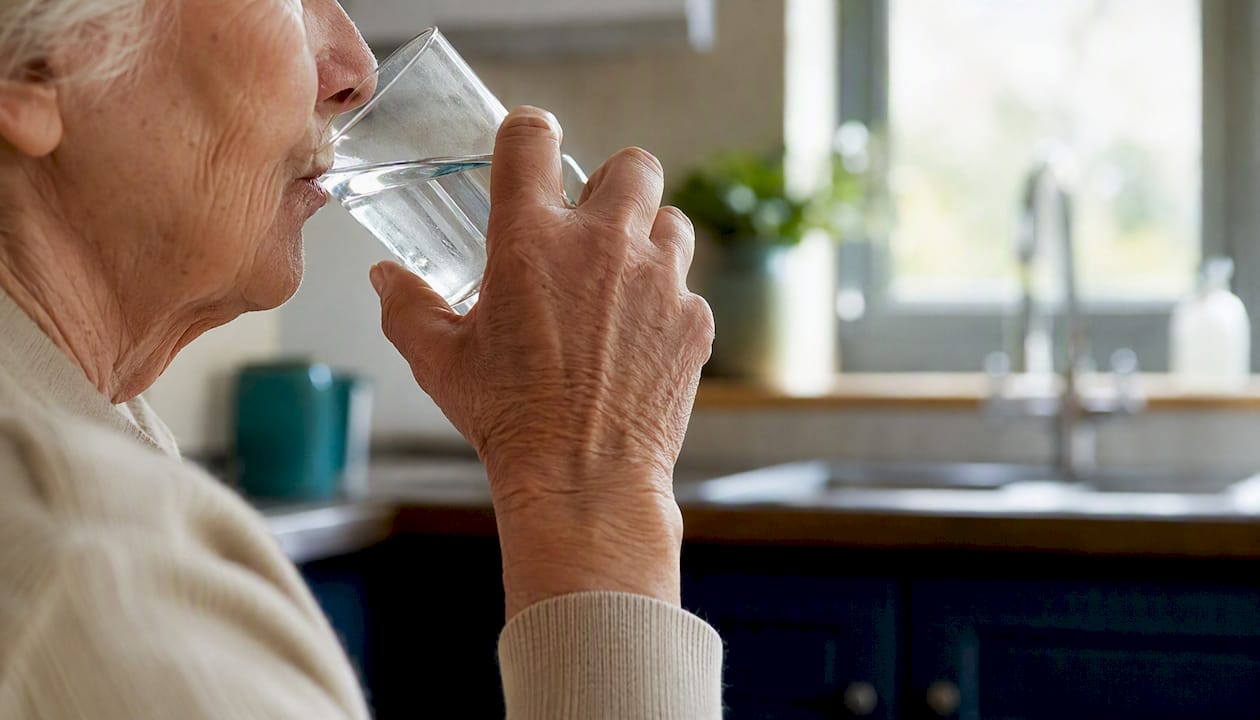
Step 2: Monitor for improvement. Urine should become lighter in color within a few hours. Alertness and energy should improve. If they do not, escalate.
Step 3: Know when to stop home management and call for help. Seek emergency care if the person:
- Cannot keep fluids down due to persistent vomiting
- Becomes severely confused or loses consciousness
- Faints or has a very rapid, weak pulse
- Produces little or no urine over 6–8 hours
- Has unstable blood pressure or breathing changes
A PMC clinical review notes that dehydration can present as delirium or mimic infection in older adults. If confusion appears suddenly, do not assume it is "just dehydration" and wait. Offer fluids and call for medical assessment.
Simple low-sodium ORS recipe (for mild losses only): 1 liter of clean water + 1/4 teaspoon of table salt + 2 tablespoons of sugar. Stir until dissolved. This is a starting point, not a prescription. Anyone with heart disease, kidney disease, or a sodium restriction should verify this recipe with their clinician before use. For a broader emergency readiness plan, Agingsolo's health and emergency planning resources offer practical tools you can prepare in advance.
Simple ways to monitor hydration at home every day
Prevention is steadier than recovery. These monitoring habits take less than two minutes a day and give you early warning before a problem becomes a crisis.
Daily checks to build into your routine:
- Urine color: Pale yellow means well-hydrated. Dark amber or brown is a warning sign. Harvard Health guidance recommends using urine color as a practical daily indicator.
- Urine frequency: Aim for at least 4–6 trips to the bathroom per day. Fewer than 3 is a concern.
- Morning weight: Weigh yourself at the same time each morning, in similar clothing, on the same scale. PMC research notes that a change of roughly 1–2% of body weight can indicate clinically relevant fluid loss. For a 150-pound person, that is just 1.5–3 pounds.
- Planned cups consumed: Count your cups. If you aimed for 7 and only had 4, adjust the next day.
Limits of urine color monitoring: Some vitamins (especially B vitamins) and medications can darken urine even when hydration is adequate. Beet consumption turns urine pink. If you take supplements, do not rely on color alone; use frequency and weight trends together.
Seasonal adjustments: In summer heat or during illness with fever, increase your baseline intake and check color more frequently. Air conditioning reduces sweat but does not eliminate insensible fluid losses through breathing and skin.
A practical hydration plan you can print and bring to your clinician
This sample plan is designed for a community-dwelling solo ager with no fluid restriction. Adjust times to fit your own schedule.
Total: approximately 1.7–2.0 liters, meeting the evidence-based target range for most older adults.
Clinician and pharmacist script lines
Bring this plan to your next appointment and say:
- "I'm trying to hit about 1.6–2.0 liters of fluid per day. Is that safe given my conditions and medications?"
- "Do any of my medications change when or how much I should drink?"
- "Are there any signs I should watch for that would tell me I'm drinking too much or too little?"
Pro Tip: If you get sick with fever, vomiting, or diarrhea, add at least one extra cup of fluid for every episode of fluid loss and check urine color every few hours. If you cannot keep fluids down for more than 12 hours, call your doctor. For heat exposure or outdoor activity, add 1–2 extra cups per hour of activity in warm weather.
Safety reminders:
- If you have a prescribed fluid restriction, use that number as your ceiling, not the table above.
- New symptoms like sudden swelling in your legs or shortness of breath after increasing fluid intake warrant a call to your clinician.
- Any sudden change in mental clarity alongside low urine output is a reason to seek care, not wait.
A note from Agingsolo on why this matters for people aging alone
When you are aging without a built-in support system, the small daily habits carry more weight. There is no one automatically noticing that you seem a little "off" today, or refilling your water glass at dinner. That is not a deficit. It is a reality that calls for a smarter, more intentional plan.
Hydration is one of the most concrete, controllable levers available to you. It does not require a prescription, a gym membership, or a caregiver. A filled water bottle within reach, three phone alarms, and a conversation with your pharmacist about your medications: that is a real safety net, built from almost nothing.
Agingsolo's free downloadable checklists and planning guides are built around exactly this kind of habit-based prevention. The philosophy is simple: small, steady actions taken consistently protect your independence far more reliably than big interventions taken in a crisis. A hydration routine is not glamorous. But it is the kind of thing that keeps you out of the emergency room and in your own home, on your own terms.
Agingsolo resources to help you stay hydrated and independent
Staying on top of hydration is easier when you have a plan you can actually follow, and someone to help you think it through.
Agingsolo's Compassionate Clearinghouse is a free resource hub with downloadable tools, checklists, and planning guides built specifically for solo agers. The hydration checklist and printable daily plan in this article are the kind of practical tools you will find there, ready to print and bring to your next clinician visit.
If you want personalized guidance, the Solo Aging Clarity Session is a 45-minute one-on-one Zoom call where you can work through your specific situation, including how to build a hydration routine that fits your health conditions, medications, and daily life. No pressure, no long-term commitment. Free resources are available immediately at the Clearinghouse. When you are ready for a more tailored conversation, the Clarity Session is there. Visit Agingsolo's solo aging guide to learn more and book a session.
Sources
These are the primary sources used to build this article. Each is drawn from a peer-reviewed journal, a major academic health system, or a nationally recognized health organization.
- Hydration Status in Older Adults: Current Knowledge and Future Challenges - PMC
- Hydration and older adults: Why water matters more as you age | UCLA Health
- How to Stay Hydrated: A Guide for Older Adults | NCOA
- Fluid Intake Recommendation Considering the Physiological Adaptations of Adults Over 65 Years: A Critical Review
- Hydration Strategies in Older Adults - MDPI
- Drink up: Dehydration is an often-overlooked health risk for seniors | Cleveland Clinic
This article is general information, not a substitute for advice from a qualified doctor. Consult a qualified healthcare professional about your own circumstances before acting on anything here.
FAQ
How much water should a 70-year-old drink each day?
Most adults over 65 are advised to aim for roughly 1.6–2.0 liters of total fluid per day, including water from food, based on ESPEN/EFSA-aligned guidance. Anyone with heart failure, kidney disease, or a prescribed fluid restriction should follow their clinician's specific target instead.
Why is hydration so important for older adults?
Aging reduces thirst sensitivity, lowers total body water, and slows kidney response to fluid changes, making dehydration both more likely and harder to detect. Poor hydration in older adults is linked to delirium, falls, urinary tract infections, acute kidney injury, and worse hospital outcomes.
What is the fastest safe way to rehydrate an older person at home?
Offer small, frequent sips of water or a low-sodium oral rehydration solution every 5–10 minutes rather than large amounts at once. If the person cannot keep fluids down, becomes severely confused, faints, or produces very little urine over several hours, seek emergency medical care immediately.
What is the best drink for seniors to stay hydrated?
Plain water is the most reliable choice, but low-sodium broth, herbal tea, and water-rich foods like soup, watermelon, and cucumber all contribute meaningfully. Moderate coffee and tea count toward daily fluid intake; alcohol does not, and should be limited because it genuinely increases fluid loss.