

A trusted contact form is a short written document that names the people, access details, and step-by-step actions someone should take when they can't reach you. It works because it's written down, not because everyone remembers a conversation you had at Thanksgiving three years ago. Verbal agreements fade. A form sitting in your kitchen drawer doesn't.
Start now, before you read another word: write one name, one phone number, and one role. That's it. That's the whole first move.
- Name: the person you'd call first if something felt off
- Phone: their best number, plus a backup if they have one
- Role: what you actually want from them (a knock on the door, a phone tree, a decision)
Pro Tip: Don't overthink the first draft. A trusted contact form is a living document, not a legal filing. You'll update it. Getting one name down today beats a perfect form you never finish.
Key Takeaways
A trusted contact form works when it pairs specific, written access details with a timed IF-THIS-THEN-THAT protocol that removes guesswork from your contacts' decisions.
| Point | Details |
|---|---|
| Start with one name | Write a primary contact's name, phone, and role today before anything else. |
| Cover access, not just contacts | Include spare key location, home file, and medical summary so a form is actually usable. |
| Distribute roles across people | Name a local responder, remote coordinator, and financial notifier separately to prevent burnout. |
| Write timings, not vague steps | A protocol with exact hours removes hesitation during a real missed check-in. |
| Review monthly and annually | Confirm contacts monthly and do a full update yearly or after any life change. |
| Use Aging Solo's template to start | Aging Solo's free trusted contact form template and Clarity Session help you finish and refine your plan. |
Table of Contents
- What Belongs on a Trusted Contact Form?
- Who Should You Ask to Be a Trusted Contact?
- Build a Missed-Contact Protocol Your Contacts Can Follow
- How Often Should You Update Your Trusted Contact Form?
- A Tuesday Morning, and Why This Isn't About Fear
- Aging Solo's Tools to Help You Finish This Today
- Where to Learn More
- Sources
- FAQ
What Belongs on a Trusted Contact Form?
The form only works if the people using it can act fast without guessing. That means giving them logistics, not vibes. Think of it as everything a capable neighbor would need if they had to walk into your home tonight and figure out what's going on.
Start with contact fields for at least two people, so nobody's the single point of failure:
- Primary contact: name, relationship, phone, email, best time to reach them
- Backup contact: same fields, for when the primary is traveling or unreachable
- Best method of contact (text often beats a call for a first check, since people notice texts faster on a busy morning)
Then cover access. This is the part people skip, and it's the part that stalls a well-meaning neighbor at your front door.
| Field | Example |
|---|---|
| Spare key location | Lockbox on the back porch, code held by primary contact |
| Gate or entry code | Side gate code taped inside kitchen cabinet, noted on form |
| Home file location | Manila folder, top drawer of hallway desk |
| Medical summary location | Printed one-pager on the refrigerator and in the home file |
| Healthcare proxy contact | Name and phone of your designated decision-maker |
Add a short medical section: your primary conditions, current medications, allergies, and your doctor's name and phone. You don't need a full chart, just enough for an EMT or a worried friend to act correctly. Aging Solo's legal documents checklist is a good companion here if you haven't named a healthcare proxy yet.
Close the form with a plain-language scope statement: what this person can do (call 911, enter your home, call your daughter) and what they cannot do (access your bank accounts, make medical decisions for you). That line protects both of you.
Who Should You Ask to Be a Trusted Contact?
Not every good friend makes a good trusted contact, and that's fine to admit out loud. The goal is matching the right person to the right job, not handing your whole life to whoever picks up first.
- Local responder. Someone who lives close enough to physically check on you within 20 or 30 minutes. Reliability and proximity matter more here than closeness of the relationship.
- Remote coordinator. A sibling, adult child, or old friend who lives farther away but is good at organizing, making calls, and keeping a level head. They run the phone tree if the local responder needs backup.
- Financial notifier. Someone you'd want alerted if a bank or brokerage flagged unusual activity on your accounts, kept entirely separate from your day-to-day trusted contact form.
- Backup for each role. People get sick, travel, or move. A backup isn't optional if you want the plan to hold up in a real moment.
Community organizations that work with people aging alone generally recommend naming 3 to 5 trusted people with distinct roles rather than leaning on one person for everything. That's not overkill. It's what keeps one generous friend from quietly burning out.
When you ask, be direct: "I'm putting together a simple plan in case I ever can't be reached. Would you be willing to be my local check-in person? It might mean a text once a month and, rarely, a knock on my door." Most people say yes, and most are quietly glad you trusted them enough to ask.
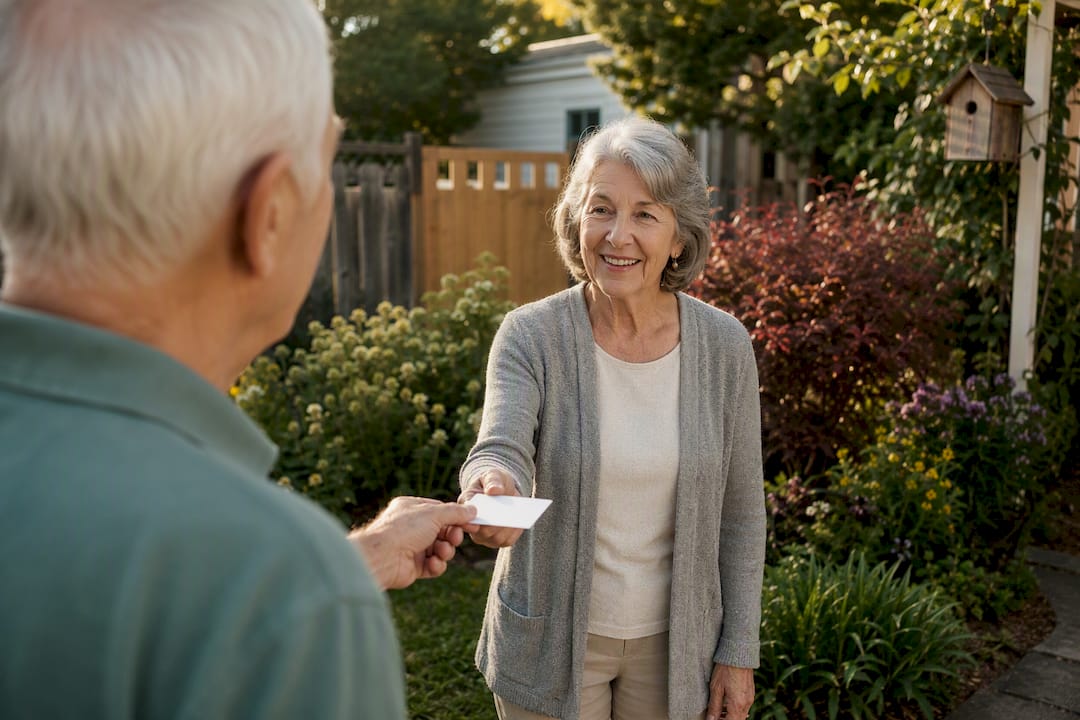
Pro Tip: Avoid naming the same person as both your local responder and your financial notifier unless you've specifically decided you want one person holding both. Splitting roles distributes the load and keeps any single relationship from carrying too much weight.
Build a Missed-Contact Protocol Your Contacts Can Follow
An IF-THIS-THEN-THAT protocol removes the guesswork from a moment when your trusted contact is already anxious and doesn't know what's normal for you. Instead of them wondering "should I worry yet?", the form tells them exactly when to act and what to do next. Written, numbered steps with real timings are what practitioners who work with people aging alone actually recommend, and for good reason: a nervous person reads a numbered list faster than they think through a decision from scratch.
Here's a sample structure you can adapt:
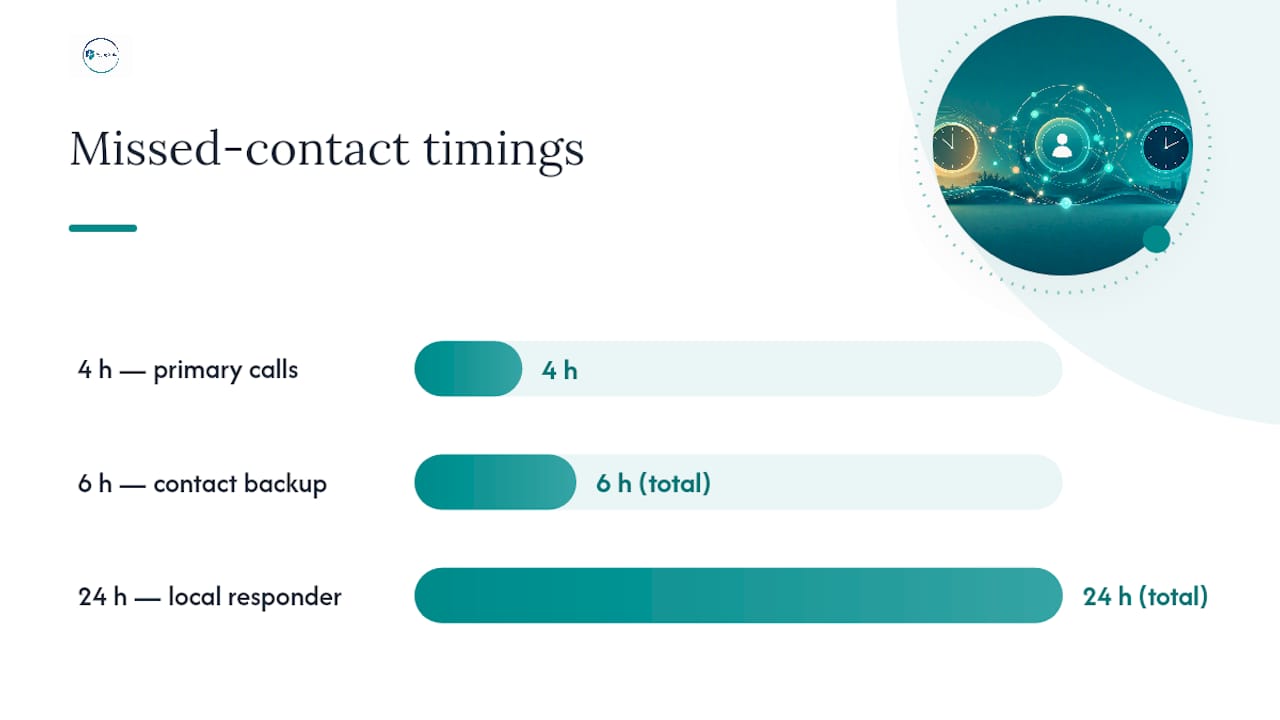
- If you don't answer a call or text within 4 hours of your usual check-in window, then the primary contact calls again and texts "Just checking in, call when you can."
- If there's still no response after 2 more hours, then the primary contact calls the backup and asks them to try reaching you separately.
- If there's no response after 24 hours total, then the local responder goes to your home, uses the spare key or lockbox code, and knocks first.
- If you don't answer the door or something looks wrong, then call 911 immediately and mention any relevant medical conditions from your summary.
Keep this protocol accessible in more than one place:
- One printed copy in your home file, near your medical summary
- One photo of it saved on your primary contact's phone
- One copy with your local responder, since they're the one who'll act on it fastest
If you want an added layer of reassurance, a professional daily check-in service or a personal emergency response device can flag a missed check-in automatically and escalate to your trusted contacts before a full day has passed. That's not a replacement for human contacts. It's a second net underneath the first one.
Pro Tip: Write your protocol with exact numbers, not vague language. "Call again in a few hours" leaves room for hesitation. "Call again at hour 4" doesn't.
How Often Should You Update Your Trusted Contact Form?
A form that's accurate today can be wrong in six months. Phone numbers change, a friend moves across the country, medications get adjusted. Treat this like a living document with a light, sustainable rhythm.
- Monthly: a quick text to each contact, just to confirm they're still willing and their number still works.
- Annually: a full review of every field, especially medications, the healthcare proxy, and the spare key location.
- After any life change: a new medication, a move, a falling out with a contact, or a contact moving away.
Testing matters as much as updating. Ready.gov's guidance for older adults specifically recommends practicing your plan, and one low-key way to do that is a practice check-in: text your local responder "testing my plan, no need to do anything" once or twice a year, just so the habit stays familiar instead of rusty.
One important boundary: never put passwords or full account numbers on this form. If you've named a trusted contact on a bank or brokerage account, that's a separate designation handled through your financial institution, not something to fold into your personal form. Keep copies of your form in your home file, and consider a wallet card listing your primary contact and any critical medical conditions.
A Tuesday Morning, and Why This Isn't About Fear
Picture this: it's a Tuesday morning, coffee's still warm, and you get a text from your neighbor Carol just checking in because it's the first of the month. You reply with a laughing emoji and a "still kicking, thanks for asking," and that's the whole interaction. Thirty seconds, and you both go back to your day feeling a little more connected than before.
That's what this work actually builds. Not a safety net woven out of worry, but a set of small, ordinary threads between you and the people who care whether your Tuesday is going fine.
Two things you can do this week: draft one contact's name, phone, and role tonight, and text a friend to schedule a ten-minute call about being your local responder. Neither takes long. Both make your independence sturdier, not smaller.
— Mike
Aging Solo's Tools to Help You Finish This Today
You don't have to build this from a blank page. Aging Solo offers a free downloadable trusted contact form template and a companion legal documents checklist, both built specifically for people planning solo, so you're filling in blanks instead of staring at a blinking cursor.
If you've got the basics of your form drafted but you're stuck on the harder questions (who should really be your healthcare proxy, how to talk to a reluctant sibling about being a backup contact, what to do if you genuinely don't have anyone nearby), that's exactly what the 45 minute Solo Aging Clarity Session on Zoom is for. Bring your draft form, your biggest unanswered question, and a notepad. You'll leave with a plan instead of a pile of open tabs.
Use the free template if you just need a starting structure. Book the Clarity Session if you're staring at real decisions, like who to trust with what, and want a second set of eyes before you commit them to paper.
Where to Learn More
- CFPB guidance on trusted contacts for financial safety
- Investor
- Ready
- Generations (ASA) on solo aging and local support networks
- PSS's guide to planning for solo aging
- Aging Solo's Build Your Support Circle guide
If you've named a trusted contact on a bank or investment account, check with that institution directly about its own policy, and consider a call to your local Area Agency on Aging for community resources near you.
Sources
- Solo aging and building a local support network | Generations (Aging Services)
- CFPB — Trusted contacts for financial safety (consumer guidance)
- Investor
- Ready
- Planning for solo aging | PSS
FAQ
What Is a Trusted Contact Form?
It's a written document naming the specific people, access details, and step-by-step actions your contacts should take if they can't reach you, distinct from the financial "trusted contact person" designation banks and brokerages use.
How Many Trusted Contacts Should I Have?
Most solo aging guidance suggests naming 3 to 5 people with distinct roles, such as a local responder, a remote coordinator, and a financial notifier, rather than relying on just one person.
Can I Use Aging Solo's Template to Build My Form?
Yes. Aging Solo provides a free downloadable trusted contact form template alongside a legal documents checklist, and both are designed specifically for people planning without a built-in support system.
What's the Difference Between a Trusted Contact Form and a Bank's Trusted Contact?
Your personal trusted contact form covers home access, medical basics, and missed-contact steps, while a bank or brokerage's trusted contact person exists only so the institution can reach someone about your account.
How Often Should I Update My Trusted Contact Form?
Confirm your contacts' willingness and phone numbers monthly, and do a full review annually or immediately after any significant life change, like a new medication or a move.