
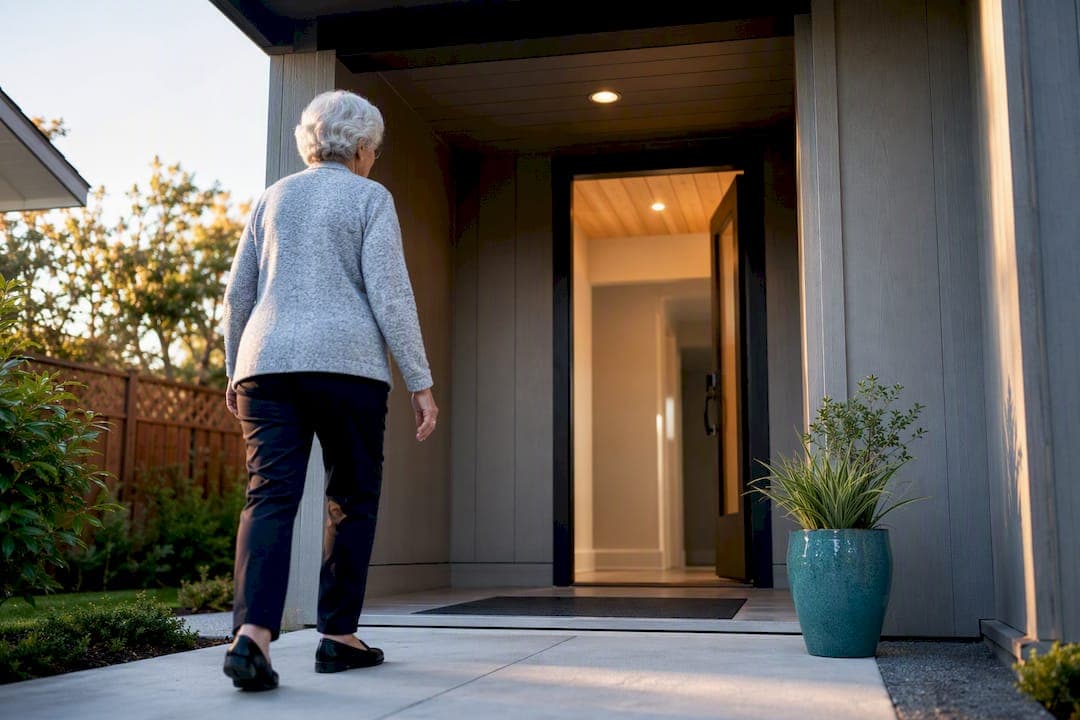
Yes, for many active, independent seniors, an accessory dwelling unit is one of the most practical ways to age in place while keeping real privacy. The trade-offs are real too. Cost and permitting swing hard depending on your city, and the unit needs accessible design from day one, not as an afterthought. Start by calling your local planning department this week to find out what's actually allowed on your lot.
TL;DR:
- Detached ADUs offer the highest privacy and accessibility, but they are also the most expensive and require the most yard space and permits.
- Building an ADU is generally a one-time investment that can generate rental income and boost property value, making it more affordable long-term than assisted living options.
- Local regulations and permits vary widely; checking setback, parking, rental, and utility rules with your city early can prevent costly delays.
- Essential design features for aging-in-place include single-story, zero-step entrances, wider doorways, grab bars, and non-slip flooring to ensure long-term independence.
- Costs for ADUs range from about $40,000 for conversions to over $350,000 for new detached units, with financing options like HELOCs and local grants available.
Table of Contents
- What Is an Accessory Dwelling Unit, and What Do People Call It?
- How Does an ADU Support a Senior's Independence?
- Which ADU Type Fits a Senior's Situation Best?
- What Does an ADU Cost, and How Do People Pay for It?
- How Do You Navigate Local Permits and Zoning Rules?
- What Design Features Actually Protect Long-Term Independence?
- How Do You Move From Idea to a Permit-Ready Plan?
- What Does Living in an ADU Actually Take to Maintain?
- What Legal Issues Should Seniors Consider Before Building?
- How Does an ADU Connect You to Local Senior Services?
- An Honest Look at What ADUs Really Solve, and What They Don't
- How Aging Solo Can Help You Plan Your Next Move
- Where to Verify the Details Before You Build
- Sources
- FAQ
What Is an Accessory Dwelling Unit, and What Do People Call It?
An accessory dwelling unit, or ADU, is a self-contained living space on a property that already has a main house. To count as an ADU, it needs its own kitchen, its own bathroom, and its own entrance, separate from the main home. You've probably heard it called something else. "Granny flat," "in-law suite," and "casita" all describe the same basic idea: a small, complete home tucked onto a lot that already has one.
The forms vary more than the name suggests:
- Detached ADU: a freestanding structure in the backyard, fully separate from the house
- Attached ADU: built onto the side or back of the main home, sharing a wall
- Garage conversion: an existing garage turned into living space
- Basement conversion: a below-grade unit carved out of existing square footage
- Above-garage unit: living space built over an existing or new garage
- Junior ADU (JADU): a smaller unit, often within the footprint of the main house, sometimes sharing an entrance
Local rules define these terms differently from one city to the next, so the same floor plan might qualify in one town and get rejected two towns over.
How Does an ADU Support a Senior's Independence?
The biggest draw for most solo agers isn't the structure. It's what the structure protects: your own front door, your own routine, and your own say over who comes in and when. A separate entrance and full kitchen mean you're not a guest in someone else's house, even if that someone else is your daughter or your closest friend.
Living steps away from family, rather than sharing a hallway with them, tends to strike a better balance than either full independence or full dependence. You get informal help nearby, someone who notices if your lights don't come on in the morning, without giving up your own schedule or your own space. AARP's research on ADUs shows strong interest among older homeowners in exactly this kind of arrangement, and documents how ADUs expand affordable housing options as people age.
There's a financial angle too. An ADU is a one-time capital investment that becomes a lasting asset, while assisted living and most in-home care are recurring costs that never stop. Some seniors rent the unit out for income while they're still fully able-bodied, then move into it themselves later, or vice versa.
This setup fits best for seniors who are:
- Still managing daily activities largely on their own
- Comfortable living solo but wanting family or a caregiver close by
- Interested in generating rental income from part of their property
- Planning years ahead rather than reacting to a health crisis
Which ADU Type Fits a Senior's Situation Best?
Not every ADU configuration serves aging well. A detached unit on one level offers the most privacy and the easiest long-term accessibility, since you control the whole structure and can design it flat, from front door to shower, with no shared walls to negotiate. It also tends to need the most yard space and the biggest budget.
An attached ADU or home addition costs less to build because it shares utility lines and sometimes a wall with the main house. Family members are closer if something goes wrong, but that same closeness cuts into the privacy that made the unit appealing in the first place.
- Garage or basement conversions save money since the shell already exists, but check the entry grade carefully. Basements often mean stairs, and garages sit lower than the yard, so a zero-step entrance may need real regrading.
- JADUs and other size-capped units work fine for occasional guests or a caregiver's short stay, but their small footprint rarely suits full-time senior living over many years.
- Above-garage units solve the space problem but almost always require stairs, which rules them out for most long-term aging-in-place plans.
What Does an ADU Cost, and How Do People Pay for It?
Cost is where ADU plans either move forward or stall out, and the range is wide. A simple conversion of an existing garage or basement can run about $40,000, while a new detached, fully accessible ADU commonly falls between $120,000 and $350,000 or more, depending on your region and finish level, according to Angi's construction cost data.
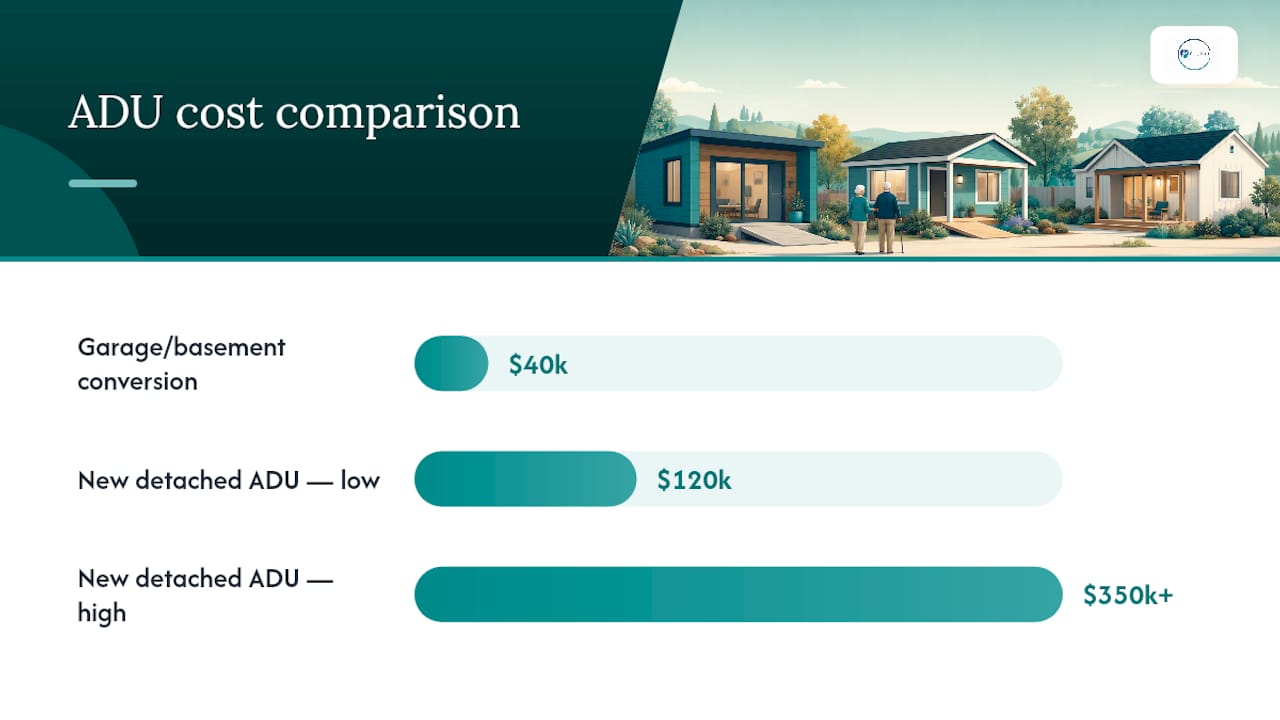
Set against that upfront number, the math often favors the ADU. Assisted living is a recurring monthly bill for as long as you're there, while an ADU is a fixed cost that adds value to your property and keeps building equity instead of draining a budget every month.
Most owners finance the build through one of a few routes:
- A home equity line of credit (HELOC) against the main property
- A dedicated construction loan, converted to a standard mortgage once the unit is finished
- A cash-out refinance on the existing home
- Occasional state or local pilot grants aimed at expanding ADU supply, worth checking with your city
Expect roughly four to nine months from permit approval to move-in for a straightforward build, longer if your city requires multiple review rounds or your lot needs grading work first.
How Do You Navigate Local Permits and Zoning Rules?
This is the step people skip and regret skipping. ADU rules live at the city or county level, and they vary enormously, which means the plan your neighbor built three towns over may not be legal on your lot at all.
- Call your local planning or building department and ask directly about setback requirements, parking minimums, owner-occupancy rules, maximum unit size, and whether short-term rentals are allowed.
- Ask whether both the main house and the ADU can be rented separately, since some jurisdictions require the owner to live in one of the two units.
- Request a pre-application meeting if your city offers one. Many planning offices will walk through your lot's zoning summary with you before you spend a dollar on drawings.
- Ask about utility hookup requirements, since a separate water or sewer connection can add real cost that a shared line avoids.
Massachusetts recently moved to make ADUs by-right statewide, meaning many towns can no longer block them outright, a policy shift documented on Mass. Some West Coast states have made similar moves. The American Planning Association tracks these regulatory patterns nationally, and it's worth checking whether your state has followed suit before you assume the answer is no.
Pro Tip: Bring a simple sketch of your lot to that first planning department call, even a rough one. Staff can often tell you in minutes whether your idea is a quick yes or a longer conversation, which saves weeks of back and forth later.
What Design Features Actually Protect Long-Term Independence?
Design decisions made on paper are far cheaper than the same fixes made after you've moved in. A single-story, zero-step entry is the one feature to insist on above all else. Once the slab is poured, adding a ramp later is a much bigger job than grading the site correctly before construction starts.
From there, the priority list runs through the details that matter daily:
- Wider doorways and hallways that accommodate a walker or wheelchair without a redesign
- A curbless shower with wall blocking installed for grab bars, even if you don't need them yet
- Comfort-height toilets and reachable light switches, kitchen shelves, and closet rods
- Non-slip flooring throughout, plus lever-style door handles instead of knobs
None of this needs to look institutional. Good universal design blends into a normal, warm home, and private single-family ADUs aren't subject to ADA rules anyway, so you're free to prioritize dignity and comfort over a clinical checklist. Discreet smart-home options, like motion-activated lighting or unobtrusive activity sensors, can add a layer of reassurance without turning the space into a monitoring station. If you plan to rent the unit out eventually, weigh those choices against resale and rental appeal. A related resource on senior bathroom modifications covers the fixture details in more depth, and the case for single-floor living explains why that one decision shapes everything else. For furnishing the space without a hospital feel, flexible layout ideas from a home design perspective are worth a look too.
How Do You Move From Idea to a Permit-Ready Plan?
Momentum matters here. Projects stall for months when the first decisions get skipped.
- Decide what the unit is actually for. A parent's private residence, a live-in caregiver's quarters, and a rental unit each demand different layouts and trigger different permit rules.
- Pull your lot's basic facts together: lot size, setbacks, and existing utility lines. Your municipality's zoning summary will have most of this on file.
- Set a realistic budget early and get two or three bids from builders who can show you accessible-build examples, not just standard ADU photos.
- Hire a designer or architect who already knows your local ADU ordinance. This alone can shave weeks off the permit review.
- Talk through the money and the roles with family before you break ground. Who pays for what, who has keys, and what happens if plans change later are easier conversations before construction than during it.
What Does Living in an ADU Actually Take to Maintain?
An ADU doesn't run itself once the ribbon's cut. You're managing a second structure with its own roof, its own HVAC system, and often its own utility meter, on top of whatever upkeep the main house already needs.
Budget for it the way you'd budget for any home: a seasonal walk-through, gutter cleaning, HVAC filter changes, and a repair fund for the inevitable water heater or appliance replacement. If the unit is rented, add tenant turnover costs, from cleaning to minor repairs between leases, to that same fund.
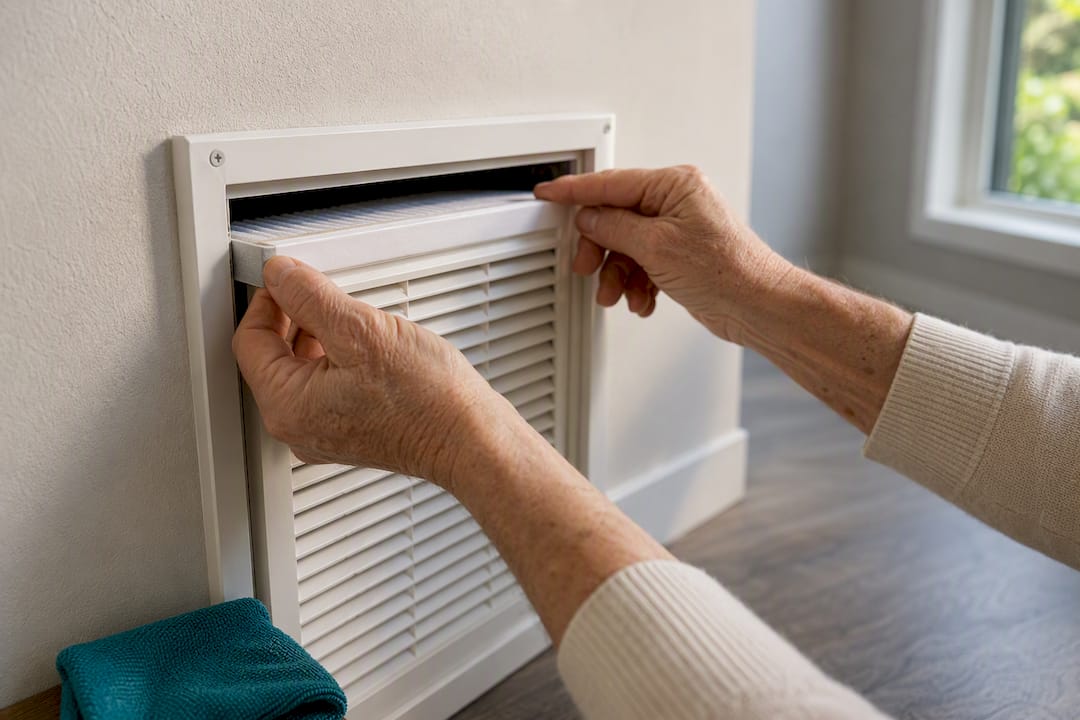
The practical question worth asking before you build is who handles this upkeep years from now, if your own mobility changes. Some families split responsibilities, with a nearby relative handling yard work and repairs while the senior manages day-to-day living. Others hire a property manager for a rented unit, which adds a monthly cost but removes the burden of chasing tenants for rent or coordinating repair visits. Either way, decide this before you need the answer, not during a crisis.
Smaller footprints do have one real advantage: less square footage generally means less to maintain, fewer rooms to heat and cool, and a shorter list of surfaces that need attention. A well-built detached ADU, sized appropriately rather than maximized to the lot line, often costs less to keep running year over year than the main house it sits next to.
What Legal Issues Should Seniors Consider Before Building?
Property rights and tenancy law deserve real attention, especially if you plan to rent the ADU out rather than live in it yourself. Adding a rental unit to your property can change your liability exposure, your insurance requirements, and potentially your property tax assessment, depending on your state and county.
If you rent to a tenant, standard landlord tenant law applies, meaning eviction, lease terms, and habitability standards follow the same rules as any other rental in your state. That's worth knowing upfront: renting out an ADU makes you a landlord in the eyes of the law, with all the obligations that comes with, even if the tenant is a familiar face.
For seniors building an ADU on a property they don't fully own outright, or one held in a trust or shared with adult children, the ownership structure matters just as much as the design. An internal connecting door between the main house and the ADU is convenient for a family member checking in, but it can also complicate the unit's future as a stand-alone rental if your plans change. Think through how the property might be used, sold, or inherited before you finalize the layout, and put family agreements about the ADU's future in writing rather than leaving it as an assumption everyone remembers differently.
A conversation with a local real estate attorney, even a short one, before you finalize plans can prevent a costly surprise later, particularly around how the ADU affects your home's title, your estate plan, or a future sale.
How Does an ADU Connect You to Local Senior Services?
An ADU doesn't have to mean isolation, and it shouldn't. Many communities run age-friendly programs that specifically support ADU construction for older residents, from expedited permit tracks to design consultations aimed at aging-in-place features. Portland's age-friendly initiative, for one, treats ADUs as a deliberate tool for keeping seniors rooted in their existing neighborhoods rather than uprooting them into unfamiliar senior housing across town.
That's the real value most people overlook: an ADU keeps you near the pharmacy you already know, the neighbor who waters your plants, and the doctor's office you've been going to for a decade. Local Area Agencies on Aging can often point you toward meal delivery, transportation services, or in-home health aides that plug into your existing ADU setup without requiring a move. A quick check with a local monitoring service, like Well-Check's wellness check system, can also add a layer of daily reassurance for a senior living solo in an ADU, without anyone hovering.
An Honest Look at What ADUs Really Solve, and What They Don't
The conventional pitch treats an ADU as a housing upgrade. That undersells it. What an ADU actually buys a solo ager is leverage over their own life. You get to choose proximity to people you love without surrendering your front door key to them.
Where I think the guidance out there falls short is the assumption that any senior wanting more support should build an ADU next to family. Sometimes the better version of that same idea is renting one out and using the income to fund your own life somewhere else, or building one for a caregiver instead of moving one for yourself. The structure is flexible. Don't let anyone, including a well-meaning contractor, tell you there's only one right way to use it.
What matters most isn't the square footage or the finish level. It's whether the decision came from a real conversation about what you want your daily life to look like, not a panicked reaction to a fall or a diagnosis. An ADU built from that kind of clarity tends to serve you for decades. One built in a hurry rarely does.
If you're weighing an ADU as part of a bigger picture of staying independent, our guide on maintaining independence while aging at home walks through how housing decisions fit alongside the other pieces of a solid plan.
— Mike
How Aging Solo Can Help You Plan Your Next Move
Deciding whether an ADU makes sense for your life isn't just a construction question. It's a question about what independence should look like for you specifically, and that's where a lot of well-meaning advice falls short.

A clarity session is available to help explore housing fit, priorities around privacy and proximity, and provide a personalized checklist and next steps to consider whether an ADU, a different housing move, or staying put is appropriate. It pairs well with our free guides on single-floor living and bathroom modifications if you want to keep researching the design side on your own first. When you're ready for a plan built around your actual life instead of a generic checklist, book your Solo Aging Clarity Session and get a straight answer on whether an ADU fits where you're headed.
Where to Verify the Details Before You Build
- AARP's ADU resource hub for national policy context and older-homeowner survey data
- Mass as a working example of statewide by-right permitting reform
- American Planning Association's ADU knowledge base for municipal regulatory patterns
- Accessorydwellings for detailed construction types and best-practice design examples
- Angi's ADU cost breakdown for current construction pricing ranges
Sources
- How much do ADU costs? — Angi
- ADUs Make Housing More Affordable for Older Adults — AARP
- Mass
- Accessory dwellings — American Planning Association
FAQ
What's One Drawback of an ADU?
The biggest drawback is upfront cost combined with local permitting uncertainty. A new detached, accessible ADU can run well into six figures, and your city's zoning rules might restrict size, parking, or rental use in ways that limit your options before you even start.
What State Has the Most Affordable Senior Housing?
Affordability varies by county as much as by state, since housing costs and ADU permitting ease both shift block by block. Rather than chasing a single "cheapest" state, check your own city's ADU rules and cost of construction directly, since a permissive, lower-cost area near you may beat a distant state's reputation.
What States Are ADU Friendly?
Massachusetts recently made ADUs by-right statewide, removing local veto power in most towns, and several West Coast states have passed similar reforms in recent years. Rules still vary significantly by city within any state, so always confirm directly with your local planning department.
What Is a Grandma Pod?
"Grandma pod" is an informal nickname for a small, prefabricated detached ADU marketed toward housing an aging parent close to family. It's the same basic concept as a granny flat or in-law suite, just built from a factory kit rather than framed on-site.