
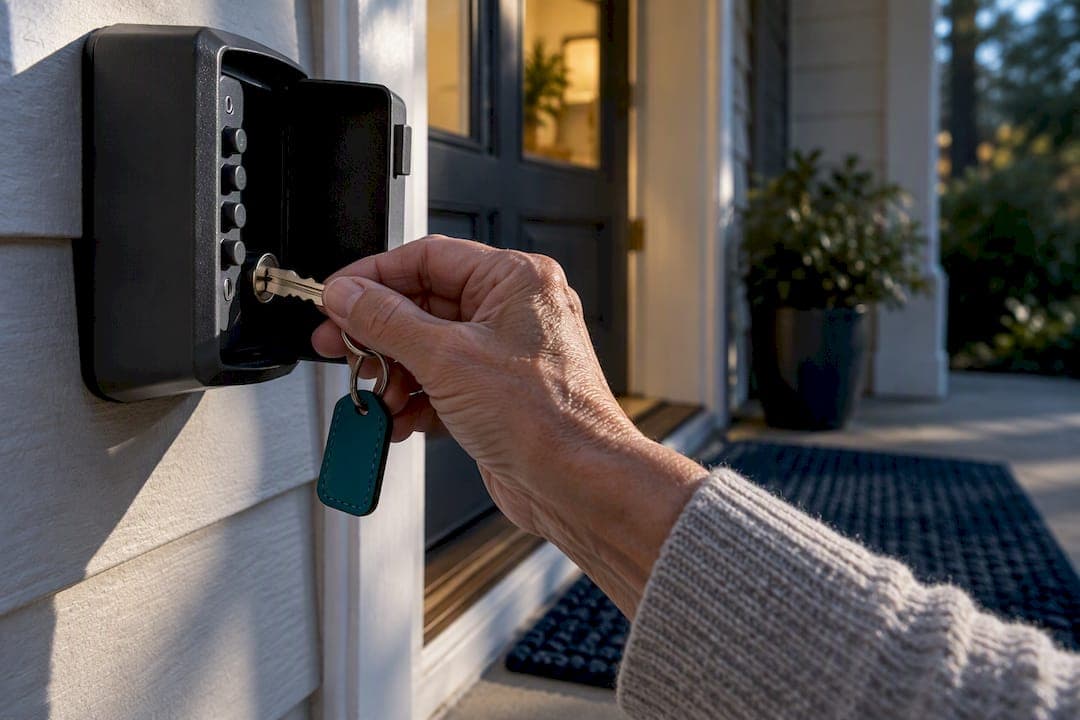
An emergency lockbox is worth having if you live alone or have a health condition that could stop you from getting to the door, and it earns its keep the first time paramedics reach you in seconds instead of minutes, without breaking a window to do it. The trade-off you need to understand upfront is access: who holds the code or the master key, and under what rules they're allowed to use it.
TL;DR:
- Most municipal programs qualify seniors living alone or with health issues, with some offering free lockboxes for those over 62 or 65.
- Fire departments typically recognize approved models like SupraSafe or wall-mounted safes, which must match their master-key systems for activation.
- Installation and registration usually take a few weeks, and registration with dispatch is essential for responders to access the lockbox during emergencies.
- Regularly updating access codes and moving the lockbox after changes in living arrangements prevent unauthorized use and maintain reliability.
- A lockbox should be paired with other safety tools like emergency binders and medical alerts for comprehensive independent living protection.
Table of Contents
- How an emergency lockbox actually works
- Municipal and fire department lockbox programs: who qualifies
- Comparing lockbox types and what matters for security
- Getting a lockbox installed, registered, and paid for
- Keeping your lockbox reliable without giving up your privacy
- Choosing the right path as a solo ager
- A phone call at 2 a.m.
- Planning beyond the lockbox
- Where to check local rules and approved models
- Sources
- FAQ
How an emergency lockbox actually works
A lockbox is a small, secured container mounted near your front door that holds a spare key. When a 911 call comes in, first responders retrieve the key using a code, a master key system, or both, and let themselves in without forcing the door.
There are three common forms:
- Door-hanger lockboxes: lightweight units that hang on a doorknob, often the cheapest option but also the easiest to pry off.
- Wall-mounted key safes: bolted into brick or siding near the entry, offering more resistance to tampering.
- Heavy-duty Knox/HomeBox-style boxes: reinforced steel units built specifically for fire department master-key systems.
Access generally works one of two ways. Some departments use a physical master key that every fire engine in the jurisdiction carries, opening any registered Knox/HomeBox residential system in that coverage area. Others use dispatch-issued codes tied to your address, released only after a verified emergency call. Responders won't open your box for a lockout or a delivery. It's reserved for genuine emergencies, and most programs are explicit about that limit.
Municipal and fire department lockbox programs: who qualifies
Many local fire departments run residential lockbox programs, and they tend to follow a familiar pattern. Many U.S. municipal programs prioritize older adults living alone or managing chronic health conditions, often with a minimum age threshold around 62 or 65, though the exact cutoff varies by city.
The general workflow looks like this:
- You contact your local fire department or community risk reduction office to ask about eligibility and available models.
- If you qualify, the department either loans or subsidizes a box, or directs you to buy an approved model yourself.
- A technician or firefighter installs the box near your entry point and confirms it's accessible.
- Your address and box details get registered with emergency dispatch, so responders know a box exists before they even arrive.
Funding varies widely. Some programs are free to qualifying residents, while others ask you to purchase the box yourself and simply handle installation and registration for you. A few departments partner with local foundations or offer installment options to keep costs manageable for residents on fixed incomes. The registration step matters as much as the box itself: an unregistered lockbox, however sturdy, may sit outside the system responders actually use.
Comparing lockbox types and what matters for security
Not every lockbox on the market is built for emergency response, and the differences show up fast once you look closely.
- Construction: steel bodies and reinforced hinges resist prying far better than plastic or thin aluminum shells.
- Program compatibility: approved models like SupraSafe and wall-mounted key safes are the ones fire departments recognize and will actually use.
- Accessibility: push-button pads with large, tactile digits work better for older hands and eyes than tiny scroll dials.
- Code visibility: avoid boxes where the combination is exposed or easily read by anyone standing at your door.
The trade-off comes down to durability versus program acceptance. A cheap door-hanger box might satisfy you, but if your fire department's system is built around master keys for a specific approved model, a mismatched box could sit there unused during the one moment it matters. Security guidance for older adults generally points toward push-button units with high combination counts and solid, tamper-resistant housing over flashy or minimalist designs.
Pro Tip: Ask your fire department which model they carry master keys for before you buy anything. A box that isn't on their approved list may be invisible to the system that's supposed to use it.
Getting a lockbox installed, registered, and paid for
Start with a phone call, not a purchase. Your local fire department or community risk reduction office can tell you which models they support and whether they install boxes themselves.
- Call your fire department and ask about eligibility, approved models, and whether installation is included.
- Ask about cost. Some departments provide boxes at no charge to qualifying seniors, while others charge a modest fee for an approved unit plus installation.
- Choose a mounting location near the main entry that's visible but not overly exposed to street view.
- Place a spare key inside, along with a small card noting any critical medical information responders should know.
- Confirm your address and box details are registered with local dispatch, since a box that isn't on file may go unused in an emergency.
The whole process, from first phone call to a working, registered box, usually takes a couple of weeks depending on how busy your local department is.
Keeping your lockbox reliable without giving up your privacy
A lockbox only helps if it stays current and if you're comfortable with who can reach it.
- Change the code or swap the key whenever someone with legitimate access to it moves out, changes roles, or you simply feel it's been shared too widely.
- Share codes sparingly: family members who check in regularly are reasonable holders, but the master access point should remain with dispatch or your fire department, not scattered among acquaintances.
- If you change your locks, move, or your caregiving arrangement shifts, update or remove the box the same week, not months later.
Municipal programs are built around this kind of restraint. Access is typically limited to a verified emergency call, which means your box isn't a spare key floating around for convenience. It's a tool with one job.
Pro Tip: Set a twice-a-year reminder, maybe tied to daylight saving time changes, to check the box's battery (if electronic) and confirm the key inside still matches your current locks.
Choosing the right path as a solo ager
If you live alone with no one nearby who holds a spare key, start with your local fire department and ask about their residential program before buying anything. A caregiver managing a parent's care from a distance might lean the same way, since registration with dispatch does more good than a box bought online without local buy-in.
Whichever route you choose, pair the lockbox with a one-page emergency binder listing medications, emergency contacts, and your doctor's information, and consider a medical alert device if a fall or sudden illness is a real concern. A trusted neighbor who knows the code, alongside your dispatch registration, adds one more layer without complicating anything. For a broader look at building this kind of support system, our guide on living alone and staying safe walks through the pieces that tend to get overlooked.

A phone call at 2 a.m.
A caregiver once told me the worst part wasn't the fall itself. It was standing outside her mother's door at 2 a.m., keys sitting fifteen minutes away, listening to paramedics debate whether to break the glass. That's the moment a lockbox exists for. Register it with dispatch, keep a short emergency binder nearby, and let the rest of your life stay exactly as full and connected as it already is.
— Mike
Planning beyond the lockbox
A lockbox solves one specific problem well, but it's rarely the only piece of a solid emergency plan. If you're trying to figure out whether your fire department's program fits your situation, or how a lockbox should connect to a medical alert system, a trusted neighbor, and the rest of your support network, that's exactly the kind of decision our Solo Aging Clarity Session is built for.
In a 45-minute session, we help you think through:
- Whether a municipal program or a personal key safe makes more sense for your address and situation.
- How to notify dispatch and keep your emergency contacts current.
- Where a lockbox fits alongside the rest of your independent living plan.
The session is a paid, one-time consultation, priced at $97. If you'd like a clear, personalized next step instead of guessing your way through it, you can book a Solo Aging Clarity Session directly on our site.
Where to check local rules and approved models

For your own city's eligibility rules and approved devices, check your local fire department's program page, such as Elgin's Lock Box Program or Front Range Fire Rescue's Knox Box guidance.
Sources
- Lockbox Program | Glendale, AZ
- Knox Box for Your Home | Front Range Fire Rescue
- FAQ (Residential Lockbox) | Royal Oak, MI
- Lock Box Program | City of Elgin, Illinois
FAQ
What is the best key safe for elderly people?
The best option is usually whichever model your local fire department's master-key system recognizes, since a box outside that system may not be usable in an emergency. Look for steel construction, large push-buttons, and a design your department has approved.
Where can I get a medication lockbox for free?
Some municipal fire departments offer free or subsidized lockboxes to qualifying seniors, particularly those living alone or managing chronic conditions. Contact your local fire department or community risk reduction office directly to ask about current program availability and eligibility.
Can anyone buy a Knox Box for their home?
Residential Knox/HomeBox-style units are generally available for purchase, but they're most useful when your local fire department can actually access them through a master-key system. Check with your department first to confirm compatibility before buying one.
What are the best safety devices for older adults living alone?
An emergency lockbox paired with a medical alert device covers two of the biggest gaps: getting responders in the door and getting help called in the first place. A short emergency binder with medications and contacts, kept near the entry, rounds out a workable plan without adding complexity.
How do I use a lockbox once it's installed?
Place a spare key inside, register the box's location and code with your local dispatch or fire department, and confirm the code with anyone who has legitimate reason to use it. Update the code whenever your locks, caregivers, or living situation change.