
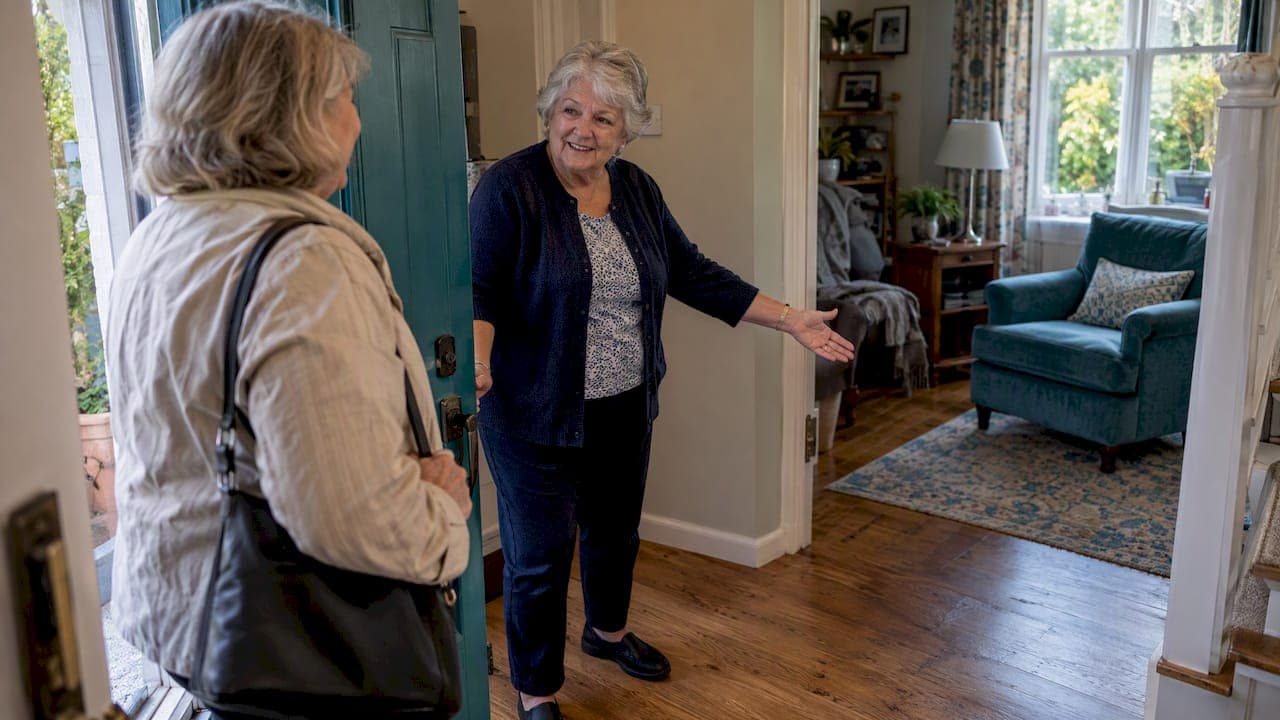
A short visitor protocol, three home fixes, and a visible emergency-contact system handle most of the risk around home visits. The three fixes are simple: secure rugs and clear pathways, add grab bars and non-slip surfaces in the bathroom, and brighten hallways and stairs. We will walk through visitor scripts, how often to reassess your setup, and what to prepare before anyone comes through your door.
TL;DR:
- Confirm each visitor’s identity by phone or text on the day, and keep the door secured until you recognize them.
- Before aides or contractors arrive, clear their work path, share relevant allergies or mobility limits, and agree on tasks, timing, payment, and boundaries.
- Post your full address and emergency contacts by the door; test alert systems monthly and keep medication and allergy details nearby.
- Book a fall risk assessment after a fall, hospital stay, or diagnosis affecting balance; otherwise, reassess every six to twelve months with a clinician.
Table of Contents
- Top in-home hazards and quick fixes
- Visitor safety: screening and answering the door
- Preparing for professional home visits
- Emergency contacts and small systems that help
- When to schedule a home safety assessment
- Aging Solo perspective: two starter moves to try tonight
- Safe communication practices for visitors and seniors
- Protocols for identifying and managing suspicious behavior
- Training visitors on emergency procedures specific to your home
- Guidelines for managing visitors with cognitive impairments or behavioral challenges
- What actually matters most in home visit safety
- A personalized plan: the Solo Aging Clarity Session
- FAQ
- Sources
Top in-home hazards and quick fixes
Picture the last time someone came by to help with groceries or just to visit. Most of the risk in that visit lives in the five feet around your front door, your bathroom, and your stairs. These are the places worth your attention first.
- Rugs and floors: remove loose rugs where you can, or secure the ones you love with non-slip pads, and tape down any visible cords.
- Lighting: use bright bulbs in hallways and on stairs, add night lights in the bathroom, and put contrast tape on step edges so they stand out.
- Bathroom: install grab bars near the shower and toilet, add non-slip strips to the tub floor, and consider a shower chair if standing for long periods feels unsteady.
- Stairs and handrails: check that handrails are sturdy on both sides where your stairway allows, and add slip-resistant treads if the steps are bare wood or tile.
- Clutter and storage: keep shoes, bags, and loose items off main walking paths, and store everyday items where you can reach them without climbing on a chair.
- Pets: keep a clear walking path free of leashes, toys, and food bowls during the busiest parts of a visit.
The National Institute on Aging's room-by-room guidance walks through exactly this kind of fix, room by room, which makes it a useful checklist if you want to go deeper after reading this.
Pro Tip: Rather than stripping every rug from your floors tonight, start with the ones in your main walking path and leave the rest for your next pass.
If you want a short, guided version of this process, our home safety audit checklist breaks these fixes into something you can start tonight.
Visitor safety: screening and answering the door
Safety at the door does not have to feel like suspicion. A few small habits let you stay warm and open while still knowing who is coming and when.
- Before the visit: set a rough appointment window, keep a short list of trusted visitors, and confirm identity by phone or text the day of the visit.
- At the door: use a peephole or video doorbell if you have one, keep the chain or lock engaged until you recognize the person, and ask new visitors to wait on the porch until you're ready to invite them in.
- During the visit: keep larger gatherings to a smaller group and choose a quiet room, which matters even more if you or a visitor lives with memory changes, since the National Institute on Aging notes that limiting visitor numbers and offering a quiet space reduces agitation.
Pro Tip: A simple line like "I'd love to see you, can we make it Thursday instead?" protects your schedule without sounding like a rejection.
Preparing for professional home visits
Aides, contractors, and other helpers do their best work when they know what to expect before they walk in.
- Clear a working path to wherever the visit will happen, and set aside a spot for tools or supplies.
- Share relevant health notes ahead of time, such as allergies or mobility limits, while keeping anything you'd rather not disclose private.
- Point out where medications or sharps are stored, and explain how you'd like waste handled.
- Walk through what the visit will cover: how long it runs, what tasks are included, how payment works, and what you're comfortable with them doing.
NIOSH and CDC training materials describe safe-moving techniques and tools like gait belts and transfer boards that protect both the visiting worker and you, especially during help with bathing or transfers.
Emergency contacts and small systems that help
A visit goes more smoothly when help is one glance or one button away. The National Institute on Aging recommends posting emergency contact information near your phones and front door, including 911, your doctor, your pharmacy, and a trusted neighbor.
- Post your full address next to the list, since that detail is easy to forget under stress.
- Consider a voice-activated assistant or a single-button medical alert device for fast, one-touch help.
- Keep a laminated visit folder near the entry with your medication list, allergies, and contacts for anyone who comes to help.
- Test these systems monthly and add a nearby friend or neighbor as backup.
Falls remain the leading cause of injury and death among adults 65 and older in the United States, and slips and trips make up a large share of home-care injury claims, according to the Safe Home Care Intervention Study. A visible emergency system shortens the gap between a fall and getting help.
When to schedule a home safety assessment
A home that worked fine last year might need a second look now, especially after a health change.
- Schedule an assessment after any fall, hospital stay, or new diagnosis that affects balance or strength.
- Otherwise, aim for a check every six to twelve months as a steady rhythm rather than a reaction to a crisis.
- A thorough assessment covers your entryway, main living spaces, bathroom, stairs, lighting, emergency plan, pets, medication management, and how you communicate expectations with any paid helpers.
- Occupational therapists, nurse-led home visits, and local elder services can each run this kind of review. Ask specifically for a fall-risk and home-hazard assessment so you get the right scope.
If a paid aide is part of your plan, our partner guide on Medicare home health coverage explains when Medicare may help cover these visits.
Aging Solo perspective: two starter moves to try tonight
We think of a good visit like the one where a friend stopped by on a Tuesday afternoon, kicked off her shoes by the door, and settled into the chair across from yours without either of you worrying about a thing. That ease is the goal, not an afterthought to safety.
Two small moves get you there faster than any long list. First, clear and mark a safe path from your door to your favorite chair tonight. Second, call or message one trusted contact and agree on a quick check-in after visits.
Our Friendly Visitors Program walks through building this kind of low-pressure support, and a Solo Aging Clarity Session can help you turn these starter moves into a plan that fits your home.
Safe communication practices for visitors and seniors
Clear, kind communication does as much for safety as any grab bar. Visitors who know what you need, and what you'd rather handle yourself, are far less likely to create friction or step past a boundary without meaning to.
Say what you want plainly and early. "I can manage the stairs myself, but I'd appreciate a hand with the groceries" tells a visitor exactly where to help. If something feels unclear during a visit, a simple question like "can you walk me through what you're planning to do?" resets the conversation without conflict.
For visits involving personal care or home tasks, agree on expectations before the person arrives rather than negotiating them at the door. This matters most for aides and contractors, where a quick conversation about timing, tasks, and payment prevents misunderstandings later. For social visits, a text exchange beforehand, confirming time and purpose, does the same job in a lighter way.
Written notes help too. A short card by the door reminding visitors of house preferences, quiet hours, or mobility needs saves you from repeating yourself and gives new visitors a clear starting point.

Protocols for identifying and managing suspicious behavior
Most visitors are exactly who they say they are, but a few habits help you trust that judgment with confidence instead of second-guessing it.
Unexpected visitors who claim to be from a utility company, a government office, or a charity warrant a pause. Legitimate workers carry identification and expect you to verify it, so ask to see a badge, then call the company directly using a number you look up yourself, not one the visitor provides.
Pressure is a signal worth taking seriously. Anyone who pushes you to decide immediately, let them inside right away, or hand over financial information during a single visit is asking for more trust than a first meeting deserves. It's reasonable to say you need time, close the door, and follow up later on your own terms.
If something feels off during a visit already underway, a simple exit line works: "I need to step into the other room for a moment." That gives you space to call a neighbor or trusted contact without confrontation. Keep that contact's number posted where you can reach it quickly, which ties back to the emergency system described earlier.

Training visitors on emergency procedures specific to your home
A visitor who knows your home's layout and your specific needs can respond faster if something goes wrong. This matters most for aides, contractors, or anyone who visits regularly rather than for a single social call.
Walk new regular visitors through where you keep your emergency contact list, how to reach your medical alert device if you have one, and which exit works best if you use a walker or wheelchair. A five-minute orientation on their first visit saves confusion later.
Be specific about your own needs rather than giving generic instructions. If you have a hearing limitation, tell visitors how you prefer to be alerted in an emergency. If a particular door sticks or a step is uneven, point it out directly instead of assuming they'll notice.
For aides or helpers who come regularly, the NIOSH home-care safety materials include guidance on safe lifting and transfer techniques that protect you both, worth reviewing together if physical assistance is part of their visit.
Guidelines for managing visitors with cognitive impairments or behavioral challenges
Visits involving memory changes, whether yours or a visitor's, call for a gentler pace and a few adjustments rather than a different set of rules entirely.
Smaller groups work better than large gatherings. The National Institute on Aging notes that limiting the number of visitors at once and setting up a quiet space during larger gatherings reduces agitation for people living with Alzheimer's or related conditions. If a holiday or family visit is coming up, consider staggering arrivals or setting aside a quiet room where someone can step away if things feel like too much.
Familiar routines help more than explanations. If a visitor seems confused or repeats questions, answering calmly and consistently, without correcting them, keeps the visit steady. Visual cues, like a labeled door or a photo by the phone, support orientation without feeling clinical.
If you're the one hosting a visitor who lives with memory changes, keep the environment predictable: same seating, same time of day, same general flow. Small consistency does more for comfort than any single conversation.
What actually matters most in home visit safety
Most advice on this topic leans hard into prevention and process, as if safety were a matter of checking every box before anyone's allowed through the door. We think that gets the order backward. The home fixes matter, but they matter because they let you keep inviting people in, not because risk is the main event of your day.
The conventional approach often treats visitors as a category of risk to manage. We'd rather you treat most visitors as exactly what they are: people who want to see you. The protocols in this guide exist so that warmth and caution can coexist, not so caution wins.
If you take one thing from everything here, let it be this: fix the three or four things that genuinely raise your risk, then stop checking boxes and let the visit be a visit. Confidence in your setup is what lets you answer the door with a smile instead of a mental list.
— Mike
A personalized plan: the Solo Aging Clarity Session
Reading a guide like this one gets you most of the way, but a conversation tailored to your actual home and your actual visitors often clarifies what to prioritize first.
- A focused look at your home and visit patterns, resulting in two to three home fixes worth doing first.
- A visitor-safety script written around your specific situation, not a generic template.
- A relaxed 45 minute call over Zoom, with a few friendly questions sent ahead so we can make the time useful right away.
The Solo Aging Clarity Session costs $97 and gives you a plan built around your home, not a stranger's.
If you'd rather start with a smaller step, booking the session is still the most direct way to turn this guide into a plan that fits your life.
FAQ
What are some home safety ideas for elderly people?
The highest-impact changes are securing loose rugs, brightening hallways and stairs, and adding grab bars in the bathroom near the shower and toilet. The National Institute on Aging's room-by-room guide covers these fixes in detail alongside posting emergency contacts near your phone.
Is Visiting Angels free for seniors?
Home-care agencies typically charge for services, though costs vary by provider and location, so pricing is best confirmed directly with any specific agency. Some home-health services may be covered through Medicare depending on eligibility, which our partner guide on Medicare home health coverage explains in more detail.
What should a 70 year old be doing every day at home?
There's no single required routine, but daily movement, clear walking paths, and a quick check that emergency contacts and devices are working all support safety without adding pressure. Keeping a steady rhythm of light activity and regular contact with a friend or neighbor supports both safety and connection.
What are the safety guidelines for home visits?
Core guidelines include verifying visitor identity before opening the door, keeping walking paths clear of rugs and cords, ensuring good lighting, and posting emergency contacts where they're easy to find. For visitors with cognitive impairments, the National Institute on Aging recommends limiting group size and offering a quiet space to reduce agitation.
How often should I reassess my home's safety setup?
A general rhythm of every six to twelve months works well for most people, with an additional review after any fall, hospital stay, or health change. An occupational therapist or nurse-led home visit can guide a more thorough assessment if you want a second set of eyes.
Sources
- The Safe Home Care Intervention Study: Implementation Methods and Effectiveness Evaluation (2024)
- Preventing falls at home — National Institute on Aging
- Caring for Yourself While Caring for Others — NIOSH/CDC trainer materials