
Picture a Tuesday afternoon in late summer. You're at the kitchen counter with a cup of tea, and the TV shows that spaghetti-strand map sliding toward your part of the coast. The house is quiet. Not lonely-quiet, exactly. Just the kind of quiet where you notice there's no one down the hall to say, "Well, what do you think?"
If you live alone, that moment is real, and it deserves a straight answer. Hurricane prep for seniors on their own comes down to a few things: a modest stash of supplies, a short list of people who know you're there, and a plan you've settled on before the cone shifts. None of it has to be grim. Much of it, done well, ends up making you feel more connected to your street than you've felt in years.
TL;DR
- Alone is not the same as unprotected. Your best storm plan is people: a neighbor or two, a friend, and your local aging-services office.
- Keep a 3 to 7 day supply of water, food, medications and key documents, plus spare batteries for anything you rely on, like hearing aids.
- Sign up for your county or state registry now. These require your own proactive registration and won't sign you up automatically.
- Decide whether you'll stay or go while the sky is still blue, and tell someone your decision.
- Plan the first quiet hours afterward too. Pace yourself, and let someone check on you.
Table of Contents
- The part nobody puts on the supply list
- Start with one conversation over the fence
- Sign up for the registry before you need it
- The supplies, kept human-sized
- Stay or go: decide while it's calm
- Putting your emergency contacts where people can find them
- The quiet after the storm
- Our perspective: a solo life can be a prepared life and a full one
- If you'd like a second pair of eyes
- Making the plan a little bit fun
- FAQ
- Sources
The part nobody puts on the supply list
Most hurricane guides start with water and canned beans. We understand why. But the people we hear from who live alone tend to describe something else first: the feeling.
There's the small jolt of realizing that every decision is yours. Whether to board up, whether to leave, whether to call your niece or your neighbor or nobody at all. When you've run your own life for decades, that's usually a point of pride. During a storm watch, it can feel a little heavy.
So let's name it plainly. Feeling nervous isn't a sign you can't manage. It's a sign you're paying attention. And the way through isn't to get tougher. It's to get connected, in a way that's specific and small enough to actually do.
Start with one conversation over the fence
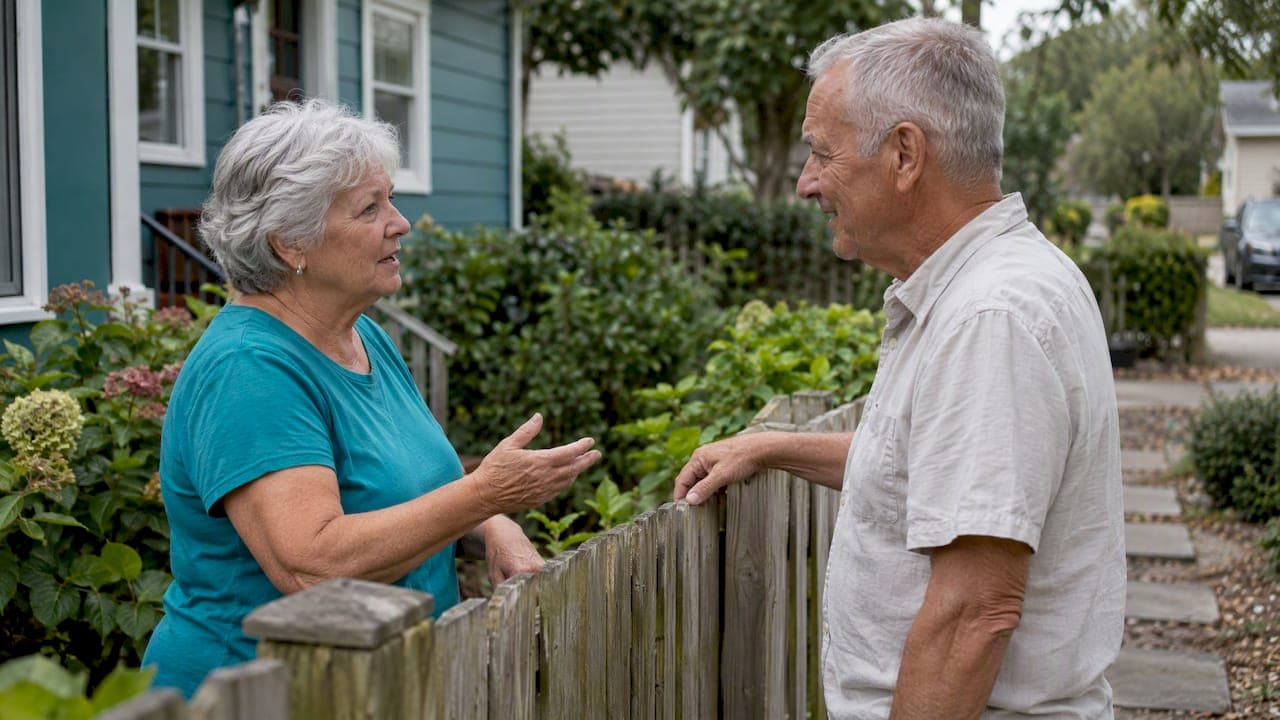
Here's the single idea we'd ask you to try before any shopping trip: knock on a neighbor's door, or text a friend nearby, and say something like, "Hurricane season makes me want to have a plan. Would you be my storm buddy? I'll be yours."
That's it. You're not asking for rescue. You're offering a trade.
This matters for a practical reason. The Administration for Community Living encourages older adults to identify neighbors, friends or local aging organizations who can help with evacuation or daily checks, because first responders may be stretched thin at the height of a disaster. In other words, the first line of support after a storm is very often the person two doors down.
A few things tend to make the conversation easier:
- Offer something first. Maybe you've got a generator-free recipe for a good no-cook dinner, or you're the one with the big flashlight collection. Everybody has something.
- Keep the ask tiny. "Could you knock on my door the morning after?" is easier to say yes to than "Could you look after me?"
- Swap numbers on paper and in your phone. Cell towers can be crowded or down. A written number still works.
If you'd like more help finding your people, our guide on building a reliable support network walks through how a single invitation can grow into a circle. And if the idea of a storm buddy feels awkward because you barely know your neighbors, that's a very normal place to start. A storm season is a surprisingly good excuse to meet them.
Who else belongs in your circle
Think in layers, not in one hero:
- A neighbor who can reach you in minutes.
- A friend or relative outside the storm zone who can be your "home base" for calls and updates.
- Your local Area Agency on Aging or Center for Independent Living, which the ACL points to as a way to connect with local assistance.
- If you have one, a doctor's office or pharmacist who knows what you take.
For people aging without children or close family, this layered approach isn't a backup to the "real" plan. It is the plan, and a good one. We talk about this more in Independence Is Not Isolation.
Sign up for the registry before you need it
This is the one piece of paperwork that's worth doing early, and it only takes a few minutes. Many local emergency management agencies keep registries for residents who may need extra help in a disaster. FEMA notes that these are local services that require you to register yourself through your state or county government well ahead of time, and that systems differ by place.
Florida, for example, runs a statewide Special Needs Registry, and one regional Area Agency on Aging explains that special needs shelters may be opened for people with medical needs who have no other safe place to go. Your state or county will have its own version, or it may not. The simplest route is to search your county's name plus "emergency management" and look for a registry or "access and functional needs" page. If you can't find one, call the county's non-emergency line and ask.
One honest note: signing up doesn't guarantee someone will arrive at your door. It helps officials know where people are. Your neighbor plan and the registry work best together.

The supplies, kept human-sized
You don't need a bunker. You need enough to be comfortable and steady for several days without power or running water.
FEMA's Ready.gov guidance calls for at least three days of water and non-perishable food, and recommends up to seven, at one gallon of water per person per day. For one person, that's a manageable pile: a week's water is seven gallons. Fill the bottom of a closet, not a room.
What tends to be different when you live alone is that nobody else will remember the odd, personal things. So think about your days:
- Food you actually like. Peanut butter, crackers, canned soup with a pop-top, shelf-stable milk, dried fruit, a few treats. Morale counts.
- Medications. Keep extra on hand if your prescriber and pharmacy allow it, plus a copy of your prescriptions.
- Power for your devices. Spare batteries for hearing aids, flashlights and a battery-powered radio, and a charged backup battery for your phone.
- Documents in something waterproof. ID, insurance cards, medication list, emergency contacts.
- Comfort items. Reading glasses, a paperback, a deck of cards, a small blanket. Waiting is part of a hurricane, and it goes better with something to do.
Medications and refrigeration
This is the area where a little knowledge goes a long way. The CDC's hurricane messaging says that if power is out for a day or more, refrigerated medication generally needs to be discarded unless the label says otherwise. It also notes that insulin can be kept at room temperature, between 59°F and 86°F, for up to four weeks, and that blood sugar monitoring matters if it has to be stored warmer than that.
Because this depends on your specific drug, talk to your pharmacist or prescriber before the season gets busy. Ask: "If my power goes out for two days, what do I do with this one?" Write the answer down where you can find it. For a plain-language look at everyday medication storage, this piece on medication storage at home and daily checks is a useful companion.
Devices that quit when the lights do
If you use an oxygen concentrator, a powered mobility device or any equipment that needs electricity, call your supplier and your utility now to ask about backup options and priority restoration lists. Don't wait for the watch. The CDC also flags that elevators in apartment buildings may stop working, so if you live on an upper floor, ask your property manager and neighbors how they plan to handle that. It's an awkward conversation in July and a much easier one than in the middle of a storm.
For a fuller look at getting through an outage at home, we've put together a 72-hour power outage plan for solo seniors.
Stay or go: decide while it's calm
This is the decision that most weighs on people who live alone, and the one most worth making early. Not in the panic of a Thursday night evacuation order, but on a clear weekend with a cup of coffee.
Ask yourself a few honest questions:
- If my area is told to evacuate, where would I go? A friend's guest room inland? A hotel? A public shelter?
- How would I get there? If you don't drive, or don't drive at night or in traffic, who would take you? Our guide to transportation options for solo agers can help you think through rides.
- What would I bring? Medications, documents, glasses, chargers, the comfort items.
- Who knows my decision?
That last one matters most. Whatever you decide, tell your storm buddy and your home-base person. If you're leaving, say where. If you're staying, agree on when you'll check in.
The NOAA hurricane outlook community makes a point that it only takes one storm to make a season a disaster, even in a below-normal year. So the plan isn't tied to the forecast headlines. It's tied to your address.
Putting your emergency contacts where people can find them
If something happens and a responder or a neighbor needs to reach your people, they need to find them fast. Our approach is simple: a digital copy, a wallet copy and a fridge copy. It takes about ten minutes and, once it's done, you can stop thinking about it.

Some people also like saving contacts inside an app they already use. If you travel and keep your itinerary in a trip planner, this walk-through on saving emergency contacts in a trip app shows how quick it can be. Just keep a paper copy as well, since phones die and networks get busy.
The quiet after the storm
Here's something that doesn't make the usual lists. When the wind finally stops, the silence can feel almost like relief. It can also be deceptive.
Weather service guidance for the Gulf Coast notes that it only takes one storm to change your life and your community, and that the cleanup afterward carries its own risks, including heat and overexertion. For older adults, hauling branches in humid weather is a real strain.
So make a gentle agreement with yourself:
- Let the heavy work wait, or let someone else do it. Letting a neighbor help is not giving up independence. It's the same trade you made earlier.
- Take breaks, drink water, and stop if something feels off.
- Check on a neighbor, and let one check on you. A knock at the door and a "Doing okay?" matters more than it sounds.
The CDC also reminds people recovering from disasters to take breaks and remember that strong feelings will fade. If the days after leave you rattled, that's normal. Call a friend, and if the feelings don't ease, talk to your doctor or a counselor.
Our perspective: a solo life can be a prepared life and a full one
We started Aging Solo Today because its founder is a solo ager himself, and he noticed that nearly all the advice for people like him assumed there was a spouse or a grown child standing by. That isn't everyone's life. It isn't ours.
What we've learned is that hurricane prep is rarely the hard part. The supplies are easy to buy. The hard part is the moment when you realize you need to ask someone for something, and you've spent years not asking.
So we'd gently turn the usual advice around. Don't start with the kit. Start with a person. One neighbor who has your number and whose number you have. Once that exists, the water and batteries are just logistics, and the whole season feels different.
We also believe that being prepared isn't the point of life. It's what frees you up for the rest of it: the dinner out, the trip you're planning, the friends you're still making. A steady plan means you can enjoy your own company without a low hum of "what if" underneath.
— Mike Crawford
If you'd like a second pair of eyes
Some people read a guide like this and feel ready. Others want to talk it through: who your people are, what to do about a particular medication or a second-floor apartment, how to fit it all into a life you already love. That's what the Solo Aging Clarity Session is for. It's a 45-minute Zoom conversation, $97, and it's about your situation, not a generic list. If you'd rather explore on your own first, our free resources are at the Compassionate Clearinghouse.
Making the plan a little bit fun
It might sound odd, but the people who handle storm season best often make it a small ritual instead of a chore.
Host a "storm buddy supper" in June or whenever you start. Invite two neighbors, make something simple, and trade phone numbers over dessert. Walk the block together and notice who has a generator, who is a nurse, who has a truck. Suddenly the street has a shape, and you're part of it.
Try a no-power dinner night. Light a few candles, eat the good crackers and the cheese, play cards by the window. Do it once when nothing's at stake, and the real thing feels less foreign. You'll also find out what you're missing, whether it's a can opener or a good book.
These small things work because they turn preparing into belonging. And belonging is the thing that helps most when the weather turns.
If you want to widen the picture beyond storms, our pieces on living alone and emergency planning and aging in place go further.
FAQ
What should seniors who live alone do first to prepare for a hurricane?
Start by talking to one neighbor or friend nearby and agree to check on each other. Then look up whether your county or state has a registry for residents who may need extra help, and sign up. Supplies come next, and they're much easier once you know who's in your corner.
How much water and food does an older adult need?
FEMA's Ready.gov guidance recommends at least three days and up to seven days of non-perishable food and water, at one gallon of water per person per day. For one person living alone, that means three to seven gallons. Add any special dietary needs your doctor has recommended.
Do I have to evacuate if I live alone?
If local officials issue an evacuation order for your zone, follow it. Decide ahead of time where you'd go and how you'd get there, and tell someone. If you have medical needs and no safe place to go, ask your county emergency management office about special needs shelters.
What happens to my medications if the power goes out?
The CDC says refrigerated medications generally need to be discarded after a day or more without power unless the label says otherwise, and insulin has its own room-temperature limits. Your pharmacist can tell you exactly what applies to each of your prescriptions, so ask before storm season.
I don't have family nearby. Who can help?
More people than you might think. Neighbors, friends, faith communities and your local Area Agency on Aging are all places to start. The ACL lists aging organizations and Centers for Independent Living among the groups that can connect older adults with local help.
Sources
- Ready.gov: Build a Kit
- ACL: Emergency Response
- FEMA: Disaster Preparedness for People with Access and Functional Needs
- CDC: Emergency Preparedness Concerns for Older Adults
- CDC: Preparedness and Safety Messaging for Hurricanes, Flooding, and Similar Disasters
- CDC: Managing Chronic Conditions after a Natural Disaster
- NOAA Climate Prediction Center: Hurricane Outlook
- National Weather Service: Gulf Coast Hurricane Preparedness
- Area Agency on Aging for Southwest Florida: Emergency Preparedness