
Picture a Tuesday afternoon. You are at the kitchen table with a letter from your insurance company that makes no sense, and your friend Ruth is on speaker from two states away. She doesn't tell you what to do. She asks what the letter says, you read it aloud, and halfway through the second paragraph you see it yourself. You hang up feeling capable, not rescued.
That small, ordinary moment is the heart of supported decision-making. It means you make your own choices, with people you trust helping you understand them. For adults aging on their own, it is one of the most freeing ideas around, and you may already be practicing it.
TL;DR
- Supported decision-making (SDM) means you keep all your legal rights and choose trusted people to help you understand, weigh and communicate decisions.
- Guardianship removes decision-making rights and hands them to a surrogate. It is meant to be a last resort, after less restrictive options have been considered.
- Many solo agers already have informal supporters: the friend who reads the fine print with you, the neighbor who comes to appointments.
- A written agreement can make those relationships visible to doctors, banks and courts. Rules differ by state, so check yours.
- Building this circle while life is calm is what keeps your voice at the center later.
Table of Contents
- What supported decision-making actually is
- You may already be doing it
- Supported decision-making vs. guardianship
- The four ways decisions get made
- Capacity is not a switch
- Where the law stands in the U.S.
- How it works for someone living alone
- Supporters, agents and backups
- Setting boundaries so you stay in charge
- Our perspective
- Talking it through with us
- A fuller life, with good company
- FAQ
- Sources
What supported decision-making actually is
Supported decision-making is a set of relationships, practices and agreements that help a person make and communicate their own decisions. The U.S. Department of Justice's Elder Justice Initiative describes it that way among the less restrictive options to guardianship.
The key word is your. Your supporters don't decide. They might explain a medical term in plainer words, help you list pros and cons, sit beside you at a bank, or remind you what you said mattered most to you last month.
The Administration for Community Living makes a point worth remembering: SDM is not a program with a fixed set of rules. It is a person-centered process. Your needs are your own, they shift over time, and the best arrangements are flexible and led by your will and preferences.
SDM began in the disability community, and much of what Google shows for it centers on people with intellectual and developmental disabilities. The same idea applies to older adults, including those with mild memory changes. ACL's framing starts from the assumption that people with intellectual and developmental disabilities and older adults with cognitive impairment should keep choice and control over the decisions in their lives.
You may already be doing it
Here is the part solo agers often find surprising. Without a spouse or grown children down the hall, many of us have quietly built support already.
- A close friend who looks over bills with you once a month.
- A neighbor who comes to a specialist appointment and takes notes while you listen.
- A cousin you call before any big purchase, mostly to hear yourself think out loud.
None of that is a sign of weakness. It is how thoughtful people have always made hard decisions. Naming it as supported decision-making simply gives it a shape, and a shape can be written down if you ever need it recognized.
If you are still building your circle, our piece on starting with one invite is a gentle place to begin. One person is enough to start.
Supported decision-making vs. guardianship
This is the question behind many searches, so let's be plain about it.
Guardianship is a court process. A judge decides a person cannot manage certain decisions and appoints a surrogate to act for them. The Justice Department's overview explains the process and notes that guardianship is intended as a last resort, used only when less restrictive options such as supported decision-making, powers of attorney or representative payees are not suitable. People who have studied its effects sometimes call the loss of rights a kind of civil death, which tells you how serious it is.
SDM works the other way. You stay the decision-maker, and the people around you adjust to help you.
| Supported decision-making | Guardianship | |
|---|---|---|
| Who decides | You | A court-appointed guardian |
| Your legal rights | Stay with you | Removed, in whole or in part |
| How it starts | Your choice, often a written agreement | A court petition and hearing |
| Flexibility | Changes as your needs change | Court involvement to change or end it |
| Best fit | You can decide with help | Other options have been tried or are not workable |
The two are not always neat opposites in practice. A court can only see what is in front of it. If a medical crisis hits and nobody can show that a working support network exists, an institution may reach for the default. Human rights advocates note that guardianship laws remain the dominant default in courts and institutions, and they urge building your network before a crisis for exactly that reason.
We walk through other ways to stay out of that situation in six alternatives to guardianship for U.S. solo agers.
The four ways decisions get made
People often ask about the four types of decision-making models. The Justice Department's guardianship overview lays out a useful way to think about them:
- Independent: you decide on your own.
- Supported: you decide, with help.
- Substituted: someone else decides for you, such as a guardian or an agent under a power of attorney.
- Mixed: different levels of support for different parts of life.
The mixed model is the one that fits real life best. You might handle your garden, your friendships and your daily schedule entirely alone, lean on a trusted person for a conversation about Medicare options, and have a health care agent named for the day you cannot speak for yourself. Each domain gets the amount of help it needs, no more.
Capacity is not a switch
Most of us picture capacity as something you either have or lose. Research describes it differently. Decision-making capacity is the ability to make a particular decision at a particular time, and a review in the journal literature on supported decision-making in Alzheimer's and related diseases stresses that it can fluctuate. Someone may handle a complicated financial choice well and still struggle with managing daily medications.
That is why a dementia diagnosis does not mean total incapacity. Treating it that way can lead to an unnecessary and hard-to-reverse loss of independence. One study that followed people over nine months found that capacity impairment rose over time in the dementia group, from 9.4% at the start to 26.4% at nine months. Still, the majority of that group retained capacity at the end of the study. Capacity changes for different people at different speeds, which is the reason to reassess instead of assuming.
Supporters can make a real difference here. The same review describes good support as simplifying information, breaking big decisions into smaller ones and offering memory aids. The aim is to strengthen your own ability to express what you want, not to take over.
If you have concerns about your own memory or health, a physician or geriatric specialist is the right person to talk to. We don't give medical advice, and an assessment of capacity is theirs to make.
Where the law stands in the U.S.
An SDM agreement is a written document in which you name the people who will help you and describe the kind of help. Whether the law formally recognizes it depends on where you live.
The National Resource Center for Supported Decision-Making reports that at least 24 states and the District of Columbia have passed comprehensive legislation on SDM agreements. Some states also write SDM into their probate codes, so a court has to consider it before appointing a guardian. That list keeps growing and some states have recently amended their laws, so check your own state's current page before you rely on it.
Some of these statutes were written with younger people with disabilities in mind. Others cover any adult who needs help making decisions. Read how your state defines who can use an agreement.
What if your state has no SDM statute? Formalizing the arrangement can still help. A written agreement gives service providers, banks and doctors evidence that a trusted network is active, which can often head off a rush toward guardianship during a medical emergency, according to ACL's guidance on alternatives. It may not bind anyone the way a statute would, so think of it as strong evidence, not a guarantee.
An elder law attorney in your state can tell you what your agreement will and won't do. That is worth one conversation.

How it works for someone living alone
A couple can lean on each other without thinking about it. Living alone, you build the leaning on purpose. That is not a loss. It is a choice, and people who make it often end up with closer, more honest friendships than they had before.
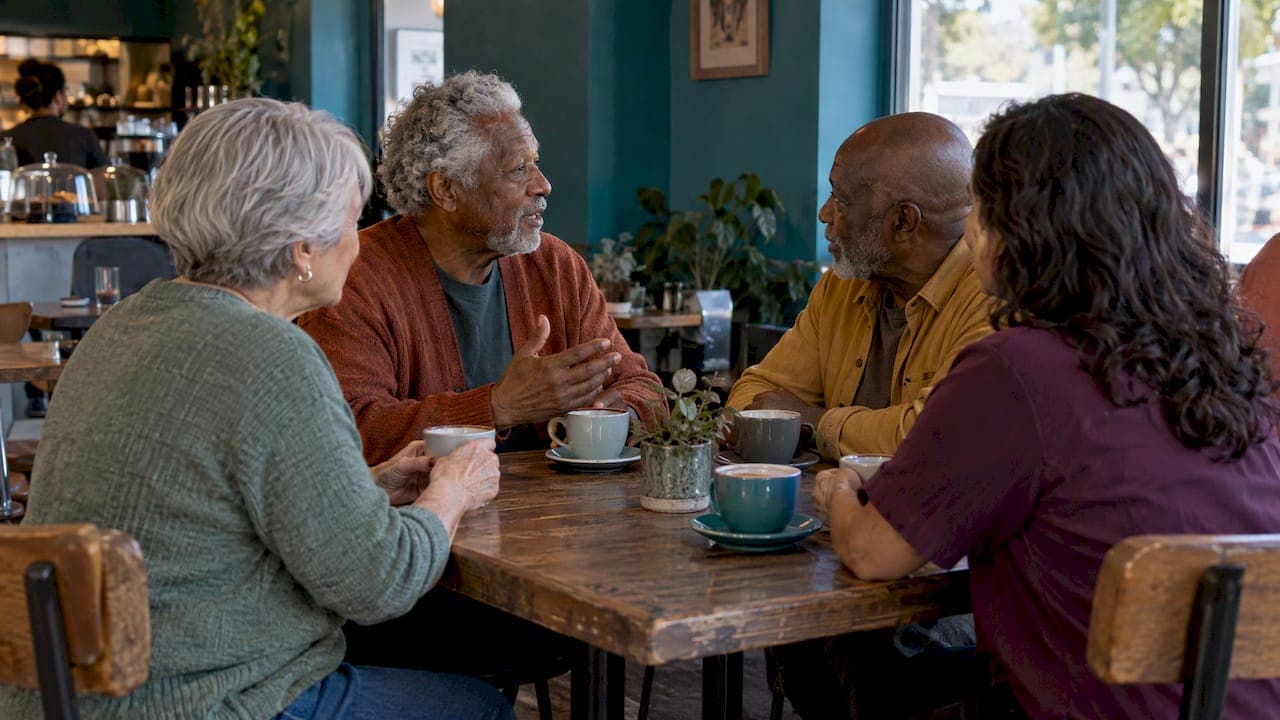
Here is what a lived version can look like. Imagine Marcus, 71, who has lived alone since his divorce and has no children. Every few months he has coffee with two friends and his niece. Over the second cup, he tells them what matters to him: staying in his house as long as possible, never being talked into a purchase by a pushy salesperson, and wanting a second pair of ears at any big medical appointment. They agree to be his people. Later they put a short version in writing.
Nothing dramatic happened. Marcus just made his wishes easy to find and gave the people who love him a clear job. The job is to help him decide, not to decide for him.
Two ideas are worth trying:
- Invite one person to one kind of help. "Would you sit with me while I read the Medicare mailing?" is easier to say yes to than "Will you be my supporter?" Let the bigger label come later.
- Say your values out loud once. Over a meal, tell a trusted person what a good day, a good home and a good decision look like for you. It gives them something to hold on to when you ask for help.
Our guide to building a reliable support network and the page on building your support circle go deeper on who to ask and how.
Supporters, agents and backups
SDM does not replace the other legal tools. It sits alongside them.
- Supporters help you decide while you can decide.
- A health care agent and a financial agent, named through documents like powers of attorney, step in only if you cannot decide, even with help. Those are substituted decision-makers, so choose them carefully.
- Backups matter, because the person you picked may move away, get sick or simply say no.
The documents and names vary by state. Our decision-making backup plans guide explains how solo agers think about the second and third person on the list. If you have no obvious heirs or family, legacy planning without heirs covers the wider picture.
A good supporter can be a friend, a neighbor, a faith community member or a professional, such as a care advocate. What matters is that they respect your pace and your no.
Setting boundaries so you stay in charge
Support can drift. A well-meaning friend starts finishing your sentences, and then answering for you. It happens kindly, which makes it harder to notice.
A few habits keep the balance:
- Ask supporters to explain options, not recommend one, unless you ask for a recommendation.
- Keep the final "yes" or "no" in your own words, even when you agree with them.
- Check in once a year. Do you still want the same people? Is the help still the right kind?
We wrote more about this in best practices for independent senior boundaries. A supporter who gets a gentle "I'd like to think this through myself" and takes it well is a keeper.
Our perspective
We started Aging Solo Today because a solo life can be a complete one. Friendship, travel, romance and ordinary pleasures are all still on the table, and so are hard decisions.
We think supported decision-making is the most respectful way to hold both. It treats you as the author of your life, even on days when you want a co-editor. It also fits how solo agers actually live: through a chosen circle, not a default one.
We have seen the same pattern again and again. People who have an honest talk with a few trusted people early tend to feel steadier afterward. The conversation is not about fear. It is about being known. And being known is what lets other people speak up for what you want if you ever can't.
So we would nudge you to start with the relationships, not the paperwork. Paperwork follows easily once you know who is in your corner.
— Mike Crawford
Talking it through with us
If you would like a patient, practical conversation about who your supporters might be and how to make your wishes visible, our Solo Aging Clarity Session is a 45-minute Zoom call for $97, one time. We help you sort out where you stand and what to do next, at your pace. You can book through our site. Our free guides, including Solo Aging 101, are there if you prefer to go on your own first.
We are not lawyers and this is not legal advice. For documents and your state's rules, an elder law attorney is the right person.
A fuller life, with good company
The point of all this is not to be ready for the worst day. It is to make the ordinary days feel freer. When you know who you would call, and they know what you want, you can plan the trip, say yes to the dinner invitation and sign up for the class without a quiet worry humming underneath.
Alone does not mean unsupported, and it does not mean lonely. It can mean a life with a few well-chosen people who help you think, and then step back so you can do the living.
FAQ
What is supported decision-making in simple terms?
It is a way of making your own decisions with help from people you choose. They might explain information, talk through options or go with you to appointments. You keep all your legal rights, and the final decision is yours.
Is supported decision-making the same as guardianship?
No. Guardianship is a court process that appoints someone else to make decisions for you, and it is meant as a last resort. Supported decision-making leaves your rights intact. It is one of the less restrictive options courts and agencies point to before guardianship.
Do I need a lawyer to set up supported decision-making?
You can begin informally, just by asking trusted people for specific help. A written agreement is more useful if you want doctors, banks or courts to take it seriously, and the rules vary by state. An elder law attorney in your state can confirm what your agreement covers.
Can someone with dementia use supported decision-making?
Often, yes, especially in earlier stages. Capacity depends on the decision and the moment, and it can change over time, so it is worth reassessing as health changes. A physician or geriatric specialist can speak to your own situation.
Is it available in every state?
Not as a formal statute. At least 24 states and the District of Columbia have passed comprehensive SDM agreement laws, and the number keeps changing. Where there is no statute, a written agreement can still serve as evidence that you have a working network.
Sources
- Elder Justice Initiative: Guardianship Overview
- Elder Justice Initiative: Guardianship, Less Restrictive Options
- ACL: Preserving the Right to Self-determination, Supported Decision-Making
- ACL: Alternatives to Guardianship
- Supported decision making: Facilitating the self-determination of persons living with Alzheimer's and related diseases (PMC)
- Neuropsychological Predictors of Decision-Making Capacity over 9 Months in Mild-to-Moderate Dementia (PMC)
- U.S. Supported Decision-Making Laws (National Resource Center)