
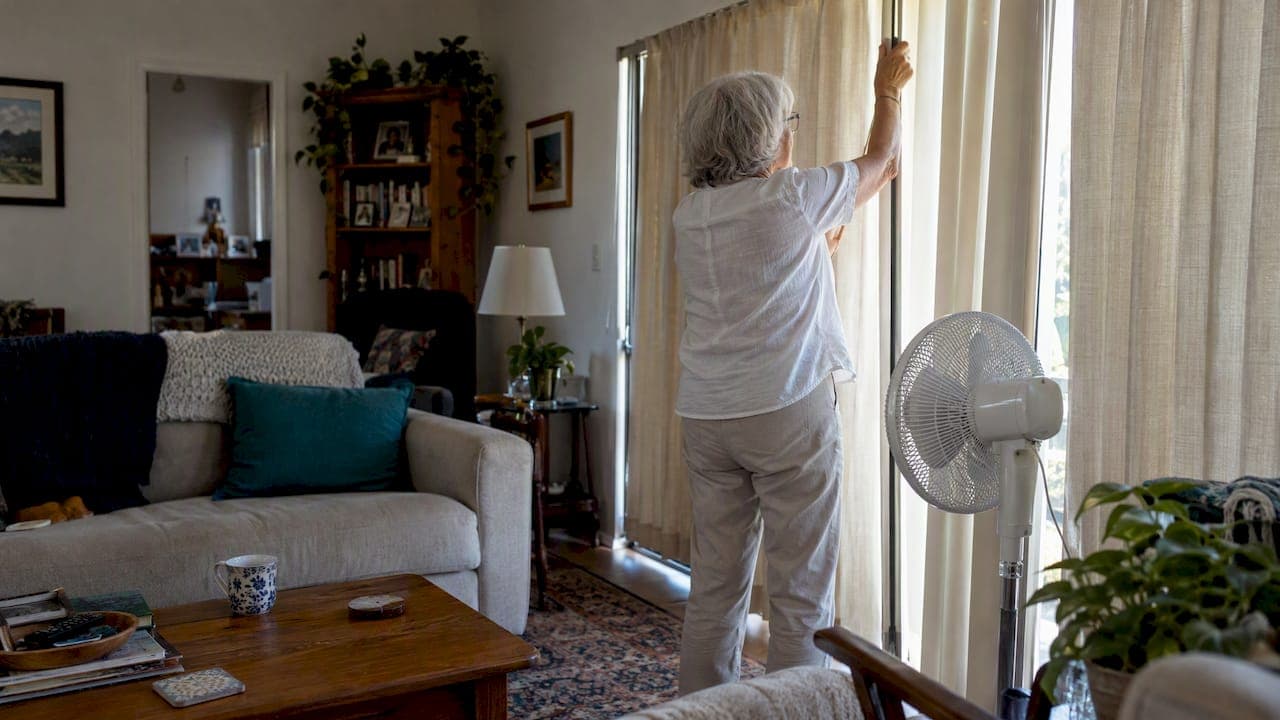
Get to a cool, air-conditioned place and stay there, sip non-alcoholic fluids before you feel thirsty, and ask a clinician or pharmacist to review your medications. The CDC and the National Weather Service's HeatRisk forecast back all three. If your home runs hot, a cooling center or a neighbor's couch is a perfectly good plan.
TL;DR:
- Ask a pharmacist or clinician to review prescriptions and supplements before summer; diuretics, some beta blockers, and anticholinergic medicines can affect heat response.
- Without reliable air conditioning, spend two to three hours daily in a cool public place, and arrange transportation before a heatwave arrives.
- During heat events, check on older adults who live alone or have chronic conditions at least twice daily, watching for dizziness, confusion, or unusual fatigue.
- Call emergency services immediately for confusion, fainting, or unusually hot, red, dry skin; offer fluids only if the person is conscious and can swallow.
Table of Contents
- Why extreme heat is especially dangerous for older adults
- Practical prevention: hydration, home cooling, clothing, and timing
- Medications and health conditions that raise heat risk
- Checking in: how friends, neighbors, and caregivers can help
- Recognizing heat-related illness and what to do right away
- Staying cool without reliable air conditioning
- A short pre-season Heat Action Plan you can finish in one sitting
- Staying independent and connected through hot seasons
- A calm way to build your own Heat Action Plan with us
- FAQ
- Sources
Why extreme heat is especially dangerous for older adults
Picture a bright July morning. The porch looks inviting, the garden needs you, and you feel fine. That "fine" is exactly the trap. With age, the body's cooling system gets slower and quieter, so trouble can build before you notice it.
Here is what shifts, according to the CDC's guidance on older adults and a systematic review on heat tolerance:
- Less effective sweating: older bodies often shed heat more slowly, so core temperature climbs faster.
- Chronic conditions: heart, lung, and kidney problems make the body work harder to cool down.
- Hot nights: when bedrooms stay warm after dark, the body never gets a real chance to recover, and strain stacks up day after day. NOAA notes that its HeatRisk tool accounts for cumulative daytime and nighttime temperatures for this reason.
- Living alone without AC: the review links heat-related deaths in older adults to socioeconomic vulnerability and other health conditions, and stresses reliable local support.
None of this means staying shut inside all summer. It means knowing where the real pressure points are, so a few small habits can do the heavy lifting.
Practical prevention: hydration, home cooling, clothing, and timing
Think of these as small summer habits, not rules. Most are quick.
Drink early and often. The WHO advises drinking fluids before you feel thirsty, because thirst can lag behind what your body needs. Water is the default. If you have been sweating a lot, an electrolyte drink can help. If your doctor limits your fluids, ask what's right for you in hot weather. Our guide on hydration and senior health goes deeper.
Keep your home as cool as you can. Air conditioning is the best tool when you have it. The CDC also cautions against relying on a fan as your main cooling source when it's very hot, and the WHO notes fans may be ineffective or unsafe above certain temperatures.
Here is a simple rhythm for your day:
- Close blinds and curtains on sun-facing windows before the day heats up.
- Skip the oven and stovetop at midday. Cold meals, the microwave, or a salad do just fine.
- Run your coolest room as your "home base" and spend the hottest hours there.
- Wear loose, lightweight, light-colored clothing, plus a wide-brimmed hat if you step outside.
- Move walks, errands, and gardening to early morning or evening, and slow your pace.
- Pre-chill a water bottle or two in the freezer so cold water is always ready.
Pro Tip: Keep a damp washcloth in a zip bag in the fridge. Laying it on your neck or wrists for a few minutes is a quick, pleasant reset after coming in from the sun.
A little sunscreen on short outings helps too, since a sunburn makes it harder for your skin to cool you down. The NIA's hot weather infographic is a handy one-page reminder to stick on the fridge.

Medications and health conditions that raise heat risk
Many of us take a few prescriptions without a second thought. In hot weather, some of them quietly change how your body handles heat. A PubMed review explains that medicines can affect thermoregulation and raise the risk of dehydration and heat illness, and that taking several together compounds the effect.
A systematic review and meta-analysis points to these types of drugs as worth asking about:
- Medicines with strong anticholinergic properties
- Non-selective beta-blockers
- Some anti-Parkinson agents
- Diuretics and other drugs that affect fluid balance or blood pressure (a common topic for your pharmacist to check)
The evidence there is limited and mostly not drawn from older adults, so the takeaway is "ask," not "panic."
Heatwaves were associated with a 21% to 33% increased risk of heat-related hospitalization among older Medicare beneficiaries with chronic conditions, and both medication exposure and heatwave exposure were linked to higher hospitalization risk, according to an epidemiologic study.
Your next step is easy: before the hot season, book a short "heat-safety" medication review with your pharmacist or clinician. Bring a printed list of everything you take, including over-the-counter products and supplements. Ask whether dose timing or fluid guidance should change on very hot days.
Please don't stop or skip a medication on your own. That can cause its own problems. Let the professional adjust the plan.
Checking in: how friends, neighbors, and caregivers can help
If you're a friend, neighbor, or family member, you matter more than you may realize. The CDC recommends checking on people who live alone or have chronic conditions at least twice a day during heat events. If you're the one living solo, tell a couple of people you'd welcome that call. Our Friends Caller resource can help you set up reliable check-ins that feel like friendship, not supervision.
A good check-in is conversational. Notice and ask:
- Are they drinking regularly through the day?
- Do they have AC or a cool room to retreat to?
- Do they seem confused, dizzy, unusually tired, or unlike themselves?
- Is their phone charged and within reach?
When you visit, bring cold water, a couple of cooling cloths, a phone charger, and a copy of their medication list. Location tools like those in this family safety checklist from Kin Watchdog can give supporters extra peace of mind, as long as the older adult agrees.
Know your escalation steps. Call the clinician for mild symptoms that don't ease. Move the person somewhere cooler if their home is too hot. Call emergency services for confusion, fainting, or very hot, red, dry skin.
Recognizing heat-related illness and what to do right away
Heat illness moves along a spectrum. The CDC lists the early signs as muscle cramps, heavy sweating, headache, nausea, weakness, dizziness, and shortness of breath. Those can be heat cramps or heat exhaustion, and they are your cue to act.
Heat stroke is the emergency. Watch for confusion, fainting, or unusually red, hot, dry skin.
If you or someone near you shows symptoms:
- Move to a cool place, indoors with AC if possible, or at least into shade.
- Loosen or remove extra clothing.
- Cool the skin with damp cloths, or a cool (not icy) bath or shower if the person is alert and steady.
- Offer small sips of fluid only if the person is conscious and able to swallow.
- Call emergency services right away for confusion, fainting, or hot, dry skin, and stay with the person until help arrives.
The line between the two calls is simple. Phone a clinician for mild symptoms that settle once you're cool. Call emergency services the moment thinking gets foggy or the person faints.
Heatwaves were linked to a 21% to 33% higher risk of heat-related hospitalization in older Medicare beneficiaries, per the Medicare study. Acting early matters.
Staying cool without reliable air conditioning
No AC doesn't mean no options. The WHO suggests that if your home can't be kept cool, you should spend two to three hours a day in a cool place. Libraries, malls, and community cooling centers all count, and a lunch out with a friend turns relief into an outing.
- Look ahead: check the NWS HeatRisk map and your local health department's list of cooling centers before a heatwave arrives.
- Plan the ride: arrange a lift or a transit route in advance, and bring water, a hat, and your medication list.
- Cool at home cheaply: open windows for cross-breezes at night, rest a frozen water bottle near your neck, and soak your feet in cool water.
- Mind the fan: at very high temperatures a fan alone won't protect you.
Pro Tip: Freeze a few bottles of water overnight. They cool you by day and melt into cold drinking water by afternoon.
A short pre-season Heat Action Plan you can finish in one sitting
Here is a plan small enough to finish before your coffee gets cold:
- Schedule a medication review and clinician check-in before summer.
- Write down three nearby cool places, at least two check-in people, your emergency contacts, and your medication list. Our emergency contact plan makes this easy.
- Pack a small go-bag: water, a hat, a towel, a printed med list, and a phone charger.
- Tell one trusted person where the plan lives and walk through it together.
Add a backup for outages with our power outage plan.
Staying independent and connected through hot seasons

I love a summer morning as much as anyone. Coffee on the porch, a slow walk, the world still cool and quiet. Taking one small safety step doesn't take that away. It protects it.
Two ideas that keep independence and connection intact: walk early, with a friend who expects a text when you're back, and turn a weekly cooling-center or library visit into a standing date with a friend. Plans like these make summer more social, not less. You can enjoy a full, solo life and still have people in your corner. Our guide on maintaining independence aging at home builds on this idea.
— Mike Crawford
A calm way to build your own Heat Action Plan with us
If you'd rather not do this alone, we can help. Our Solo Aging Clarity Session is a Zoom call for $97, one time.
- We turn the checklist above into a short plan that fits your home, health, and people.
- You leave with clear, practical next steps.
- It suits solo agers who want calm, one-session help.
Book your session at Agingsolo.
This article is general information, not a substitute for advice from a qualified doctor. Consult a qualified healthcare professional about your own circumstances before acting on anything here.
FAQ
What is the safest way for seniors to stay cool in extreme heat?
Spend the hottest hours in an air-conditioned place, drink fluids before you feel thirsty, and avoid strenuous activity at midday. The WHO also recommends a cool space if your home can't be kept cool.
How often should someone check on an older adult during a heatwave?
At least twice a day, according to the CDC. Ask whether they're drinking, whether they have a cool room, and whether they seem confused or dizzy.
Can medications make heat more dangerous for older adults?
Yes, some can. Certain drugs affect thermoregulation, thirst, or fluid balance, as a PubMed review explains. Ask your pharmacist or clinician for a pre-season review, and never stop a medicine on your own.
When should I call 9-1-1 for heat illness?
Call right away for confusion, fainting, or unusually red, hot, dry skin, which are signs of heat stroke. Mild symptoms that ease once you're cool are a reason to call your clinician instead.