
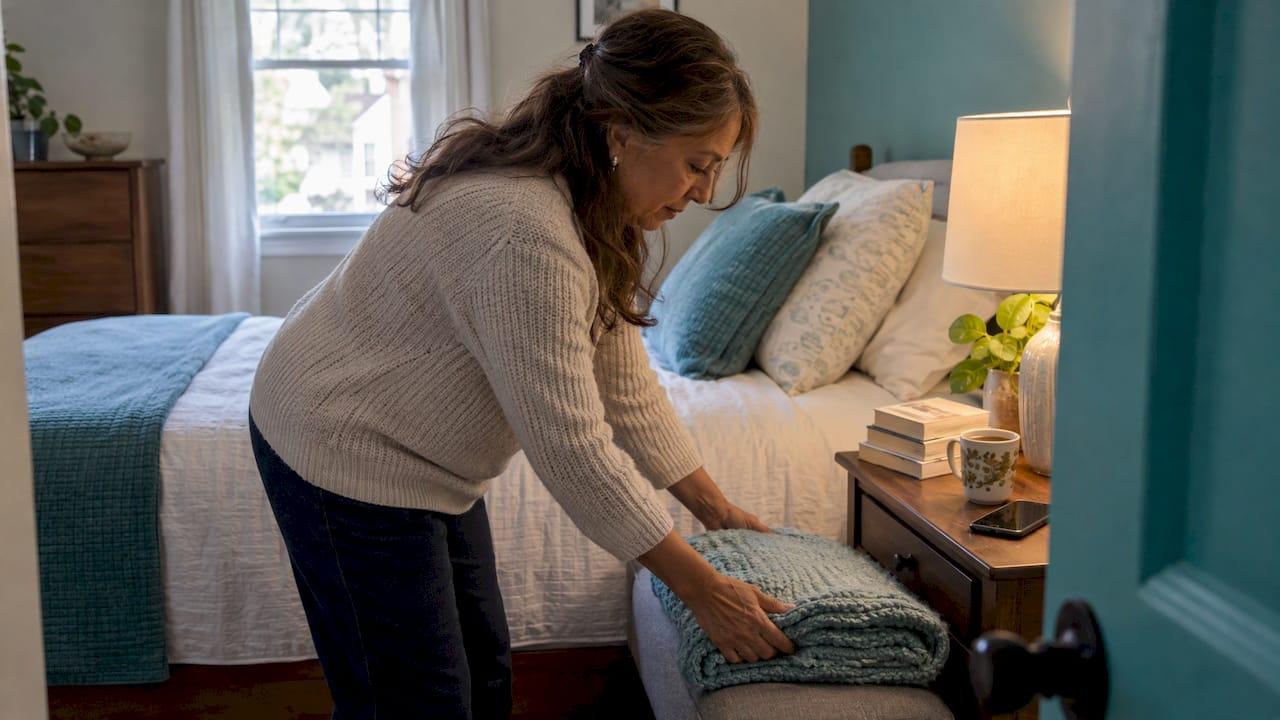
Picture it: the second afternoon home. The house is quiet, the kettle has finally boiled, and you realize no one is coming through the door with soup. For a moment the quiet feels heavier than you expected. Then you notice your phone is within reach, a casserole you cooked three weeks ago is thawing, and a friend is due to call at four. You are alone, and you are not lonely. That is the recovery this guide is about.
Yes, you can recover from surgery on your own. Most people who do it well share one habit: they decide, ahead of time, who they will lean on for the few things that truly need another person. The rest, the cozy parts, the pacing, the small pleasures, are yours to shape.
TL;DR
- Living alone does not stop you from having surgery. Hospitals do expect a responsible adult to take you home after anesthesia, so line that person up early.
- Set up one comfortable "recovery floor" before you go in, with food, your phone and a bed and bathroom close together.
- Ask the hospital about discharge planning and local help. Meals, rides and in-home support often exist if you ask.
- Plan company, not just care: a daily call or video chat does as much for your mood as any gadget.
- Treat recovery as a season of slow, chosen comforts, not a test of how little you can ask of others.
Table of Contents
- The first honest feeling
- Getting home: the one thing that needs another person
- Making home feel like a good place to heal
- Using the hospital's help before you leave it
- Staying company for yourself, and for others to find
- What recovery looks like when it goes well
- Our perspective
- Talk it through with us
- FAQ
- Sources
The first honest feeling
Before the logistics, let's name the feeling. Many solo agers say the hardest moment is not the pain. It is the paperwork line that asks for an emergency contact, or the nurse who asks, kindly, "And who's picking you up?"
That pause can sting. You may feel a little exposed, as if your independence suddenly needs defending. It doesn't. Being on your own is a way of living, not a gap in your preparation. Plenty of people heal well at home without a spouse or grown children nearby. What they have is a small, steady circle, and they have said out loud what they need from it.
If you have been meaning to build that circle, our guide to social connection for seniors is a gentle place to start. Surgery has a way of showing you who is already in it.
Getting home: the one thing that needs another person
Here is the part that surprises people. If you are having anesthesia or sedation, most hospitals will not let you leave by yourself, even if you feel perfectly awake. Northwestern Medicine asks you to arrange for an adult 18 or older to take you home, and says it is not safe to drive yourself. With local anesthesia you may be able to leave on your own, but they suggest checking with your physician first.
Some facilities are firm about it. MD Anderson says a responsible adult must be available to receive your discharge instructions and take you home, and that a procedure can be rescheduled if no one is lined up. Allina Health likewise asks for a responsible adult to drive you and stay for 24 hours, and says surgery may be canceled without one.
The reason is simple. Anesthesia and sedation can cloud thinking and coordination for a while. Pennsylvania's Patient Safety Authority explains this impairment and notes that a taxi driver does not count as a responsible person after sedation. Rules differ by state and facility, so ask your surgeon's office exactly what theirs are.

Who to ask, and how
This is the moment to make one honest, specific request. Not "could you help me sometime?" but "I'm having surgery on a Tuesday. Could you drive me home and stay through the evening?"
Think about:
- A friend or neighbor who has said "let me know if you need anything" and meant it.
- Someone from a faith community, club or volunteer group. OrthoInfo, from the American Academy of Orthopaedic Surgeons, suggests turning to a congregation or community if family and friends are not available.
- A hospital social worker or patient navigator, who may know of volunteer or paid options.
People usually feel honored to be asked for something clear and finite. A single request with a start and an end is easier to say yes to than an open-ended favor.
If you worry about what happens in the first day or two, JAMA's patient guidance says to line up someone for cooking, bathroom help or rides until you are healed, and that you may need someone with you even after a same-day discharge. UMass Memorial Health suggests asking someone to stay a few days if you live alone. If that is not possible for you, tell your care team early. They can plan around it, and that conversation is the right place to ask about a short stay or in-home help.
Making home feel like a good place to heal
This is the part I enjoy most, because it is the part that is entirely yours. You are not just clearing a path. You are building a nest.
Pick the floor where you will spend most of your days. MedlinePlus suggests keeping essentials within easy reach there, with a bed and a bathroom or commode close by, and making sure you can always reach your phone. If you have stairs, UMass Memorial Health suggests setting up a main-floor room so you only need to climb once a day. Our piece on the benefits of single-floor living shows how much easier a one-level day can feel, even for a few weeks.
Now make it lovely. The favorite blanket. The lamp that makes the room glow. A stack of paperbacks, a tablet loaded with shows you have been saving, the good tea. A recovery space that comforts you will get used. One that feels like a waiting room will not.
Cook for the person you will be in two weeks
One of the kindest things you can do is cook for your future self. Both MedlinePlus and Allina Health recommend preparing meals to freeze and reheat. Make it a small ritual: on a few Sunday afternoons, put on music and make a double batch of whatever you love. Soup, a baked pasta, a chicken and rice dish. Label the containers with a funny name if that makes you smile.

Store everyday foods and supplies where you can reach them without bending or stretching. UMass Memorial Health suggests keeping them between hip and shoulder height.
Smooth the paths
While you are setting up, look at the floor. Loose throw rugs and trailing cords are easy to remove and make moving around with a sore body far less stressful. MedlinePlus and US Aging both mention removing rugs and cords, and Allina Health suggests night lights or grab bars. If you want a deeper look at one room, our bathroom upgrades guide covers the ones that matter most, and our home safety audit is a quick walk-through if you would like a second pair of eyes on the house.
And if you have a bit of help available, a friend who will take out the trash or mow the lawn, say yes. Allina Health recommends arranging house or yard help if you need it.
Using the hospital's help before you leave it
Here is something many solo agers do not realize: you are allowed to tell the hospital you will be on your own, and they have people whose job is to respond.
Medicare-participating hospitals are required to run a discharge planning process that looks at whether you can care for yourself, as the federal rule describes, and to arrange things before you go. A policy summary from the National Health Policy Forum adds that hospitals are meant to identify patients who may struggle after discharge and to consider what services they will need and whether those are available.
In plain words: say it early. "I live alone and will have no one at home." Say it at your pre-op visit, not on discharge morning. MedlinePlus describes a discharge plan that spells out your medical problems and allergies, every medicine and when to take it, and how to change dressings. Ask for it on paper and ask a nurse to walk you through it. We go deeper in our guide to post-hospital discharge planning.
A small tip from US Aging's guidance: if there is a self-care task ahead, like changing a dressing or using a device, learn it in the hospital by watching staff and then having them watch you practice. Learning on the day you leave can feel rushed.
Help you may not know exists
MedlinePlus says that if you will not have help for the first one to two weeks, ask your provider about a trained caregiver who can help with daily activities. US Aging adds that many communities offer rides to medical appointments, home-delivered meals, medication help, chore services and in-home support, and suggests calling your local Area Agency on Aging or the Eldercare Locator. OrthoInfo notes that several states offer respite care for temporary in-home support after surgery.
Our support for older adults planning guide and transportation options guide can help you think through rides and services.
Staying company for yourself, and for others to find
Here is where recovery alone can become unexpectedly rich. With days unscheduled, you get time you rarely give yourself.
OrthoInfo recommends staying socially connected during recovery with daily video or phone calls, and says online or in-person support groups can be an option if reaching out to your usual circle feels hard. Take that literally. Put a standing call on the calendar: a sister at nine, a neighbor at four. Something to look forward to turns a long day into two bookends.
A few gentle ideas that fit a slow week:
- Invite one friend over for an hour, not a day. Keep it short, keep it easy, let them bring lunch.
- Learn something you never had time for: a language app, watercolors, a documentary series about a place you want to visit.
- Write postcards or emails to people you have lost touch with. Recovery makes a lovely excuse to reconnect.
If some days feel emptier than others, that is normal, and it deserves attention without alarm. Our Hidden Loneliness Checklist helps you tell the difference between a quiet day and something that needs a bit more connection. If low mood lingers or worsens, tell your doctor. That is a medical conversation, not a failing.
And one non-negotiable: know when to call for help. JAMA says to call 911 or go to the nearest emergency room for chest pain, shortness of breath or symptoms that are quickly getting worse. Keep the phone numbers for your surgeon's office and any home care agency where you can see them, as US Aging suggests, and ask your surgeon when to call.
What recovery looks like when it goes well
Imagine day ten. You are up before the sun, tea in hand, watching the neighbor's dog pull its owner down the street. The incision is healing. You have had three visits, five phone calls and one very good soup. You are tired in the right way.
Somewhere in there, you notice something. You asked for help, specifically and without apology, and it came. The circle you thought was thin turned out to be sturdier than you knew. That discovery tends to stay with people long after the stitches come out.
If you want to see where it can lead, our guide to maintaining independence at home picks up where recovery leaves off.
Our perspective
We started Aging Solo Today because we are solo agers ourselves, and we know that moment when someone asks who will take care of you and the room goes quiet.
Here is what we believe. A solo life is a complete life, and surgery does not change that. What it does is give you a clear reason to look at your support, not out of fear, but because you deserve to be looked after while you heal. The people who recover best on their own are rarely the ones who needed no one. They are the ones who knew exactly who to call and what to ask.
That is why we think a conversation about your own situation is worth having before a procedure, not after. Who is your ride? Who is your daily call? What does your home need to feel like a place you want to recover in? Those answers are different for everyone, and they are easier to find with someone helping you think them through.
Independence is not doing everything alone. It is living on your own terms, including how you accept help.
Mike Crawford
Talk it through with us
If you have a procedure coming up and you are not sure who your ride, your check-in person or your backup will be, you do not have to sort it out alone. Our Solo Aging Clarity Session is a 45-minute Zoom conversation for personalized solo ager planning, and it costs $97.
Bring your date, your questions and your worries, and we will talk about what a steady, connected recovery could look like for you. Book a Solo Aging Clarity Session when you are ready. If you would rather start on your own, Solo Aging 101 is a clear starting point.
FAQ
Can I go to the hospital for surgery alone?
Yes, you can arrive on your own, but leaving is different. If you have anesthesia or sedation, hospitals generally require a responsible adult to take you home. Some will reschedule without one. Ask your surgeon's office about their exact policy when you book.
Can I stay home alone after surgery?
Sometimes, depending on the procedure, your health and your care team's guidance. Many facilities recommend someone stay with you for the first 24 hours after same-day surgery. Tell your surgeon early that you live alone so they can plan with you.
What should I do before surgery if I live alone?
Set up your recovery floor, stock easy food, and freeze a few meals. Arrange your ride and a first-night companion, and keep your phone within reach. Tell the hospital you live alone so discharge planning can start early.
How do I stay connected while I recover?
Schedule daily phone or video calls, and invite short visits when you feel up to it. Online or in-person support groups can help if reaching out to your circle feels difficult. If low mood lingers, tell your doctor.
Sources
- Getting your home ready after the hospital, MedlinePlus
- Leaving the hospital: your discharge plan, MedlinePlus
- Before Your Surgery, Northwestern Medicine
- Prepare for Your Hospital Stay, MD Anderson
- Before surgery: how to prepare at home, Allina Health
- Should Patients be Accompanied When Discharged, Pennsylvania Patient Safety Authority
- Before Surgery: Preparing Your Home, UMass Memorial Health
- Planning to Return Home After Surgery, JAMA
- Joint Replacement for Patients With Limited Resources, OrthoInfo (AAOS)
- Hospital to Home, US Aging
- Hospital Discharge Planning in Medicare, National Health Policy Forum