
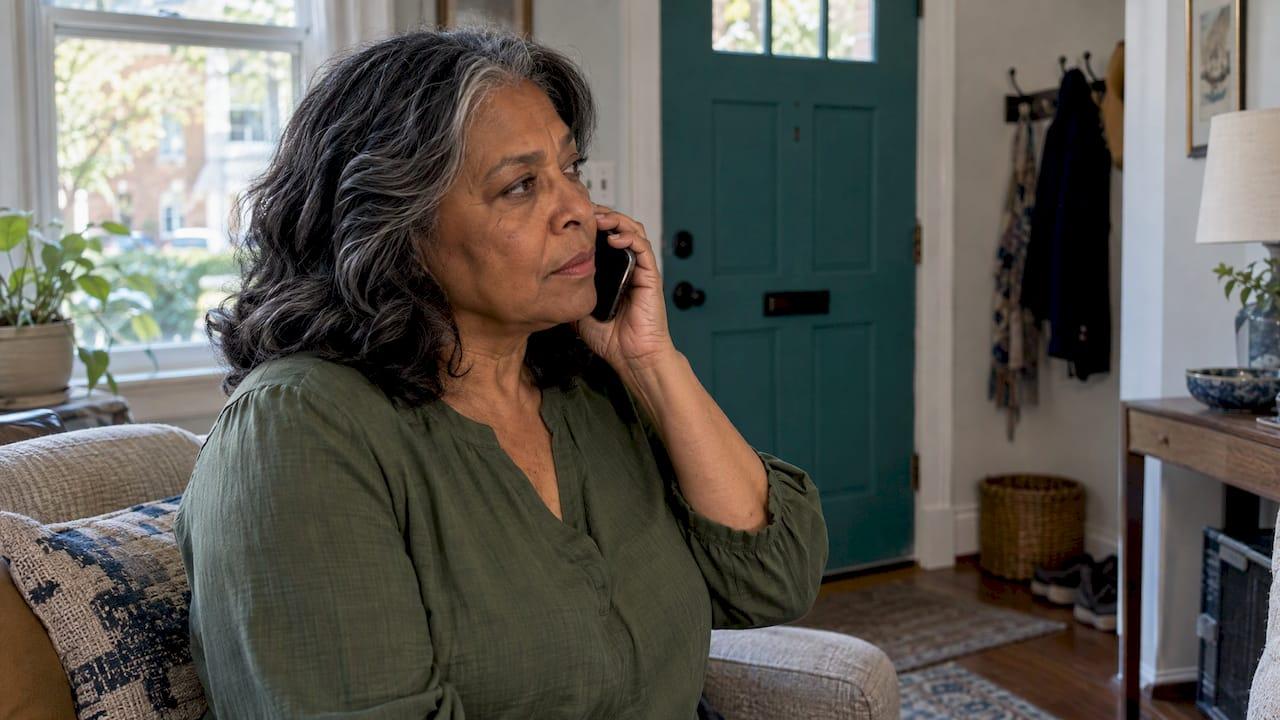
It is Thursday, and you are at the table you and Ruth have shared at the same coffee shop for nine years. She is late, which is not like her. When she arrives, she is wearing the same cardigan as last week, and she mentions that the nice young man who "helps with her bills" now has her checkbook. She laughs it off. You laugh with her. Then you drive home with a small knot in your chest and one question: is this the kind of thing you call someone about?
If the knot is there, it is worth listening to. You can call adult protective services (APS), the state or county agency that looks into abuse, neglect and exploitation of older adults and adults with disabilities, whenever you have reasonable cause to worry. You do not need proof, and in most states you do not need to give your name. Calling is not a betrayal of a friend's independence. Done well, it protects the life she built.
TL;DR
- Call 911 first if someone is in immediate danger. APS is not a first responder.
- For everything else, call your state's APS line. You do not need proof, only a reasonable worry.
- Most states let you report without giving your name, and your identity is kept confidential.
- APS cannot remove a capable adult from home or force services on them. Adults keep the right to say no.
- Wanting to protect a friend and respecting her independence are the same impulse.
Table of Contents
- Why this call feels so hard when you live alone yourself
- What APS looks into
- You do not need proof, just a reasonable worry
- 911 or APS: which one is it?
- How to reach the right office
- Can you report anonymously?
- What to say on the call
- What happens after you call
- After the call: staying a friend
- Our perspective
- If you want a thoughtful ear for your own situation
- FAQ
- Sources
Why this call feels so hard when you live alone yourself
Many of us who are aging solo have fought for our independence. We have been the competent ones for decades. So when we see a friend whose life is quietly getting smaller, we hesitate. We do not want to be the person who "reported" her. We do not want to be wrong. We may also fear, privately, that one day someone will be making that call about us.
That last thought is worth holding gently. The friends and neighbors who notice us are part of what makes a solo life a full one. If you were the person with the unexplained bruises or the new "helper" who controls the phone, you would want someone to notice. You would not want them to look away to be polite.
The agencies themselves describe their work in the same spirit. New Jersey's APS fact sheet says adults keep all their civil and constitutional rights unless a court restricts them, and that services aim to help people stay in their homes whenever possible. Montana's APS describes its mission as protecting people while supporting their freedom and right to self-determination, using the least restrictive approach. A call to APS is much closer to "someone should check in" than to "someone should take over."
What APS looks into
APS is not one national office. Each state runs its own program, and in some states, such as California, it runs through county offices. The names and age cutoffs differ, but the core job is the same: look into harm to adults who may not be able to protect themselves.
Georgia is a typical example. Its APS investigates abuse, neglect or exploitation of adults 65 and older, or 18 and older with a disability, who do not live in long-term care facilities. The types it lists are:
- physical abuse
- mental, emotional or verbal abuse
- sexual abuse
- neglect
- self-neglect
- exploitation, including financial exploitation
California's social services department gives examples that help you picture each one. Abuse can include hitting or burning, over- or under-medicating, isolation, theft, fraud and extortion, abandonment, and verbal assaults or threats. Self-neglect is also covered: a person who is not able to meet their own basic needs, such as food, medicine or safe shelter.
Montana adds a few signs that are easy to miss when you only see someone over coffee: unexplained fractures, a caregiver who isolates the person from others, and power-of-attorney signings when the older person cannot understand what they are signing.
Quiet signs that deserve a call
Think back to Ruth. Nothing dramatic happened. These are the kinds of moments that tend to bring people to the phone:
- A new friend or "helper" who answers for her, screens her calls, or is suddenly around every time you visit.
- Money that does not add up: bills unpaid despite plenty of income, new names on accounts, gifts she would not normally make.
- A friend who used to be chatty and has stopped seeing anyone, and does not seem to have chosen that.
- Unexplained injuries, or an explanation that changes each time.
- A home or a person that looks very different from how it did six months ago: no food, unwashed clothes, unopened mail.
None of these proves anything. That is exactly the point of the next section.
You do not need proof, just a reasonable worry
This is the part that frees people up. Washington's social services department tells reporters to report immediately if you have reasonable cause to believe a vulnerable adult is being harmed, and says you do not need proof. Wisconsin goes further: you can report even if you only have a feeling about a situation, because APS professionals are trained to assess it and decide how to respond.
In other words, your job is to notice and to say so. Figuring out what is true is the agency's job.
There is also protection for you. Washington notes that people who report in good faith have immunity from liability. Texas law likewise gives good-faith reporters immunity from civil and criminal liability.
911 or APS: which one is it?
If someone is in immediate danger, or it is a life-threatening situation, call 911. Wisconsin's guidance says to call the police or 911 right away in an emergency, and Georgia and Indiana both state plainly that APS is not an emergency responder.

So if you walk into Ruth's kitchen and find her unresponsive, or someone is hurting her in front of you, the phone call is 911. If what you have is the knot in your chest and a pattern you cannot shake, it is APS.
Some states are mandatory-report states. Indiana, for example, requires everyone to report suspected neglect, battery or exploitation of an endangered adult, and Texas has a similar universal rule. Other states require reports only from certain professionals, such as Wisconsin, where the required reporters include licensed health care providers and licensed social workers. If you are a private person, a friend or neighbor, you are always welcome to report, whatever your state's rules.
How to reach the right office
Because APS is run state by state, the first move is finding your friend's state number. Call the one where she lives, not where you live. A few examples of how it looks in practice:
| State | How to report |
|---|---|
| California | 1-833-401-0832, enter the 5-digit zip code to reach the county APS, 24 hours a day, 7 days a week |
| Georgia | 1-866-552-4464 (option 3, weekdays 8 a.m. to 5 p.m.) or the online APS intake form |
| Mississippi | 844-437-6282 or online |
| Montana | 1-844-277-9300 (weekdays 8 a.m. to 5 p.m.) or online |
| Tennessee | 1-888-277-8366 (APS-TENN), 24/7, or the One DHS online portal |
| Texas | 1-800-252-5400 or txabusehotline.org for non-urgent concerns |
Hours and numbers change, so confirm them on your state's official APS page before you dial. Your local Area Agency on Aging can also point you to the right door; we explain what these agencies do in our piece on the Area Agency on Aging.
Can you report anonymously?
Usually, yes, and even when you give your name it is protected. A few examples:
- Washington: you do not need to give your name. Your identity stays confidential unless there is court action, law enforcement is called in, or you agree to be named.
- Mississippi: anonymous reports are accepted, though people who are required by law to report must give their contact details. The reporter's name is kept confidential by the intake unit.
- Tennessee: the online portal lets anyone submit a report without logging in, with the option to be anonymous and a reference number to track it.
- Wisconsin: the reporter's identity and the information reported are confidential and protected by law, and never shared with the person being investigated.
Here is the trade-off worth knowing. If you give your name and number, a caseworker can call you back with a question, and your details can fill gaps. If you stay anonymous, you protect yourself from awkwardness but the agency cannot follow up with you. Either choice is legitimate. Many people who have a close friendship with the person pick "confidential, with my name," and some who live next door to a difficult relative pick anonymous. You know which feels right.
What to say on the call
You do not need a speech. Think of it as telling a story to someone who needs the basics. Agencies ask for what you know, as best you can. Mississippi lists the person's name, age, address and location, contact details for anyone suspected of causing harm, a description of what is happening, and how the person is managing daily activities. Montana adds your reasons for believing harm is occurring, the best time to reach the person, whether the person knows about the report, and the names of others who may know something.
In plain words, it might sound like this:
"My friend Ruth is 78 and lives alone on Maple Street. Over the past two months, a man who says he's her helper has taken over her checkbook. She's stopped coming to our weekly coffee, and she told me she isn't sure how much is in her account. I'm worried about her finances and her isolation."
That is a complete, useful report. Facts you saw, things she said, and what changed.
If you can, ask for a case number and keep it. Georgia's guidance suggests asking for and keeping the case number.
What happens after you call
This is where many worried friends get stuck, so here is a realistic picture. Timelines vary by state:
- Georgia: you should get a follow-up call within 48 hours, and APS has 10 calendar days to respond to a referral. A caseworker visits the person and does an assessment, sometimes alongside local law enforcement.
- Mississippi: an investigation begins within 48 hours if the person is in immediate danger, or 72 hours if not.
- California: for most types of abuse, county APS programs have 10 days to respond.
APS may not tell you much afterward. Wisconsin notes that investigation details cannot be shared because of confidentiality, and New Jersey says all records and communications are confidential unless a court orders otherwise. Silence does not mean nothing is happening. It means privacy is being respected, which is the same privacy you would want.
Can APS take someone out of their home?
This is the fear that stops many solo agers from calling, and it deserves a straight answer: for a capable adult, no. Washington's DSHS says it cannot remove adults from where they live against their wishes. New Jersey says workers cannot remove someone without a court order or force a capable adult to accept services. Texas says APS has no authority to remove people from their homes or require services, except in emergencies where it must go to court, and where the person lacks capacity to consent. A person with capacity can refuse services, though the investigation itself is not optional.
Wisconsin explains that APS usually provides services only when the adult wants them. In limited cases involving a permanent cognitive impairment, it may work with a legal decision maker or ask a court for protections such as guardianship.
So the usual result of a call is a conversation, a visit, and an offer of help: connections to community services, a look at the finances, maybe a referral to law enforcement if a crime is suspected. Ruth stays in her house, with her cardigan and her coffee.
After the call: staying a friend
Reporting is one act. Friendship is the rest of it. Here are a few doable things that fit a real life rather than a plan.
Keep the coffee date. Isolation is a common thread in exploitation, so a friend who keeps showing up is protective in a way no agency can be. Make it a standing thing, and keep it light. You are not interrogating her. You are sitting at the usual table.
Offer a second set of eyes without taking over. "I'm happy to look at that mail with you, if you'd like company while you do it." Many people say yes to company when they would say no to help.
Be ready for her to be annoyed. She may find out, or guess, and feel hurt. That is okay. You can say, "I care about you, and I wasn't sure what was going on." Most friendships can hold that sentence.
If the worry is about scams specifically, our 48-hour scam prevention plan walks through how solo agers can close the doors scammers use. And if the person you are worried about has no one to make decisions with, it helps to know about supported decision-making and the alternatives to guardianship, which keep a person's own voice at the center.
Our perspective
When you live alone, the people who notice you are the most valuable thing you own. Not the money, not the house. A neighbor who says "you seem tired this week" is a form of care that cannot be bought.
We see calling APS as part of that web of noticing, not as an alarm. It is a way of saying, "I think my friend deserves a second look," and then letting trained people take it from there, within the rules that protect her rights.
It also changes how we think about our own lives. Solo agers do best when we have people who know our rhythms and who are allowed to ask questions. That is why we encourage everyone to build a circle on purpose, with friends and neighbors who would feel comfortable noticing something and speaking up, and who know they are welcome to. A full solo life is not a life without help. It is a life where help is chosen, and where the people who love you can find the words.
Mike Crawford
If you want a thoughtful ear for your own situation
Sometimes the friend you are worried about is, quietly, you: a new helper, a decision you are not sure about, or the realization that nobody would notice if your routine changed. Our 45-minute Solo Aging Clarity Session is a Zoom conversation built around personalized planning for solo agers, so you can talk through your own circumstances with someone who has lived this way too. It is a one-time $97.
You can read more or book on the Solo Aging Clarity Session page. If you would rather start by thinking about who is in your circle, our Circle of Care page is a good place to begin.
FAQ
When should I call adult protective services?
Call when you have reasonable cause to believe an older adult or an adult with a disability is being abused, neglected or exploited, or is not able to care for themselves. You do not need proof. If the person is in immediate danger, call 911 first.
Is an APS report really anonymous?
In many states you can decline to give your name, and states such as Washington, Mississippi and Tennessee say so on their official pages. Even when you do share your name, agencies treat it as confidential, with limited exceptions such as court action. Check your friend's state page for its specific rule.
Will my friend be told that I called?
APS does not share a reporter's identity with the person being investigated in states such as Wisconsin, though your friend may guess. Some states also ask whether the person knows about the report, which helps the caseworker plan a respectful visit. You can tell your friend yourself if that feels more honest.
Can APS make someone leave their home or accept help?
Not if the person has the capacity to decide. Texas, New Jersey and Washington all state that APS cannot remove a capable adult or force services on them. Emergencies and court-ordered protections are the narrow exceptions.
What if I am not sure it is abuse?
Call anyway and describe what you saw. Wisconsin says you can report even with just a feeling, and trained staff decide how to respond. Your role is to share what you have noticed.
Sources
- Adult Protective Services (APS), Georgia Department of Human Services
- Report Elder Abuse, Georgia.gov
- A Guide for Reporting Vulnerable Adult Abuse, Washington DSHS
- Report Concerns Involving Vulnerable Adults, Washington DSHS
- Adult Protective Services, California Department of Social Services
- Report abuse, California Department of Social Services
- Adult Protective Services, Montana DPHHS
- Adult Protective Services: Report Alleged Abuse, Wisconsin DHS
- Adult Protective Services, Mississippi Department of Human Services
- Adult Protective Services, Tennessee Department of Human Services
- Adult Protective Services fact sheet, New Jersey Department of Human Services
- Adult Protective Services flyer, New Jersey Department of Human Services
- APS Partners: Courts, Texas DFPS
- Adult Protective Services, Indiana FSSA
- Adult Protective Services, Montana DPHHS (area offices)